
Rivers, ruins and real texture
Reading
A Thames-and-Kennet town where royal abbey history, green riversides and independent food reward a closer look.
- Best for
- Abbey history, riverside walks and independent food
- Give it
- A full day on foot
- Don't miss
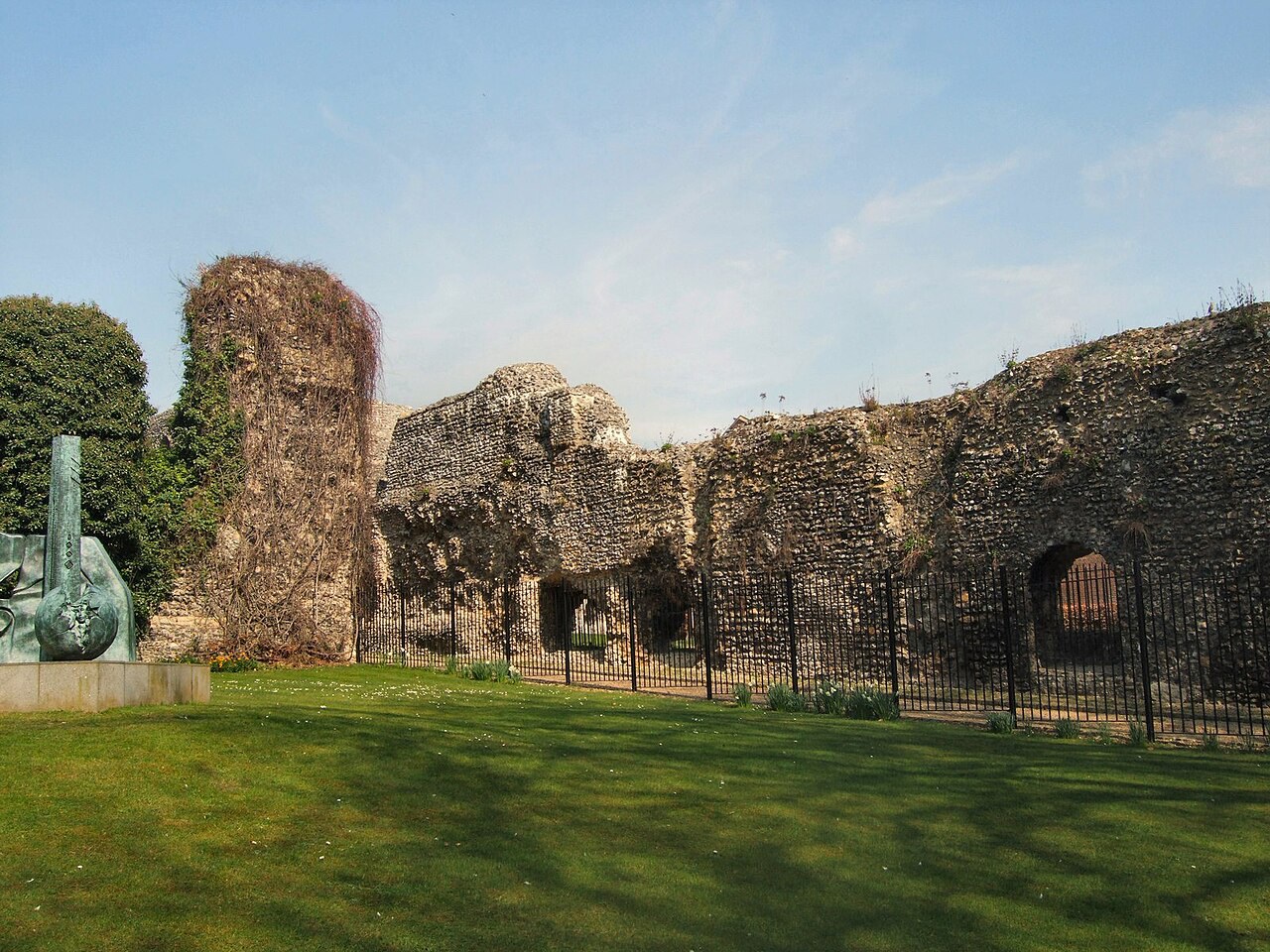
- The Abbey ruins and Maiwand Lion
Photo: Paul Gillett · CC BY-SA 2.0 · cropped
The Fox verdict
A much-maligned town that rewards exploration
Reading's scruffy edges wrap around royal ruins, river paths, distinctive museums and a genuinely good independent food scene.
Start with the Abbey and Forbury Gardens, then follow the town's history through its museums or change pace beside the Thames and Kennet. The contrast between busy centre, green riverside and independent food is the point.
Where to go
Places in Reading
Every place below is checked against a published source, listed with what it is and how long to give it.
Local signatures
3 places
Start here
Reading Abbey Ruins
The conserved remains of the royal monastery founded by Henry I in 1121, with the chapter house its best-preserved element.
- Visit length
- Editorial estimate: allow around 60 minutes
- Locality
- Town Centre historic core
Prospect Park
Reading's largest open space, with lawns, wildflower meadow, woodland, tennis courts, a playground and a pond.
- Visit length
- Editorial estimate: allow around 90 minutes
- Locality
- Less than a mile west
Thames Lido
A heated outdoor pool in restored 1902 baths, with hot tub, saunas, spa rooms and a Michelin-Guide restaurant.
- Visit length
- Editorial estimate: allow around 120 minutes
- Locality
- King's Meadow
Walks & outdoors
1 placeForbury Gardens
A restored Victorian town garden with the three-times-life-size Maiwand Lion, a bandstand and open play space.
- Visit length
- Editorial estimate: allow around 45 minutes
- Locality
- Between the centre and the abbey
Things to do
2 placesReading Museum
A free, family-friendly museum whose collections cover Maiwand and the abbey and include a Bayeux Tapestry replica.
- Visit length
- Editorial estimate: allow around 75 minutes
- Locality
- Reading
Museum of English Rural Life
A free, family-friendly museum of English rural life, also known as MERL.
- Visit length
- Editorial estimate: allow around 75 minutes
- Locality
- Reading
No places match this filter. Choose All places to reset the list.
Three ways to explore Reading
Signature outings
Walk through Abbey history
Reading Abbey was founded by Henry I in 1121 and became one of Europe's largest royal monasteries.
Find the Maiwand memorial
The three-times-life-size cast-iron lion in Forbury Gardens commemorates the 66th Berkshire Regiment dead of the 1880 Battle of Maiwand.
See the town in objects
Reading Museum's free, family-friendly collections cover Maiwand and the abbey and include a Bayeux Tapestry replica.
The city story
Reading beneath the surface
The original Travel Fox guide follows Reading from pub walls and independent kitchens to its river paths, royal ruins and cast-iron lion.
A town in one pub and two rivers
The Nag's Head keeps its walls covered in wonky framed cottage drawings, yellowing maps, thousands of pump clips, and Reading FC memorabilia from the old Elm Park days. It pours up to twelve real ales and thirteen ciders, and CAMRA calls it "one of the best pubs in southern England for the choice and quality of its real ciders and cask-conditioned ales." The pies come from Sweeney & Todd, a pie shop across town that reviewers rate for its Five Nations and its Honey Mustard Chicken.
That is Reading in one pub: a scruffy town centre wrapped around real things.
The town sits where the Kennet meets the Thames, six bridges between them. The Kennet threads through the middle, past the Oracle's riverside dining strip on a stretch called Brewery Gut. The Thames forms the northern edge, dividing the town from Caversham.
Reading's food map
Caversham is the leafy side, over Caversham Bridge, with a village-y high street, a Waitrose, delis, and Caversham Court Gardens running to the water. Clay's Kitchen moved here in 2023, a husband-and-wife restaurant cooking the food of the Nawabs of Hyderabad: Andhra cod, mutton claypot, lamb pulao. The critic Andy Hayler called the beef "one of the best beef dishes compared even to Michelin-starred restaurants."
The Oxford Road, west of the centre, is the town's food corridor: Caribbean, South Asian and Middle Eastern grocers and takeaways.
For food without a booking, the Blue Collar market sets up in Market Place on Wednesdays and Fridays — jerk chicken wraps, dry-aged burgers, Peruvian boxes, halloumi. Blue Collar Corner off Hosier Street, a reclaimed derelict yard, has four kitchens and a summer beer garden.
Pool and river paths
Down by King's Meadow, the Thames Lido is a heated outdoor pool from 1902 with saunas, a spa, and a Michelin-Guide restaurant known for its scallops and wood-roast hake.
You can walk most of it. The Thames Path runs through the town, green even here, past Christchurch Meadows and over three of the six bridges. Keep going east and it's about nine miles to Henley via Sonning. The Kennet & Avon towpath heads the other way, out past the Fisherman's Cottage, a canalside pub with open mic on Wednesdays.
Fast trains and royal ruins
The station puts Paddington about twenty-six minutes away on a fast train, or the Elizabeth line straight through to the middle of London.
The history is close to the surface. Reading Abbey was founded by Henry I in 1121, grew into one of Europe's largest royal monasteries, and holds his grave — somewhere under the old prison car park, lost since the Dissolution. Next door stands Reading Gaol, where Oscar Wilde served two years' hard labour and afterwards wrote "The Ballad of Reading Gaol." Banksy painted a prisoner escaping its wall in 2021.
The lion and the three Bs
In Forbury Gardens there is a cast-iron lion three times life size, a memorial to the dead of the Battle of Maiwand. Local legend says the sculptor killed himself on realising a lion can't stand in that pose. He didn't. The anatomy is correct, and he lived another forty-three years.
The town was built on biscuits, beer and bulbs — Huntley & Palmers, Simonds, Suttons — all three long gone. What's left is a good pub arguing over pickled onions. The Retreat hosts the local contest every year, and Kate Winslet's mother reportedly once won a pickled-onion contest herself.
Stay around Berkshire
Make a longer stay of it
Travel Fox holiday homes around Berkshire, linked directly to their property pages.
A guide with a point of view
Written from research. Edited for real journeys.
Use the Official site links for live practical details, then use this guide for context, ideas and room to explore.
Photography credits & licences
Third-party photographs are credited to their named creators and reused under the linked Creative Commons licence or public-domain dedication. Travel Fox stores an optimised local copy; the file-specific changes and any browser-applied display crop are disclosed below. Reused photographs link both to the Wikimedia Commons source record and to the declared source image; Travel Fox's own photographs carry no such record and are marked as ours. These image licences do not cover Travel Fox text, branding or page design.
- File:Reading Abbey ruins - geograph.org.uk - 2863234.jpg — photograph by Paul Gillett; Reading Abbey ruins by Paul Gillett. Source record on Wikimedia Commons. Declared source image. Licence: CC BY-SA 2.0. File changes: Downloaded from Wikimedia Commons, resized to a maximum 1920px edge and encoded as an optimised JPEG. Display changes: Displayed with responsive CSS cropping.
Sources
Every place on this page is checked against a published source. Each entry links the record we used and names who publishes it.
- Reading Abbey Ruins — readingmuseum.org.uk operator, sector body or destination organisation
- Forbury Gardens — reading.gov.uk statutory register or public authority
- Reading Museum — readingmuseum.org.uk operator, sector body or destination organisation
- Museum of English Rural Life — merl.reading.ac.uk other published source
- Prospect Park — reading.gov.uk statutory register or public authority
- Thames Lido — thameslido.com operator, sector body or destination organisation