
Cairngorms National Park · Highland Perthshire
Blair Atholl
On level ground where Glen Tilt meets the Garry valley, Blair Atholl brings together a working watermill, Blair Castle and six colour-coded estate walks.
- Working mill
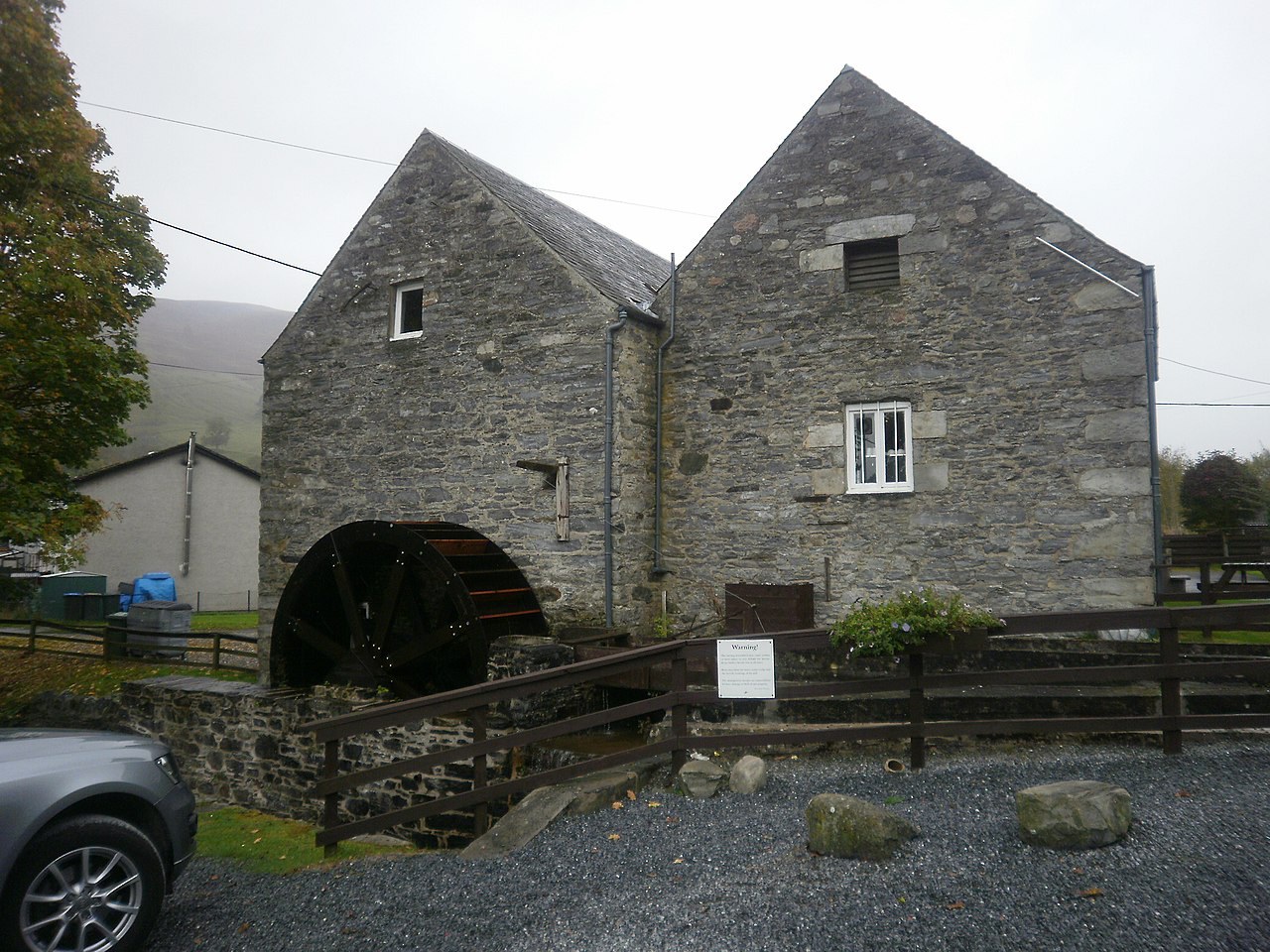
- A mill has stood here since the 1590s
- Waymarked walks
- Six colour-coded routes from Blair Atholl
- Rail
- A station on the Highland Main Line
Photo: Ian Webster · CC BY-SA 2.0 · cropped
The Fox verdict
Working craft, estate history and paths into the hills
The watermill and castle anchor the village, while the River Tilt leads into woodland, gorge and moorland walks.
Blair Atholl combines 30 furnished castle rooms and extensive grounds with a water-powered flour mill, rural-history museum, independent brewery taproom and a documented network of estate routes.
Where to go
Places in Blair Atholl
Every place below is checked against a published source, listed with what it is and how long to give it.
Local signatures
3 placesBlair Castle and grounds
The visit combines 30 furnished rooms, a castle piper, red deer, Highland cattle, the nine-acre Hercules Garden, two-acre Diana's Grove, St Bride's Kirk and estate trails.
- Visit length
- Editorial estimate: Planning allowance: 2 hours 30 minutes
- Locality
- On the village edge
Atholl Country Life Museum
Displays include a roadman’s homemade early white-line painting device, a reconstruction of the 1930s Trinafour post office, the Voices of Atholl film and what the museum calls Scotland’s only stuffed Highland cow.
- Visit length
- Editorial estimate: Planning allowance: 45 minutes
- Locality
- The former village school
The Highland Bothy, Atholl Arms Hotel
Dark wood, open fires and a traditional Highland-hotel feel meet a menu that names Cullen skink, haggis bonbons, smoked salmon, haddock in real-ale batter and Highland game Madras.
- Visit length
- Editorial estimate: Planning allowance: 1 hour
- Locality
- Beside Blair Atholl station
- Access
- Dogs are allowed in the hotel’s public areas when kept on a lead and off the furniture.
Food & drink
3 places
Blair Atholl Watermill
A mill has stood on the site since the 1590s. It produces stone-ground wheat, oat, rye and spelt products, while the bakery makes breads, cakes, rolls and traditionally boiled bagels.
- Visit length
- Editorial estimate: Planning allowance: 45 minutes
- Locality
- Beside the lade
- Access
- Milling depends on the River Tilt’s water level.
Wasted Degrees Taproom
The taproom serves beer made in Blair Atholl, pizza and a range that includes Atholl Gold cask ale, Pilsner, Amber Rye, American Pale and cider made from Perthshire apples.
- Visit length
- Editorial estimate: Planning allowance: 1 hour 15 minutes
- Locality
- Sawmill Yard
- Access
- CAMRA records step-free access, outside tables in the yard, and a dog-friendly and family-friendly taproom.
The House of Bruar Food Hall and restaurant
The independent retail destination includes a food hall, Q Guild butchery, delicatessen, bakery and restaurant; the bakery makes sourdough, baguettes, focaccia, crusty rolls, bagels and pretzels.
- Visit length
- Editorial estimate: Planning allowance: 1 hour 15 minutes
- Locality
- Roughly three miles north of the village
Walks & outdoors
1 placeGlen Tilt circuit
The circuit follows the River Tilt’s fault-guided glen through open hill country, with Allt Mhairc, traces of abandoned settlement, orchids and butterflies among the documented highlights.
- Visit length
- Editorial estimate: 4–5 hours for the mapped 14.75 km/9.25 mile circuit
- Locality
- Glen Tilt
- Access
- A rifle range can close part of the route, so the estate’s live notices matter; walkers should also check deer-stalking information.
History & heritage
1 placeBlair Atholl Parish Church
Archibald Elliot designed the Category B listed church, built in 1823–25 with a plain rectangular form and three-stage crenellated tower. Queen Victoria and Prince Albert worshipped here in 1844.
- Visit length
- Editorial estimate: Planning allowance: 20 minutes
- Locality
- Blair Atholl
- Access
- A rifle range can close part of the route; the estate publishes deer-stalking information for walkers.
No places match this filter. Choose All places to reset the list.
Three ways to explore Blair Atholl
Signature outings
Flour from the Tilt
The mill’s output still depends on the River Tilt’s water level, and its own flour feeds a bakery making breads, cakes, rolls and traditionally boiled bagels.
A castle repeatedly remade
Blair Castle began with Comyn’s Tower in 1269, then gained Georgian and Victorian transformations that now dominate its white, turreted exterior.
Beer from Sawmill Yard
Wasted Degrees brews in the village’s former sawmill yard and serves its Perthshire-made beer with pizza and tables outside in the industrial yard.
The village story
Blair Atholl: water, stone and the road into the hills
Visit Blair Atholl's working watermill, follow waymarked estate trails, and explore a village shaped by the Dukes of Atholl after a new road opened in 1822.
Water, valley and village tables
The wheel at the watermill turns only when the River Tilt runs high enough to drive it, so the flour in the tearoom's carrot cake depends on the river's water level. There has been a mill on this spot since the 1590s, and it is now one of only three working water-powered mills in Scotland. It grinds wheat, oats, rye and spelt into pinhead, coarse, medium and fine oatmeal, and the bakery next door turns the flour into wholemeal loaves, an olive-oil white loaf and traditionally boiled bagels, with nothing added by way of preservatives or improvers. The tearoom sits in the old grain store and opens onto a garden beside the lade. The mill stopped in 1929 and became a store; John Ridley began restoring it in 1977 with help from the last miller's assistant, and James and Mary Bruce, parents of the present owner, took it on in 1993.
You are on flat ground here, where Glen Tilt comes down out of the mountains to meet the wide valley of the River Garry. The Tilt divides the village: Blair Atholl on one bank, Bridge of Tilt on the other, two settlements that once belonged to rival estates. Tulach Hill rises to the south. To the north, through the trees, stands the white bulk of Blair Castle, and the castle is close — on the edge of the village rather than a drive away.
The Atholl Arms stands beside the station, its informal bar known as the Highland Bothy: dark wood, open fires and a terrace outside for a drink. The foundation stone was laid by the fourth Duke of Atholl on 23 June 1830, the building went up over the following two years and was extended and given a courtyard later in the century, as the new road and then the railway remade the village around it. The bar menu runs to Cullen skink, haggis bonbons with Arran mustard, smoked salmon from the Dunkeld Smokehouse, North Sea haddock landed at Buckie and fried in real-ale batter, an Atholl Arms steak-and-ale pie, and a Highland game Madras made with pheasant, rabbit and venison. Dogs are welcome in the public rooms on a lead.
In Sawmill Yard, a small brewery called Wasted Degrees makes its own beer and sells it from a taproom among the industrial buildings, with tables out in the yard. The core cask is Atholl Gold, a 3.5% golden ale; the range extends to a pilsner, an amber rye, an American pale and a cider pressed from Perthshire apples. The food is pizza, and a recent visitor, Fraser P, put it plainly: "the pizzas are top class." It is dog friendly and family friendly, and it is the village's one contemporary note — beer brewed and drunk near a castle first built more than 750 years ago.
From modern dining to estate walking
Pizza turns up again at the Roundhouse Inn at Parc Royale, which pairs it with chips, and at Food in the Park, a fish-and-chip and pizza takeaway with a licensed bar and covered outdoor seating — picnic benches and sofas under a clear-topped marquee. Up at the castle, the Tullibardine restaurant serves home-made soup, club sandwiches and scones with Glen Lyon Coffee and Stewart ice cream on a terrace above the gardens.
For something more ambitious, the Old Manse of Blair sits in ten acres with a walled garden and an orangery, and its kitchen, under Adam Kyle, sends out Perthshire lamb loin, hand-dived Orkney scallop, Scrabster cod with West Coast mussels and Ardgay Estate venison; the whisky lounge does smaller plates of venison sliders and Cumbrae oysters. Michelin calls the cooking "Scottish to the core."
The everyday shopping is smaller: Tilt Stores for groceries and the post office at Atholl Square. Three miles north, though, the House of Bruar is a retail destination in its own right, with a food hall, a Q Guild butchery, a delicatessen and a bakery making sourdough, focaccia and pretzels; its restaurant does handmade pies and roast Perthshire lamb and pork. It pairs well with the Falls of Bruar behind it, where a path climbs through a wooded gorge past a sequence of cascades and over two stone bridges, with steep unguarded drops that want watching if children are along.
Deep time and car-free connections
The walking starts at the door. Atholl Estates keeps six colour-coded routes waymarked from the village, from a one-mile Red Squirrel Walk out of the Glen Tilt car park — woodland where you look for dreys and gnawed cone cores — up to a nine-mile circuit of Glen Banvie through grouse moor. In between, the Banvie Burn route passes the Rumbling Bridge and a folly called the Whim, built in 1761 to look towards the castle and Ben Vrackie; the Farm and Forest Walk runs through the River Tilt gorge, an SSSI with uncommon plants including herb Paris; and the Woodend Walk crosses the castle parkland by Diana's Grove, two acres of tall specimen trees.
The long one is Glen Tilt itself, a glen that the river follows along a geological fault towards Deeside. In 1785 James Hutton came here and found granite pushing up into older schist — evidence that the granite had once been molten and was younger than the rock around it, which contributed to the idea of deep geological time. The estate leaflet offers the glen as a ten-mile circuit or a shorter six; a rifle range can close part of the route, and the estate publishes deer-stalking information for walkers.
You can arrive and leave without a car. Blair Atholl has its own station on the Highland Main Line — ScotRail and the Caledonian Sleeper both call, though it is unstaffed, with no ticket machine and no ramp for level access to the train. National Cycle Route 7 runs through the village, and an 8.5-mile path along the Garry and past Killiecrankie links it to Pitlochry, seven miles south, which makes a good one-way walk with the train home. By road the village is reached from the A9 on the B8079.
A planned village and a many-layered castle
Blair Atholl looks the way it does because the Dukes of Atholl planned it. Until 1822 the Great North Road ran through Old Blair, higher up; when a new bridge opened that September the route dropped onto the flat ground by the mill and a farm, and a planned estate village grew along it in local sandstone and whinstone, with slate roofs and crowstepped gables. The parish church, a plain rectangular building with a crenellated tower, went up in 1823–25 to a design by Archibald Elliot. Queen Victoria and Prince Albert worshipped there on 15 September 1844; the minister was asked to keep his sermon to twenty-five minutes.
The castle behind all this began as Comyn's Tower in 1269 and was rebuilt so often — a great hall around 1530, a Georgian remodelling around 1740, a full Scots Baronial makeover with turrets and a ballroom in the 1860s and 1870s — that the present exterior is dominated by later Georgian and Victorian work. It was besieged in 1689 and occupied twice by Prince Charles Edward Stuart, in September 1745 and again in February 1746; the following March, Lord George Murray's Jacobites laid siege to the government troops holding it, in what is described as the last castle siege in British history. Inside are thirty furnished rooms, a piper, the nine-acre walled Hercules Garden and a red-deer park.
The Duke also keeps the only private army left in Europe. The Atholl Highlanders are a ceremonial bodyguard, raised and reduced and revived across the centuries: the fourth Duke raised a regiment in 1777, the sixth re-formed a bodyguard in 1839, and they escorted Queen Victoria and mounted guard for her in the 1840s; the tenth Duke brought them back in 1966. Members join by invitation, usually people with local or estate connections.
Older lives and village memory
Older things surface here too. In 1985 a stone-lined grave at Bridge of Tilt gave up the skeleton now called Blair Atholl Man: a man of about forty-five who died in the fifth or sixth century and, isotope work suggests, grew up somewhere in western Scotland before he ended his life on the Tilt. Up at Old Blair, the ruin of St Bride's Kirk holds the grave of John Graham of Claverhouse — "Bonnie Dundee" — who died after the Jacobite victory at Killiecrankie in 1689. Dorothy Wordsworth, who stayed at the coaching inn in 1803, thought the chapel "the most interesting object we saw at Blair."
The old village school, built in 1833, is now the Atholl Country Life Museum, its exhibits including a roadman's homemade device for painting an early white line down a road and what the museum calls Scotland's only stuffed Highland cow. Every second year the village fills up when it hosts an international scout jamborette, bringing around 1,200 young people from across the world to a place of a few hundred houses.
Drive in and the road signs carry the figure of a kilted Highlander. He is Donald MacBeath, who fought at Balaclava and Inkerman, won the Distinguished Conduct Medal, served as sergeant-major of the Atholl Highlanders and was the estate's head keeper for forty-one years, from 1864 to 1905. He still stands at the edge of the village, pointing the way in.
Stay around Cairngorms
Make a longer stay of it
Travel Fox holiday homes around Cairngorms, linked directly to their property pages.
For homeowners
Own a holiday home near Blair Atholl?
We manage holiday lets across the UK from 12% commission, charged after cleaning costs, with no lock-in. A co-founder visits before you decide.
How our holiday let management works →
A guide with a point of view
Written from research. Edited for real journeys.
Use the Official site links for live practical details, then use this guide for context, ideas and room to explore.
Photography credits & licences
Third-party photographs are credited to their named creators and reused under the linked Creative Commons licence or public-domain dedication. Travel Fox stores an optimised local copy; the file-specific changes and any browser-applied display crop are disclosed below. Reused photographs link both to the Wikimedia Commons source record and to the declared source image; Travel Fox's own photographs carry no such record and are marked as ours. These image licences do not cover Travel Fox text, branding or page design.
- File:Blair Atholl Watermill - geograph.org.uk - 3789697.jpg — photograph by Ian Webster; Blair Atholl Watermill by Ian Webster. Source record on Wikimedia Commons. Declared source image. Licence: CC BY-SA 2.0. File changes: Downloaded from Wikimedia Commons, resized to a maximum 1920px edge and encoded as an optimised JPEG. Display changes: Displayed with responsive CSS cropping.
Sources
Every place on this page is checked against a published source. Each entry links the record we used and names who publishes it.
- Blair Castle and grounds — portal.historicenvironment.scot statutory register or public authority
- Blair Atholl Watermill — blairathollwatermill.co.uk operator, sector body or destination organisation
- Atholl Country Life Museum — athollcountrylifemuseum.co.uk operator, sector body or destination organisation record not machine-readable; publisher restricts automated access
- The Highland Bothy, Atholl Arms Hotel — athollarmshotel.co.uk operator, sector body or destination organisation
- Wasted Degrees Taproom — wasteddegrees.com operator, sector body or destination organisation
- Blair Atholl Parish Church — trove.scot other published source record not machine-readable; publisher restricts automated access
- Glen Tilt circuit — walkhighlands.co.uk other published source
- The House of Bruar Food Hall and restaurant — houseofbruar.com operator, sector body or destination organisation