
The Forest Village
Nethy Bridge
A River Nethy settlement wrapped on three sides by forest, with Telford stonework, local food and woodland trails leading towards Castle Roy.
- Best for
- Woodland walks, local food and village history
- Give it
- A full day between the village and forest
- Don't miss
- The Telford bridge and Castle Roy
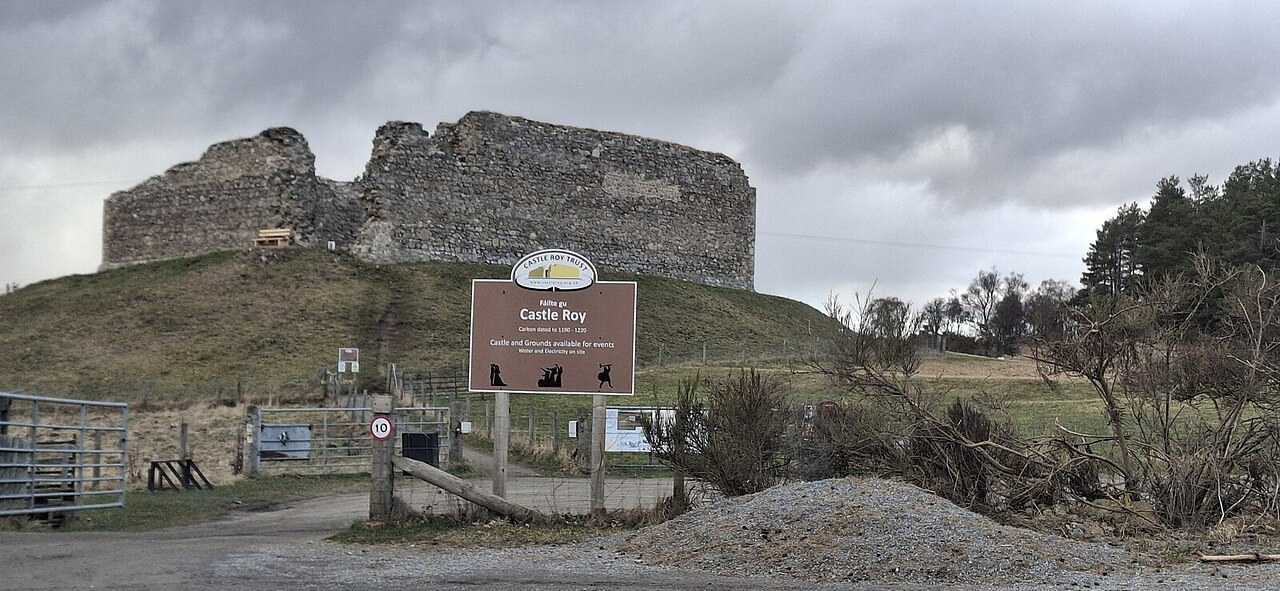
Photo: Mike Pennington · CC BY-SA 2.0 · cropped
The Fox verdict
Forest paths with a strong sense of place
Nethy Bridge combines everyday village stops with Caledonian pine woodland, historic stonework and a compact choice of outdoor activities.
The River Nethy runs through the centre and forest wraps around three sides. Start with homemade food or local produce, then choose between village woodland trails, a nine-hole moorland course and the surviving bridge, castle and church history.
Where to go
Places in Nethy Bridge
Every place below is checked against a published source, listed with what it is and how long to give it.
Local signatures
3 placesNethy House Cafe
A village cafe serving homemade soups, sandwiches, light lunches and cakes, with barista coffee from Glen Lyon Roastery.
- Visit length
- Editorial estimate: Allow around 60 minutes
- Locality
- Nethy Bridge village
- Access
- Well-behaved dogs are welcomed; there is sunny outdoor seating and a wood burner inside.
Speyside Centre
A family-run tearoom, garden centre, gift and antiques shop, and wildlife-viewing stop. The tearoom specialises in clootie dumpling and overlooks red-squirrel feeders.
- Visit length
- Editorial estimate: Allow around 75 minutes
- Locality
- Skye of Curr Road
- Access
- Dogs are welcomed, and the toddler play area has swings, slides and a play hut.
Castle Roy
A scheduled 13th-century enclosure castle with a roughly 25 by 16 metre curtain wall, pointed gateway arch, small projecting tower and probable latrine chamber.
- Visit length
- Editorial estimate: Allow around 45 minutes
- Locality
- on a natural mound
Food & drink
2 placesBalliefurth Farm Shop
A butcher, farm shop and gift shop established in 1948, selling beef, lamb and pork alongside poultry, venison, game, pies, deli goods, eggs, honey, preserves and frozen ready meals.
- Visit length
- Editorial estimate: Allow around 30 minutes
- Locality
- Nethy Bridge
The Bridge Lounge & Bar
The village's only currently listed pub or bar-style venue, with log fires, classic bar meals and outdoor dining.
- Visit length
- Editorial estimate: Allow around 75 minutes
- Locality
- village centre
- Access
- Dogs are welcome in public areas but not dining areas.
History & heritage
2 placesBridge over the River Nethy
A Category B, slightly hump-backed Thomas Telford bridge of pinned granite rubble, dated by Historic Environment Scotland to 1815-20 and seriously damaged by flooding in 1829.
- Visit length
- Editorial estimate: Allow around 20 minutes
- Locality
- over the River Nethy
Abernethy Old Parish Church and Burial Ground
A Category C late-18th-century church, substantially altered in 1874, with round-headed windows, coloured geometric glazing, a crowstepped porch, circular bellcote and local slate tombstones in the burial ground.
- Visit length
- Editorial estimate: Allow around 30 minutes
- Locality
- Nethy Bridge
Things to do
1 placeAbernethy Golf Club
A nine-hole moorland course with forest and mountain views, welcoming families, groups, visitors and golfers of all standards.
- Visit length
- Editorial estimate: Allow around 150 minutes
- Locality
- Nethy Bridge
- Access
- Families, groups, visitors and golfers of all standards are welcomed.
No places match this filter. Choose All places to reset the list.
Three ways to explore Nethy Bridge
Signature outings
Read Telford's Stonework
Pause at the three-span, slightly hump-backed bridge of pinned granite rubble that Thomas Telford's men built between 1815 and 1820.
Find Castle Roy's Gateway
Look for the pointed gateway arch, projecting tower and thick curtain wall of this scheduled 13th-century enclosure castle.
Walk Among Slate Tombstones
See the church's crowstepped porch and circular bellcote, then the burial ground's collection of local slate tombstones.
The village story
Nethy Bridge Village Guide
Telford stonework, village food and Caledonian pine paths beside the River Nethy.
The River and a Cafe Fire
The bridge that gives the village its name is a low, slightly hump-backed crossing of pinned granite rubble, thrown across the River Nethy in three spans by Thomas Telford's men between 1815 and 1820. A flood took a bite out of it in 1829. It is one of four Telford bridges here, the others carrying roads over the Aultmore Burn, the Duack Burn and a watercourse on the golf course. The river runs through the middle of everything before it joins the Spey, and forest closes in on three sides.
Start at Nethy House Cafe. The coffee is barista-made from Glen Lyon Roastery beans, the soups and cakes are homemade, and there is a wood burner inside for the days the Cairngorms remember what they are. Well-behaved dogs are welcome, and the outdoor seating catches whatever sun is going.
Farm Shop and Fireside Bar
For the makings of dinner rather than lunch, there is Balliefurth Farm Shop, a butcher and farm shop that has been open since 1948. Most of the beef and lamb comes from Balliefurth Farm itself, where the Shorthorn cattle are largely grass-fed. Alongside the meat you will find venison and game, cooked meats and pies, eggs, honey, preserves and frozen ready meals. The Premier Store covers everything else you forgot to pack.
The village's pub is the bar at the Nethy Bridge Hotel, the Bridge Lounge & Bar, which keeps log fires and classic bar meals. The kitchen has run to things like Nethy's Caesar salad with chicken, king prawn or sweet potato, tomato penne with Parmigiano Reggiano and garlic ciabatta, and battered chicken fillets with fries. Dogs are welcome in the public areas, though not where the food is served.
Red Squirrels and Forest Trails
A short way out on the Skye of Curr Road, the Speyside Centre combines a garden centre, a gift and antiques shop and a family-run tearoom whose speciality is clootie dumpling. The tables look out onto red-squirrel feeders, there is a play area for small children, and the place has been rebuilding steadily since a fire in 2016.
Walking is the main event. A network of colour-coded trails runs from a mile and a half to five miles, among them the all-abilities Riverside Trail, the wildlife-focused Wilderness Trail, the Castle Roy Loop and the old King's Road through the pines. For something longer, the Castle Roy circuit is a three-and-a-half-mile figure-of-eight from the Balnagowan Wood car park, about ninety-five metres of ascent over an hour and a half, muddy in places. The Speyside Way passes close by on its route towards Grantown-on-Spey and, eventually, the Moray coast. Abernethy Forest, more than four thousand hectares of Scots pine, birch, rowan, juniper and heather, is one of the finest surviving stretches of Caledonian pine woodland, and it holds red squirrel, pine marten, crested tit, osprey and Scottish crossbill. The community ranger, Sarah White, will tell you what is about and where.
Castle, Church and Station
Castle Roy itself is a thirteenth-century enclosure castle on a low natural mound, its curtain wall roughly twenty-five metres by sixteen and around two metres thick, with a pointed gateway arch and a small projecting tower still standing. The old parish church, altered in 1874 and called simply "elegant" in the Statistical Account of 1794, has round-headed windows, a crowstepped porch and a burial ground full of local slate tombstones. The station, built in 1863, lost its railway and became group accommodation; one man who slept there in 1967 remembered his boots frozen to the floor by morning.
Roads, Buses and the Games
Getting here is straightforward. The B970 links the village to Aviemore and Grantown-on-Spey, the touring SnowRoads route passes through, and Stagecoach service 37 runs to Aviemore station, Boat of Garten and beyond. On the second Saturday of August the Games Field fills for the Abernethy Highland Games, held here in one form or another since 1846. Outside the games, the paths are used by walkers, runners, cyclists, dog-walkers and, in winter, sometimes cross-country skiers.
Stay around Cairngorms
Make a longer stay of it
Travel Fox holiday homes around Cairngorms, linked directly to their property pages.
For homeowners
Own a holiday home near Nethy Bridge?
We manage holiday lets across the UK from 12% commission, charged after cleaning costs, with no lock-in. A co-founder visits before you decide.
How our holiday let management works →
A guide with a point of view
Written from research. Edited for real journeys.
Use the Official site links for live practical details, then use this guide for context, ideas and room to explore.
Photography credits & licences
Third-party photographs are credited to their named creators and reused under the linked Creative Commons licence or public-domain dedication. Travel Fox stores an optimised local copy; the file-specific changes and any browser-applied display crop are disclosed below. Reused photographs link both to the Wikimedia Commons source record and to the declared source image; Travel Fox's own photographs carry no such record and are marked as ours. These image licences do not cover Travel Fox text, branding or page design.
- File:Castle Roy, Nethy Bridge - geograph.org.uk - 8271591.jpg — photograph by Mike Pennington; Castle Roy, Nethy Bridge by Mike Pennington. Source record on Wikimedia Commons. Declared source image. Licence: CC BY-SA 2.0. File changes: Downloaded from Wikimedia Commons, resized to a maximum 1920px edge and encoded as an optimised JPEG. Display changes: Displayed with responsive CSS cropping.
Sources
Every place on this page is checked against a published source. Each entry links the record we used and names who publishes it.
- Bridge over the River Nethy — portal.historicenvironment.scot statutory register or public authority
- Nethy House Cafe — nethybridge.com operator, sector body or destination organisation record not machine-readable; publisher restricts automated access
- Balliefurth Farm Shop — nethybridge.com other published source record not machine-readable; publisher restricts automated access
- The Bridge Lounge & Bar — strathmorehotels-nethybridge.com other published source
- Speyside Centre — speysidecentre.com operator, sector body or destination organisation
- Castle Roy — portal.historicenvironment.scot statutory register or public authority
- Abernethy Old Parish Church and Burial Ground — portal.historicenvironment.scot statutory register or public authority
- Abernethy Golf Club — abernethygolfclub.com operator, sector body or destination organisation