
Dartmoor's food-minded stannary town
Ashburton
Ashburton pairs a strong independent food and craft scene with medieval history and walks onto Dartmoor.
- Historic role
- A stannary town since 1285
- Moorland walk
- Buckland Beacon and its carved stones
- Town character
- Independent food, craft and antiques
Photo: Colin Smith · CC BY-SA 2.0 · cropped
The Fox verdict
Come for the pies; stay for the larder, history and moor.
Ashburton is the largest town within Dartmoor National Park, yet its independent food scene and historic buildings give a visit a close-grained focus.
Pair the Old Exeter Inn and Fish Deli with St Andrew's Church or the Chapel of St Lawrence, then use the town as a base for Buckland Beacon or the nearby family and railway attractions.
Where to go
Places in Ashburton
Every place below is checked against a published source, listed with what it is and how long to give it.
Local signatures
3 placesThe Fish Deli
A small fishmonger and deli known for River Teign mussels, diver-caught scallops, smoked fish and award-winning local produce.
- Visit length
- Editorial estimate: allow around 25 minutes.
- Locality
- East Street
Church of St Andrew
A Grade I early or mid-15th-century church with a tall tower, oak work by Herbert Read, stained glass by C. E. Kempe and a pulpit by Harry Hems.
- Visit length
- Editorial estimate: allow around 45 minutes.
- Locality
- Next door to the Old Exeter Inn
River Dart Country Park
Ninety acres with an assault course, pirate ship, toddlers' beach, zip wires, low ropes, pump track, River Dart walks and the Old Sawmill cafe-bar.
- Visit length
- Editorial estimate: allow around 150 minutes.
- Locality
- Within Dartmoor National Park
Food & drink
1 place
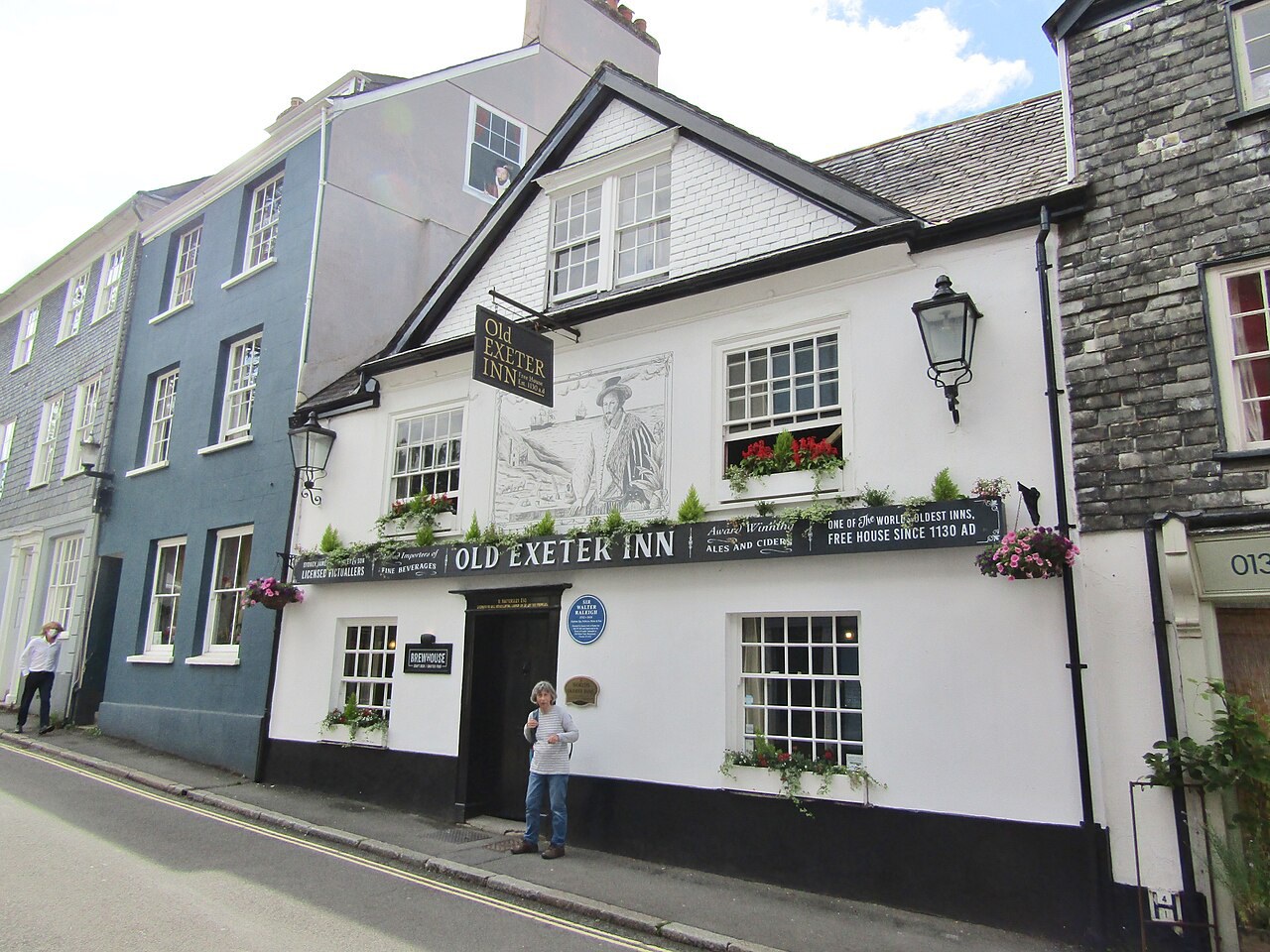
The Old Exeter Inn
A historic traditional inn and pie house with handmade shortcrust pies, a maze of small named rooms and a self-pour Otter Tap Room.
- Visit length
- Editorial estimate: allow around 75 minutes.
- Locality
- West Street
Walks & outdoors
1 placeBuckland Beacon and the Ten Commandments Stones
A walk from Ashburton's information centre up to the tor and the Ten Commandments carved into two stones.
- Visit length
- Editorial estimate: allow around 100 minutes.
- Locality
- Two miles up from Ashburton
History & heritage
3 places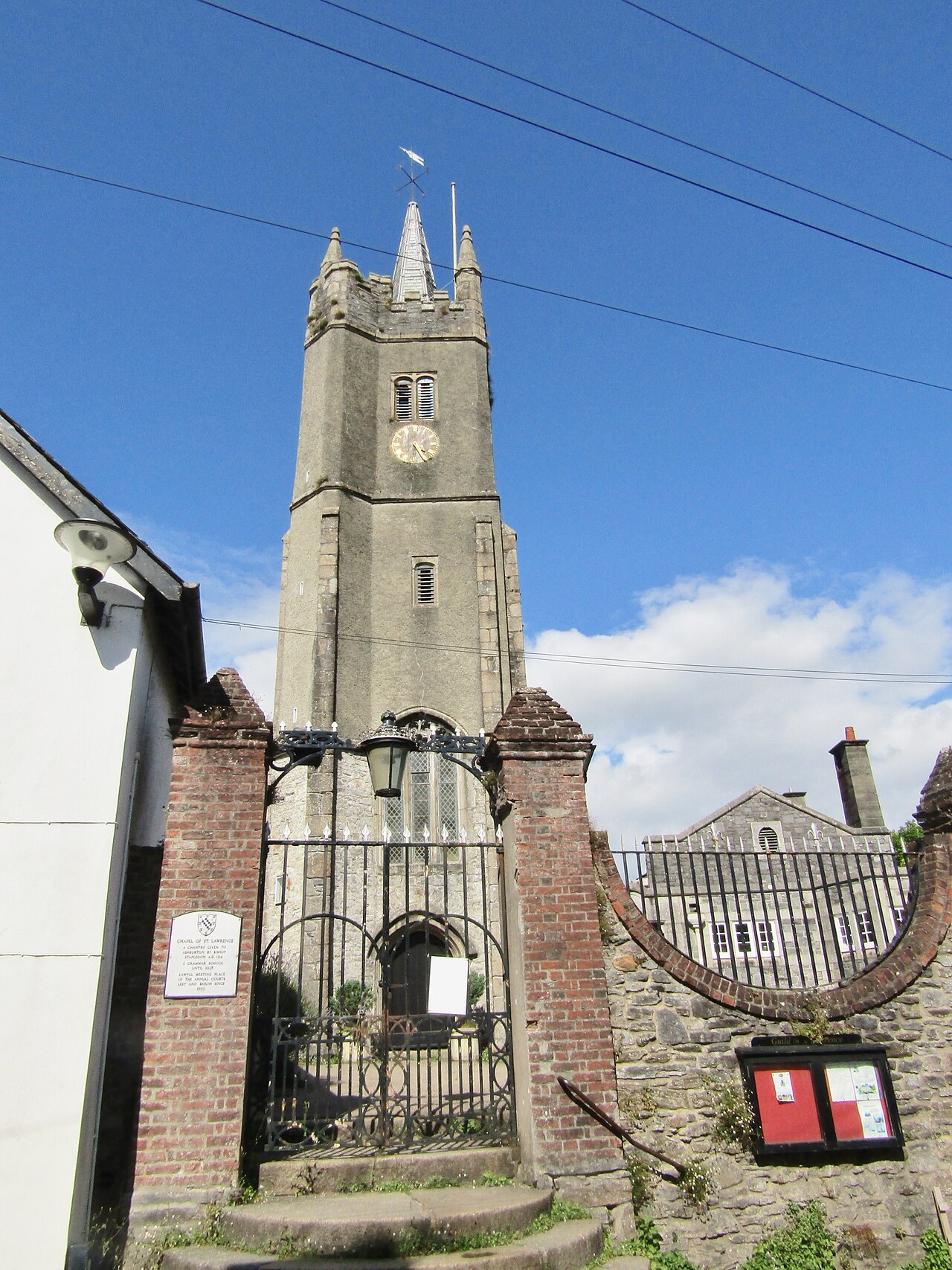
Chapel of St Lawrence
A Grade II* former chantry chapel and grammar school, now a heritage and cultural centre managed by the Guild of St Lawrence.
- Visit length
- Editorial estimate: allow around 45 minutes.
- Locality
- St Lawrence Lane
South Devon Railway
A 6.64-mile heritage steam line between Buckfastleigh and Totnes, nearby and just off the A38.
- Visit length
- Editorial estimate: allow around 105 minutes.
- Locality
- Buckfastleigh-Totnes
Buckfast Abbey
A working Benedictine abbey with gardens and its famous tonic wine, described as a short day out from Ashburton.
- Visit length
- Editorial estimate: allow around 60 minutes.
- Locality
- A few miles south via Buckfastleigh
No places match this filter. Choose All places to reset the list.
Three ways to explore Ashburton
Signature outings
Pie in a nine-century inn
The Old Exeter Inn serves handmade shortcrust pies through a maze of named rooms that includes the self-pour Otter Tap Room.
Read the stones at Buckland Beacon
The 2.7 km walk from the town's information centre climbs to the tor and its Ten Commandments carved across two stones.
Find the old grammar school
The Grade II* Chapel of St Lawrence began as a chantry chapel and later served as a grammar school for more than 600 years.
The village story
Ashburton, from pie house to portreeve
The locked Travel Fox article moves from the Old Exeter Inn and Ashburton's independent larder to moorland walks, stannary history and living civic traditions.
A historic inn and medieval streets
The Old Exeter Inn on West Street makes its pies on the premises every day: Minted Leg of Lamb with overnight-cooked lamb and redcurrant gravy in shortcrust, an Orchard Pig & Chicken of Breton-style chicken and gammon under organic pork crackling. It bills itself as England's Historic Pie House, which is a lot of billing, but the building has been trading in some form since around 1130 — it went up to house the men building St Andrew's Church next door — so it has had time to settle on a theme. The interior is a maze of small rooms with names: the Bar & Snug, the Confessional & Parlour, the Otter Tap Room where you pour your own pints. Out the back is a walled beer garden being turned by the gardener, Annie, into a wildflower apothecary garden with a cider bar and a pizzeria attached. Sir Walter Raleigh was reportedly arrested here on 19 July 1603 for treason and taken to the Tower. Sir Arthur Conan Doyle drank here while writing *The Hound of the Baskervilles*. The pub has been in the Good Beer Guide for twenty-five years running, which is the part the landlord, David, would probably rather you noticed.
Ashburton sits on the south-eastern edge of Dartmoor, in the valley of the little River Ashburn, about twenty miles north-east of Plymouth and immediately beside the A38 — there are slip roads at both ends of the town, so you are off the expressway and into medieval streets in under a minute. It is the largest town inside the National Park, with a population of about 4,170, and it does not feel like a place got up for visitors. The core is four streets — North, West, East and St Lawrence Lane — lined with rendered fronts that mostly hide older timber frames, and dozens of them are listed. On North Street there is a house with a slate-hung front cut into the four card suits, hearts and diamonds and clubs and spades, said locally to date from its days as a gaming house. The writer Philip Wilkinson looked for evidence of the gaming house and found none. It is a Co-op now.
Cafes, dining and ice cream
The food is the reason to spend a week here rather than a night. The Old Library on North Street is a daytime café run by two locally raised chefs, Amy Mitchell and Joe Suttie — no bookings, nine till three, Monday to Saturday. They do "curious croissants" loaded with smoked bacon, avocado and poached egg, and a thing called Mr Pig, slow-roasted crispy pork belly with chipotle mayo and pickled red onion in home-baked focaccia. Twice a month they clear the room and run a Dinner Club, a seven-course tasting menu at seventy pounds — braised pressed lamb with grilled chard and caponata, that sort of thing, paired with mostly European wines. The Good Food Guide files it under "Local Gem," which undersells the lamb.
Round the streets from there, Coljan on West Street is a café by day and a wine bar and restaurant by night, run by Nathan and Michelle Siddell and family — the name is a family portmanteau. The evening menu is a "4-4-4": four starters, four mains, four desserts, rotating every four weeks with the season. Café Latino on North Street is a South American coffee bar with Latin music and a monthly cocktail night called Noche Borracha; the owner, Davide Berlanda, is Italian, makes focaccia sandwiches, and welcomes dogs. "Ashburton is a really cool place to be," he told *Great British Life*. "It's quirky and has something different. Also, the community here is incredible." Rafikis on St Lawrence Lane is a vegetarian and vegan café-bar built more or less by hand by Susie and Kian, a well-travelled couple who fitted it out themselves down to the plates; it is their third venue. And at the end of the same lane is Creamo's, a small-batch ice cream shop run by Matai Jowitt, a New Zealander who learned pastry under a chef in Chagford, and his wife Rachael, a coffee roaster who grew up in Ashburton. They use Riverford organic milk, and the flavours are not shy: Firecracker Walnut is roast apples, peppercorns and a walnut and black-pepper praline. Matai started by making three-litre batches and delivering tubs around the town until the demand forced him to open a shop. "Creamo" was his great-great-grandfather's name, and the old man is on the logo.
Delis, antiques and old pubs
For the larder there is the Fish Deli on East Street, small and very good, run by Nick and Michele since 2004 — Nick is a trained chef who was sourcing fish for a Plymouth hotel at eighteen and still buys from the same day-boat fishermen. River Teign mussels, diver-caught scallops, smoked fish. The Ashburton Delicatessen on North Street is a mother-and-son affair, Sue and Robin Hudson, carrying over sixty cheeses with tasters out on the counter and award-winning fruity sausage rolls baked on site. Briar Bakery on West Street took over in 2022 from Ella, the town's much-loved baker of thirteen years, and the new team trained specifically to keep her going. And out at Dean Prior, just off the A38, Dean Court Farm Shop has a butchery run by Dave Haggett and a café doing cream teas with homemade scones. On top of the food, Ashburton keeps more than ten antique shops working together as a trail, which the *Telegraph* called Devon's best destination for antiques shopping — a strong claim to hang on a town of four thousand, though the collectors who drive down for it seem to agree.
There are three good pubs beyond the Old Exeter. The Bay Horse Inn is under new owners since 2025 — Jim, Sophie and Charlie — pulling well-kept Dartmoor Brewery Jail Ale and serving pie and mash; it keeps dog treats and blankets behind the bar and has a beer garden with a pool table and a jukebox. The Silent Whistle on St Lawrence Lane is family-run, rotates its ales from Dartmoor Brewery and St Austell, and bakes its own pizzas; it started as the Old Bottle Inn, became the Railway Hotel in 1872 when the branch line reached the town, and took its current melancholy name in 1962 when the line closed. In 1912 a local reckoned Ashburton had fourteen fully licensed premises and two beerhouses — one for every 155 people. Most are gone. The Golden Lion, the Culloden, the Duke's Head, the Blue Anchor, the Seven Stars, all cleared or shut over the last century.
Moorland walks and family adventures
The moor rises straight behind the town, so the walks start from the door. The Ashburton Circular is about five miles of riverside and field with a pub near the start, and the gentler River Ashburn walk follows the water through woods. Ashburton sits on the Dartmoor Way, the long circular route round the moor, with one stage arriving from Shipley Bridge and the next leaving for Bovey Tracey. Two miles up you reach Buckland Beacon and the Ten Commandments Stones, carved in 1927 by a landowner, William Whitley, in protest at a proposal before the Commons to swap the Ten Commandments for the Two. His sculptor, W. A. Clement, lived in a cow shed by a wood for the five weeks of the exacting work and is said to have got by on a loaf of bread a week. West of town the River Dart cuts a steep wooded gorge; Dr Blackall's Drive runs along the north rim, a near-level carriage road built in the 1880s so a local doctor could show off the valley to his guests, and it is only about eight feet wide because that is all a horse and carriage needs. Hembury Woods climbs to an Iron Age hillfort that a Norman later reused as a motte-and-bailey. In summer people swim at Spitchwick, in the deep pool below New Bridge.
Families have the River Dart Country Park, ninety acres a mile off the A38 with an assault course, a pirate ship, a bike pump track, a toddlers' beach, zip wires and the licensed Old Sawmill café-bar, plus paid canoeing and high ropes for the older ones. The nearest working railway station is Newton Abbot, about eight miles off; the Country Bus 88 links the two in under twenty minutes.
Stannary history and living traditions
The history is worth a paragraph or two once the pubs are settled. Ashburton was made a stannary town in 1285, one of four on the moor where tin was assayed and taxed — around forty percent of Dartmoor's tin passed through here, and the tinners lived under their own Stannary Law until 1896. Later the River Ashburn ran the fulling mills that turned local wool into serge for export. In the Domesday Book it is Essebretone, sixty households, worth twenty pounds to the Bishop of Exeter in 1086, up from eight in 1066 — the lord's land carried seventy-six sheep, five cattle and one cob. St Andrew's Church is Grade I, its tower finished before 1449, with a pulpit by Harry Hems of Exeter, oak carving by Herbert Read and glass by C. E. Kempe. Down St Lawrence Lane the little Chapel of St Lawrence was a chantry that became a grammar school and ran as one for six hundred years, until 1983; the explorer William John Wills, who died crossing Australia with Burke, carved his name into one of its benches as a boy. Ashburton also produced William Bickford, who invented the miner's safety fuse, and William Gifford, orphaned here and apprenticed to a shoemaker before he became the first editor of the *Quarterly Review*. The poet Stevie Smith died in the town. Ollie Watkins was born in it.
The town still appoints a portreeve every year, one of only a handful in England that bother, and on the third Saturday of July the ancient Court Leet elects Ale Tasters and Bread Weighers who process round the inns and bakeries in medieval dress, sampling the ale and weighing the loaves to check the customers are getting their money's worth, then handing out certificates to the ones that pass. In 1840 a foundling child was discovered behind the old Golden Lion inn and given a name on the spot. They called him Albert Lion.
Stay around Dartmoor
Make a longer stay of it
Travel Fox holiday homes around Dartmoor, linked directly to their property pages.
A guide with a point of view
Written from research. Edited for real journeys.
Use the Official site links for live practical details, then use this guide for context, ideas and room to explore.
Photography credits & licences
Third-party photographs are credited to their named creators and reused under the linked Creative Commons licence or public-domain dedication. Travel Fox stores an optimised local copy; the file-specific changes and any browser-applied display crop are disclosed below. Reused photographs link both to the Wikimedia Commons source record and to the declared source image; Travel Fox's own photographs carry no such record and are marked as ours. These image licences do not cover Travel Fox text, branding or page design.
- File:Ashburton - Old Exeter Inn - geograph.org.uk - 6942288.jpg — photograph by Colin Smith; Ashburton - Old Exeter Inn by Colin Smith. Source record on Wikimedia Commons. Declared source image. Licence: CC BY-SA 2.0. File changes: Downloaded from Wikimedia Commons, resized to a maximum 1920px edge and encoded as an optimised JPEG. Display changes: Displayed with responsive CSS cropping.
- File:Ashburton - Chapel of St Lawrence - geograph.org.uk - 6942920.jpg — photograph by Colin Smith; Ashburton - Chapel of St Lawrence by Colin Smith. Source record on Wikimedia Commons. Declared source image. Licence: CC BY-SA 2.0. File changes: Downloaded from Wikimedia Commons, resized to a maximum 1920px edge and encoded as an optimised JPEG. Display changes: Displayed with responsive CSS cropping.
Sources
Every place on this page is checked against a published source. Each entry links the record we used and names who publishes it.
- The Old Exeter Inn — oldexeterinn.com operator, sector body or destination organisation
- The Fish Deli — thefishdeli.co.uk operator, sector body or destination organisation
- Church of St Andrew — historicengland.org.uk statutory register or public authority record not machine-readable; publisher restricts automated access
- Chapel of St Lawrence — historicengland.org.uk statutory register or public authority record not machine-readable; publisher restricts automated access
- Buckland Beacon and the Ten Commandments Stones — dartmoor.gov.uk statutory register or public authority record not machine-readable; publisher restricts automated access
- River Dart Country Park — riverdart.co.uk operator, sector body or destination organisation
- South Devon Railway — southdevonrailway.co.uk operator, sector body or destination organisation
- Buckfast Abbey — buckfast.org.uk operator, sector body or destination organisation