
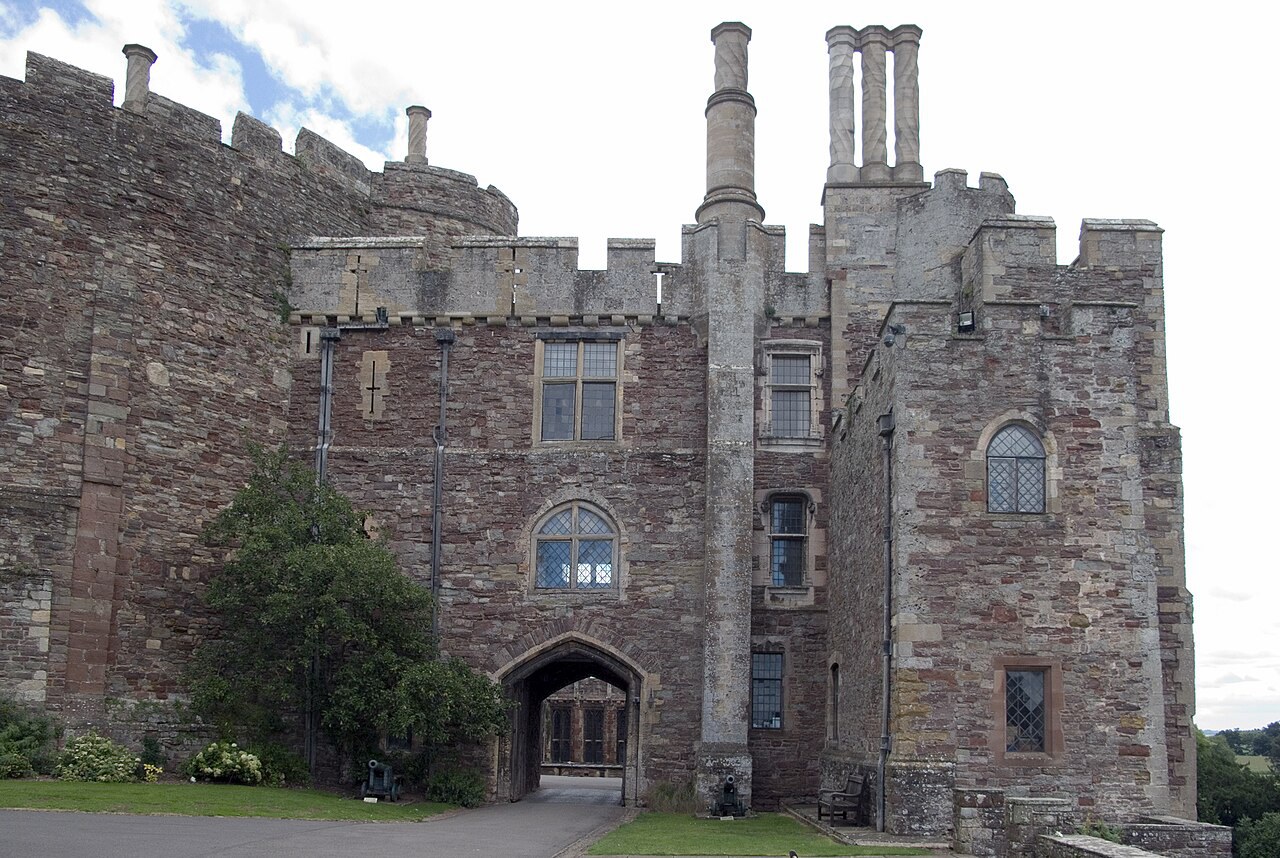
Castle, cowpox and canal
Berkeley
A Vale of Berkeley town where an 800-year family castle, the story of the first vaccination and the Severn's maritime remains shape a remarkably layered visit.
- Best for
- Castle history, vaccination heritage and Severn walks
- Give it
- A town visit with nearby waterside detours
- Don't miss
- The Temple of Vaccinia and the Purton Hulks
Photo: Fiducial · CC BY-SA 3.0 · cropped
The Fox verdict
Small town, far-reaching stories
Berkeley links a castle occupied by one family for more than 800 years with Edward Jenner's home and the garden hut where he vaccinated local people free of charge.
The castle, Jenner museum and Grade I church give the town a concentrated historical core, while Purton's canalside ship graveyard and the wetland reserve at Slimbridge extend a visit towards the Severn.
Where to go
Places in Berkeley
Every place below is checked against a published source, listed with what it is and how long to give it.
Local signatures
3 places
Start here
Berkeley Castle
The oldest continuously occupied castle in England has been home to the Berkeley family for more than 800 years; its keep includes the dungeon and cell linked to Edward II, and visits from May to October include the Walled Garden's Butterfly House.
- Visit length
- Editorial estimate: around 2 hours
- Locality
- Berkeley
Dr Jenner's House, Museum & Garden
Jenner's Grade II* early-18th-century home includes the restored Temple of Vaccinia, the garden hut where he vaccinated the local poor free of charge, as well as a Physic Garden and the Old Cyder House.
- Visit length
- Editorial estimate: around 75 minutes
- Locality
- Berkeley
Church of St Mary the Virgin
The Grade I church retains 13th-century fabric, a 12th-century south door and font, medieval wall paintings and a monument to Edward Jenner; its separate Grade I tower dates from 1753, while Dicky Pearce's grave is in the churchyard.
- Visit length
- Editorial estimate: around 45 minutes
- Locality
- Berkeley
Food & drink
2 placesThe Malt House
A family-run hotel, bar and restaurant serving classic and modern British food, with regular specials, a Speciality Sausage Board and a vegetarian selection.
- Visit length
- Editorial estimate: around 75 minutes
- Locality
- 22 Marybrook Street, Berkeley GL13 9BA
Berkeley Arms Hotel
A historic 16th-century coaching inn in the centre of Berkeley, shown on a 1543 map of the town as the Kings Inn.
- Visit length
- Editorial estimate: around 75 minutes
- Locality
- 4 Cannonbury Street, Berkeley
Walks & outdoors
1 placeSlimbridge WWT Wetland Centre
A 325-hectare reserve beside the Severn with more than 200 bird species and a 360-degree observation tower.
- Visit length
- Editorial estimate: around 2 hours 30 minutes
- Locality
- Slimbridge
History & heritage
1 placePurton Hulks
Mainland Britain's largest ship graveyard stretches for more than two miles, with over 80 abandoned vessels run aground after a 1909 riverbank collapse to protect the canal bank from tidal erosion.
- Visit length
- Editorial estimate: around 90 minutes
- Locality
- Between the River Severn and the Gloucester & Sharpness Canal at Purton
- Access
- The research describes an easy walk of about two miles from the main car park at Purton, following the Severn Way along the canal past the hulks.
No places match this filter. Choose All places to reset the list.
Three ways to explore Berkeley
Signature outings
Meet eight centuries of Berkeley history
Explore the castle keep, including the dungeon and cell linked to Edward II, before seeing the surrounding gardens.
Walk past Purton's grounded vessels
Trace the Severn Way along the canal past the hulks that were grounded to defend the bank from tidal erosion.
Look out across Slimbridge
Use the 360-degree observation tower to take in a 325-hectare reserve associated with more than 200 bird species.
The town story
Berkeley: castle walls, vaccination and the Severn
The accepted Travel Fox article moves from an 800-year family castle through the town's inns and medieval church to Jenner's vaccination story, Purton's ship graveyard and Berkeley's older records.
The castle and the Vale
Berkeley Castle has been lived in by the same family for more than 800 years, which makes it the oldest continuously occupied castle in England. The keep still holds the dungeon and the cell linked to Edward II, and from May to October the Walled Garden houses a tropical Butterfly House with 25-plus species. It is not the kind of thing most small towns have at the end of the road.
The town sits on a hill in the Vale of Berkeley, midway between Bristol and Gloucester, between the Severn and the M5. Georgian and medieval buildings line the streets, and 17th-century houses front the High Street.
Two Berkeley inns
The Malt House on Marybrook Street is a family-run hotel, bar and restaurant. The menu runs classic and modern British, with a Speciality Sausage Board. Dishes have included black pudding glazed with Stilton, pork steak with forestière sauce, halibut with lime and butter, and a roasted vegetable lasagne.
The Berkeley Arms is a 16th-century coaching inn in the centre of town. On a 1543 map it is marked as the "Kings Inn," a promotion it seems to have quietly declined to keep.
Old buildings and the last court jester
The Mariners Arms on Salter Street is the oldest building in Berkeley, dating to at least 1476. Its name comes from the days when boats could navigate up Berkeley Pill and the mariners would walk up the road to the alehouse. It recently closed, becoming a convenience store. For meat there is Adey's Organic Meats, raised in Berkeley and sold at the Stroud, Cheltenham and Thornbury farmers' markets.
The Church of St Mary the Virgin has parts dating to 1225, a 12th-century font from an earlier church, and a detached tower built in 1753 that holds ten bells. Out in the churchyard is the grave of Dicky Pearce, said to be England's last court jester, who died in 1728 falling from the Minstrels' Gallery. His epitaph was written by Jonathan Swift and begins, "HERE LIES THE EARL OF SUFFOLK'S FOOL / MEN CALLED HIM DICKY PEARCE."
Vaccination and the Severn
Edward Jenner was born here and came back as the local doctor. On 14 May 1796 he inoculated James Phipps, his gardener's eight-year-old son, with cowpox taken from a milkmaid named Sarah Nelmes, who had caught it from a cow called Blossom. It was the world's first vaccination, done in a garden hut he called the Temple of Vaccinia, now open with his house as Dr Jenner's House, Museum & Garden.
For walking, the Severn Way runs along the Gloucester & Sharpness Canal from the car park at Purton, an easy two miles past the Purton Hulks — the largest ship graveyard in mainland Britain, over 80 vessels run aground after a 1909 riverbank collapse to protect the bank from the tide. Five miles northeast is Slimbridge, 325 hectares of wetland with 200-plus bird species.
Routes, records and Domesday
The nearest station is Cam and Dursley, five miles off; Berkeley's own closed in 1964. The Stagecoach 62 runs Dursley to Bristol through the town several times a day, with the M5 at junctions 13 and 14.
When the Domesday surveyors came in 1086 they counted 262 villagers, ten mills, and valued the whole place at £170 to the lord — a considerable sum, for a town that now measures its fame in one doctor, one jester, and a cow.
Stay around Gloucestershire
Make a longer stay of it
Travel Fox holiday homes around Gloucestershire, linked directly to their property pages.
A guide with a point of view
Written from research. Edited for real journeys.
Use the Official site links for live practical details, then use this guide for context, ideas and room to explore.
Photography credits & licences
Third-party photographs are credited to their named creators and reused under the linked Creative Commons licence or public-domain dedication. Travel Fox stores an optimised local copy; the file-specific changes and any browser-applied display crop are disclosed below. Reused photographs link both to the Wikimedia Commons source record and to the declared source image; Travel Fox's own photographs carry no such record and are marked as ours. These image licences do not cover Travel Fox text, branding or page design.
- File:Entrance to Berkeley Castle.jpg — photograph by Fiducial; Own work. Source record on Wikimedia Commons. Declared source image. Licence: CC BY-SA 3.0. File changes: Downloaded from Wikimedia Commons, resized to a maximum 1920px edge and encoded as an optimised JPEG. Display changes: Displayed with responsive CSS cropping.
Sources
Every place on this page is checked against a published source. Each entry links the record we used and names who publishes it.
- Berkeley Castle — berkeley-castle.com operator, sector body or destination organisation
- Dr Jenner's House, Museum & Garden — jennermuseum.com operator, sector body or destination organisation
- Church of St Mary the Virgin — stmarys-berkeley.co.uk operator, sector body or destination organisation
- The Malt House — themalthouse.uk.com other published source
- Berkeley Arms Hotel — theberkeleyarmshotel.co.uk operator, sector body or destination organisation
- Purton Hulks — canalrivertrust.org.uk national body or asset manager
- Slimbridge WWT Wetland Centre — wwt.org.uk other published source