
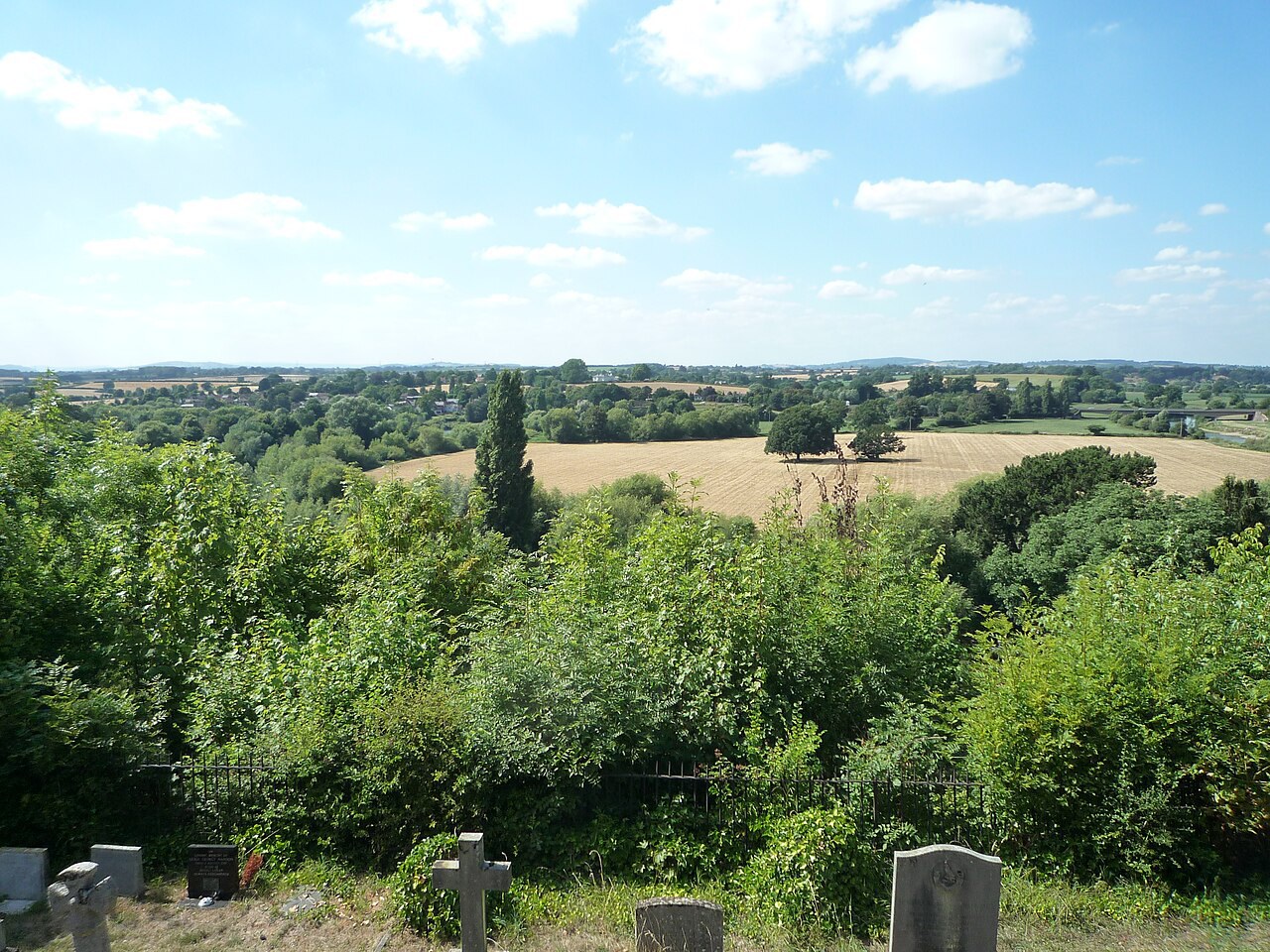
Red sandstone above the Wye
Ross-on-Wye
A market town on a red-sandstone promontory, with a horseshoe river bend below and the story of John Kyrle running through its market, gardens and church.
- Best for
- Market-house history, river views and local food
- Give it
- A day for town stops and a nearby Wye Valley sight
- Don't miss
- The horseshoe bend from the Prospect and churchyard
Photo: Fabian Musto · CC BY-SA 2.0 · cropped
The Fox verdict
A market town shaped by the Wye and the Man of Ross
Ross-on-Wye brings together a 17th-century Market House, views over the river's horseshoe bend and places associated with John Kyrle.
Start with the red-sandstone Market House and Made in Ross, then connect the Prospect gardens with St Mary the Virgin and its monuments. Riverside food and drink sit alongside a long local tourism story, while Goodrich Castle and Symonds Yat extend the day into the Wye Valley.
Where to go
Places in Ross-on-Wye
Every place below is checked against a published source, listed with what it is and how long to give it.
Local signatures
3 placesThe Hope & Anchor
A riverside pub, restaurant and inn with breakfasts, a homemade pub menu, a large terrace, a stretch tent, a bandstand and a hut serving cakes and ice creams.
- Visit length
- Editorial estimate: Allow around 90 minutes
- Locality
- down by the river
Truffles Delicatessen
A traditional deli and café with local produce, nearly 100 ciders from 20 suppliers, and its own cakes, quiches and soups.
- Visit length
- Editorial estimate: Allow around 45 minutes
- Locality
- Ross-on-Wye
Goodrich Castle
A well-preserved medieval red-sandstone castle near Ross-on-Wye.
- Visit length
- Editorial estimate: Allow around 150 minutes
- Locality
- c. 5 miles from Ross-on-Wye
Food & drink
1 placeKing's Head Hotel
A former coaching inn claiming 14th-century origins, with a conservatory restaurant and a 60-foot well as the centrepiece of the rear restaurant.
- Visit length
- Editorial estimate: Allow around 90 minutes
- Locality
- on the high street
Walks & outdoors
3 places
The Prospect Gardens
A free public park laid out by John Kyrle in the 1690s, with views over the Wye's horseshoe bend towards the Black Mountains, Brecon Beacons and Malvern Hills.
- Visit length
- Editorial estimate: Allow around 45 minutes
- Locality
- Ross-on-Wye
John Kyrle Circular Walk
A town and riverside circular commemorating John Kyrle, the Man of Ross.
- Visit length
- Editorial estimate: Allow around 120 minutes
- Locality
- town and riverside
Symonds Yat Rock
A Wye Valley beauty spot with the Symonds Yat Rock viewpoint, peregrine falcons, river rapids and canoeing.
- Visit length
- Editorial estimate: Allow around 90 minutes
- Locality
- c. 10–15 min drive from Ross-on-Wye
History & heritage
2 placesMarket House and Made in Ross
A red-sandstone Market House built in 1650–1654 to replace a wooden Booth Hall, with the Made in Ross arts and crafts co-operative in its upper storey.
- Visit length
- Editorial estimate: Allow around 45 minutes
- Locality
- the middle of Ross
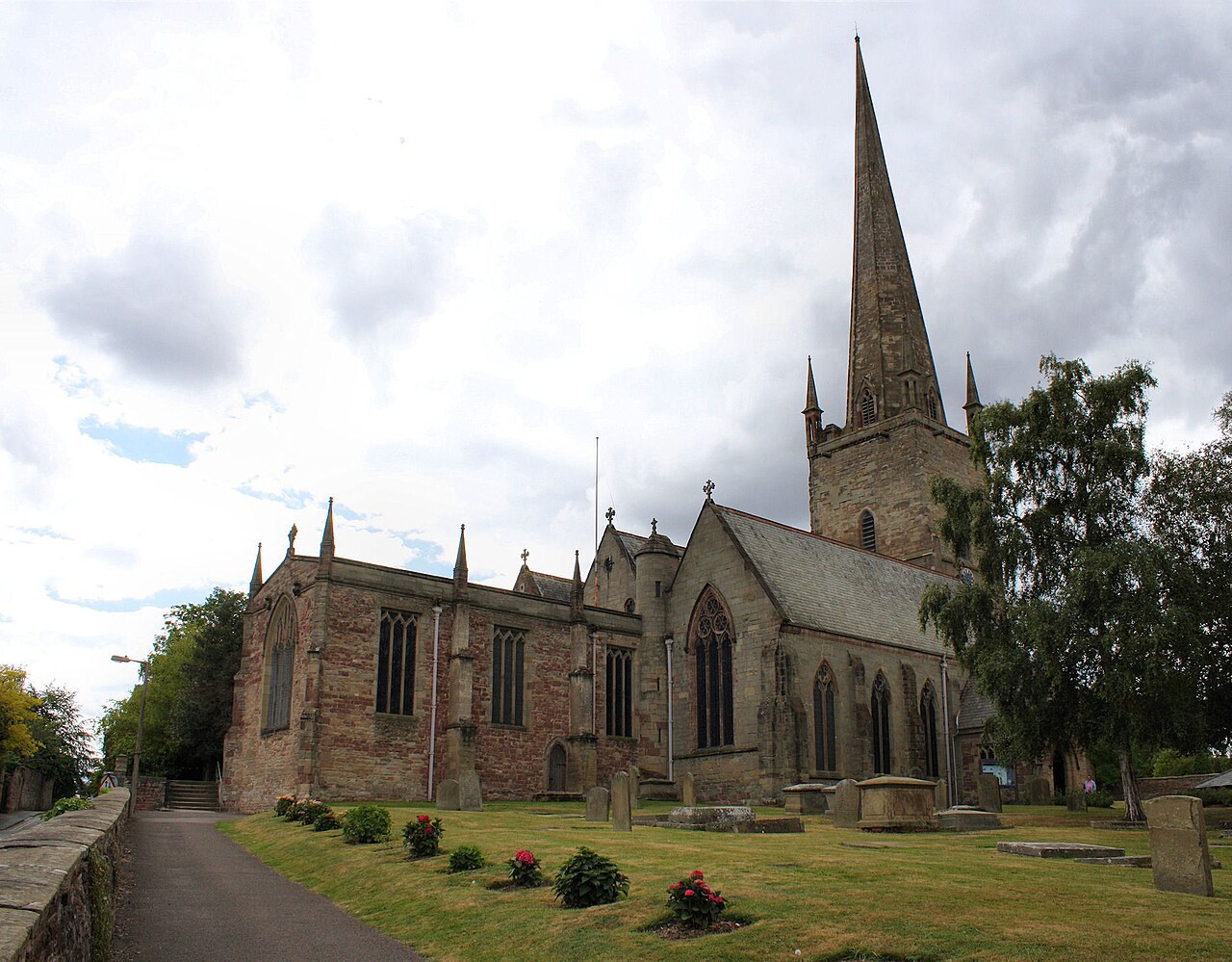
Church of St Mary the Virgin
A mainly late-13th- and 14th-century church with Herefordshire's tallest spire, Rudhall family monuments, John Kyrle's burial place and the churchyard Plague Cross.
- Visit length
- Editorial estimate: Allow around 60 minutes
- Locality
- Ross-on-Wye
No places match this filter. Choose All places to reset the list.
Three ways to explore Ross-on-Wye
Signature outings
Upstairs at the Market House
Browse work by producers living within 20 miles of Ross in the Made in Ross co-operative above the historic market space.
The horseshoe bend
Look over the Wye's horseshoe bend towards the Black Mountains, Brecon Beacons and Malvern Hills from the free Prospect gardens.
Spire, tombs and Plague Cross
See the spire Kyrle repaired, the Rudhall monuments and the churchyard cross marking the c. 315 townspeople who died in 1637.
The town story
Ross-on-Wye Town Guide
Markets, river views, local food and the long shadow of the Man of Ross, told through the accepted Travel Fox article.
Market House and the Prospect
The Market House sits on stone pillars in the middle of Ross, red sandstone, built between 1650 and 1654 to replace a wooden hall. Markets have been held under and around it since the 1650s, and they still are, on Thursdays and Saturdays. The upper storey is now Made in Ross, a co-operative selling work by people who live within twenty miles of the town.
The town sits on a red sandstone promontory above the Wye, which loops below it in a horseshoe bend. From the Prospect gardens and the churchyard you can see the bend, and beyond it the Black Mountains, the Brecon Beacons and the Malverns. The Prospect is a free public park, laid out by John Kyrle in the 1690s on land he rented from the Marquess of Bath. Kyrle turns up everywhere in Ross, of which more shortly.
Pubs beside town and river
For a drink, the Tap House is the one to find. It's a micropub in the old tap house of the Alton Court Brewery, which closed in 1956, and does six real ales and a cider on hand pump and nothing to eat. One reviewer called it "by far the best place to drink in Ross on Wye," and it is, by the same account, "truly dog friendly."
Down by the river, the Hope & Anchor has a large riverside terrace, a stretch tent and a bandstand with live music, plus a hut selling cakes and ice creams. It does breakfasts and a homemade pub menu, with afternoon teas next door in the Pavilion if you book. The King's Head, a former coaching inn on the high street, claims a 14th-century origin and has a sixty-foot well as the centrepiece of its back restaurant, which is a lot of well to build a dining room around.
Food shops and St Mary's
The food shops are good. Truffles is a deli that stocks nearly a hundred ciders from twenty suppliers and bakes its own cakes and quiches. Hanks' on Broad Street is a butcher dealing in local meat and game, jams and eggs. Out at Peterstow there's Pengethley Farm Shop.
St Mary the Virgin has the tallest spire in Herefordshire, around 205 feet, visible from every direction. Kyrle rebuilt the unsafe top of it and added the pinnacles and a bell. Inside are the Rudhall family monuments, alabaster tombs spanning the 16th and 17th centuries, and in the churchyard a Plague Cross marking around 315 townspeople who died in 1637 and were buried at night, without coffins, in a pit.
John Kyrle and the River Wye
John Kyrle, the Man of Ross, lived here on about £500 a year in a timber house opposite the Market House. He brought in a public water supply, repaired the spire and settled arguments. Alexander Pope wrote him into a poem. He is buried under the church floor.
The river is the reason people came. In 1745 the rector started running boat trips down the Wye, and by 1808 eight boats made regular excursions — the birthplace, Ross will tell you, of British tourism. There's a station at Ledbury for the trains and the M50 for the cars; the town's own railway shut in 1964 and is an industrial estate now. You can still hire a canoe and paddle down towards Symonds Yat, past herons and, if you're lucky, Goodrich Castle on the bank.
Stay around Herefordshire
Make a longer stay of it
Travel Fox holiday homes around Herefordshire, linked directly to their property pages.
A guide with a point of view
Written from research. Edited for real journeys.
Use the Official site links for live practical details, then use this guide for context, ideas and room to explore.
Photography credits & licences
Third-party photographs are credited to their named creators and reused under the linked Creative Commons licence or public-domain dedication. Travel Fox stores an optimised local copy; the file-specific changes and any browser-applied display crop are disclosed below. Reused photographs link both to the Wikimedia Commons source record and to the declared source image; Travel Fox's own photographs carry no such record and are marked as ours. These image licences do not cover Travel Fox text, branding or page design.
- File:View from the Prospect Gardens (Ross-on-Wye) - geograph.org.uk - 5894146.jpg — photograph by Fabian Musto; View from the Prospect Gardens (Ross-on-Wye) by Fabian Musto. Source record on Wikimedia Commons. Declared source image. Licence: CC BY-SA 2.0. File changes: Downloaded from Wikimedia Commons, resized to a maximum 1920px edge and encoded as an optimised JPEG. Display changes: Displayed with responsive CSS cropping.
- File:The Church of St Mary the Virgin, Ross-on-Wye (6061373831).jpg — photograph by Robert Cutts from Bristol, England, UK; The Church of St Mary the Virgin, Ross-on-Wye. Source record on Wikimedia Commons. Declared source image. Licence: CC BY 2.0. File changes: Downloaded from Wikimedia Commons, resized to a maximum 1920px edge and encoded as an optimised JPEG. Display changes: Displayed with responsive CSS cropping.
Sources
Every place on this page is checked against a published source. Each entry links the record we used and names who publishes it.
- Market House and Made in Ross — rosstc-herefordshire.gov.uk statutory register or public authority
- The Prospect Gardens — herefordshire.gov.uk statutory register or public authority
- Church of St Mary the Virgin — rossparishes.uk other published source
- The Hope & Anchor — thehopeandanchor.co.uk operator, sector body or destination organisation
- King's Head Hotel — kingshead.co.uk operator, sector body or destination organisation
- Truffles Delicatessen — ratings.food.gov.uk statutory register or public authority
- John Kyrle Circular Walk — herefordshire.gov.uk statutory register or public authority
- Goodrich Castle — english-heritage.org.uk national body or asset manager
- Symonds Yat Rock — forestryengland.uk national body or asset manager