
Mersey stories
Liverpool
A maritime, musical city of two cathedrals, waterfront museums, historic pubs and a food culture with its own name.
- Best for
- Music history, waterfront museums and independent food
- Give it
- Several days across the centre and south Liverpool
- Don't miss
- The two cathedrals linked by Hope Street
Photo: El Pollock · CC BY-SA 2.0 · cropped
The Fox verdict
A city whose landmarks come with stories
Liverpool rewards a stay that moves between Hope Street, the waterfront, music history and the city's independent tables.
Start with the two cathedrals and the Philharmonic Dining Rooms, then give the waterfront museums and Royal Albert Dock their own stretch of time. The Cavern Club, Baltic Market, World Museum and Sefton Park add distinct music, food, family and open-air stops without turning the visit into a single-theme itinerary.
Where to go
Places in Liverpool
Every place below is checked against a published source, listed with what it is and how long to give it.
Local signatures
3 placesThe Philharmonic Dining Rooms
An extravagant Victorian palace-pub built in 1898–1900, with elaborate carving, Art Nouveau metal gates and famous marble-and-mosaic gentlemen's toilets.
- Visit length
- Editorial estimate: allow around 60 minutes
- Locality
- corner of Hope Street and Hardman Street
Museum of Liverpool
A museum telling the story of Liverpool in a striking modern building at Pier Head, part of National Museums Liverpool's free-general-admission group.
- Visit length
- Editorial estimate: allow around 90 minutes
- Locality
- Pier Head
World Museum
A free five-floor museum with Ancient Egypt, natural history, a live aquarium and a planetarium, described in the source as a reliable family hit.
- Visit length
- Editorial estimate: allow around 120 minutes
- Locality
- William Brown Street
Food & drink
1 placeBaltic Market
Liverpool's first street-food market, with a rotating cast of independent traders and a full bar in the Baltic Triangle.
- Visit length
- Editorial estimate: allow around 90 minutes
- Locality
- old Cains Brewery site in the Baltic Triangle
History & heritage
6 placesLiverpool Cathedral
Giles Gilbert Scott's vast Gothic sandstone cathedral was built from 1904 to 1978; its 189-metre external length makes it the longest cathedral in the world, and its tower has views.
- Visit length
- Editorial estimate: allow around 90 minutes
- Locality
- Hope Street
Metropolitan Cathedral of Christ the King
Frederick Gibberd's modernist circular cathedral was consecrated in 1967; Edwin Lutyens' vast crypt survives beneath the present building.
- Visit length
- Editorial estimate: allow around 60 minutes
- Locality
- Hope Street
Royal Albert Dock
Opened in 1846, the dock's fireproof warehouses and hydraulic cranes transformed ship turnaround; the regenerated warehouses now form the cultural heart of the waterfront.
- Visit length
- Editorial estimate: allow around 60 minutes
- Locality
- waterfront, just south of Pier Head
The Beatles Story
The Beatles' dedicated museum at Royal Albert Dock.
- Visit length
- Editorial estimate: allow around 90 minutes
- Locality
- Royal Albert Dock
The Cavern Club
Opened as a jazz club in 1957, the Cavern hosted the Beatles 292 times between 1961 and 1963; a replica was rebuilt in 1984 on about three-quarters of the original site using original bricks.
- Visit length
- Editorial estimate: allow around 90 minutes
- Locality
- 10 Mathew Street
St Luke's Bombed Out Church
Built from 1811 to 1832, gutted in the 1941 Blitz and left roofless, St Luke's is now a memorial and open-air venue for exhibitions, film and events.
- Visit length
- Editorial estimate: allow around 45 minutes
- Locality
- top of Bold Street
Things to do
1 place
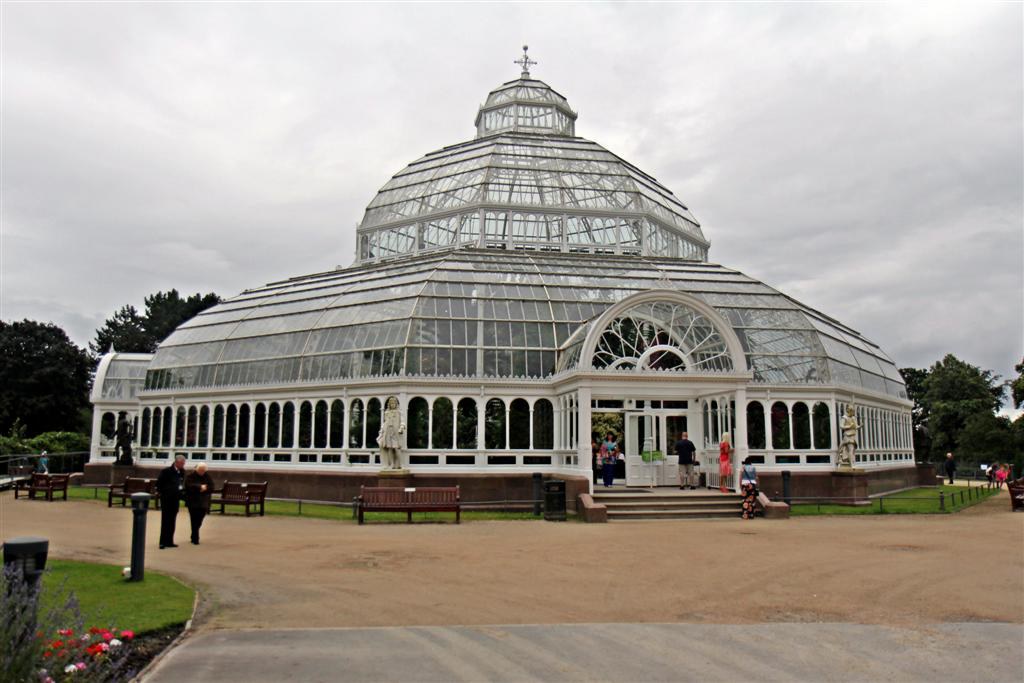
Sefton Park and Palm House
A 235-acre Victorian park with a boating lake and an 1896 glass Palm House, plus a café, playground and free events.
- Visit length
- Editorial estimate: allow around 90 minutes
- Locality
- south Liverpool
No places match this filter. Choose All places to reset the list.
Three ways to explore Liverpool
Signature outings
Climb Liverpool Cathedral
Take in Giles Gilbert Scott's vast Gothic sandstone interior before heading up for the tower views.
Step into the Cavern story
Visit the Mathew Street club where the Beatles played 292 times before the original was filled in and a replica was rebuilt with original bricks.
Circle the Palm House
Pair Sefton Park's boating lake with its glass Palm House, built in 1896 and now used for a café and free events.
The city story
Liverpool City Guide
Historic pubs, two cathedrals, independent tables, waterfront stories and Beatles landmarks in a city with a language and appetite of its own.
Hope Street and where to stay
The gentlemen's toilets at the Philharmonic Dining Rooms are a listed attraction. Not the pub — the toilets, specifically, all marble and mosaic, a listed attraction in their own right. The Phil stands on the corner of Hope Street and Hardman Street, opposite the concert hall it's named after, and it was built between 1898 and 1900 by a local architect called Walter W. Thomas. Historic England later upgraded it to Grade I on the strength of its carving, its Art Nouveau metal gates by Henry Bloomfield Bare, and the stone musicians worked in low relief around the rooms. John Lennon reputedly said the price of fame was not being able to go to the Phil for a drink. This is where a lot of visitors to Liverpool start, and it's not a bad idea.
Hope Street, which the Phil sits on, is worth understanding early, because it does something no other street in the country manages. It has a cathedral at each end. At the top is the Anglican Liverpool Cathedral, designed by Giles Gilbert Scott — who was twenty-two when he won the commission — and built slowly between 1904 and 1978. At 189 metres it is the longest cathedral in the world, an enormous slab of Gothic sandstone that you can climb for the view. At the other end is the Metropolitan Cathedral of Christ the King, a modernist circular thing consecrated in 1967, designed by Frederick Gibberd and known to everyone locally as Paddy's Wigwam, or the Mersey Funnel. It was not the original plan. Edwin Lutyens had drawn up a cathedral that would have been the second-largest church on earth with the biggest dome anywhere, and the war and the money stopped it. His vast crypt got built, and it survives down there beneath the current building.
For where to base yourself, the city sorts fairly cleanly into a few districts. The Georgian Quarter, around Hope Street, is rows of townhouses from around 1800, when this was the money end of town; it's quieter than the centre, thick with old pubs and good restaurants, and it suits couples and anyone who cares about the buildings. Ropewalks, named for the long thin streets where rope was twisted for the sailing ships, is the food-and-nightlife district — former warehouses now full of cafés, bars and music venues, with Bold Street running through it and the FACT arthouse cinema and media centre in the middle. The Baltic Triangle, south of the centre, was industrial wasteland not long ago and is now breweries, street art, food markets and a heavy weekend crowd; it skews young. And then there's the waterfront, which is the Liverpool of postcards — central, museum-heavy, and the place most people picture when they picture the city at all.
Bold Street tables and a bowl of scouse
Bold Street is where you eat. It's the densest run of independent restaurants in Liverpool, and a few names come up again and again. Maray does Middle Eastern and North African small plates, and its cauliflower shawarma has become the sort of dish people order before they've sat down. Bakchich, next door in spirit if not in cuisine, does simple Lebanese; its lunchtime falafel wrap is cited as one of the best-value meals in the city. Mowgli was founded by Nisha Katona, a Liverpool-born barrister who left the bar for Indian street food, and the chat bombs and Bunny Chow are the things to order. Leaf, a tearoom and events space, and Mamasan sit in the same stretch.
If you want to spend more, the city can absorb it. sō-lō in the Baltic Triangle is Michelin-starred, the first solo restaurant from chef Tim Allen, with dishes like native lobster with Iberico lardo and Isle of Skye scallops — though it's been closed for refurbishment, so check it's open before you plan an evening around it. The Art School Restaurant, tucked off Hope Street on Sugnall Street, does high-end British cooking: a twice-baked cheese soufflé with Ormskirk leek and Wirral watercress, salt-aged miso duck. Manifest is a thirty-cover wine bar and restaurant whose chef trained at Moor Hall and Edinburgh's 21212. NORD, over in the Baltic Triangle, is seasonal and local, with fresh fazzoletti pasta and cod kievs.
But the dish that actually belongs to the city is scouse. It's a stew — beef or lamb slow-cooked with potatoes, carrots and onion, served with pickled red cabbage or beetroot and crusty bread — and it was originally a thrift meal, whatever veg you had with the cheapest cut of meat. The name comes from lobscouse, a sailors' dish of meat and ship's biscuit brought into the port by Scandinavian and Irish crews, and by the late eighteenth century the potato version had become the regional staple. It gave the city everything, in the end: the accent is Scouse, the people are Scousers, all of it named after a sailors' stew. The meatless version, for people who couldn't afford the meat, is blind scouse. There's a Global Scouse Day, on 28 February, which tells you how seriously it's taken. Traditional cafés and pubs are where to find a bowl.
Markets, pubs and the waterfront
For a market meal, Baltic Market was the city's first street-food market and still runs Thursday to Sunday on the old Cains Brewery site, with wood-fired pizza, halloumi fries, a full bar and a frozen gin slush for anyone who wants one. And a few streets away is Chinatown, home to the oldest Chinese community in Europe, which grew out of nineteenth-century shipping links with Shanghai. The Chinese Arch on Nelson Street is about fifteen metres high, the largest outside mainland China, and the streets around it are where to go for dim sum.
The pubs reward wandering. Ye Cracke, on Rice Street in the Georgian Quarter, was Lennon's local during his art-college days, a small backstreet boozer with a back room called the War Office. Peter Kavanagh's, off Catharine Street, is named for a landlord who ran it for fifty-three years, from 1897 to 1950; he redid the interior himself in 1929 with murals by the Scottish artist Eric Robinson, stained glass by William English, and furniture of his own design. The décor includes a grand piano and, among the oddments, crocodile skin. The Baltic Fleet is a wedge-shaped free house near the docks on Wapping, with its own microbrewery, Wapping Beers, in the cellar — a rare independent survivor down by the water.
The waterfront itself is where you'll spend a good part of a stay. The Three Graces stand in a row at Pier Head: the Royal Liver Building, the Cunard Building and the Port of Liverpool Building. The Liver Building is topped by two birds, Bella and Bertie, each five and a half metres tall, designed by Carl Bernard Bartels. Legend says that if they fly away the city will cease to exist; the Scouse gloss is that Bertie faces inland to check the pubs are open while Bella watches the sea for handsome sailors. Just south is the Royal Albert Dock, opened in 1846, whose fireproof warehouses and hydraulic cranes halved the time it took to turn a ship around. It fell derelict in the twentieth century, was regenerated from 1981, and got its Royal in 2018. Its warehouses now hold most of the city's waterfront museums.
Museums, the Beatles and open air
Nearly all of them are free. National Museums Liverpool runs nine sites on free general admission, several of them clustered here. The Museum of Liverpool at Pier Head tells the city's story in a sharp modern building. The Merseyside Maritime Museum and the International Slavery Museum sit in the dock; the second confronts, directly and without softening it, the port's central role in the transatlantic slave trade. Tate Liverpool occupies a warehouse converted by James Stirling and opened in 1988, though it's mid-renewal, so check the status. The Beatles Story is here too. Over on William Brown Street, the Walker Art Gallery holds one of the best collections in England outside London, and the World Museum has five floors, a live aquarium and a planetarium — the reliable rainy-afternoon answer if you've brought children.
You can't avoid the Beatles here and there's no reason to try. The Cavern Club on Mathew Street opened in 1957 as a jazz club; the band played it 292 times between 1961 and 1963, and it was here that Brian Epstein first saw them and signed on as manager. The original was filled in during Merseyrail construction in 1973 and rebuilt in 1984 on about three-quarters of the old site, using fifteen thousand of the original bricks. Penny Lane is a real street in the south of the city, near where Lennon and McCartney grew up, and the shelter in the middle of the roundabout and the barber were real things on their bus route into town. Strawberry Field, out in Woolton, was a Salvation Army children's home near Lennon's boyhood house; he played in its garden and looked forward to its summer fête, and the red gate now fronts a visitor centre. The airport is named after him, the first British airport named after a person, with the strapline "Above us only sky."
For open air, Sefton Park is 235 acres of Victorian parkland in the south with a boating lake and a glass Palm House built in 1896, now given over to a café, a playground and free events. St Luke's, at the top of Bold Street, is the church people call the Bombed Out Church — built between 1811 and 1832, gutted in the Blitz of 1941, and left a roofless shell ever since, now used for open-air exhibitions and film. Otterspool Promenade runs along the Mersey, and a little further north Crosby Beach holds Antony Gormley's Another Place, a hundred cast-iron figures standing along the tideline and looking out to sea.
Moving through the pool of life
The city moves easily. Lime Street is the main station, the oldest grand terminus main-line station still working anywhere in the world, with direct trains to Manchester and London. Merseyrail is the electric metro underneath, its Wirral line diving under the river through the Mersey Railway Tunnel to New Brighton, West Kirby and Chester. Two road tunnels run under the river as well — Queensway, opened in 1934 and hailed at the time as the eighth wonder of the world, and Kingsway. The airport is about seven miles south. Beyond the city, Chester's Roman walls are forty minutes by train, Knowsley Safari Park's five-mile drive-through is twenty minutes away, and the Mersey Ferry still crosses from Pier Head to the Wirral — the same fifty-minute run that Gerry Marsden put in a song, and the reason the Pier Head terminal now carries his name.
Carl Jung, who dreamed about Liverpool in 1927 and never once visited, called it "the pool of life." It's the kind of thing a city likes to have said about it, and Liverpool has kept it. The birds on the Liver Building have kept their side too, facing carefully apart — one to the pubs, one to the sea — so that the city can go on standing, which by local reckoning is the whole point of them.
Stay around Merseyside
Make a longer stay of it
Travel Fox holiday homes around Merseyside, linked directly to their property pages.
A guide with a point of view
Written from research. Edited for real journeys.
Use the Official site links for live practical details, then use this guide for context, ideas and room to explore.
Photography credits & licences
Third-party photographs are credited to their named creators and reused under the linked Creative Commons licence or public-domain dedication. Travel Fox stores an optimised local copy; the file-specific changes and any browser-applied display crop are disclosed below. Reused photographs link both to the Wikimedia Commons source record and to the declared source image; Travel Fox's own photographs carry no such record and are marked as ours. These image licences do not cover Travel Fox text, branding or page design.
- File:The Palm House, Sefton Park, Liverpool (geograph 3147392).jpg — photograph by El Pollock; El Pollock. Source record on Wikimedia Commons. Declared source image. Licence: CC BY-SA 2.0. File changes: Downloaded from Wikimedia Commons, resized to a maximum 1920px edge and encoded as an optimised JPEG. Display changes: Displayed with responsive CSS cropping.
Sources
Every place on this page is checked against a published source. Each entry links the record we used and names who publishes it.
- The Philharmonic Dining Rooms — historicengland.org.uk statutory register or public authority record not machine-readable; publisher restricts automated access
- Liverpool Cathedral — liverpoolcathedral.org.uk operator, sector body or destination organisation
- Metropolitan Cathedral of Christ the King — liverpoolmetrocathedral.org.uk operator, sector body or destination organisation
- Royal Albert Dock — albertdock.com operator, sector body or destination organisation
- Museum of Liverpool — liverpoolmuseums.org.uk operator, sector body or destination organisation
- The Beatles Story — beatlesstory.com operator, sector body or destination organisation
- The Cavern Club — cavernclub.com operator, sector body or destination organisation
- Baltic Market — balticmarket.co.uk operator, sector body or destination organisation
- World Museum — historicengland.org.uk statutory register or public authority record not machine-readable; publisher restricts automated access
- Sefton Park and Palm House — palmhouse.org.uk operator, sector body or destination organisation
- St Luke's Bombed Out Church — slboc.com other published source