
Woodland garden, coast and steam
Exbury
A small estate hamlet where a 200-acre Rothschild garden, miniature railway and paths towards Lepe set the pace.
- Best for
- Woodland gardens and coastal walking
- Give it
- A garden-led half day
- Don't miss
- Peak garden colour from late April to early May
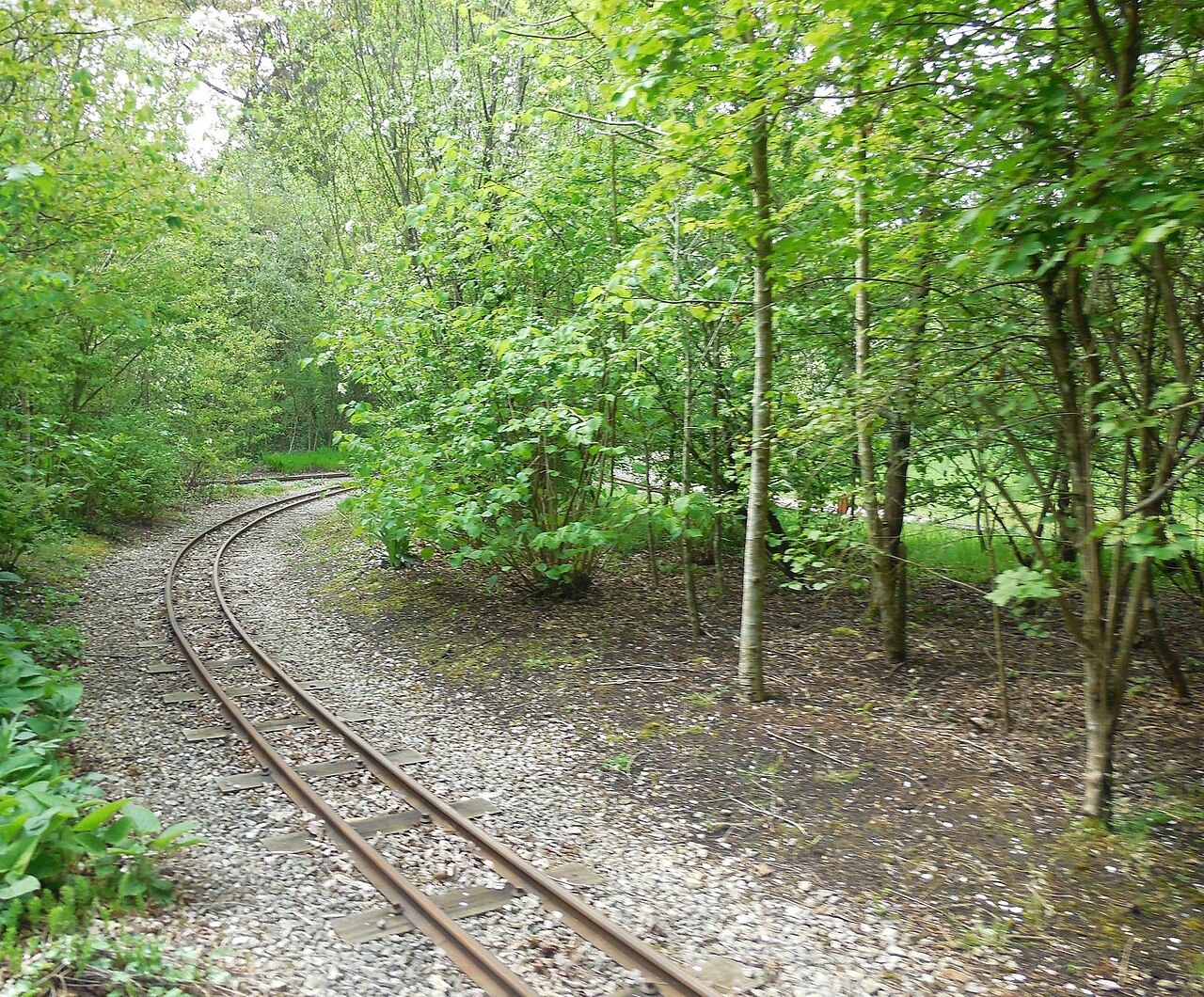
Photo: Paul Gillett · CC BY-SA 2.0 · cropped
The Fox verdict
Come for the garden, then follow Exbury towards the coast
Exbury is a small estate hamlet whose strongest visitor choices are the Rothschild woodland garden, its steam railway and the landscape around Lepe.
The 200-acre garden is the clear centre of a visit, with rhododendrons, azaleas, camellias and magnolias backed by the miniature railway and Mr Eddy's tea rooms. Beyond it, the Lepe Loop and Lepe Country Park add coast, countryside and bird-rich nature reserve, while St Katherine's and the Royal Oak supply history and a nearby pub stop.
Where to go
Places in Exbury
Every place below is checked against a published source, listed with what it is and how long to give it.
Local signatures
3 placesExbury Gardens
A 200-acre informal woodland garden known for rhododendrons, azaleas, camellias and magnolias, with peak display in late April to early May.
- Visit length
- Editorial estimate: Allow around 2 hours
- Locality
- Exbury
Lepe Country Park
A coastal country park with a mile-long beach, pine-fringed low cliffs, wildflower meadows and a nature reserve rich in wading birds.
- Visit length
- Editorial estimate: Allow around 90 minutes
- Locality
- Lepe
The Royal Oak
A traditional family-run country pub dating from 1848, when it began as a tearoom and accommodation for cyclists, with real ales, ciders and homemade food.
- Visit length
- Editorial estimate: Allow around 90 minutes
- Locality
- Hilltop, Beaulieu
Food & drink
1 placeMr Eddy's Restaurant and Tea Rooms
The main food offer serving Exbury, providing refreshments for visitors to the garden and steam railway.
- Visit length
- Editorial estimate: Allow around 45 minutes
- Locality
- At Exbury Gardens
Walks & outdoors
1 placeThe Lepe Loop
A five-mile circular coast-and-countryside walk around Lepe and Exbury, combining mostly easy walking with gentle gradients.
- Visit length
- Editorial estimate: Allow around 2½ hours
- Locality
- Around Lepe and Exbury
- Access
- Mostly easy walking with gentle gradients, gates and three stiles.
History & heritage
1 placeChurch of St Katherine
A Grade II church built in 1907–08, retaining a 13th-century Purbeck-stone font from the earlier chapel and now on the Heritage at Risk register.
- Visit length
- Editorial estimate: Allow around 45 minutes
- Locality
- Exbury
Things to do
1 place
Exbury Gardens Steam Railway
The Rhododendron Line is a 1¼-mile, 12¼-inch-gauge railway inspired by Leopold de Rothschild and opened in August 2001.
- Visit length
- Editorial estimate: Allow around 45 minutes
- Locality
- Exbury Gardens
No places match this filter. Choose All places to reset the list.
Three ways to explore Exbury
Signature outings
Steam through the garden
Take the 1¼-mile Rhododendron Line, conceived by Leopold de Rothschild and opened in 2001.
Find the surviving font
See the 1907–08 Church of St Katherine, where a 13th-century Purbeck-stone font survived the rebuilding of two earlier churches.
Circle Lepe and Exbury
Follow the five-mile Lepe Loop through coast and countryside on a mostly easy route with three stiles.
The village story
Exbury Village Guide
A locked eight-paragraph story of a moved estate hamlet shaped by gardens, steam, coast and wartime memory.
An Estate Hamlet and Its Woodland Garden
A water tower stands over Exbury, built to supply a garden. That tells you most of what you need to know about the place. This is an estate hamlet on the southern edge of the New Forest, a mile or so from the Solent, made of buff-coloured brick cottages that were put up all at once in the 1820s to house estate workers. There is no pub in the village and no shop. What there is, instead, is 200 acres of rhododendrons.
The gardens are the reason to come. Lionel Nathan de Rothschild bought the near-derelict Exbury House in 1919 and spent the rest of his life on the woodland garden — the acid soil and gentle climate suited rhododendrons, azaleas, camellias and magnolias. He described himself as a "banker by hobby but a gardener by profession." The peak display runs late April to early May, when the Daffodil Meadow and the River of Gold do their work. One of the most famous hybrids raised here, in 1933, is a rhododendron called Naomi, named after his daughter.
Steam, Tea and the Nearest Pub
Since 2001 you can see the garden by steam. The Exbury Gardens Steam Railway is a 1¼-mile miniature line, and the ironwork on its station carries the Rothschild five-arrow crest, cast by the Ballantine Bo'ness Iron Company. It was Leopold de Rothschild's idea.
For food, there is Mr Eddy's Restaurant and Tea Rooms at the gardens, which feeds the garden and railway visitors. For a pub you have to leave the village. The nearest is the Royal Oak up at Hilltop on the Beaulieu road, which advertises an excellent range of real ales and ciders and homemade food. It started life in 1848 as a tearoom and lodging for cyclists.
Coast Paths and St Katherine's
The walking is the other draw. The Lepe Loop is a five-mile circular around Lepe and Exbury, mostly easy going with three stiles. A slightly longer route, just under six miles, starts at the gardens and runs through field and woodland paths to Lepe, where the views open across the Solent to the Isle of Wight. Lepe Country Park sits about a mile and a half away — a mile-long beach with pine-fringed low cliffs and a nature reserve full of wading birds.
The Church of St Katherine was built in 1907, the third church on more or less the same ground: it replaced an 1827 church, which had replaced a medieval chapel first mentioned in 1291. Cistercian monks from Beaulieu Abbey used to cross the river on stepping-stones to serve that chapel. The 13th-century Purbeck-stone font survived all the rebuilding. The church is now on the Heritage at Risk register, its stonework badly eroded.
Wartime Memory and the Road In
There is a war in the village's recent memory too. In 1942 the Royal Navy requisitioned Exbury House, code-named it HMS Mastodon, billeted 300 men in barracks and used the place to help plan the Dieppe raid and D-Day. Down at Lepe they built Mulberry Harbour caissons and ran the PLUTO fuel pipeline out under the Solent.
Getting here means driving — Brockenhurst station is ten miles off and the buses barely run. You reach it along the B3054 through Beaulieu, past the water tower, into a village that was moved here on purpose.
Stay around New Forest
Make a longer stay of it
Travel Fox holiday homes around New Forest, linked directly to their property pages.
A guide with a point of view
Written from research. Edited for real journeys.
Use the Official site links for live practical details, then use this guide for context, ideas and room to explore.
Photography credits & licences
Third-party photographs are credited to their named creators and reused under the linked Creative Commons licence or public-domain dedication. Travel Fox stores an optimised local copy; the file-specific changes and any browser-applied display crop are disclosed below. Reused photographs link both to the Wikimedia Commons source record and to the declared source image; Travel Fox's own photographs carry no such record and are marked as ours. These image licences do not cover Travel Fox text, branding or page design.
- File:Steam Railway tracks, Exbury Gardens - geograph.org.uk - 4949715.jpg — photograph by Paul Gillett; Steam Railway tracks, Exbury Gardens by Paul Gillett. Source record on Wikimedia Commons. Declared source image. Licence: CC BY-SA 2.0. File changes: Downloaded from Wikimedia Commons, resized to a maximum 1920px edge and encoded as an optimised JPEG. Display changes: Displayed with responsive CSS cropping.
Sources
Every place on this page is checked against a published source. Each entry links the record we used and names who publishes it.
- Exbury Gardens — exbury.co.uk operator, sector body or destination organisation
- Exbury Gardens Steam Railway — exbury.co.uk operator, sector body or destination organisation
- Mr Eddy's Restaurant and Tea Rooms — exbury.co.uk other published source
- Church of St Katherine — historicengland.org.uk statutory register or public authority record not machine-readable; publisher restricts automated access
- Lepe Country Park — hants.gov.uk statutory register or public authority record not machine-readable; publisher restricts automated access
- The Lepe Loop — newforestnpa.gov.uk statutory register or public authority
- The Royal Oak — theroyaloakbeaulieu.co.uk operator, sector body or destination organisation