
Stone town by the sea
Stromness
A winding flagstone street, harbour piers and lanes pressed between the shore and the granite rise of Brinkie's Brae.
- Best for
- Maritime history, modern art and coastal walking
- Give it
- A full day, or longer for the 6.5km Warebeth walk
- Don't miss
- The flagstones, harbour piers and view from Brinkie's Brae
Photo: Graeme Yuill · CC BY-SA 2.0 · cropped
The Fox verdict
A harbour town whose stories face the water
Stromness brings Orkney's seafaring past, twentieth-century art and coastal walking together along one winding shoreline street.
Old stone houses turn their gable-ends towards the sheltered harbour, while lanes spill uphill from the flagstones. The Pier Arts Centre, Stromness Museum, Login's Well and the coast towards Warebeth make the town's links with art, Arctic exploration and wartime Orkney tangible.
Where to go
Places in Stromness
Every place below is checked against a published source, listed with what it is and how long to give it.
Local signatures
3 places
Start here
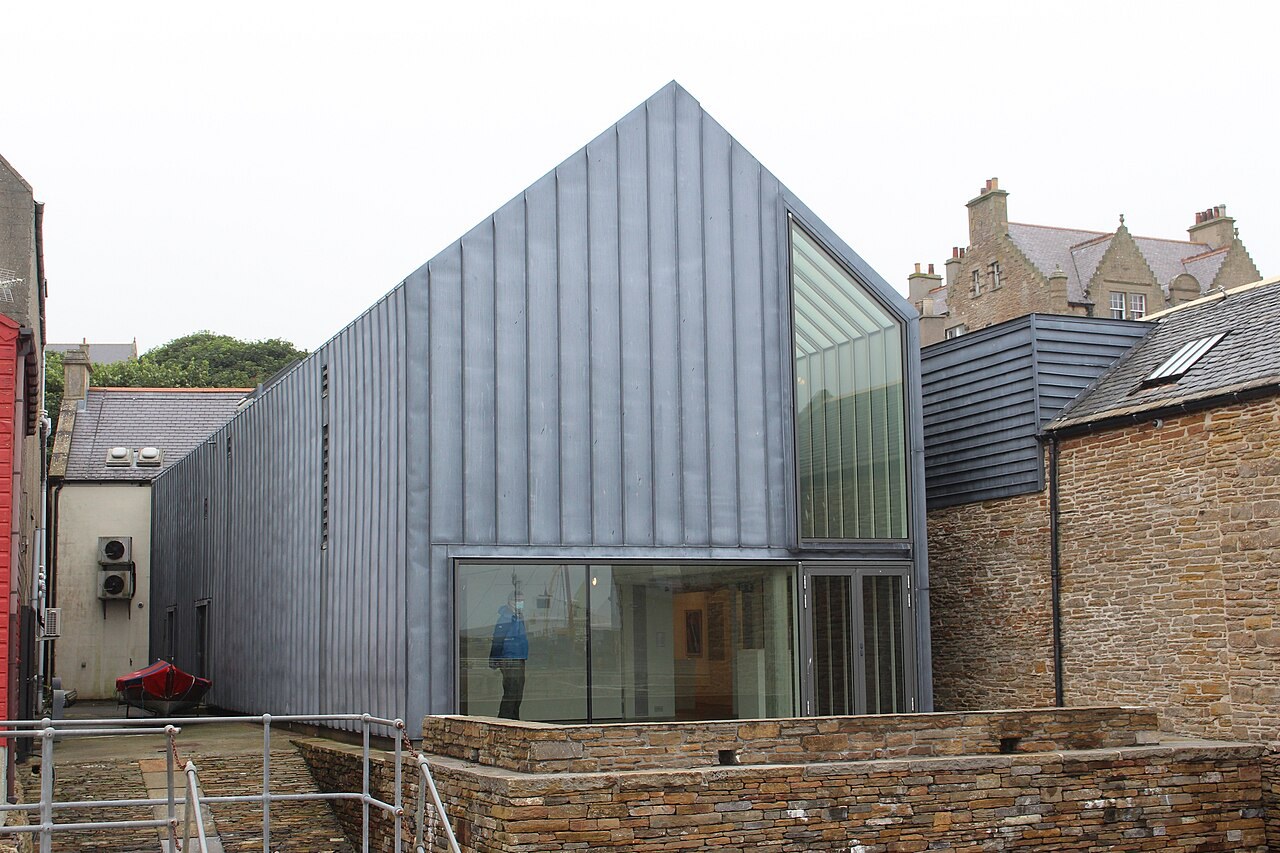
Pier Arts Centre
Margaret Gardiner's collection of twentieth-century British art founded this free-admission centre in 1979, in former Hudson's Bay Company recruiting premises.
- Visit length
- Editorial estimate: around 75 minutes
- Locality
- On the Stromness-to-Warebeth route
- Access
- Admission is free; the centre opens Tuesday to Saturday.
Stromness Museum
Orkney's Museum of Natural and Maritime History includes a lower gallery on nineteenth-century Orkney–Canada Hudson's Bay links and portraits of John Rae and George Mackay Brown.
- Visit length
- Editorial estimate: around 75 minutes
- Locality
- On the Stromness-to-Warebeth route
Ness Battery
A Second World War coastal-defence compound on the route from Stromness to Warebeth.
- Visit length
- Editorial estimate: around 75 minutes
- Locality
- Just west of town
- Access
- Tours are by appointment.
Food & drink
1 place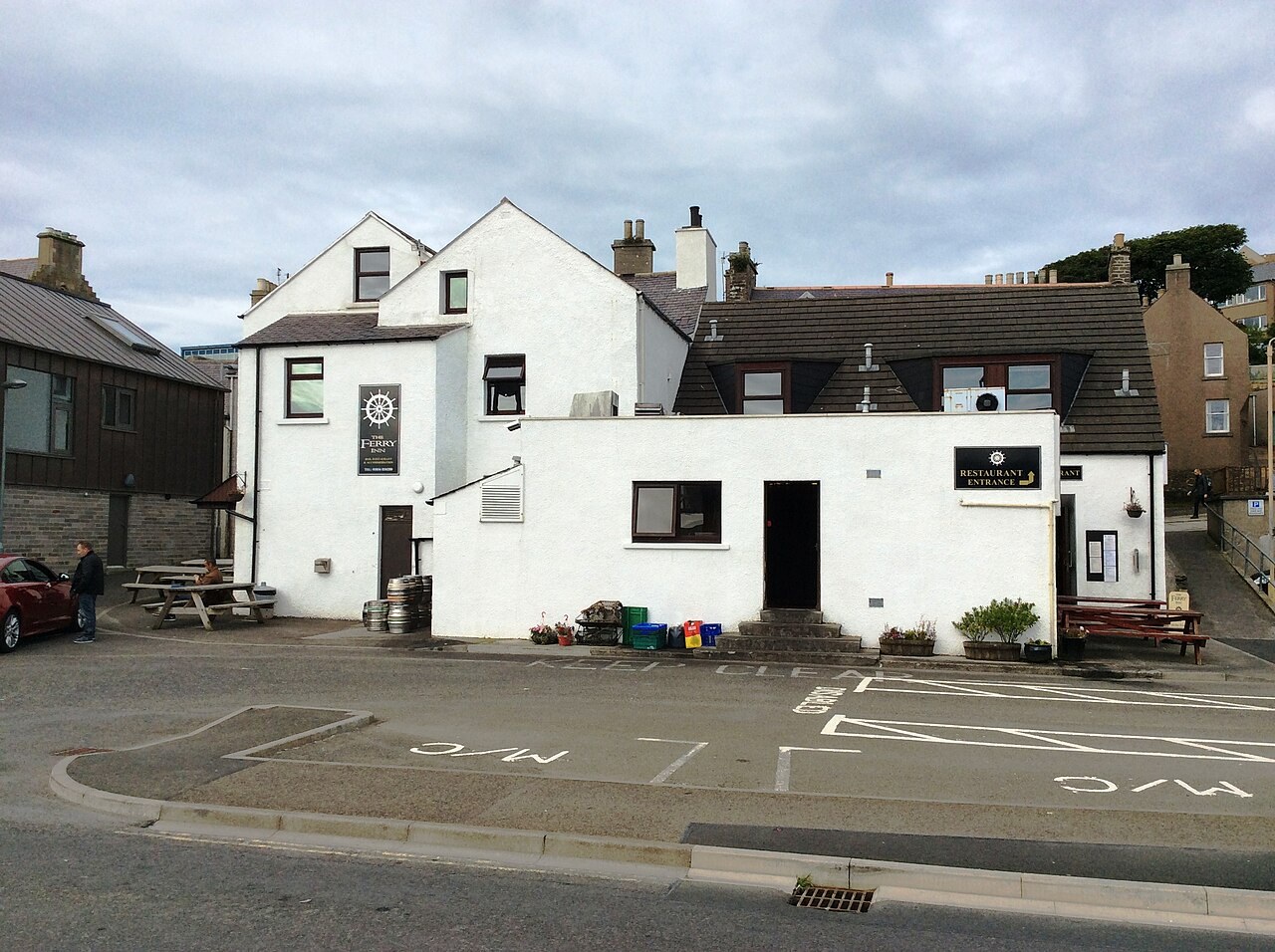
The Ferry Inn
A traditional inn serving fresh local seafood, Orkney beef, lamb and dairy, with local cask ales and a speciality in single malts, gins and rums.
- Visit length
- Editorial estimate: around 90 minutes
- Locality
- 10 John Street, on the harbourfront
- Access
- Booking is advised in peak season.
Walks & outdoors
1 placeBrinkie's Brae
A climb up the granite hill gives panoramic views over the harbour and beyond; local legend links the brae to a woman who sold fair winds to sailors.
- Visit length
- Editorial estimate: around 60 minutes
- Locality
- Behind the town
History & heritage
2 placesLogin's Well
This reopened well, now behind a glass door, supplied water to Captain Cook's ships, Hudson's Bay Company vessels and Franklin's Erebus and Terror.
- Visit length
- Editorial estimate: around 15 minutes
- Locality
- On the main street
Warebeth Cemetery
The old coastal graveyard holds George Mackay Brown's grave and the remains of a Norwegian fishing boat.
- Visit length
- Editorial estimate: around 30 minutes
- Locality
- On the coast west of town
No places match this filter. Choose All places to reset the list.
Three ways to explore Stromness
Signature outings
See Gardiner's collection
Visit the Pier Arts Centre to see the twentieth-century British art collection Margaret Gardiner gave to Orkney.
Take in Brinkie's Brae
Climb the granite hill behind town for panoramic views over Stromness harbour and beyond.
Settle in at the Ferry Inn
Pair fresh local food with Orkney cask ale, or choose from the inn's single malts, gins and rums.
The town story
Stromness Town Guide
Follow the flagstones through a town where harbour life, Arctic voyages, art and coastal paths share the same narrow shoreline.
Flagstones and the Harbourfront
The main street is a single winding line of flagstones, hugging the shore so closely that the old stone houses turn their gable-ends to the water, many with their own piers and slipways. It is essentially the whole town: one paved thoroughfare running from the pierhead to the Point of Ness, with a tumbling network of lanes and alleyways branching off it. Some of them have names — Khyber Pass, Puffer's Close — that suggest the people naming lanes here were not short of imagination.
The Ferry Inn sits on the harbourfront at 10 John Street, and it is the sole surviving traditional pub in the town centre; pubsgalore lists nine local establishments as closed. It has been a must-visit for over thirty years and has won CAMRA's Northern Isles Pub of the Year more than once. The cellar is racked for up to ten local cask ales, with four handpulls on the bar and a speciality line in single malts, gins and rums. The kitchen keeps things fresh and local — Orkney seafood, beef, lamb and dairy, local breads and biscuits — and opens daily from half past twelve. Book in peak season.
A Landmark Hotel and Independent Shops
Up on Victoria Street, the Stromness Hotel is the town's most prominent building, a Victorian landmark overlooking the harbour. During the Second World War, with the naval anchorage at Scapa Flow to protect, it became the army headquarters for Orkney and Shetland.
For provisions, E. Flett the butcher trades in Orkney meat, Bayleaf Deli is the deli on the main street, and Argo's Bakery handles the bread and bakes. Stromness Books & Prints keeps an independent bookshop going on the flagstones, alongside studios, galleries, a vintage paper shop and a dive shop.
Explorers, Artists and Poets
The town is generous with its history for its size. A statue of Dr John Rae stands here — the Orcadian Arctic explorer who learned from Inuit hunters the fate of Franklin's lost 1845 expedition, reported that the men had resorted to cannibalism, and was shunned by the Victorian establishment for saying so. Login's Well, on the main street and recently reopened behind a glass door, once watered Captain Cook's Resolution and Discovery, the Hudson's Bay Company's ships, and Franklin's own Erebus and Terror before they sailed.
The poet George Mackay Brown lived his final years in a top-floor flat at Mayburn Court, across from Stromness Museum, and is buried west of town at Warbeth. Margaret Gardiner left her collection of twentieth-century British art to found the Pier Arts Centre in 1979; admission is free, Tuesday to Saturday.
The Coast and Granite Heights
The walking is coastal. The path to Warebeth runs 6.5km, about two and a half hours, past the Ness Battery and out to a beach named from the Scots word for seaweed, with views across Hoy Sound to Hoy and Graemsay and the chance of orca and feeding gannets near the Kirk Rocks. Brinkie's Brae, the granite hill behind the town, repays the climb with the whole harbour laid out below.
Ferries, Roads and Silence
There is no railway — Orkney never had one. NorthLink ferries cross to Scrabster on the mainland, and the A965 reaches Kirkwall in about twenty-five minutes. Brown's gravestone at Warbeth carries his own instruction: "Carve the runes, then be content with silence."
Stay around Orkney
Make a longer stay of it
Travel Fox holiday homes around Orkney, linked directly to their property pages.
For homeowners
Own a holiday home near Stromness?
We manage holiday lets across the UK from 12% commission, charged after cleaning costs, with no lock-in. A co-founder visits before you decide.
How our holiday let management works →
A guide with a point of view
Written from research. Edited for real journeys.
Use the Official site links for live practical details, then use this guide for context, ideas and room to explore.
Photography credits & licences
Third-party photographs are credited to their named creators and reused under the linked Creative Commons licence or public-domain dedication. Travel Fox stores an optimised local copy; the file-specific changes and any browser-applied display crop are disclosed below. Reused photographs link both to the Wikimedia Commons source record and to the declared source image; Travel Fox's own photographs carry no such record and are marked as ours. These image licences do not cover Travel Fox text, branding or page design.
- File:Pier Arts Centre Extension, Stromness - geograph.org.uk - 7029542.jpg — photograph by Graeme Yuill; Pier Arts Centre Extension, Stromness by Graeme Yuill. Source record on Wikimedia Commons. Declared source image. Licence: CC BY-SA 2.0. File changes: Downloaded from Wikimedia Commons, resized to a maximum 1920px edge and encoded as an optimised JPEG. Display changes: Displayed with responsive CSS cropping.
- File:The Ferry Inn, Stromness - geograph.org.uk - 5529326.jpg — photograph by Bill Henderson; The Ferry Inn, Stromness by Bill Henderson. Source record on Wikimedia Commons. Declared source image. Licence: CC BY-SA 2.0. File changes: Downloaded from Wikimedia Commons, resized to a maximum 1920px edge and encoded as an optimised JPEG. Display changes: Displayed with responsive CSS cropping.
Sources
Every place on this page is checked against a published source. Each entry links the record we used and names who publishes it.
- Pier Arts Centre — pierartscentre.com operator, sector body or destination organisation
- Stromness Museum — stromnessmuseum.org.uk operator, sector body or destination organisation
- Login's Well — orkney.com other published source
- Ness Battery — portal.historicenvironment.scot statutory register or public authority
- Warebeth Cemetery — orkney.com other published source
- Brinkie's Brae — orkney.com other published source
- The Ferry Inn — ferryinn.com operator, sector body or destination organisation