
Austen's village, fully revealed
Chawton
Two complementary literary houses, an intimate Hampshire street and a landscape made for exploring on foot.
- Best for
- Literary history and village walks
- Give it
- A full day at an unhurried pace
- Don't miss
- Austen's writing table and the Great House library
Photo: Simon Burchell · CC BY-SA 4.0 · cropped
The Fox verdict
A small village with two halves of one remarkable story
Chawton pairs Jane Austen's domestic and creative world with her brother Edward's estate, then connects both through a compact village landscape.
Begin with the cottage where Austen lived and worked, continue to the Great House and its collection of early women's writing, and leave time for St Nicholas' Church or a signed village loop. The pub and tearoom opposite the museum make the day unusually easy to pace.
Where to go
Places in Chawton
Every place below is checked against a published source, listed with what it is and how long to give it.
Local signatures
3 places
Start here
Jane Austen's House
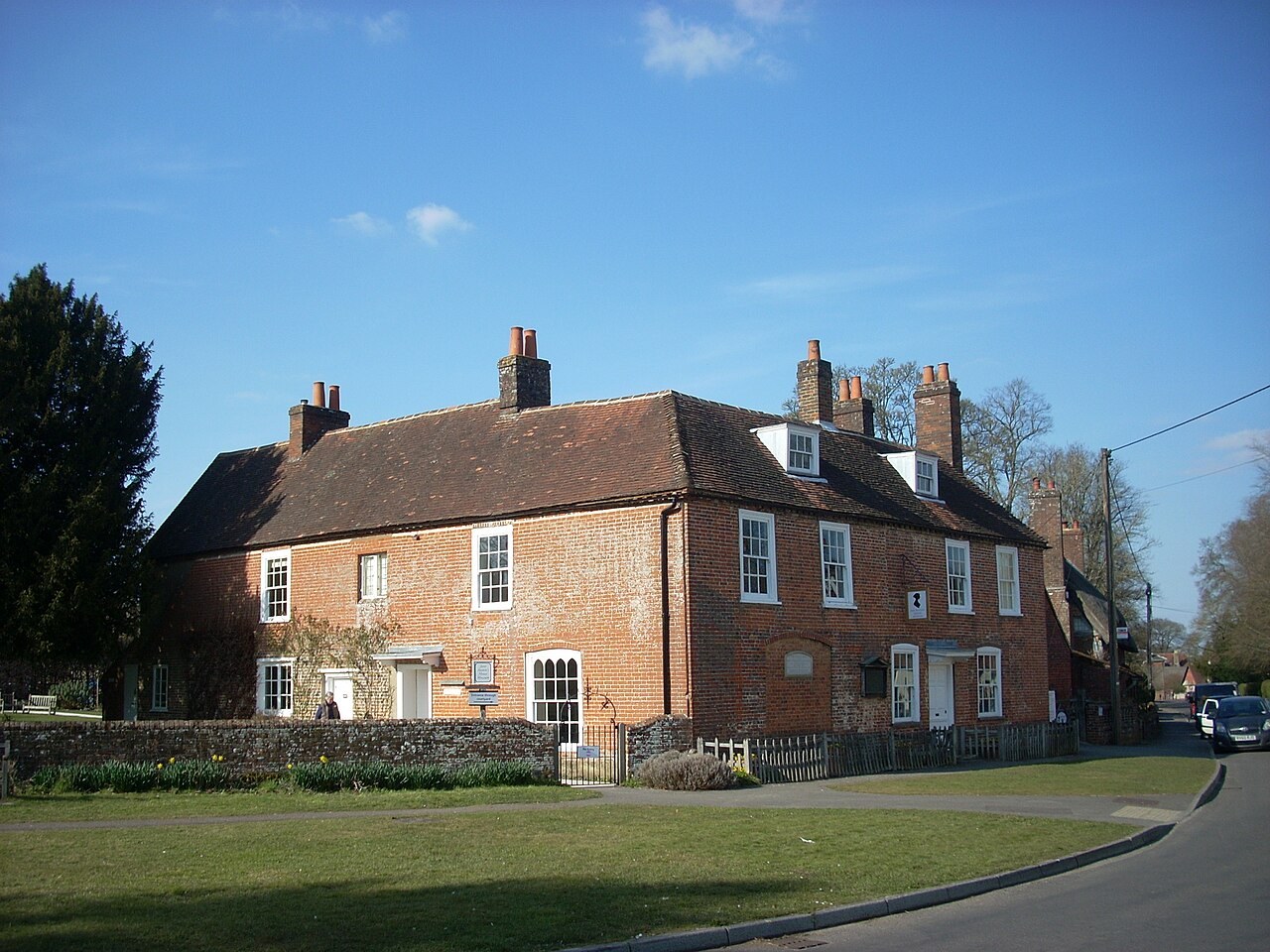
The 17th-century cottage where Jane Austen lived from 1809 to 1817 and revised, wrote and saw all six novels into print, with her writing table and family objects among the collection.
- Visit length
- Editorial estimate: Allow around 90 minutes
- Locality
- on the village street
- Access
- Check current visitor arrangements on the Official site before travel.
The Greyfriar
Chawton's traditional village pub serves home-cooked seasonal food from local suppliers and welcomes dogs, with a secluded rear garden.
- Visit length
- Editorial estimate: Allow around 75 minutes
- Locality
- opposite Jane Austen's House
Cassandra's Cup
A combined village shop, delicatessen and traditional tearoom serving teas, coffee, cakes, traybakes and cream teas alongside everyday groceries.
- Visit length
- Editorial estimate: Allow around 45 minutes
- Locality
- opposite Jane Austen's House
Walks & outdoors
1 placeChawton Village Loop
A gentle signed orientation circuit concentrating on the village and estate, with only about 30 feet of ascent.
- Visit length
- Editorial estimate: Allow around 1 hour
- Locality
- around the village and estate
- Access
- Check route conditions before setting out.
History & heritage
2 places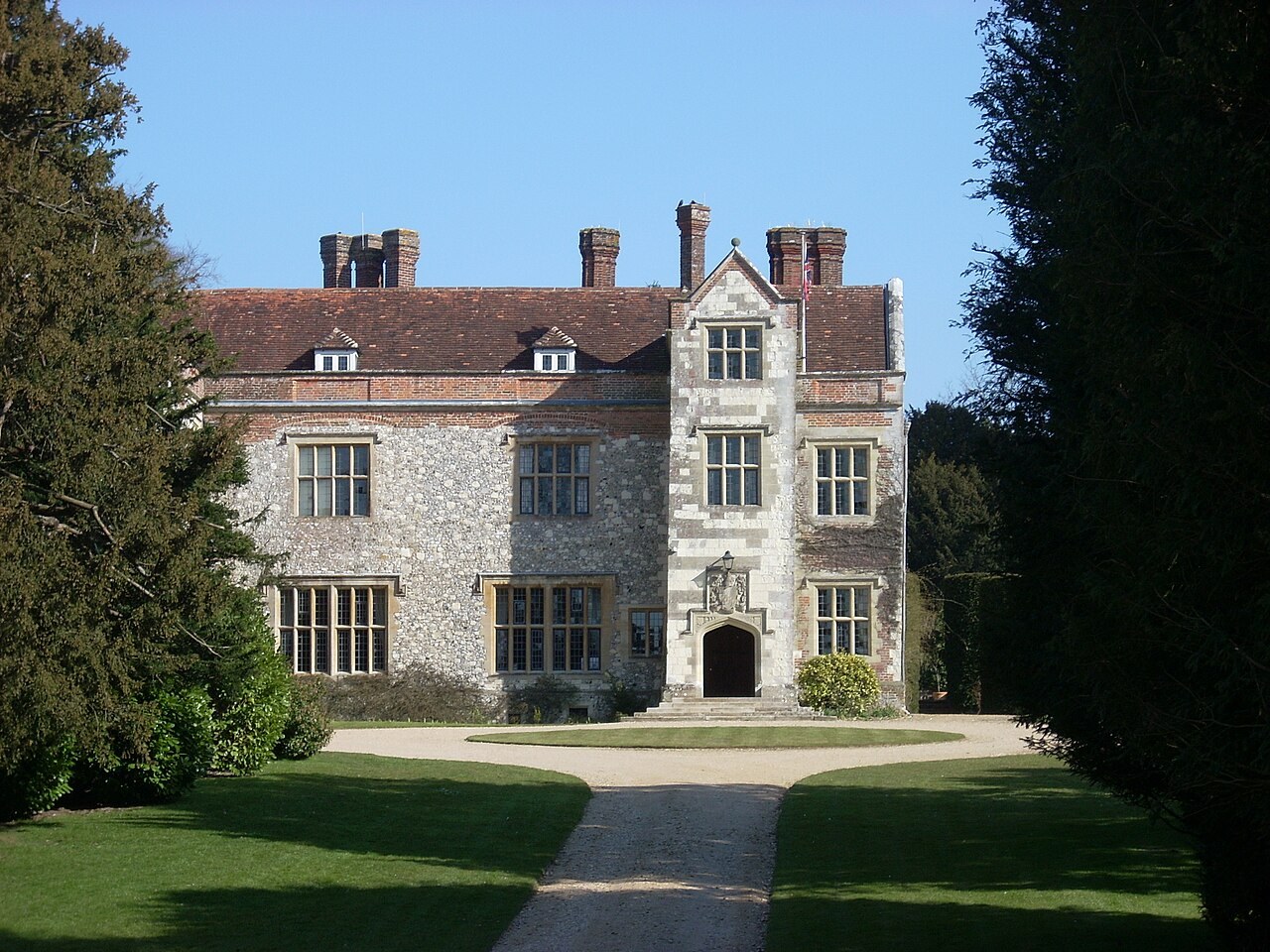
Chawton House
Edward Austen Knight's Great House combines an Elizabethan mansion, gardens and parkland with a major research collection devoted to early women's writing.
- Visit length
- Editorial estimate: Allow around 2 hours
- Locality
- at the estate end of the village
- Access
- Check current house, garden and parkland access on the Official site before travel.
St Nicholas' Church
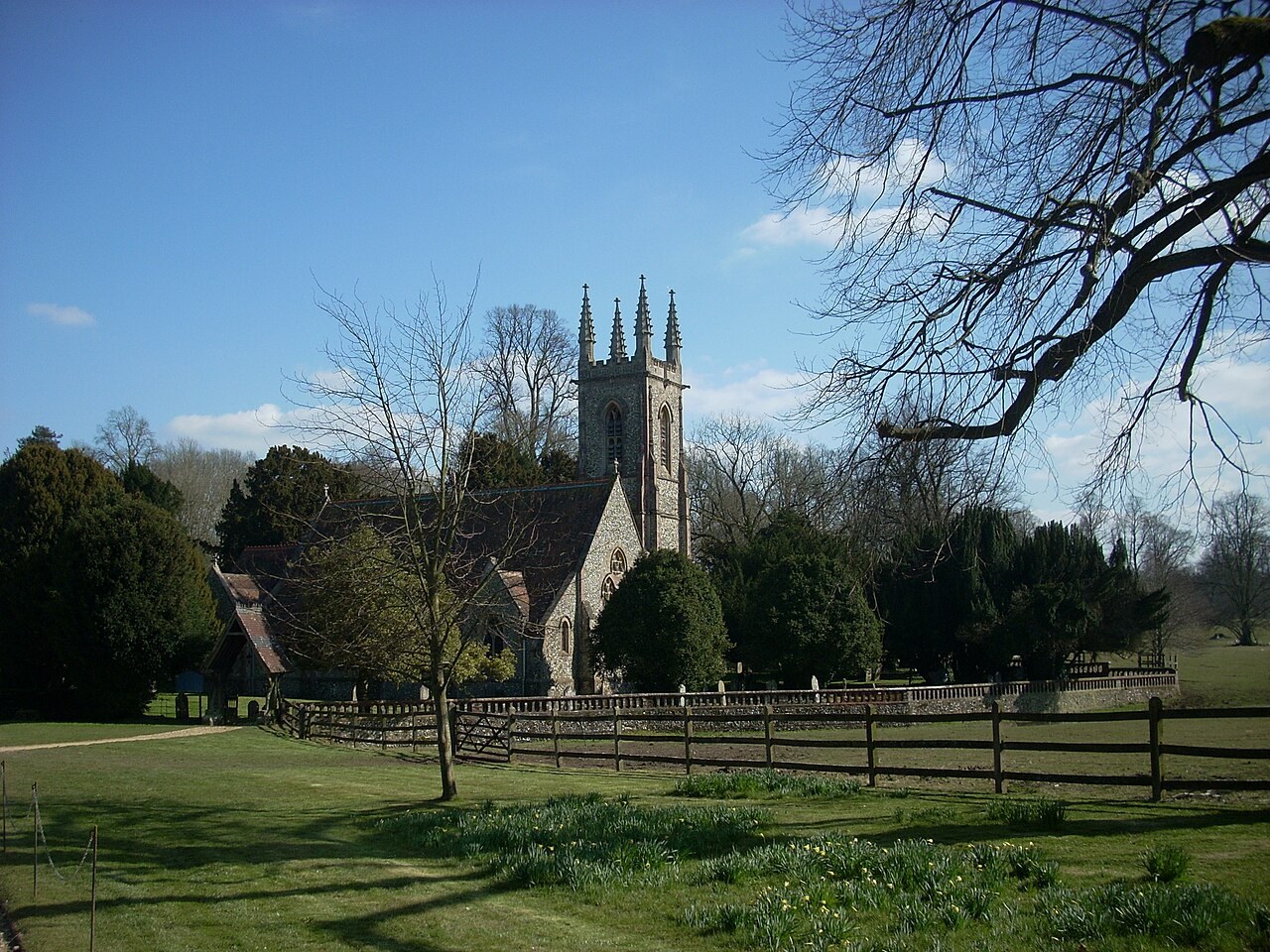
A flint-and-Bath-stone church rebuilt after the 1871 fire, retaining an older chancel and holding notable monuments, glass and the Austen family grave monument in its churchyard.
- Visit length
- Editorial estimate: Allow around 30 minutes
- Locality
- beside Chawton House parkland
No places match this filter. Choose All places to reset the list.
Three ways to explore Chawton
Signature outings
See Austen's Writing Table
Enter the cottage where Austen spent her final Chawton years and see the small writing table associated with her work.
Explore the Great House
Move from Edward Austen Knight's Elizabethan house into gardens, parkland and a library centred on early women's writing.
Pause at St Nicholas'
Look closely at the rebuilt flint church, its surviving older chancel and the Austen family monument in the churchyard.
The village story
Chawton Village Guide
Food, footpaths, family history and women's writing meet within one intimate Hampshire village.
Across the Street from Austen
Opposite Jane Austen's House, on the far side of a street you could hold a conversation across, stand a pub and a tearoom that between them cover most of what a day in Chawton asks for. The Greyfriar is the village's one pub, a low terrace with 16th-century fabric and jettied upper floors that were reworked, at some later point, in an Arts and Crafts manner. It faces the museum directly and sits about five minutes' walk from Chawton House at the other end of the village.
Inside there are around forty covers for dining and a private room seating twenty-four. The kitchen offers home-cooked, seasonal food from local suppliers; a Hampshire Living notice the pub likes to display called the result "a fusion of tradition with a twist." Dogs are welcome and so, according to the beer records, are muddy boots, which is a useful sign in a village where most people arrive having walked in from somewhere. CAMRA records the regular ales as Fuller's London Pride and Dark Star Hophead, with a changing guest, and there is a large car park and a secluded rear garden for the afternoon when you have done the museums and want to do nothing at all. How old the pub actually is depends on whom you believe: its own account claims at least 150 years of service, while CAMRA calls the building a 16th-century inn and dates its life as Chawton's pub to the time of the Spanish Armada. Nobody has produced the record that would settle it.
Cassandra's Cup, across the road, does several jobs at once. It is a village shop, delicatessen and tearoom, selling fresh meat, artisan cheeses, fish, fruit and vegetables, everyday groceries and a wine selection put together with a London sommelier. The suppliers are named and specific: Sole Butchers, The Cheese Stall, a packaging-free operation called Fill Ups, and Bonilla a la Vista, a Spanish maker of crisps. The coffee is Gentlemen Baristas. If you only want to sit down, there are scones, cakes, traybakes and cream teas. A visitor named James Markey left a verdict the tearoom now keeps on show: "A really great find. Very popular with the locals and understandably so!"
Tea and Trails Through Chawton
That is not the end of the tea, which is worth knowing before you plan a day. Chawton House keeps the Old Kitchen Tearoom in its historic kitchen, where the reliable order is a pre-booked afternoon tea of sandwiches, scones with clotted cream and jam, homemade cakes and a hot drink. Out in the parkland, opposite St Nicholas' Church, a small stand called the Tea Shed sells coffee, hot chocolate and sweet treats to walkers who have booked nothing at all.
Chawton is a walking village, and the routes fan out by every length. The gentlest is a 2.1-mile signed loop of about an hour, with roughly thirty feet of climb, that stays among the village and estate and makes the best short orientation on foot. From there the options lengthen: a 4.2-mile circuit to Upper Farringdon and back, stile-free but with three steep staircases and a habit of turning muddy, which climbs to a 497-foot high point and follows about a mile of the old Meon Valley Railway, closed in 1955; a 4.7-mile Chawton Wood loop, rated moderate, where you might see deer; and a 4.5-mile circular that crosses the fields to Farringdon, over a valley whose springs feed the River Wey, the water Jane Austen called "a fine running stream."
The long one is the Writers' Way, seventeen miles from Chawton through the landscapes of Austen, Gilbert White and William Cobbett, open to walkers, cyclists and horse riders, with twelve- and eight-mile shortcuts for anyone who wants the idea without the whole distance. You can walk it out and take the Watercress Line heritage railway back from Four Marks. If you would rather arrive on foot than by car, the Jane Austen Trail runs about a mile and a half from Alton and makes the approach part of the visit; its route remembers the Austen household's servants, Sally, Betsy, Browning and William, by name. Alton is also the nearest station, about a mile and a half away, a half-hour walk, with a direct service advertised from London Waterloo, though it is worth checking the timetable before you travel, and the village sits just off the A31/A32 junction. Stagecoach's 38 runs through Chawton between Alton and Petersfield, and the 64 passes the A31/A32 roundabout on the Alton–Winchester road.
The Cottage and the Great House
The reason for all of this is a small 17th-century cottage on the corner. Jane Austen lived in it from July 1809 until May 1817, offered it rent-free for life by her brother Edward along with their mother, her sister Cassandra and their friend Martha Lloyd. Edward could make the offer because childless wealthy relatives, Thomas and Catherine Knight, had adopted him as their heir; he took control of the estate in 1797, took the Knight name, and received a grant of arms in 1812. In the eight years she spent here Jane revised, wrote and saw into print all six of her novels. Her writing table survives, small enough to make the scale of the work faintly implausible. So do the plainer facts of the household: she practised the piano before breakfast, the family sewed a patchwork coverlet and brewed their own wine and beer, and a locally made donkey carriage carried her the four miles into Alton at about four miles an hour. She left for medical treatment in Winchester in May 1817 and died there on 18 July. She is buried in Winchester Cathedral, not here; her mother and sister, both named Cassandra, lie in the churchyard of St Nicholas' beneath a single monument.
The cottage might easily not have survived. After Jane's death it was divided into three dwellings for estate workers, and by 1947 it was for sale. It was bought for £3,000 by a London solicitor, Thomas Edward Carpenter, who gave it as a memorial to his son, Lieutenant Philip John Carpenter, killed in Italy at Lake Trasimene on 30 June 1944 at the age of twenty-two. The Duke of Wellington opened it as a museum on 23 July 1949. It is now Grade I listed and holds Austen's letters, jewellery, first editions, furniture and textiles. The preservation effort had begun earlier, with the Jane Austen Society, founded in 1940 by Dorothy Darnell of Alton.
Chawton House, up the lane, is the other half of the story and a different kind of place: Edward's Great House, an Elizabethan mansion the Knight family built in the 1580s after Nicholas Knight acquired the estate in 1578. It has an iron fireback dated 1588, a stair hall, carved fireplaces and "witch marks" scratched into a 16th-century chimneypiece to keep out evil. There is a painting of the house made around 1740; into it, in 1819, Jane's twelve-year-old niece scratched "Mary Jane Austen, 1819," which is either vandalism or the family's most durable autograph. Fanny Knight, arriving as a child, wrote that she did not know when she would "be quite mistress of all the intricate & different ways" of the house. Today it holds a research library of early women's writing, around 4,500 rare editions printed between 1660 and 1860, with names including Aphra Behn, Frances Burney, Ann Radcliffe, Mary Shelley and Mary Wollstonecraft. The collection is there because an American technology entrepreneur, Dr Sandy Lerner, funded a £1.25 million long lease and a restoration reported at £10 million, then gave some 8,000 books to begin it.
Church, Manor and Village
St Nicholas' sits low at the Chawton House end of the village, flint and Bath stone, Early English in character, with a hammerbeam roof over the nave. Most of the medieval church burned in 1871; the present building went up in 1871–72 to a design by Sir Arthur Blomfield, keeping the older chancel. Inside are wall tablets dated 1723, 1737, 1802 and 1841, a white-marble recumbent figure of Sir Richard Knight from 1679, a reredos by G. F. Bodley built around a Netherlandish Crucifixion of about 1600, and stained glass by Charles Eamer Kempe. A church has stood on the spot since at least the 13th century, and the first rector on record dates from 1289. In 2018 a bronze statue of Jane Austen by Adam Roud was unveiled in the churchyard, the idea of a resident, Michael Sanders, who conceived it as a parting gift to the village.
Long before any of this, the Domesday surveyors reached Chawton, then in Neatham Hundred, and recorded thirty-three households, eight ploughlands, and six acres of meadow and woodland that rendered fifty swine. They valued the whole manor at £12 a year, up from £10. Hugh of Port held it; before the Conquest it had belonged to Odo of Winchester under King Edward.
The village you walk through is malmstone and flint, clay peg tiles, steep gables and tall chimneys, its houses set at the street edge or just behind small gardens. The conservation appraisal that catalogues all this reaches for three words, "maturity, enclosure and intimacy," and they are the right ones. Beyond the two great houses there are quieter buildings worth slowing for: Baigens, timber-framed in the 16th century and refronted later, with Elizabethan wall paintings inside, and Pound Farmhouse, with carved angel brackets at the door and a staircase from around 1700. Behind the church the parkland runs to 275 acres of lower pasture and higher arable, its old field names, Carter's Lea, Hopkilns and Knickerknocker, still recorded, and its gardens holding a ha-ha, a walled garden begun by Edward Austen, an Elizabeth Blackwell herb garden and two terraces influenced by the work of Sir Edwin Lutyens. Families can pick up an I-spy sheet or follow the Poo Trail through the parkland, with explorer activities for children in the garden; there is also a recreation ground in the village with a play area and picnic tables, and a cricket club whose pavilion stands on Gosport Road.
War Stories and the Wider Landscape
The Great House has absorbed more than its quiet suggests. Peter Knight of the family was killed at Dunkirk; his cousin Bill Bradford, taken prisoner, escaped and sailed some four hundred miles to Gibraltar. A German Heinkel came down nearby after colliding with an RAF Hurricane, and its dead crew were buried for a time at St Nicholas' before being taken home. In 1942 Peggy Knight took in thirty-seven Dr Barnardo's girls, one of whom, Eunice Miller, went on to win a diving silver medal at the 1954 Commonwealth Games. Another, Margaret Meldrum, remembered the house afterwards in a line worth more than the chronology around it: "The house, it wrapped its love around us / And it never let us go."
If you tire of the two museums, Alton is a mile and a half off, with the Curtis Museum for local history and the Allen Gallery for art, and Selborne, Gilbert White's village, lies beyond, with 267 acres of beech and meadow on its common. But the village rewards standing still. Jane arrived here in July 1809 and wrote to her brother Frank, in a verse she was pleased enough with to keep: "Our Chawton home — how much we find / Already in it, to our mind." Two hundred years on, with the cottage door open across the street from the pub, it is not a hard sentiment to share.
Stay around South Downs
Make a longer stay of it
Travel Fox holiday homes around South Downs, linked directly to their property pages.
For homeowners
Own a holiday home near Chawton?
We manage holiday lets across the UK from 12% commission, charged after cleaning costs, with no lock-in. A co-founder visits before you decide.
How our holiday let management works →
A guide with a point of view
Written from research. Edited for real journeys.
Use the Official site links for live practical details, then use this guide for context, ideas and room to explore.
Photography credits & licences
Third-party photographs are credited to their named creators and reused under the linked Creative Commons licence or public-domain dedication. Travel Fox stores an optimised local copy; the file-specific changes and any browser-applied display crop are disclosed below. Reused photographs link both to the Wikimedia Commons source record and to the declared source image; Travel Fox's own photographs carry no such record and are marked as ours. These image licences do not cover Travel Fox text, branding or page design.
- File:Jane Austen's House Museum, Chawton.jpg — photograph by Simon Burchell; Own work. Source record on Wikimedia Commons. Declared source image. Licence: CC BY-SA 4.0. File changes: Downloaded from Wikimedia Commons, resized to a maximum 1920px edge and encoded as an optimised JPEG. Display changes: Displayed with responsive CSS cropping.
- File:Chawton House, Hampshire.jpg — photograph by Simon Burchell; Own work. Source record on Wikimedia Commons. Declared source image. Licence: CC BY-SA 4.0. File changes: Downloaded from Wikimedia Commons, resized to a maximum 1920px edge and encoded as an optimised JPEG. Display changes: Displayed with responsive CSS cropping.
- File:St. Nicholas' Church, Chawton 01.jpg — photograph by Simon Burchell; Own work. Source record on Wikimedia Commons. Declared source image. Licence: CC BY-SA 4.0. File changes: Downloaded from Wikimedia Commons, resized to a maximum 1920px edge and encoded as an optimised JPEG. Display changes: Displayed with responsive CSS cropping.
Sources
Every place on this page is checked against a published source. Each entry links the record we used and names who publishes it.
- Jane Austen's House — janeaustens.house operator, sector body or destination organisation
- Chawton House — chawtonhouse.org operator, sector body or destination organisation
- St Nicholas' Church — historicengland.org.uk statutory register or public authority record not machine-readable; publisher restricts automated access
- Chawton Village Loop — walkalton.org.uk other published source record not machine-readable; publisher restricts automated access
- The Greyfriar — thegreyfriar.co.uk operator, sector body or destination organisation
- Cassandra's Cup — cassandrascup.co.uk operator, sector body or destination organisation