
Chalk stream, three villages
Lavant
Follow the River Lavant between historic East, Mid and West Lavant, with downland paths, medieval churches and country food along the way.
- Best for
- Easy village walks, church history and downland views
- Give it
- A relaxed half day, or longer with a meal
- Don't miss
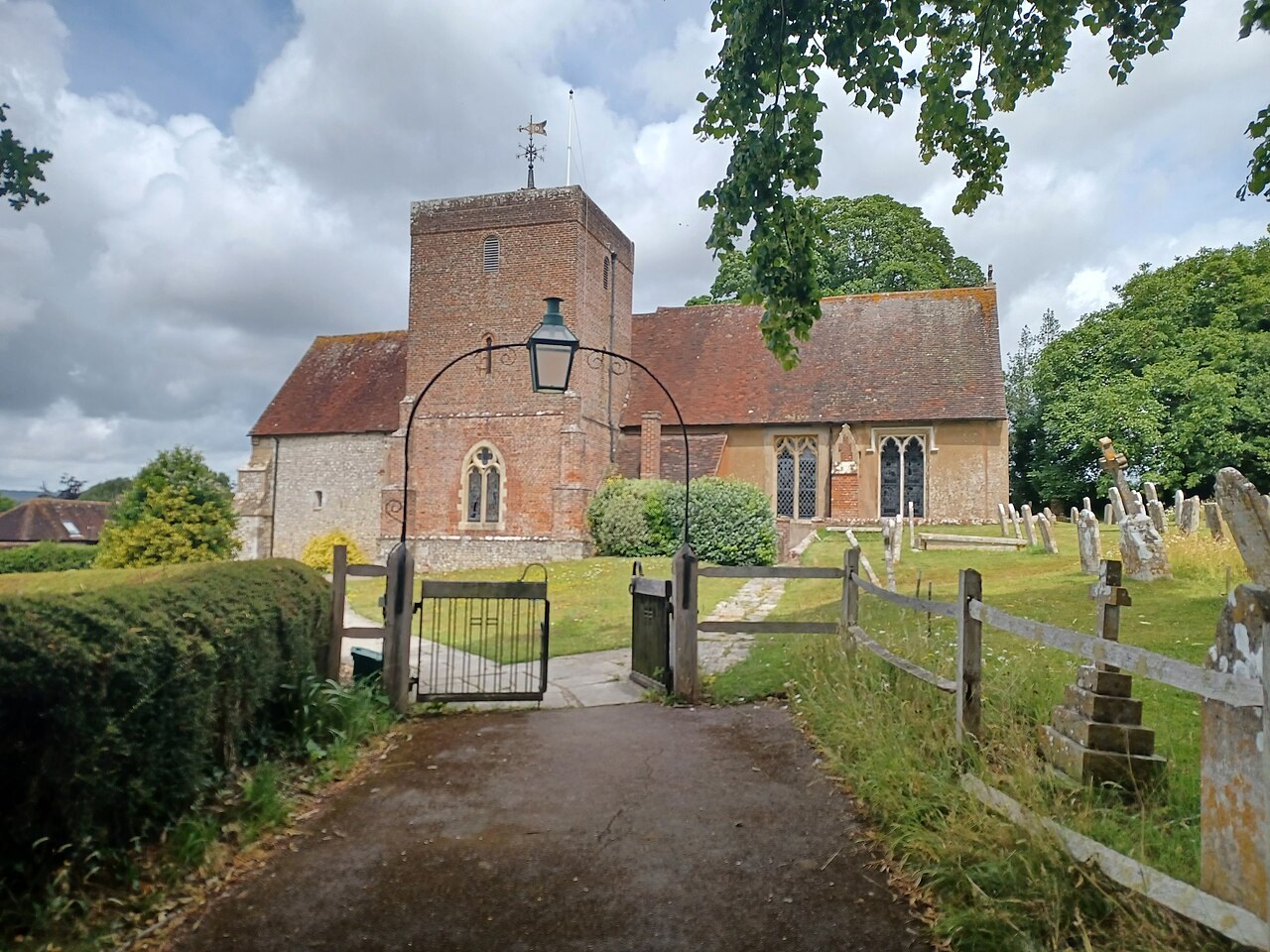
- The chalk stream and St Mary's flint-and-Lavant-stone fabric
Photo: Simon Burchell · CC BY-SA 4.0 · cropped
The Fox verdict
A chalk-stream village in three parts
Lavant combines short parish walks and two medieval churches with a choice of country pubs and a converted-barn tea room.
East Lavant gathers around its church and green, Mid Lavant follows the Chichester–Midhurst road, and West Lavant opens towards the Downs. Together they make a compact base for easy circuits, historic interiors and food stops, with the rare River Lavant tying the three settlements together.
Where to go
Places in Lavant
Every place below is checked against a published source, listed with what it is and how long to give it.
Local signatures
3 placesThe Earl of March
An early-18th-century former coaching inn overlooking rolling hills, with a kitchen focused on locally sourced and foraged ingredients.
- Visit length
- Editorial estimate: Allow around 90 minutes for a meal or drink
- Locality
- Mid and West Lavant
- Access
- Check the official site for current menus and service arrangements before travel.
Wellies Tea Rooms
An independent tea room in a converted farm barn serving breakfast, lunch, afternoon tea, cakes and homemade or local produce.
- Visit length
- Editorial estimate: Allow around 75 minutes for breakfast, lunch or tea
- Locality
- Oldwick Farm, West Lavant
- Access
- Check the official site for current service arrangements before travel.
St Nicholas' Church, Mid Lavant
A Grade II church with 12th-century origins, a 13th-century chancel, a shingled west bell turret and the monument of Lady Mary May.
- Visit length
- Editorial estimate: Allow around 35 minutes
- Locality
- Mid Lavant
- Access
- Visitor opening is not confirmed in the source; check local church information before setting out.
Food & drink
1 placeThe Royal Oak, East Lavant
A traditional country pub with rooms, a log fire and a spacious garden, serving contemporary British food made with seasonal and locally sourced ingredients where possible.
- Visit length
- Editorial estimate: Allow around 90 minutes for a meal or drink
- Locality
- Pook Lane, East Lavant
- Access
- Menus are seasonal and dishes change with availability; check the official site before travel.
History & heritage
1 place
St Mary's Church, East Lavant
A Grade I church with a 12th-century nave and doorway, a medieval tower encased in red brick in 1671, and five chancel stalls with misericords.
- Visit length
- Editorial estimate: Allow around 35 minutes
- Locality
- East Lavant
- Access
- Visitor opening is not confirmed in the source; check local church information before setting out.
Things to do
1 placeLavant Village Green and Recreation Ground
A registered recreation ground with picnic tables, benches and a central cricket wicket, used seasonally by village cricket and football clubs.
- Visit length
- Editorial estimate: Allow around 30 minutes
- Locality
- East Lavant
- Access
- The green is freely accessible, but visitors must keep off the prepared cricket wicket.
No places match this filter. Choose All places to reset the list.
Three ways to explore Lavant
Signature outings
The village green
Use the picnic tables and benches around the freely accessible recreation ground, while keeping off the prepared cricket wicket.
Eight centuries at St Mary's
Look for the 12th-century zigzag doorway, local Lavant-stone dressings and the tower encased in red brick in 1671.
The Royal Oak
Choose seasonal British food at this Pook Lane country pub, with its log fire and spacious outdoor garden.
The village story
Lavant Village Guide
A rare chalk stream links three historic settlements below the South Downs.
Chalk Stream and Country Inn
The River Lavant is a chalk stream, one of the rare ones, and it runs the length of a village that is really three villages. East Lavant sits around its church and green; Mid Lavant strings out along the A286; West Lavant gathers itself around a Georgian farm and a big house. They ran as separate places for centuries and only joined for civil purposes in 1872. In winter the groundwater rises and the stream swells, which is why residents trained as citizen scientists now monitor water quality and riverflies at three sites.
Start at the Royal Oak on Pook Lane in East Lavant, a country inn with rooms and roughly two hundred years behind it. The kitchen leans on named suppliers — Walter Rose butchers, Kingfisher of Brixham, Hobbs House bakery — and the menu changes with what is in. You might find beer-battered fish and chips with minted peas and tartare, or the Royal Oak burger with smoked Cheddar, Dijon mayonnaise, barbecue relish and skin-on fries, alongside a field-to-fork Sunday roast. There is a log fire, a spacious garden, and water bowls and treats for dogs. The cask ales are Butcombe Original and Adam Henson's Rare Breed.
Blake's View and a Converted-Barn Tea Room
The Earl of March stands at the foot of the Downs on the Chichester–Midhurst road, an early-eighteenth-century building that was once a coaching inn. Its kitchen, under chef Adam Hadwen, works with local and foraged ingredients and looks out over rolling hills. Parish tradition holds that William Blake wrote the words later set as "Jerusalem" while taking in this view in 1803. He had reason to be nearby: he taught the children at Lavant House drawing, the house built around 1720 and later a girls' school until 2016.
For daytime there is Wellies, a tea room in a converted barn at Oldwick Farm in West Lavant, doing breakfast, lunch and a proper afternoon tea. The village shop closed in the mid-1990s, so stock up in Chichester, a little over two miles south.
Paths into the Downs
Most people come here to walk. The Centurion Way, five and a half miles of tarmac and compacted stone on a dismantled railway, links Chichester through Lavant to West Dean, and is scattered with commissioned sculpture: an amphitheatre cut from an old quarry and sown as a wildflower meadow, and above it David Kemp's Chichester Road Gang, figures welded from old gas canisters. The Lavant Valley circuit follows the Way for eight and a half kilometres and its outward leg is level enough for a buggy. For a climb, the seven-kilometre Trundle route rises from the valley to broad views over West Sussex.
Two Medieval Churches
St Mary's in East Lavant is Grade I, its nave twelfth-century, its tower encased in red brick by William Westbrooke in 1671. Inside are a 12th-century west doorway with zigzag moulding and five chancel stalls with misericords. St Nicholas' in Mid Lavant is a modest church and holds the monument of Lady Mary May; in 1835 a parishioner, Henrietta Dorrien, wrote that it was "so small that not only the body & gallery are completely fill'd but the Chancel cram'd." Domesday valued East Lavant at eighteen pounds a year, its mill at six shillings.
The Village Green
The green still has a cricket wicket at its centre, kept for the village club. You are asked, when you cross it, to keep off the prepared strip.
Stay around South Downs
Make a longer stay of it
Travel Fox holiday homes around South Downs, linked directly to their property pages.
For homeowners
Own a holiday home near Lavant?
We manage holiday lets across the UK from 12% commission, charged after cleaning costs, with no lock-in. A co-founder visits before you decide.
How our holiday let management works →
A guide with a point of view
Written from research. Edited for real journeys.
Use the Official site links for live practical details, then use this guide for context, ideas and room to explore.
Photography credits & licences
Third-party photographs are credited to their named creators and reused under the linked Creative Commons licence or public-domain dedication. Travel Fox stores an optimised local copy; the file-specific changes and any browser-applied display crop are disclosed below. Reused photographs link both to the Wikimedia Commons source record and to the declared source image; Travel Fox's own photographs carry no such record and are marked as ours. These image licences do not cover Travel Fox text, branding or page design.
- File:St. Mary's Church, East Lavant 01.jpg — photograph by Simon Burchell; Own work. Source record on Wikimedia Commons. Declared source image. Licence: CC BY-SA 4.0. File changes: Downloaded from Wikimedia Commons, resized to a maximum 1920px edge and encoded as an optimised JPEG. Display changes: Displayed with responsive CSS cropping.
Sources
Every place on this page is checked against a published source. Each entry links the record we used and names who publishes it.
- The Royal Oak, East Lavant — butcombe.com other published source
- The Earl of March — theearlofmarchlavant.com operator, sector body or destination organisation
- Wellies Tea Rooms — welliestearooms.co.uk operator, sector body or destination organisation
- St Mary's Church, East Lavant — historicengland.org.uk statutory register or public authority record not machine-readable; publisher restricts automated access
- St Nicholas' Church, Mid Lavant — historicengland.org.uk statutory register or public authority record not machine-readable; publisher restricts automated access
- Lavant Village Green and Recreation Ground — lavantparishcouncil.gov.uk statutory register or public authority