
Royal burgh above the Clyde
Lanark
Wallace history, traditional pubs and a wooded river gorge give Lanark several distinct ways to spend a day.
- Best for
- Town history and Falls of Clyde walking
- Give it
- A half-day in town or longer with New Lanark
- Don't miss
- The Wallace statue above St Nicholas Church
Photo: Paul Buckingham · CC BY-SA 2.0 · cropped
The Fox verdict
A working town with history at its door
Lanark combines a royal-burgh past with local pubs, lochside recreation and the Clyde gorge.
Start with Wallace and the unusual Whuppity Scoorie story around St Nicholas Church, then choose between the town's traditional hospitality, Lanark Loch or the route from New Lanark through the wooded gorge to the Falls of Clyde.
Where to go
Places in Lanark
Every place below is checked against a published source, listed with what it is and how long to give it.
Local signatures
3 placesThe Crown Tavern
A long-established traditional pub with a comfortable, laid-back atmosphere and hearty homemade meals.
- Visit length
- Editorial estimate: Allow around 75 minutes
- Locality
- 17–21 Hope Street, Lanark
- Access
- Dogs and families with young children are welcomed.
Lanark Loch
Walk around Lanark Loch or visit its children's play park. Coarse fishing for carp is available by permit.
- Visit length
- Editorial estimate: Allow around 60 minutes
- Locality
- Lanark
New Lanark World Heritage Site
A UNESCO World Heritage mill village where Robert Owen managed the cotton mills from 1800 to 1825 and introduced reforms to education, housing and working conditions.
- Visit length
- Editorial estimate: Allow around 120 minutes
- Locality
- New Lanark
Food & drink
2 placesOverton Farm Shop & Butchery
A farm shop and butchery with a café called the Oven, selling homebred meat, local seasonal fruit and vegetables, homemade preserves and artisan bread from a local bakery.
- Visit length
- Editorial estimate: Allow around 60 minutes
- Locality
- Crossford, near Lanark
Carmichael Estate Farm Shop
The refurbished Carmichael Farm Shop sells estate venison, beef and lamb alongside local produce. The Hideaway is a separate restaurant on the estate.
- Visit length
- Editorial estimate: Allow around 60 minutes
- Locality
- Between Lanark and Biggar
Walks & outdoors
2 placesCastlebank Park
A riverside park offering access to the River Clyde close to Lanark.
- Visit length
- Editorial estimate: Allow around 45 minutes
- Locality
- Close to the town
Falls of Clyde
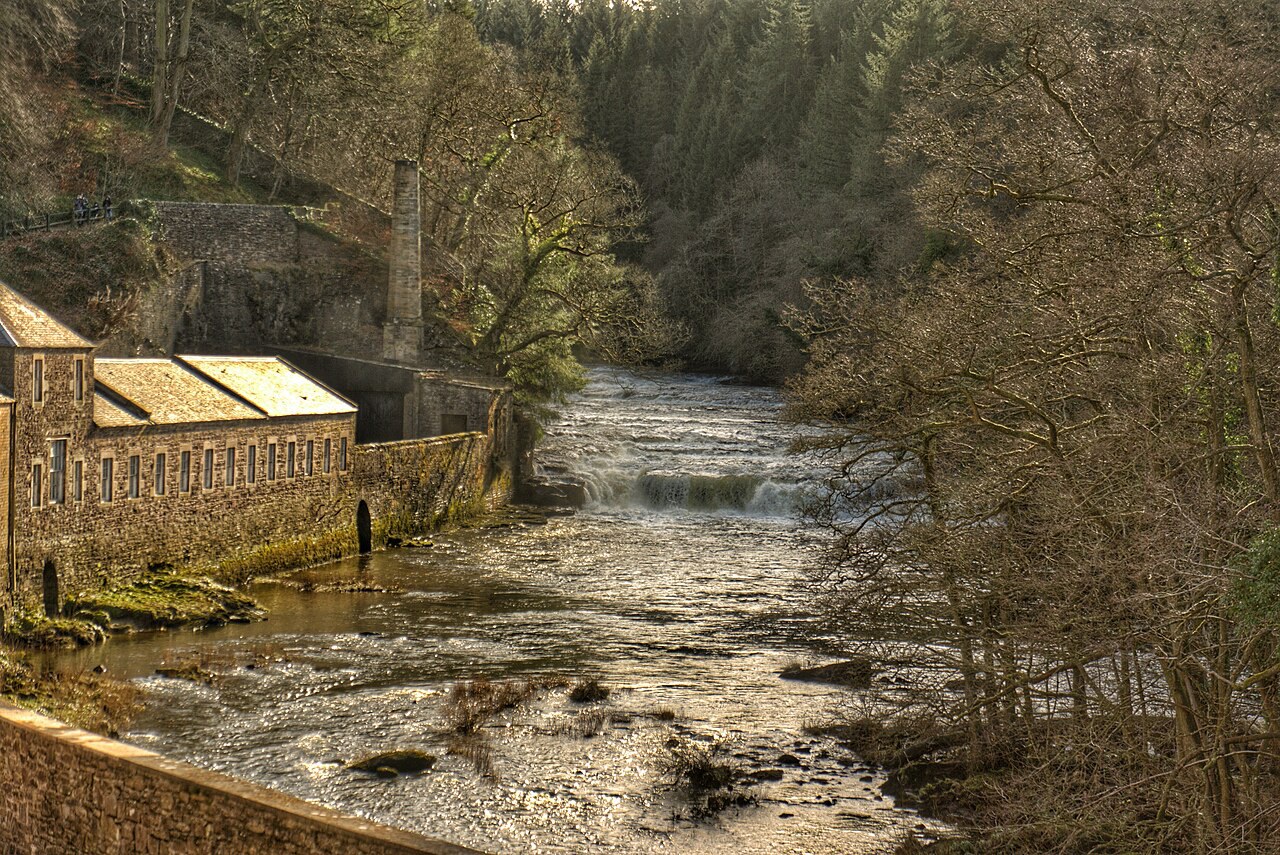
A classic riverside walk through a wooded gorge on the Clyde Walkway from New Lanark to the waterfalls and Bonnington Weir.
- Visit length
- Editorial estimate: Allow around 110 minutes
- Locality
- From New Lanark
History & heritage
1 placeSt Nicholas Parish Church
A Category B listed church on the site of a 13th-century chapel, with an eight-foot statue of Sir William Wallace above the front entrance and the small bell used for Whuppity Scoorie.
- Visit length
- Editorial estimate: Allow around 30 minutes
- Locality
- Lanark
No places match this filter. Choose All places to reset the list.
Three ways to explore Lanark
Signature outings
The statue over St Nicholas
See Robert Forrest's eight-foot statue of Sir William Wallace above the church entrance, then connect it with the story of Wallace's 1297 revolt in Lanark.
Walk into the wooded gorge
The Falls of Clyde viewpoint paths run beside a steep gorge. Stay on the marked path when exploring the reserve.
A Clyde Valley farm shop
The Young family has farmed in Crossford for more than 50 years, and Overton butchers its own meat on site.
The town story
Wallace, mills and the Clyde gorge
Wallace, working-town hospitality and the wooded Clyde gorge shape a Lanark visit.
Wallace and St Nicholas
An eight-foot statue of Sir William Wallace, sculpted by Robert Forrest, stands above the entrance to St Nicholas Parish Church. Wallace killed William Haselrigg, the English sheriff of Lanark, in May 1297. The account of Marion Braidfute's death and Wallace's revenge comes from Blind Harry and later local tradition; Marion may never have existed. In Castlegate, the Wallace House interpretation space uses murals and panels to explore his Lanark story.
From St Nicholas, the town runs down Hope Street and around Castlegate. At 17–21 Hope Street, the Crown Tavern serves homemade meals and welcomes families and dogs. The Clydesdale Inn on Bloomgate occupies a building completed in the 1790s. Beside Lanark Loch, the Inn on the Loch occupies a former boathouse; the loch has a play park, a walking circuit and permit-only coarse fishing.
Provisions and Farming Country
For provisions, the Duke's Deli at 12–14 Castlegate offers hampers. Overton Farm Shop in Crossford has its own butchery and the Oven restaurant. Between Lanark and Biggar, the refurbished Carmichael Farm Shop sells estate meat and local produce; The Hideaway is a separate restaurant on the estate. Lanark Market's livestock auctions are a reminder of the area's farming trade.
New Lanark and the Falls
From New Lanark, the Clyde Walkway follows the river through woodland towards the Falls of Clyde. Closer to town, Castlebank Park links to the Clyde Walkway and has a play area. New Lanark's former cotton mills are a UNESCO World Heritage Site. Under Robert Owen, children who would otherwise have worked in the mills attended school, while he improved housing, healthcare and working conditions.
Connections and Flight
Lanark station is on Bannatyne Street, beside the town's bus interchange. At the former racecourse, a 1910 aviation meeting set world records for speed and altitude. Horse racing ended there in 1977; the site is now used for walks and sport.
Whuppity Scoorie
Every 1 March, children gather at the Town Steeple at Lanark Cross for Whuppity Scoorie. When the small bell rings — silent since the previous autumn — they run clockwise three times around St Nicholas Church, swinging paper balls on strings, then scramble for coins thrown down in Hyndford Place. The custom has a name in print since 1890 and no one entirely agrees what it means.
Stay around South Lanarkshire
Make a longer stay of it
Travel Fox holiday homes around South Lanarkshire, linked directly to their property pages.
For homeowners
Own a holiday home near Lanark?
We manage holiday lets across the UK from 12% commission, charged after cleaning costs, with no lock-in. A co-founder visits before you decide.
How our holiday let management works →
A guide with a point of view
Written from research. Edited for real journeys.
Use the Official site links for live practical details, then use this guide for context, ideas and room to explore.
Photography credits & licences
Third-party photographs are credited to their named creators and reused under the linked Creative Commons licence or public-domain dedication. Travel Fox stores an optimised local copy; the file-specific changes and any browser-applied display crop are disclosed below. Reused photographs link both to the Wikimedia Commons source record and to the declared source image; Travel Fox's own photographs carry no such record and are marked as ours. These image licences do not cover Travel Fox text, branding or page design.
- File:Falls of Clyde, New Lanark - geograph.org.uk - 4885715.jpg — photograph by Paul Buckingham; Falls of Clyde, New Lanark by Paul Buckingham. Source record on Wikimedia Commons. Declared source image. Licence: CC BY-SA 2.0. File changes: Downloaded from Wikimedia Commons, resized to a maximum 1920px edge and encoded as an optimised JPEG. Display changes: Displayed with responsive CSS cropping.
Sources
Every place on this page is checked against a published source. Each entry links the record we used and names who publishes it.
- St Nicholas Parish Church — lanark-stnicholas.co.uk operator, sector body or destination organisation
- The Crown Tavern — crown-tavern.co.uk operator, sector body or destination organisation
- Lanark Loch — southlanarkshire.gov.uk statutory register or public authority
- Castlebank Park — southlanarkshire.gov.uk statutory register or public authority
- New Lanark World Heritage Site — newlanark.org operator, sector body or destination organisation
- Falls of Clyde — scottishwildlifetrust.org.uk national body or asset manager
- Overton Farm Shop & Butchery — overtonfarmshop.co.uk operator, sector body or destination organisation
- Carmichael Estate Farm Shop — carmichael.co.uk operator, sector body or destination organisation