
Market town, old walls
Cowbridge
A traditional High Street shaped by medieval walls and markets, with historic inns, independent food shops and River Thaw walks.
- Best for
- Medieval history, independent shops and local food
- Give it
- Time for the High Street, garden and River Thaw paths
- Don't miss
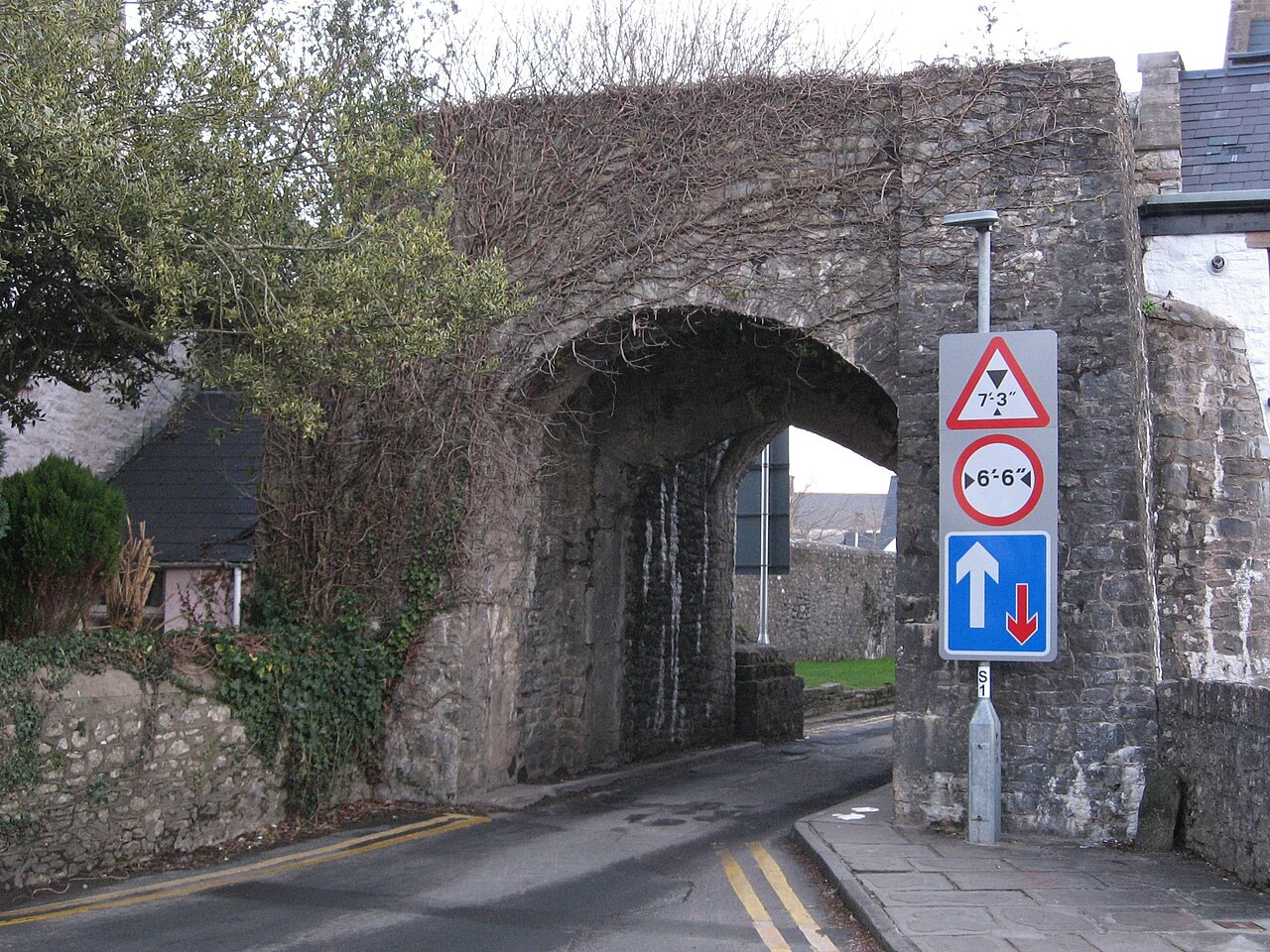
- The surviving South Gate and its two angle towers
Photo: Chris Andrews · CC BY-SA 2.0 · cropped
The Fox verdict
A market town with its layers still showing
Cowbridge brings medieval fabric, historic inns, independent food shopping and countryside walks into one compact guide.
Begin with the surviving South Gate and the High Street it once helped protect, then choose between real ale, Welsh produce and the walled Physic Garden. The Church of the Holy Cross, St Quentin’s Castle and the Iolo Morganwg Heritage Walk carry the story out towards Llanblethian and the River Thaw.
Your picks, your pace
Make Cowbridge yours
Choose a mood or build your own list. Your saved stops are an ordering aid, with a direct map route when you are ready.
Local signatures
3 placesForage Farm Shop and Kitchen
A farm shop, deli and kitchen with an on-site butcher, local Welsh produce and pick-your-own flower fields.
- Visit length
- Editorial estimate: Allow around 75 minutes
- Locality
- Penllyn Estate
St Quentin’s Castle
The ruins of an early-14th-century castle reached on a circular route across the River Thaw from Cowbridge.
- Visit length
- Editorial estimate: Allow around 60 minutes
- Locality
- Llanblethian
Iolo Morganwg Heritage Walk
A set walk combining local history with countryside views, field paths, riverside sections and the base of St Quentin’s Castle.
- Visit length
- Editorial estimate: Allow around 3 hours
- Locality
- Cowbridge and Llanblethian
Food & drink
1 place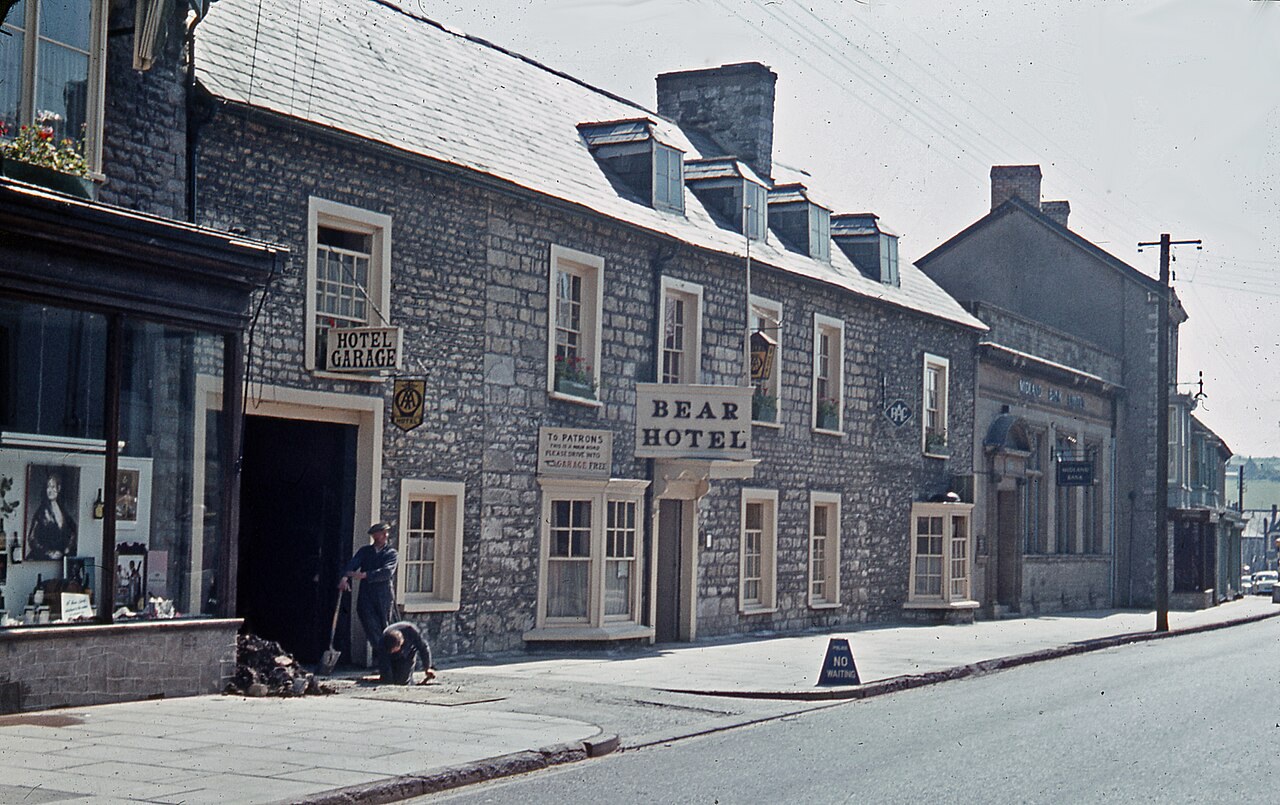
The Bear Hotel
A historic inn in a much older building, with two real-ale bars and Welsh menus served around a log fire.
- Visit length
- Editorial estimate: Allow around 90 minutes
- Locality
- 63 High Street
- Access
- Dogs are allowed in the bar; dog-friendly rooms allow up to two pets per stay for a fee.
Walks & outdoors
1 place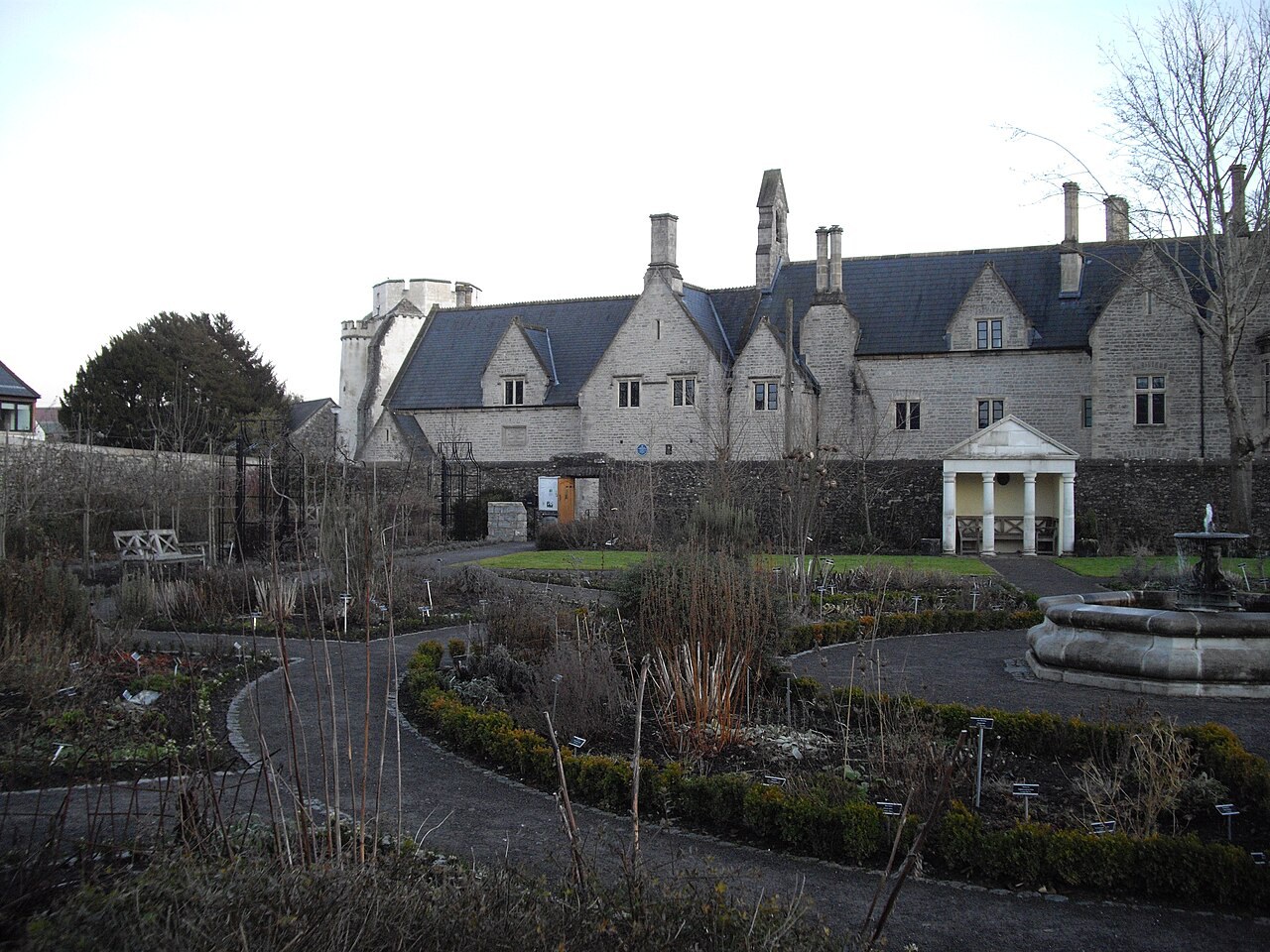
Cowbridge Physic Garden
A half-acre walled physic garden on the footprint of an earlier formal garden, planted only with species found in Britain before 1800.
- Visit length
- Editorial estimate: Allow around 45 minutes
- Locality
- Cowbridge
History & heritage
2 places
Cowbridge South Gate
The intact survivor of Cowbridge’s town walls, built by about 1300, with two angle towers still standing.
- Visit length
- Editorial estimate: Allow around 20 minutes
- Locality
- at the edge of town
Church of the Holy Cross
A Grade I church with later-13th-century nave and chancel work and a broad, semi-fortified tower built around 1300.
- Visit length
- Editorial estimate: Allow around 35 minutes
- Locality
- Cowbridge
No places match this filter. Choose All places to reset the list.
On the map
Cowbridge at a glance
Tap a marker to jump to its guide card.
Three ways to explore Cowbridge
Signature outings
The surviving South Gate
See the intact gate and two angle towers that remain from the walls built around Cowbridge by about 1300.
A garden before 1800
Explore the walled Physic Garden, where every plant grown was found in Britain before 1800.
Real ale at the Bear
Choose between two real-ale bars and Welsh menus served around a log fire in Cowbridge’s historic Bear Hotel.
The town story
Cowbridge Town Guide
Medieval walls, old inns, independent food shops and River Thaw walks give Cowbridge its enduring market-town shape.
Walls, High Street and Old Inns
The South Gate still stands at the edge of town, the one surviving piece of walls that once ringed Cowbridge by about 1300, with two angle towers beside it. The walls were built to protect the Lord of Glamorgan's burgage plots and to collect tolls from a twice-weekly market. The market is long gone, but the High Street it shaped is still lined with independent shops, and you can walk the length of it in Georgian and Victorian company.
Start at the Bear. It has been an inn on the High Street since at least 1736, when it was noted as The Bear, though the building is far older — put up around the 12th century as a town house for the Llanmihangel Place manor. The hall fireplace carries two carved shields, a reversed lion rampant and a trefoil, and the ceiling beams date to the late 16th century. The Glamorganshire Agricultural Society was founded here in 1772. Today two bars either side of the entrance corridor both pour real ale, generally with up to three guest beers, and the kitchen runs Welsh menus around a log fire. Dogs are allowed in the bar and in the rooms, and get sausages at breakfast.
Real Ale and Independent Food
For drinking rather than dining, the Vale of Glamorgan Inn is a single-roomed real-ale pub in the centre, wooden-floored with a range fire and a flagstone rear section warmed by another stove. It is, in one description, "a popular single roomed pub in the centre of town where conversation is the usual entertainment." An archway off the street survives from its coaching-inn days.
The food shopping is unusually good. Forage Farm Shop has an on-site butcher and a deli of cheese, cakes and bread, much of the meat and veg grown on the Penllyn Estate around it, plus pick-your-own flower fields. Cowbridge Farm Shop stocks home-grown produce; the Elephant & Bun deli handles speciality ingredients; the Penny Farthing does coffee, breakfast and lunch. There is a florist, Gail Armytage, and a vintage homestore called Happy Days for fashion and furniture.
Garden and Watchtower
Behind high stone walls, some of them 13th century, sits the Physic Garden — half an acre laid out by the Welsh Historic Gardens Trust on the footprint of an earlier 1700s garden, growing only plants found in Britain before 1800. Camilla, its patron, opened it in 2008. The Church of the Holy Cross nearby has a squat, semi-fortified tower from around 1300, broad enough that it may have been meant as a watchtower or refuge if the town were attacked.
Iolo, Attack and Grammar School
It was attacked, in the Glyndŵr rising, and rebuilt. Iolo Morganwg, the antiquary who invented the modern Eisteddfod's rituals, kept a bookshop on the High Street; a plaque marks it with his motto, "Truth against the world." The Grammar School counted Anthony Hopkins among its pupils before it closed in 1974.
River Walks and Arrival
Walks follow the River Thaw south to Llanblethian, along the old town walls and across the water to the ruins of St Quentin's Castle. There is no railway now — it closed in 1951 — so you arrive off the A48, Cardiff twelve miles east. The Sunday Times once called this the best place to live in Wales, and the people who buy their Sunday joint at Forage seem to have quietly agreed.
Stay around Vale of Glamorgan
Make a longer stay of it
Travel Fox holiday homes around Vale of Glamorgan, linked directly to their property pages.
For homeowners
Own a holiday home near Cowbridge?
We manage holiday lets across the UK from 12% commission, charged after cleaning costs, with no lock-in. A co-founder visits before you decide.
How our holiday let management works →
A guide with a point of view
Written from research. Edited for real journeys.
Use the Official site links for live practical details, then use this guide for context, ideas and room to explore.
Photography credits & licences
Third-party photographs are credited to their named creators and reused under the linked Creative Commons licence or public-domain dedication. Travel Fox stores an optimised local copy; the file-specific changes and any browser-applied display crop are disclosed below. Reused photographs link both to the Wikimedia Commons source record and to the declared source image; Travel Fox's own photographs carry no such record and are marked as ours. These image licences do not cover Travel Fox text, branding or page design.
- File:South Gate, Cowbridge - geograph.org.uk - 2798160.jpg — photograph by Chris Andrews; South Gate, Cowbridge by Chris Andrews. Source record on Wikimedia Commons. Declared source image. Licence: CC BY-SA 2.0. File changes: Downloaded from Wikimedia Commons, resized to a maximum 1920px edge and encoded as an optimised JPEG. Display changes: Displayed with responsive CSS cropping.
- File:The Physic Garden, Cowbridge - geograph.org.uk - 2226214.jpg — photograph by John Lord; The Physic Garden, Cowbridge by John Lord. Source record on Wikimedia Commons. Declared source image. Licence: CC BY-SA 2.0. File changes: Downloaded from Wikimedia Commons, resized to a maximum 1920px edge and encoded as an optimised JPEG. Display changes: Displayed with responsive CSS cropping.
- File:Cowbridge Bear Hotel geograph-3376337-by-Ben-Brooksbank.jpg — photograph by Ben Brooksbank; Ben Brooksbank. Source record on Wikimedia Commons. Declared source image. Licence: CC BY-SA 2.0. File changes: Downloaded from Wikimedia Commons, resized to a maximum 1920px edge and encoded as an optimised JPEG. Display changes: Displayed with responsive CSS cropping.
Sources
Every place on this page is checked against a published source. Each entry links the record we used and names who publishes it.
- Cowbridge South Gate — cadwpublic-api.azurewebsites.net other published source
- The Bear Hotel — townandcountrycollective.co.uk other published source
- Forage Farm Shop and Kitchen — foragefarmshop.co.uk operator, sector body or destination organisation
- Cowbridge Physic Garden — cowbridgephysicgarden.org operator, sector body or destination organisation
- Church of the Holy Cross — churchinwales.org.uk other published source
- St Quentin’s Castle — cadw.gov.wales statutory register or public authority
- Iolo Morganwg Heritage Walk — visitthevale.com operator, sector body or destination organisation