
Curry, film and wool
Bradford
Base yourself between Bradford's curry culture, free collections and Saltaire's Victorian model village.
- Best for
- Curry, film and Victorian heritage
- Stay in
- Quiet Saltaire or the city centre for nightlife
- Don't miss
- Bradford's free museums and galleries
The Fox verdict
A low-cost culture break with a flavour all its own
Bradford pairs more than two hundred South Asian restaurants with free museums, Hockney collections and the Saltaire World Heritage Site.
Choose the city centre for curry houses, theatre and nightlife, or Saltaire for a quieter base among Victorian stone houses, independent cafés and galleries. The National Science and Media Museum, Cartwright Hall and the wider district's industrial and artistic story make culture central to the stay.
Where to go
Places in Bradford
Every place below is checked against a published source, listed with what it is and how long to give it.
Local signatures
3 placesNational Science and Media Museum
A free museum whose collections cover photography, television and film, with Europe's first IMAX cinema and the only public venue able to show three-strip Cinerama.
- Visit length
- Editorial estimate: Allow around 90 minutes
- Locality
- city centre, Little Horton Lane
Sweet Centre
Opened in 1964 as a halal butcher's before expanding into a café-restaurant known for seekh kebabs, chana puri, samosas, halwa and Asian sweets.
- Visit length
- Editorial estimate: Allow around 60 minutes
- Locality
- 106–110 Lumb Lane
The Record Café
Real ales and craft keg sit alongside a Spanish charcuterie counter and a mezzanine record shop that visitors can browse and buy from.
- Visit length
- Editorial estimate: Allow around 60 minutes
- Locality
- North Parade, city centre
Food & drink
1 placeMumtaz
An upscale Kashmiri restaurant opened in 1979, serving chargrilled seekh kebabs, lamb chops and chicken boti; it is halal and does not serve alcohol.
- Visit length
- Editorial estimate: Allow around 90 minutes
- Locality
- Great Horton Road
Walks & outdoors
1 place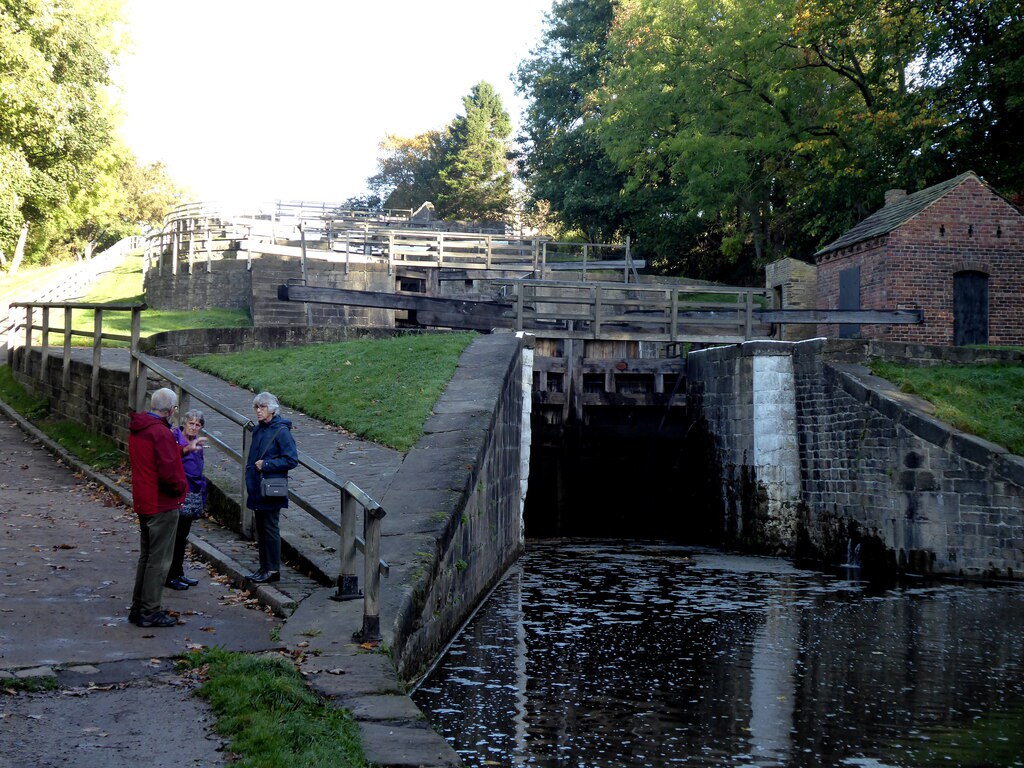
Bingley Five Rise Locks
Britain's steepest staircase lock flight, formed by five chambers on the Leeds–Liverpool Canal and reached by a short train hop from Saltaire.
- Visit length
- Editorial estimate: Allow around 75 minutes
- Locality
- on the Leeds–Liverpool Canal
History & heritage
3 places
Saltaire
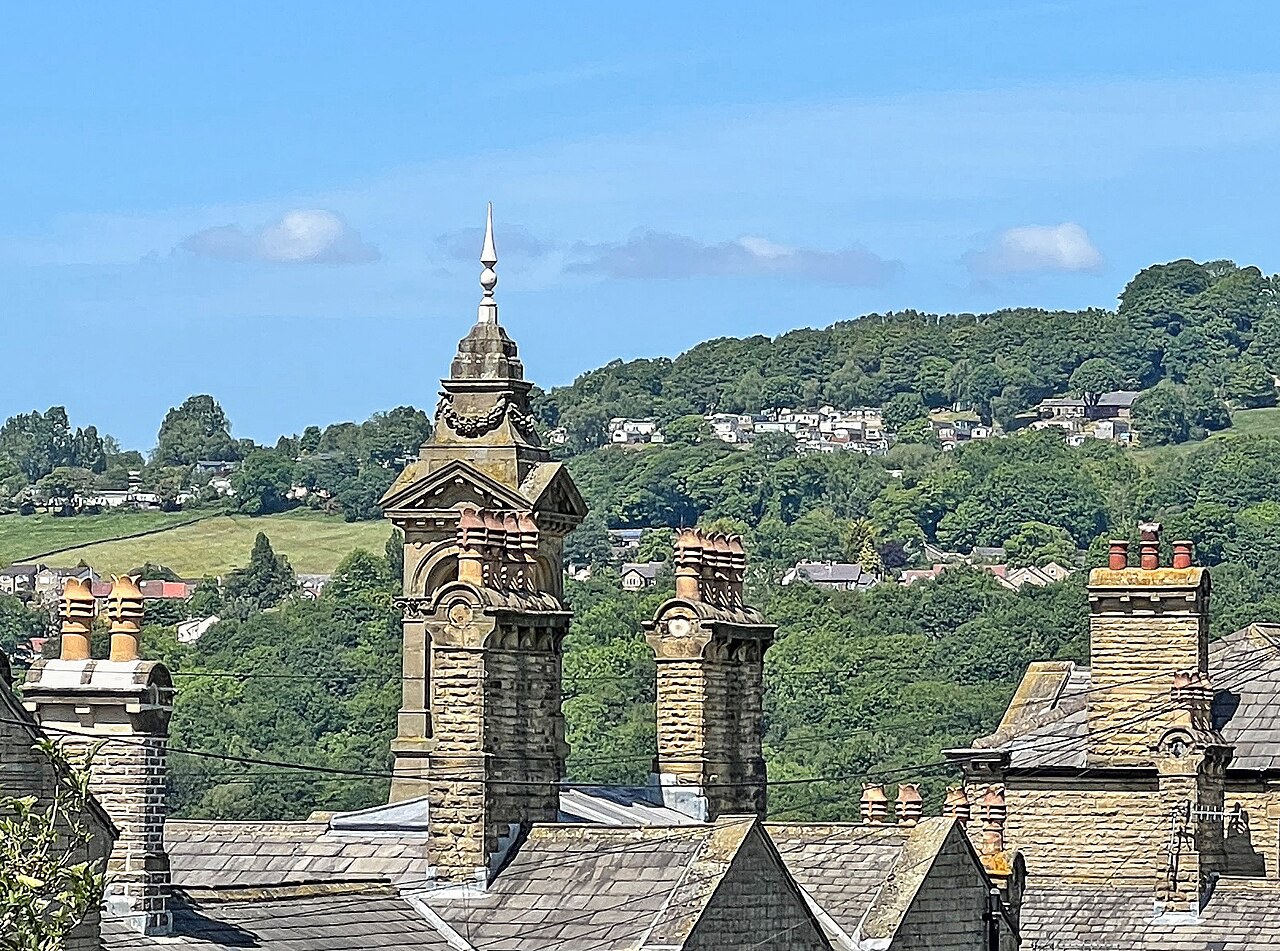
A compact Victorian model village of more than 800 stone houses, laid out in Italian Renaissance style and inscribed on the UNESCO World Heritage List in 2001.
- Visit length
- Editorial estimate: Allow around 90 minutes
- Locality
- on the River Aire
Cartwright Hall
A free Baroque art gallery with Bradford's public collection of early David Hockney work and a Mughal-style water garden outside.
- Visit length
- Editorial estimate: Allow around 75 minutes
- Locality
- in Lister Park
Brontë Parsonage Museum
The Haworth museum anchors a Brontë Country visit that can also take in cobbled Main Street, Brontë Bridge and Waterfall, and Penistone Hill.
- Visit length
- Editorial estimate: Allow around 120 minutes
- Locality
- Haworth
Things to do
1 placeLister Park
A Green Flag park with a boating lake, café, tennis courts, bowling green, accessible adventure playground and Mughal water garden.
- Visit length
- Editorial estimate: Allow around 75 minutes
- Locality
- Manningham
No places match this filter. Choose All places to reset the list.
Three ways to explore Bradford
Signature outings
Walk Saltaire's Victorian plan
Explore more than 800 stone houses laid out in Italian Renaissance style in a model village built without a pub by the temperance-minded Titus Salt.
See the five-rise staircase
Visit Britain's steepest staircase lock flight, where five chambers step up the Leeds–Liverpool Canal near Bingley station.
Find Hockney at Cartwright Hall
See Bradford's public collection of early David Hockney work inside the free Baroque gallery in Lister Park.
The city story
Bradford City Guide
Giant naans, cellar curry houses, real ale, Victorian wool wealth and Hockney collections give Bradford its scale and character.
Curry Capital at Full Scale
At Akbar's the naan arrives on a metal stand taller than the table, hanging over the karahis like a flag. It is a good way to discover whether your group has over-ordered. Bradford has held the title of Curry Capital of Britain six years running, with more than two hundred South Asian restaurants, and the naan is not the only place where the city declines to do things by halves.
The style here is Kashmiri and Punjabi — karahis cooked in the pan, tandoor breads, chargrilled seekh kebabs and lamb chops. The Kashmir, at 27 Morley Street, is the oldest of them; the sign says 1958, the family says it opened as a meeting place around 1952, a home from home for men newly arrived from Pakistan before the students found it. It is still run by the same brothers, still a cellar, still bring-your-own, and the fish karahi is about twelve pounds. The Sweet Centre on Lumb Lane began in 1964 as a halal butcher's and is now known for seekh kebabs and chana puri. Mumtaz and MyLahore are the polished end of the same tradition — halal, no alcohol; Mumtaz does halwa puri and fresh chai for breakfast. Worth checking which serve drink before you book a group in.
Pints in the Independent Quarter
For a pint you go into the centre, because the pubs are all here and nowhere near Saltaire — Titus Salt built his model village in 1851 without a single one, being a temperance man; the village's bar culture is a modern arrival. The Record Café on North Parade calls itself the holy trinity of ale, ham and vinyl: real ales downstairs, a Spanish charcuterie counter, and a record shop on the mezzanine you can actually buy from. The Sparrow, a few doors along, is owned by Kirkstall Brewery and pours six handpumps. The Corn Dolly has more than a thousand pumpclips on the walls and an 80s jukebox. Underneath a city-centre road, a maze of tunnels forgotten for decades reopened in 2016 as Sunbridge Wells, a warren of small bars and shops.
Saltaire's Temperance Legacy
Saltaire is the place to stay if you want quiet. It is a complete Victorian village on the River Aire, twelve minutes north on the Airedale line, over 800 stone houses laid out in Italian Renaissance style and inscribed on the UNESCO list in 2001. Salts Mill, the vast 1853 building at its heart, stopped spinning wool in 1986 and now holds one of the best collections of David Hockney anywhere — Hockney was born in Bradford — and it is free to walk in. Saltaire station sits directly opposite the door.
Free Culture and Wool Grandeur
Much of Bradford is free, in fact. The National Science and Media Museum has the first IMAX screen opened in Europe and the only cinema in the world that can still show three-strip Cinerama. Cartwright Hall in Lister Park is a free art gallery with more Hockney and a Mughal water garden outside. The Wool Exchange, Venetian Gothic and built for the wool merchants in the 1860s, is now a Waterstones.
Priestley's Bruddersford
Outside the museum stands a statue of J.B. Priestley, the city he called Bruddersford spread out in front of him.
Stay around Yorkshire
Make a longer stay of it
Travel Fox holiday homes around Yorkshire, linked directly to their property pages.
A guide with a point of view
Written from research. Edited for real journeys.
Use the Official site links for live practical details, then use this guide for context, ideas and room to explore.
Photography credits & licences
Third-party photographs are credited to their named creators and reused under the linked Creative Commons licence or public-domain dedication. Travel Fox stores an optimised local copy; the file-specific changes and any browser-applied display crop are disclosed below. Reused photographs link both to the Wikimedia Commons source record and to the declared source image; Travel Fox's own photographs carry no such record and are marked as ours. These image licences do not cover Travel Fox text, branding or page design.
- File:Saltaire rooftops.jpg — photograph by Tim Green; https://www.flickr.com/photos/atoach/53018003370/. Source record on Wikimedia Commons. Declared source image. Licence: CC BY 2.0. File changes: Downloaded from Wikimedia Commons, resized to a maximum 1920px edge and encoded as an optimised JPEG. Display changes: Displayed with responsive CSS cropping.
- File:Bingley Five-Rise Locks - geograph.org.uk - 7311515.jpg — photograph by Oliver Dixon; Bingley Five-Rise Locks by Oliver Dixon. Source record on Wikimedia Commons. Declared source image. Licence: CC BY-SA 2.0. File changes: Downloaded from Wikimedia Commons, resized to a maximum 1920px edge and encoded as an optimised JPEG. Display changes: Displayed with responsive CSS cropping.
Sources
Every place on this page is checked against a published source. Each entry links the record we used and names who publishes it.
- Saltaire — saltairecollection.org operator, sector body or destination organisation
- National Science and Media Museum — scienceandmediamuseum.org.uk operator, sector body or destination organisation
- Cartwright Hall — bradforddistrictparks.org other published source
- Lister Park — bradforddistrictparks.org other published source
- Sweet Centre — sweetcentrebradford.co.uk operator, sector body or destination organisation
- Mumtaz — mumtaz.org.uk operator, sector body or destination organisation
- The Record Café — visitbradford.com operator, sector body or destination organisation
- Bingley Five Rise Locks — visitbradford.com operator, sector body or destination organisation
- Brontë Parsonage Museum — visitbradford.com operator, sector body or destination organisation