
Red sandstone and local defiance
Turriff
A Deveron town known as Turra, where a bronze cow recalls a famous 1913 protest.
- Best for
- Local history, riverside walking and nearby castles
- Give it
- A half day in town or longer with a castle drive
- Don't miss
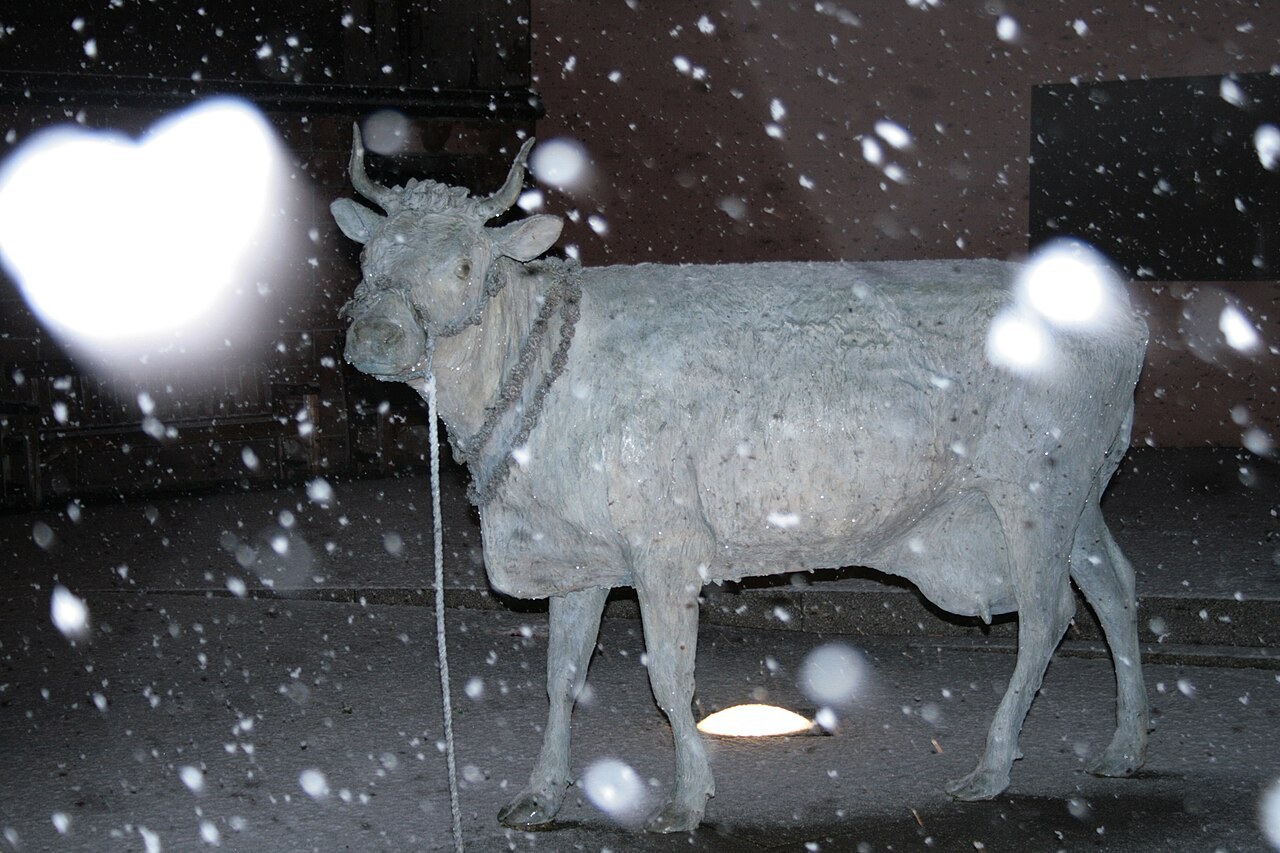
- The Turra Coo at Main Street and High Street
Photo: tormentor4555 · CC BY-SA 3.0 · cropped
The Fox verdict
A small town with a very memorable cow
Turriff pairs red-sandstone townscape and Deveron paths with one of Aberdeenshire's most distinctive protest stories.
Start with the Turra Coo, trace older history at St Congan's Old Church and the heritage centre, then make time for the Haughs or the castles at Delgatie and Fyvie.
Where to go
Places in Turriff
Every place below is checked against a published source, listed with what it is and how long to give it.
Local signatures
3 placesSt Congan's Old Church
The surviving choir of the old parish church, with a double bellcote dated 1635, a bell from 1556 and a sandstone block carved with ten heads.
- Visit length
- Editorial estimate: Allow around 30 minutes
- Locality
- Turriff
Turriff Heritage Centre
A centre for Turriff's local history in the former Municipal Building.
- Visit length
- Editorial estimate: Allow around 60 minutes
- Locality
- former Municipal Building
Fyvie Castle
A baronial castle with gardens, a loch and estate walks.
- Visit length
- Editorial estimate: Allow around 2 hours
- Locality
- Fyvie, about 7.0 miles south-east of Turriff
Walks & outdoors
1 placeThe Haughs
A roughly 76.6-acre riverside recreation park with maintained paths, used for walking, running and birdwatching and as the site of the Turriff Show.
- Visit length
- Editorial estimate: Allow around 60 minutes
- Locality
- beside the River Deveron
History & heritage
2 places
Turra Coo
A bronze cow commemorating the 1913 protest in which Robert Paterson's seized dairy cow became the centre of an auction disturbance and was later bought back by public subscription.
- Visit length
- Editorial estimate: Allow around 20 minutes
- Locality
- junction of Main Street and High Street
Delgatie Castle
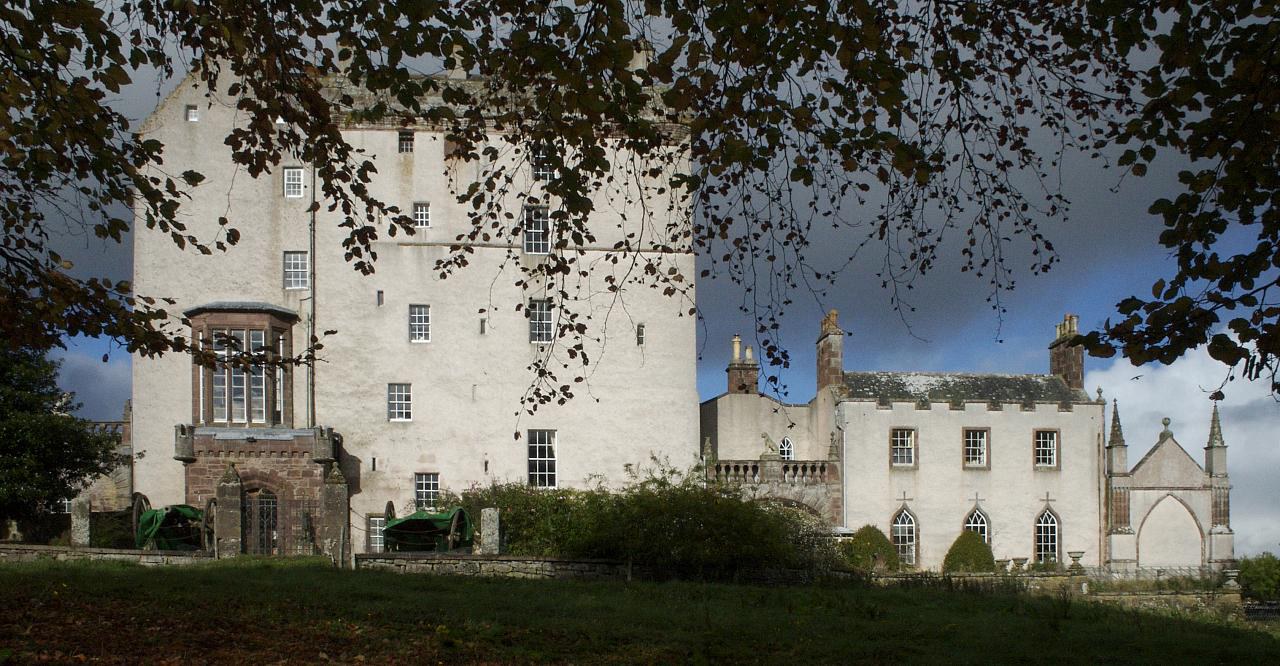
A white-harled five-storey tower with a wide turnpike stair and painted ceilings, surrounded by woodlands with a roughly 3.3-mile loop from the castle car park.
- Visit length
- Editorial estimate: Allow around 1 hour 25 minutes for the woodland loop
- Locality
- about 2 miles north-east of Turriff
Things to do
1 placeTurriff Sports Centre
Turriff's sports centre, with a swimming pool and the library nearby.
- Visit length
- Editorial estimate: Allow around 60 minutes
- Locality
- Turriff
No places match this filter. Choose All places to reset the list.
Three ways to explore Turriff
Signature outings
Follow the Turra Coo story
See the bronze cow that recalls the 1913 protest, auction disturbance and community effort to buy the animal back.
Walk the Haughs
Use the maintained riverside paths for a walk beside the Deveron, with running and birdwatching also noted in the source.
Explore Delgatie
Follow the roughly 3.3-mile woodland loop from the car park around the white-harled castle.
The town story
Turriff Town Guide
The original Travel Fox account of Turra's sandstone streets, places to eat, riverside paths and remarkable cow.
Bronze Cow and Red Sandstone
At the junction of Main Street and High Street stands a bronze cow. It has a name — the Turra Coo — and it is the reason a great many people know Turriff exists at all. More on the cow shortly, because it deserves the wait.
The town itself is built from red sandstone, most of the High Street dating to the early 1800s, quarried locally and solid enough that the whole place reads as one material. Locals call it Turra, in Scots, and the name comes from the Gaelic Torraibh, meaning place of round hills. It sits above the River Deveron, where the Burn of Turriff joins it, on the main Aberdeen–Banff road.
Places to Eat and Drink
For eating, the town keeps three proper options. The Fife Arms is one of the town's oldest buildings, white-painted and dating to 1770, at the north end of Main Street, and its restaurant leans local — pheasant goujons, sea bass, rack of lamb, loin of venison, and a breakfast that runs to six cooked dishes. The White Heather looks ordinary from the street and isn't inside; one reviewer called it "nice, bright, modern and very clean", and the kitchen does macaroni cheese, battered chicken fillets and sticky toffee pudding, with light lunches Thursday to Monday. The Crown Inn, on Crown Street, is quieter — a family-run pub with two rooms, one with a pool table and one for eating, and a good whisky shelf. The Turriff United Social Club, attached to the Highland League football ground, does a decent pint if you want the football on.
There was a time when the town was better supplied with drink. By 1800 it reportedly had more than twice as many ale and whisky houses as butchers. That ratio has since corrected.
Riverside Walks and the Turra Coo
For walking, head for the Haughs — seventy-odd acres of riverside park along the Deveron, with maintained paths, birdwatching, and the ground where the Turriff Show sets up each August. Two miles northeast, a three-mile loop runs through the woods around Delgatie Castle from its car park. The Walk Well Turriff group sets off from the sports centre and circles the den on foot.
Now the cow. In 1913 a local farmer, Robert Paterson of Lendrum, refused to stamp his workers' National Insurance cards in protest at Lloyd George's new Act. To recover the debt, a sheriff's officer seized the only movable thing on the farm — Paterson's white dairy cow. At the auction in the town square the animal turned up decorated with ribbons and painted with the words "Lendrum to Leeks", a crowd of a hundred pelted the officers with soot and rotten fruit, and the cow bolted. She was bought back by public subscription and returned to Lendrum in triumph, where she lived out her days and was buried in 1920.
Turriff Show and the Squeak
Turriff Show, first held in 1864, is now Scotland's largest two-day agricultural show, drawing more than twenty-four thousand people. The Queen came for the 150th in 2014.
The local paper, the Turriff Advertiser, was founded in 1933 and known to everyone as the Squeak. It printed its last edition in 2022.
Stay around Aberdeenshire
Make a longer stay of it
Travel Fox holiday homes around Aberdeenshire, linked directly to their property pages.
For homeowners
Own a holiday home near Turriff?
We manage holiday lets across the UK from 12% commission, charged after cleaning costs, with no lock-in. A co-founder visits before you decide.
How our holiday let management works →
A guide with a point of view
Written from research. Edited for real journeys.
Use the Official site links for live practical details, then use this guide for context, ideas and room to explore.
Photography credits & licences
Third-party photographs are credited to their named creators and reused under the linked Creative Commons licence or public-domain dedication. Travel Fox stores an optimised local copy; the file-specific changes and any browser-applied display crop are disclosed below. Reused photographs link both to the Wikimedia Commons source record and to the declared source image; Travel Fox's own photographs carry no such record and are marked as ours. These image licences do not cover Travel Fox text, branding or page design.
- File:Th Turra Coo - panoramio.jpg — photograph by tormentor4555; tormentor4555. Source record on Wikimedia Commons. Declared source image. Licence: CC BY-SA 3.0. File changes: Downloaded from Wikimedia Commons, resized to a maximum 1920px edge and encoded as an optimised JPEG. Display changes: Displayed with responsive CSS cropping.
- File:Delgatie Castle (3222493849).jpg — photograph by Tom Parnell from Scottish Borders, Scotland; Delgatie Castle. Source record on Wikimedia Commons. Declared source image. Licence: CC BY-SA 2.0. File changes: Downloaded from Wikimedia Commons, resized to a maximum 1920px edge and encoded as an optimised JPEG. Display changes: Displayed with responsive CSS cropping.
Sources
Every place on this page is checked against a published source. Each entry links the record we used and names who publishes it.
- Turra Coo — contenthub.visitabdn.com operator, sector body or destination organisation
- St Congan's Old Church — visitabdn.com operator, sector body or destination organisation
- The Haughs — aberdeenshire.gov.uk statutory register or public authority
- Turriff Heritage Centre — visitabdn.com operator, sector body or destination organisation
- Turriff Sports Centre — livelifeaberdeenshire.org.uk other published source
- Delgatie Castle — delgatiecastle.com operator, sector body or destination organisation
- Fyvie Castle — nts.org.uk national body or asset manager