
Links and Clyde shore
Troon
Open Championship golf, two sandy bays, harbour history and marina-side food on Troon's rocky headland.
- Best for
- Links golf, sandy beaches and harbour history
- Give it
- A day between the seafront and harbour
- Don't miss
- The Postage Stamp and Ballast Bank viewpoints
Photo: Alan O'Dowd · CC BY-SA 2.0 · cropped
The Fox verdict
Links golf beside the Firth of Clyde
Troon combines Open Championship golf, two wide sandy beaches, harbour history and marina-side food.
Royal Troon's Postage Stamp gives the town its most famous sporting landmark, while North Sands and South Sands flank the headland with level promenades and views across the Clyde. Ballast Bank, Fullarton's surviving parkland and the ruins of Crosbie Church carry the story beyond the golf links.
Where to go
Places in Troon
Every place below is checked against a published source, listed with what it is and how long to give it.
Local signatures
3 placesBallast Bank
Built from ballast dumped by merchant ships, this artificial hill is now a scenic walk with viewpoints over Troon, the harbour and the Firth of Clyde.
- Visit length
- Editorial estimate: Allow around 45 minutes
- Locality
- By Troon harbour
Scotts Troon
A waterfront bar and restaurant overlooking the marina, with terrace seating and a seasonally changing menu running from freshly landed lobster to Scotch steaks.
- Visit length
- Editorial estimate: Allow around 1 hour 15 minutes
- Locality
- Troon Yacht Haven, Harbour Road
Dundonald Castle
A three-storey tower house built by Robert Stewart to mark his accession as Robert II, with a visitor centre, café, shop and exhibition on the earlier castles at the site.
- Visit length
- Editorial estimate: Allow around 1 hour 30 minutes
- Locality
- Near Dundonald village
History & heritage
3 placesRoyal Troon Golf Club
Founded in 1878 and granted Royal status at its 1978 centenary, Royal Troon has hosted the men's Open ten times; its Postage Stamp eighth is a 123-yard par 3.
- Visit length
- Editorial estimate: Allow around 2 hours
- Locality
- In Troon
Fullarton Estate Parkland
Fullarton House was demolished in 1966, but its grounds survive as a public park with stables, walled gardens, a doocot and an ice house.
- Visit length
- Editorial estimate: Allow around 1 hour
- Locality
- The former Fullarton House grounds
Crosbie Church
The ruined church is traditionally said to have lost its roof on the day Robert Burns was born; its cemetery dates from around 1240 and served as Troon's burial ground until 1862.
- Visit length
- Editorial estimate: Allow around 30 minutes
- Locality
- Near Troon
Things to do
2 placesNorth Sands
North Sands is a wide sandy beach with a level promenade, used for family days out, windsurfing and kitesurfing.
- Visit length
- Editorial estimate: Allow around 1 hour
- Locality
- North of Troon's rocky headland
South Sands
South Sands is a wide sandy beach with a level promenade, used for family days out, windsurfing and kitesurfing.
- Visit length
- Editorial estimate: Allow around 1 hour
- Locality
- South of Troon's rocky headland
No places match this filter. Choose All places to reset the list.
Three ways to explore Troon
Signature outings
Meet the Postage Stamp
Royal Troon's 123-yard eighth is the shortest hole in Open Championship golf, with a green measuring 2,635 square feet.
Follow the southern sands
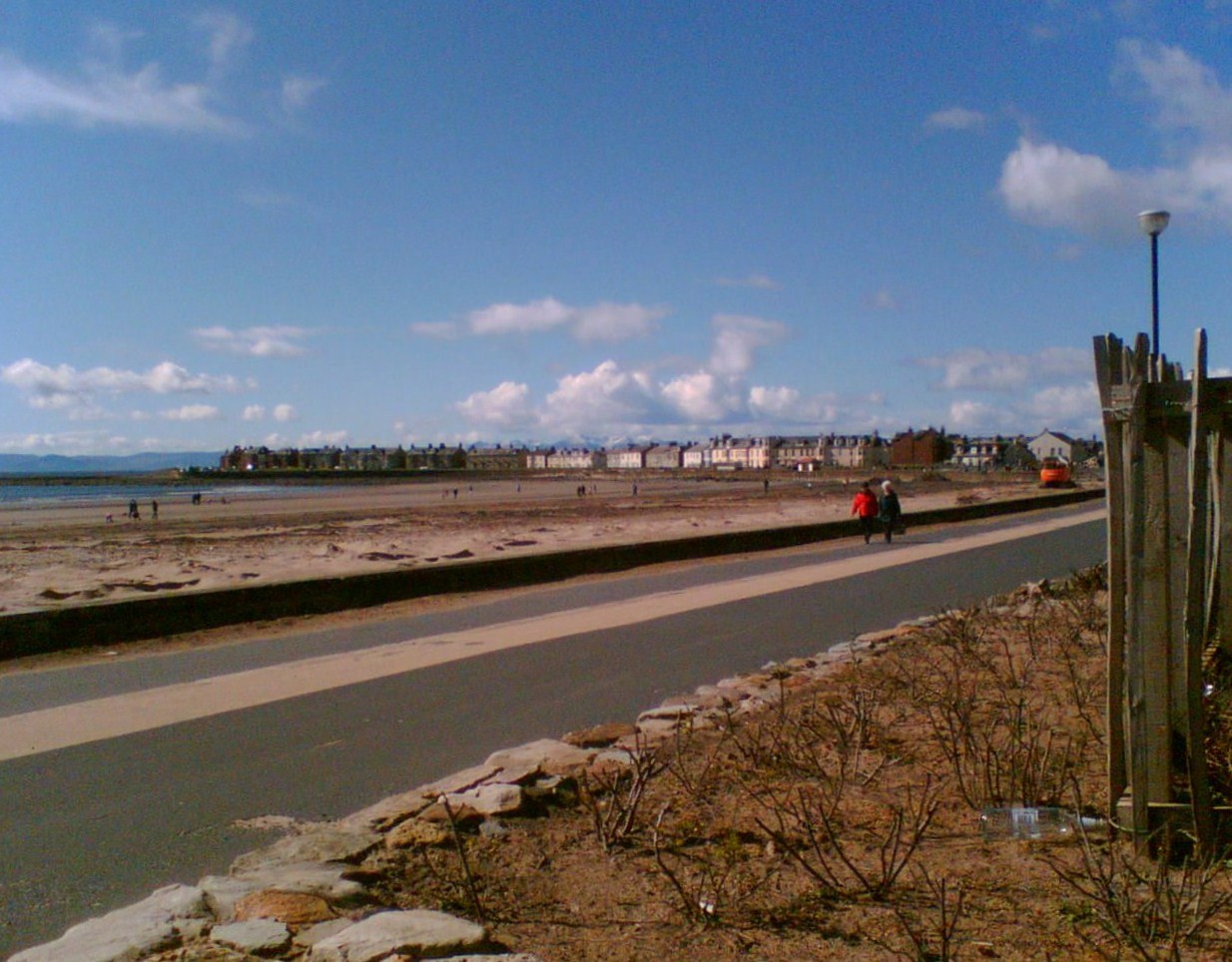
Take the level promenade beside South Sands, with wide sand and clear-day views across the Firth of Clyde to Arran and Ailsa Craig.
Meet the Stewart kings
Explore the three-storey tower house built by Robert Stewart to mark his accession as Robert II, then use the visitor centre's café, shop and exhibition.
The town story
Troon Town Guide
Golfing drama, broad beaches, harbour history and the places that explain how Troon grew.
Links and the Firth of Clyde
The eighth hole at Royal Troon is a par-3 of 123 yards, the shortest hole in Open Championship golf, with a green measuring 2,635 square feet. It is called the Postage Stamp, and it has undone better players than you are likely to bring. The club sits in the town itself, founded in 1878, granted Royal status at its 1978 centenary, and it has hosted the men's Open ten times — Palmer, Watson, Weiskopf, Stenson, Schauffele in 2024. Five other courses ring the town on the same links land, three of them municipal and open to visitors, so you do not need a member to sign you in.
If golf is not the reason you came, the seafront is. Troon is built on a rocky headland pushing into the Firth of Clyde, with a wide sandy beach on each side of it: North Sands and South Sands, both backed by level promenade. The Ayrshire Coastal Path runs through, and on a clear day you look west across the water to Arran and Ailsa Craig. Windsurfers and kitesurfers use both beaches. For a walk with a view, climb the Ballast Bank — an artificial hill raised from the ballast that merchant ships dumped here, now a set of viewpoints over the harbour and the Clyde.
Eating at the Harbour
The harbour is where you eat. Scotts, at the Troon Yacht Haven marina on Harbour Road, is a waterfront bar and restaurant with terrace seating over the boats. The menu changes with the season and runs from freshly landed lobster to Scotch steaks, with share platters and bar nibbles; two courses come to £19.95 in the week, and food starts at nine in the morning if you want a breakfast roll before anything else. A pound from every cocktail goes to Ayrshire Cancer Support. Round at the harbour proper there is MacCallums Oyster Bar and, next to it, the Wee Hurrie chip shop.
Coal, Rails and Shipbuilding
That harbour is the reason the town exists. The Troon Harbour Act passed in 1808, and by 1812 the docks served the Kilmarnock and Troon Railway — Scotland's first railway, a horse-drawn line built to carry coal, on which passengers were charged freight rates by weight. By the end of the century Troon was among Britain's top ten coal ports, and the Ailsa yard built ships here until 2000. Fullarton House, the grand mansion of the Dukes of Portland, stood until 1966; its grounds survive as a public park, with stables, walled gardens, a doocot and an ice house.
Crosbie Church
Just inland lies the ruin of Crosbie Church. Its roof is said to have blown off on 25 January 1759 — the day Robert Burns was born — after which the building fell to ruin. The cemetery is older still, dating from around 1240, and served as Troon's burial ground until 1862.
Ferry, Rail and the Broon from Troon
Since March 2024 a CalMac ferry has run from the harbour to Brodick on Arran, a full day out. The train stops in the town on the Glasgow–Ayr line, and Prestwick airport is three miles off. Gordon Brown, the Lions forward, was born here in 1947 and never quite shook the name he was given: the Broon from Troon.
Stay around Ayrshire
Make a longer stay of it
Travel Fox holiday homes around Ayrshire, linked directly to their property pages.
For homeowners
Own a holiday home near Troon?
We manage holiday lets across the UK from 12% commission, charged after cleaning costs, with no lock-in. A co-founder visits before you decide.
How our holiday let management works →
A guide with a point of view
Written from research. Edited for real journeys.
Use the Official site links for live practical details, then use this guide for context, ideas and room to explore.
Photography credits & licences
Third-party photographs are credited to their named creators and reused under the linked Creative Commons licence or public-domain dedication. Travel Fox stores an optimised local copy; the file-specific changes and any browser-applied display crop are disclosed below. Reused photographs link both to the Wikimedia Commons source record and to the declared source image; Travel Fox's own photographs carry no such record and are marked as ours. These image licences do not cover Travel Fox text, branding or page design.
- File:South Sands, Troon - geograph.org.uk - 3262830.jpg — photograph by Alan O'Dowd; South Sands, Troon by Alan O'Dowd. Source record on Wikimedia Commons. Declared source image. Licence: CC BY-SA 2.0. File changes: Downloaded from Wikimedia Commons, resized to a maximum 1920px edge and encoded as an optimised JPEG. Display changes: Displayed with responsive CSS cropping.
Sources
Every place on this page is checked against a published source. Each entry links the record we used and names who publishes it.
- Royal Troon Golf Club — royaltroon.co.uk operator, sector body or destination organisation
- North Sands — britainfromabove.org.uk other published source
- South Sands — ayrshirecoastalpath.org other published source
- Ballast Bank — south-ayrshire.gov.uk statutory register or public authority record not machine-readable; publisher restricts automated access
- Scotts Troon — scotts-troon.co.uk operator, sector body or destination organisation
- Fullarton Estate Parkland — trove.scot other published source record not machine-readable; publisher restricts automated access
- Crosbie Church — trove.scot other published source record not machine-readable; publisher restricts automated access
- Dundonald Castle — historicenvironment.scot statutory register or public authority record not machine-readable; publisher restricts automated access