
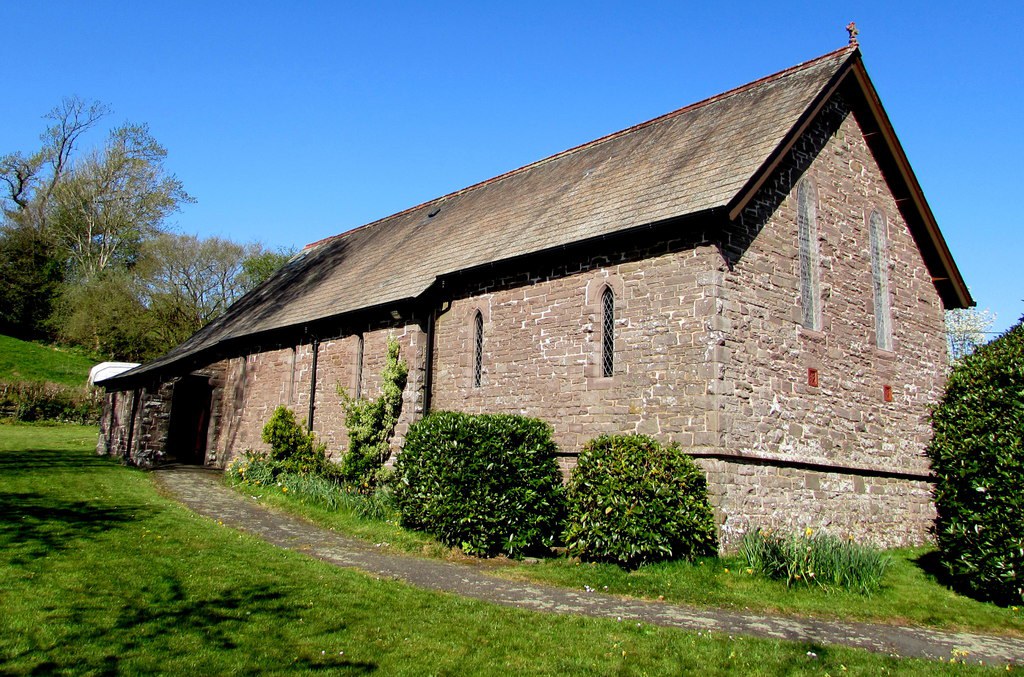
Bwlch, Powys
Bwlch
A compact roadside village at a low col, with local food, a traditional pub and quick access to open grassy ridges.
- Best for
- Ridge walks and local food
- Landscape
- The Usk–Wye watershed
- Don't miss
- The Beacons Way over Cefn Moel
Photo: Jaggery · CC BY-SA 2.0 · cropped
The Fox verdict
A roadside base beneath open grassy ridges
Come for a seven-mile circuit over Cefn Moel, local produce and the village's sole surviving pub.
Bwlch pairs simple village provisions with the New Inn, All Saints Church and routes onto Cefn Moel. Llangorse Lake, its multi-activity centre and Tretower Court and Castle broaden a longer visit.
Where to go
Places in Bwlch
Every place below is checked against a published source, listed with what it is and how long to give it.
Local signatures
3 placesBeacons Farm Shop & Welsh Venison Centre
This family-run farm shop and small café sells its own venison, beef and lamb, sausages made on site and locally baked bread. Outdoor tables overlook deer, cattle and sheep.
- Visit length
- Editorial estimate: Allow around 45 minutes
- Locality
- Middlewood Farm
Llangorse Lake
South Wales's largest natural lake offers lakeside scenery and boat hire, and is also seen from the higher ground around Bwlch.
- Visit length
- Editorial estimate: Allow around 1 hour
- Locality
- Llangorse
Llangorse Multi Activity Centre
The centre offers indoor climbing and bouldering, pony trekking and horse riding, a junior challenge course and archery for families.
- Visit length
- Editorial estimate: Allow around 2 hours
- Locality
- Llangorse
- Access
- Minimum ages vary by activity.
History & heritage
2 places
All Saints Church
The late 19th- and early 20th-century mission church has a small nave, wide chancel and green Welsh-slate roof. Inside are a stone pulpit and Celtic Studios stained glass from 1951 and 1967.
- Visit length
- Editorial estimate: Allow around 30 minutes
- Locality
- Bwlch
- Access
- It remains open for worship.
Tretower Court and Castle
The site combines Roger Picard II's circular tower with the later court associated with Sir Roger Vaughan, including a recreated 15th-century garden and furnished great hall.
- Visit length
- Editorial estimate: Allow around 1 hour 30 minutes
- Locality
- Off the A479
No places match this filter. Choose All places to reset the list.
Three ways to explore Bwlch
Signature outings
Taste Bwlch's farm produce
Beacons Farm Shop sells its own venison, beef and lamb alongside sausages made on site and locally baked bread.
Find the Celtic Studios glass
All Saints holds Christ and St Luke from 1951 and a Figure of Christ from 1967 beneath its green Welsh-slate roof.
Enter court and castle
Tretower pairs Roger Picard II's circular tower with a later court, recreated 15th-century garden and furnished great hall.
The village story
Bwlch: ridge roads and a pub fire
The original Travel Fox guide follows Bwlch from its surviving inn and local provisions onto grassy ridges, through turnpike history and into All Saints Church.
The New Inn, from fire to kitchen
The New Inn sits on the A40 with armchairs pulled around a large fireplace and a bunkhouse upstairs for walkers who would rather not drive home. It was called The Star until 1845, when it was a single-storey house you reached by steps up from the road, and it is now the only pub left in a village that once kept several. In 2024 it was named Brecknockshire CAMRA Pub of the Year. The regular cask ale is Wye Valley Butty Bach, with changing beers from Grey Trees, Oakham and Salopian, and real cider alongside. Dogs are welcome; the pub dog is Rocky.
The kitchen runs to venison in red wine, beef and chorizo lasagne, haddock and spinach gratin, Welsh beef pie and mushroom pot pie, with red Thai vegetable curry and a mushroom-and-lentil lasagne for anyone off the meat. The salted caramel cheesecake is the pudding to watch for. Neil, Amy and Maddy are among the people who will serve you.
Provisions at the mountain pass
For provisions you have two options. The Gate Shop and Post Office, which began life as a toll house, covers milk, bread and the day-to-day. Just off the A40 at Middlewood Farm, the Beacons Farm Shop and Welsh Venison Centre sells its own venison, beef and lamb, sausages made on site, and locally baked bread, with a small café doing cakes, tea and local ice cream at outdoor tables that look over deer, cattle and sheep.
The village sits on a low col around 223 metres up, on the watershed between the Usk and the Wye, between Buckland Hill and Cefn Moel. Arrive on the A40 and you climb to a compact roadside cluster at the pass, from where paths reach open grassy ridges quickly. Look out and you have the central Beacons, the Black Mountains and Llangorse Lake laid out below.
Ridge walks and turnpike history
Walkers are well served. A seven-mile circular links Bwlch, Cwmdu and Cefn Moel, taking field paths through Felindre, passing St Michael and All Angels Church and Thomas Price's grave, then returning on the Beacons Way over Cefn Moel with Pen y Fan in the distance. Expect mud, stiles and livestock. For a longer day, a thirteen-mile route crosses Mynydd Llangorse and circles Llangorse Lake, the largest natural lake in South Wales, before returning over the Iron Age fort of Allt yr Esgair.
The reason for all those vanished inns is the road. In the 18th and 19th centuries Bwlch stood on the London to Carmarthen and Fishguard turnpike, and stagecoaches stopped to change horses, which is why the present shop was once a toll house. The writer John Ogilby, passing through in 1675, called it a "disunited village seated on an eminence." Above the village to the north-west, the fragments of Blaenllynfi Castle sit on a moated platform, probably raised between 1208 and 1215.
All Saints and onward connections
All Saints Church, built between 1897 and 1902 by public subscription, is a plain thing under a green Welsh-slate roof, with a stone pulpit and Celtic Studios stained glass. Abergavenny is the practical railhead, about nineteen kilometres down the A40, connected to Bwlch by the X43 bus, which calls at All Saints in both directions.
The fireside final word
If you go into the New Inn, sit by the fire. Rocky may already have the best spot.
Stay around Brecon Beacons
Make a longer stay of it
Travel Fox holiday homes around Brecon Beacons, linked directly to their property pages.
For homeowners
Own a holiday home near Bwlch?
We manage holiday lets across the UK from 12% commission, charged after cleaning costs, with no lock-in. A co-founder visits before you decide.
How our holiday let management works →
A guide with a point of view
Written from research. Edited for real journeys.
Use the Official site links for live practical details, then use this guide for context, ideas and room to explore.
Photography credits & licences
Third-party photographs are credited to their named creators and reused under the linked Creative Commons licence or public-domain dedication. Travel Fox stores an optimised local copy; the file-specific changes and any browser-applied display crop are disclosed below. Reused photographs link both to the Wikimedia Commons source record and to the declared source image; Travel Fox's own photographs carry no such record and are marked as ours. These image licences do not cover Travel Fox text, branding or page design.
- File:All Saints Church, Bwlch, Powys (geograph 6128795).jpg — photograph by Jaggery; Jaggery. Source record on Wikimedia Commons. Declared source image. Licence: CC BY-SA 2.0. File changes: Downloaded from Wikimedia Commons, resized to a maximum 1920px edge and encoded as an optimised JPEG. Display changes: Displayed with responsive CSS cropping.
Sources
Every place on this page is checked against a published source. Each entry links the record we used and names who publishes it.
- Beacons Farm Shop & Welsh Venison Centre — visitcrickhowell.wales operator, sector body or destination organisation
- All Saints Church — heritage.churchinwales.org.uk other published source
- Llangorse Lake — visitwales.com operator, sector body or destination organisation
- Llangorse Multi Activity Centre — llangorse.com operator, sector body or destination organisation
- Tretower Court and Castle — cadw.gov.wales statutory register or public authority