
Wildcats, shinty and Highland history
Newtonmore
A Badenoch village where painted wildcats lead into museums, local food and paths between the Spey, Calder and surrounding hills.
- Best for
- Painted-wildcat hunting, Highland history and village walks
- Trail range
- A 0.5 km Loch Imrich loop to the 10 km Wildcat Trail
- Don't miss
- 132 named, life-size painted wildcats around the streets and paths
Photo: Euan Nelson · CC BY-SA 2.0 · cropped
The Fox verdict
A village that rewards exploring on foot
Newtonmore joins a village-scale painted-wildcat hunt to two distinct museums, living shinty culture and a graded choice of local walks.
Begin with the painted cats, give the Highland Folk Museum and Clan Macpherson Museum separate time, then choose between the short Loch Imrich circuit and the longer Wildcat Trail. Balavil's Shinty Bar and Wild Flour add two strongly local stops without turning the day into a drive between distant attractions.
Where to go
Places in Newtonmore
Every place below is checked against a published source, listed with what it is and how long to give it.
Local signatures
3 placesWildcat Experience
A hunt for 132 named, life-size painted wildcat models hidden around Newtonmore since 2010; it is public art and a treasure trail, not a wildlife-sighting activity.
- Visit length
- Editorial estimate: around 90 minutes
- Locality
- around Newtonmore's streets and paths
- Access
- The published breakdown classes 98 cats as easy for wheelchairs and pushchairs, with further groups on bumpier, steeper or inaccessible terrain.
Highland Folk Museum
More than 35 reconstructed and relocated buildings interpret Highland life from the 1700s to the mid-twentieth century across areas including Aultlarie Croft and the rebuilt Baile Gean township.
- Visit length
- Editorial estimate: around 150 minutes
- Locality
- Newtonmore
Wildcat Trail
A waymarked circuit around Newtonmore through Spey-side paths, heather moorland and native woodland, with views towards the Cairngorm and Monadhliath ranges.
- Visit length
- Editorial estimate: 2.5–3.5 hours
- Locality
- Newtonmore
- Access
- The Allt Laraidh gorge section is permanently closed after a landslip, and the trail is redirected onto minor Strone Road. A separate woodland loop near Glen Road is currently inaccessible because of storm damage. Other sections can be steep, muddy or flooded.
Food & drink
2 places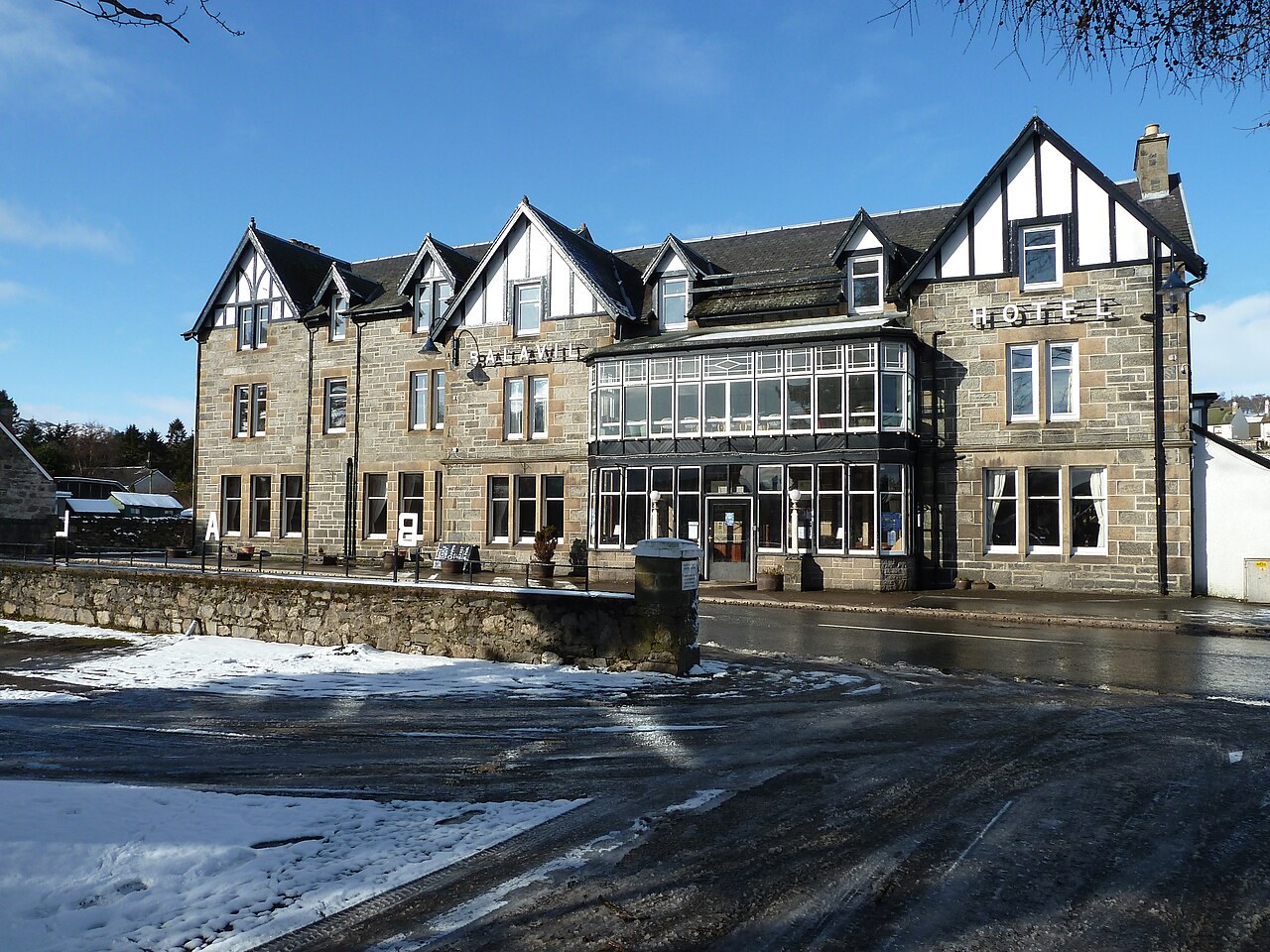
Balavil Hotel
A family-run hotel with open fires, a wood-panelled lounge and the Shinty Bar, whose Newtonmore shinty memorabilia sits alongside a pool table and televised sport.
- Visit length
- Editorial estimate: around 75 minutes
- Locality
- Newtonmore
Wild Flour Café
A family-owned café operating since 2013, with a garden, book exchange, dog treats and children's corner; most of its cakes, scones, soups, sandwiches and flatbreads are made in house.
- Visit length
- Editorial estimate: around 45 minutes
- Locality
- Newtonmore
Walks & outdoors
1 place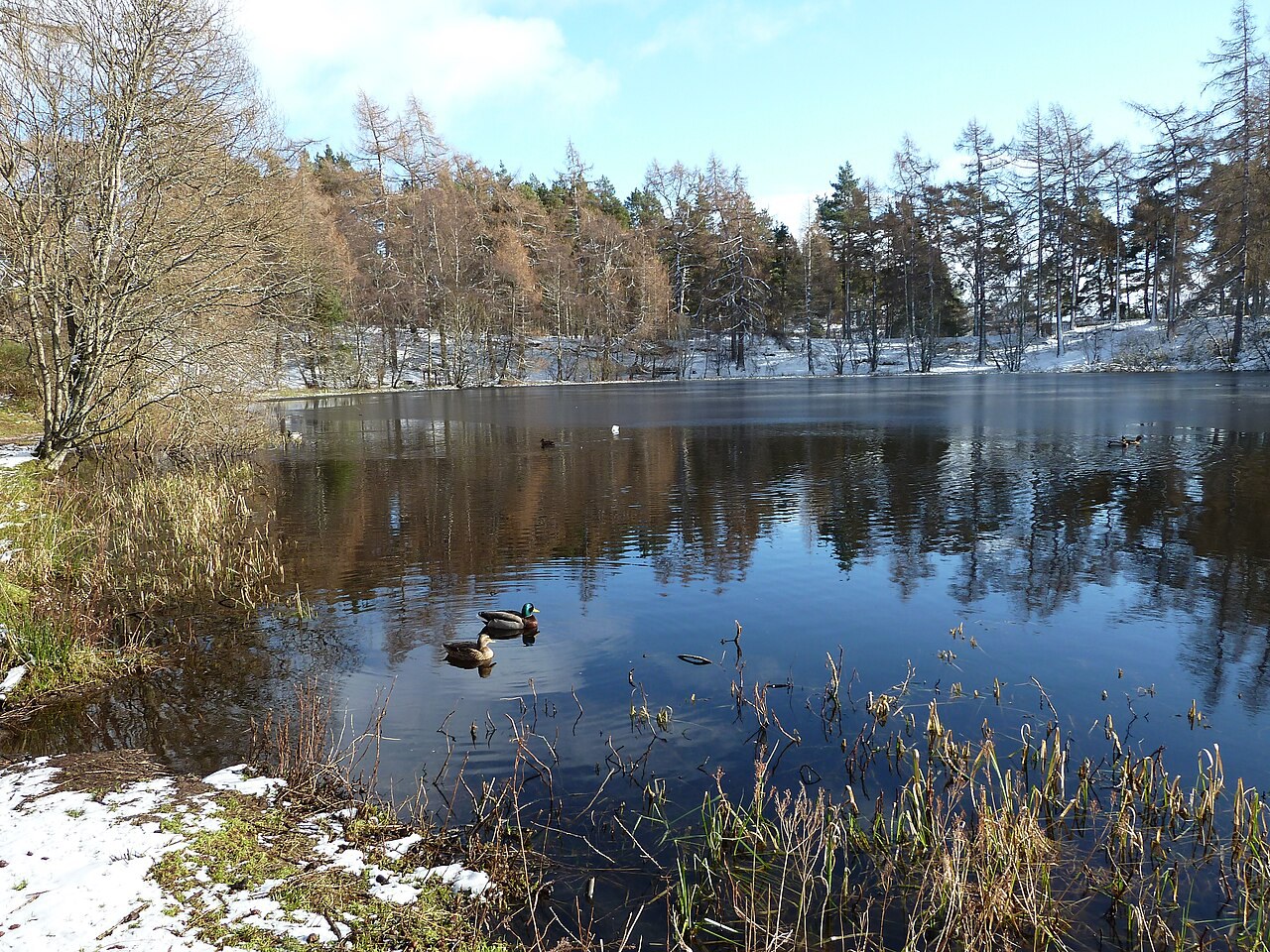
Loch Imrich
A short loch outing with a published distinction between the accessible higher route and lower access by steps and slopes.
- Visit length
- Editorial estimate: around 30 minutes
- Locality
- from Newtonmore village
- Access
- The higher route is suitable for wheelchairs and mobility scooters; the lower route reaches the loch by steps and slopes.
History & heritage
1 place
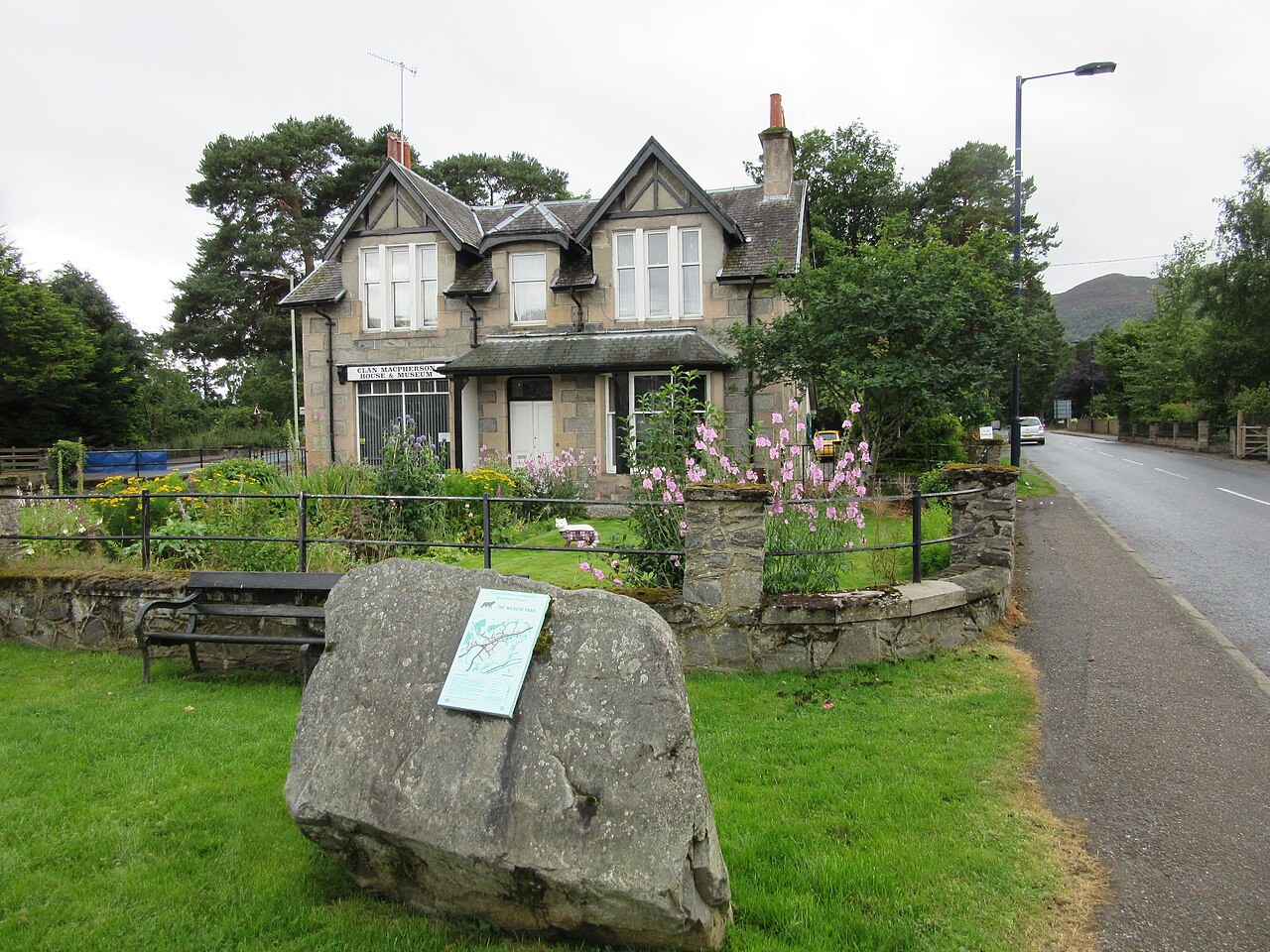
Clan Macpherson Museum
A compact chronological account of Clan Macpherson with Jacobite material, clan personalities, the Black Chanter, Cumberland Medallion and family portraits.
- Visit length
- Editorial estimate: around 60 minutes
- Locality
- Newtonmore
No places match this filter. Choose All places to reset the list.
Three ways to explore Newtonmore
Signature outings
The Black Chanter
Use the Black Chanter, Cumberland Medallion and family portraits as concrete points in the Clan Macpherson Museum's compact chronological story.
The Shinty Bar
The Balavil's back bar fills the room with Newtonmore shinty memorabilia, linking a hotel stop to the village's lived sporting culture.
Loch Imrich
Choose the 0.5 km loop, using the higher route for wheelchair and mobility-scooter access or the lower route by steps and slopes.
The town story
Newtonmore Town Guide
Painted wildcats, Highland collections, shinty and Speyside paths give Newtonmore a character that is best understood by walking through it.
Painted Cats and the Upper Spey
There are 132 life-size painted wildcats hidden around Newtonmore, each with a name, propped against walls and gateposts and the edges of paths since 2010. Finding them is the point. It is a treasure hunt at the scale of a whole village: 98 of the cats sit on flat ground reachable with a wheelchair or a pushchair, 11 more are on bumpier ground, 13 on steeper terrain, and 10 are out of reach for wheelchairs and pushchairs altogether. None of it involves seeing an actual wildcat. That is a separate and much harder story unfolding across the wider national park, where a conservation programme has been releasing the real animals; the painted ones are simply how Newtonmore gets you to walk its streets, which is exactly what you should do.
The village sits in Badenoch, in the upper Spey valley, with the Monadhliath rising to the west and the Cairngorm mass to the east. The Spey crosses its southern edge and the Calder comes down through a wooded gorge, so the near landscape is river flats and moor before it climbs to anything serious. The dark crags of Creag Dhubh are the immediate western landmark. You arrive at your own station on the Highland Main Line, which has step-free access, a help point and a small car park but no ticket office, toilets or refreshments; the A86 runs through the village towards Laggan and Fort William one way and Kingussie the other, while the A9 now bypasses the centre rather than pushing through it.
Three hotel bars anchor the eating and drinking. The Balavil is the one to seek out first, a family-run hotel with open fires and a wood-panelled lounge, and at the back the Shinty Bar, a room packed with Newtonmore shinty memorabilia, a pool table and televised sport. Dogs are allowed in the Shinty Bar; the rest of the hotel keeps a no-pets policy. The main bar pours local Cairngorm ales alongside more than sixty malt whiskies and around twenty gins. The food leans hard on the area: a Buckie hot-smoked salmon salad dressed with Newtonmore honey, dill and capers; haggis pakora; dill-and-lemon gravlax; a steak and Cairngorm ale pie; a Newtonmore venison casserole; and a smash burger called "The Newtonmore," layered with haggis and peppercorn sauce. There is sticky toffee pudding, and the plant-based side runs to vegan meatballs, a vegan pie and a fishless-finger butty.
Hotel Bars, Cafés and Shops
The Glen Hotel, an Edwardian building, serves good honest pub grub. Its menu runs through Highland kitchen staples: Cullen skink; a haggis tower with mash, carrot and turnip under whisky cream; venison casserole; "Glen Chicken" set on haggis with whisky cream and clapshot; haggis, neeps and tatties; a steak pie made with Cairngorm Stag ale; four-cheese macaroni; vegetarian haggis with clapshot; and an affogato with locally made Stag's Breath liqueur. Vegetarian, vegan, gluten-free and dairy-free choices appear on the menu. The comfortable bar and restaurant has a cask-ale tradition that has included up to four handpumps for Cairngorm, Caledonian, Cromarty and guest ales.
The Highlander is a large hotel, with the Monarch Restaurant, a bar serving simpler meals and a spacious lounge built around whisky and gin. There is a beer garden, and you can dine with a dog in the area called Farklers Rest.
For daytime food, Wild Flour has been the village café since 2013, with a garden, a book exchange, dog treats and a children's corner. Most of its cakes, scones, soups, sandwiches and filled flatbreads are made in house, alongside bread and Cullen skink. It is run by Suzy, who sings with a local Gaelic waulking group, and Lucy, who walks the surrounding hills with her dogs. The small, licensed Letterbox Restaurant occupies the former post office at Dod's Corner and changes its menu around Scottish produce, particularly seafood, local game and Aberdeenshire steaks. Antlers serves breakfast, brunch and lunch with takeaway. On the A9 just south of the village, Ralia Café makes sandwiches with Harry Gow bread from Inverness and soups ranging from potato and leek to sambar dhal and Thai chicken; it grinds coffee to order from an Edinburgh family roastery. Mehmood's handles curry, and Newtonmore Grill covers takeaway food.
Village Paths and Mountain Days
The shops have thinned over the years, but Newtonmore still has food shopping, a post office and banking, petrol, car washing, hairdressing and crafts. The Harris Tweed Shop sells genuine cloth and finished goods and ships worldwide from the village's oldest continuously used business premises, a building that opened in the late nineteenth century as a coal merchant and later held an antique shop and a bookshop. Learn & Create is a not-for-profit combining craft retail with classes, stocking yarn, fabric and haberdashery. Main Street has a Co-op and a post office and Spar that also carries pet supplies and wild-bird food. At the A9 stop, the Hairy Coo gift shop is run by mother and daughter Sheila and Emma. The Wildcat Centre stocks maps, walking guides and wildcat souvenirs, including local author Sue Thomas's Wild Flower Walks Around Newtonmore.
The walking is graded from a stroll to a full mountain day. At the gentle end, Loch Imrich is a half-kilometre loop from the village, with a higher route suitable for wheelchairs and mobility scooters and a lower one reaching the loch by steps and slopes. The Milk Cow Path is a fifteen-minute turn of about a kilometre, and Jack Richmond Memorial Park gives a riverside circuit near the village facilities. The Wildcat Trail is the longer outing: a waymarked circuit of roughly ten kilometres taking two and a half to three and a half hours through Spey-side paths, heather moor and native woodland. A landslip permanently closed the Allt Laraidh gorge section, and the trail is redirected onto minor Strone Road. A separate woodland loop near Glen Road is currently inaccessible because of storm damage. The Coffin Road circuit follows rough grass fields with gates, while the Strone Road loop uses minor roads and pavements with a long moderate slope, gaining an elevated view without a hill climb. West of the village, the public road runs about a mile and a half into Glen Banchor, opening a quiet cleared-township landscape beneath the Monadhliath.
Serious walkers have Creag Dhubh, a 756-metre viewpoint with climbing crags reached on about 503 metres of ascent, and the three Monadhliath Munros from Glen Banchor, a 24.5-kilometre day of eight to ten hours over Càrn Dearg, Càrn Sgulain and A'Chailleach on a rough, boggy plateau that demands proper navigation in poor visibility. Between those extremes, the Speyside Way link to Kingussie is a mostly gentle three miles, so you can reach the next town on foot or bicycle without touching the A9; National Cycle Route 7 passes through as well. Stagecoach's 39 and M39 bus routes link Newtonmore with Aviemore.
Museums, Shinty and the Railway
Two museums explain why the walking has such a layered backdrop. The Highland Folk Museum spreads across eighty acres, using more than thirty-five reconstructed and relocated buildings to interpret Highland life from the 1700s to the mid-twentieth century, from the 1930s working farm at Aultlarie Croft to Baile Gean, a rebuilt early-1700s township. Its founder, Dr Isobel F. Grant, called her original collection Am Fasgadh, "The Shelter," and described its purpose as being "to shelter homely ancient things from destruction." The township stood in for the first series of Outlander in 2014, and Kirk's Store gives younger visitors a period sweet shop to raid. The Clan Macpherson Museum, opened in 1952, is a compact counterpoint, holding the Black Chanter, the Cumberland Medallion and portraits of Eliza and Robert Macpherson among Jacobite material and the story of James "Ossian" Macpherson.
Shinty is lived culture here rather than display. Newtonmore Camanachd Club holds thirty-five Camanachd Cup wins, the competition record, and the Eilan has hosted matches since 1877. The village's Highland Games began in 1945 as a welcome-home gathering for returning service personnel; its traditional date is the first Saturday in August. The hill race climbs 1,200 feet over four and a half miles, with course records of 26 minutes 49 seconds by Finlay Wild and 32 minutes 21 seconds by Angela Mudge. On the flat ground by the Spey, Newtonmore Golf Club dates from 1893, took advice from Old Tom Morris in 1896, grew to eighteen holes in 1906 and later gained touches from James Braid; it plays as a par-70 course of just over 6,000 yards with mountain views in every direction.
The village that hosts all this was largely made by the railway. Older settlement lay up in Glen Banchor until sheep farming and a bridge over the Spey pulled people down to the moor, and when the line arrived in 1863 it turned a droving junction into a resort, a 1929 guide selling the place as a "gem of Highland health resorts." The station is a category B listed building, opened in 1863 and rebuilt in 1893 with a canopy, an inset clock and drinking fountain and a Highland Railway monogram. So is the Spey Bridge, a three-arch reinforced-concrete crossing designed by Sir Owen Williams with Maxwell Ayrton in 1925 and 1926, one of a handful of technically bold Highland bridges whose modern forms sat strangely in the glen at first and have since grown into it.
Nearby Excursions and the Walk Back
Beyond the village, Kingussie and Ruthven Barracks lie just to the east, the barracks a Jacobite-era ruin that changed hands twice in the rising of 1745 and 1746. Six miles off, the Highland Wildlife Park runs a drive-through reserve and walk-round enclosures with polar bears, an Amur tiger, wolves and Scottish wildcats; Dalwhinnie's distillery sits to the south, and Laggan Wolftrax offers graded mountain-bike trails west along the A86. All of it is better reached with a plan than assumed to be walkable from the door.
Back in the village, a painted cat missed on the way in still waits to be counted on the walk back.
Stay around Cairngorms
Make a longer stay of it
Travel Fox holiday homes around Cairngorms, linked directly to their property pages.
For homeowners
Own a holiday home near Newtonmore?
We manage holiday lets across the UK from 12% commission, charged after cleaning costs, with no lock-in. A co-founder visits before you decide.
How our holiday let management works →
A guide with a point of view
Written from research. Edited for real journeys.
Use the Official site links for live practical details, then use this guide for context, ideas and room to explore.
Photography credits & licences
Third-party photographs are credited to their named creators and reused under the linked Creative Commons licence or public-domain dedication. Travel Fox stores an optimised local copy; the file-specific changes and any browser-applied display crop are disclosed below. Reused photographs link both to the Wikimedia Commons source record and to the declared source image; Travel Fox's own photographs carry no such record and are marked as ours. These image licences do not cover Travel Fox text, branding or page design.
- File:Clan MacPherson Museum, Newtonmore - geograph.org.uk - 4639141.jpg — photograph by Euan Nelson; Clan MacPherson Museum, Newtonmore by Euan Nelson. Source record on Wikimedia Commons. Declared source image. Licence: CC BY-SA 2.0. File changes: Downloaded from Wikimedia Commons, resized to a maximum 1920px edge and encoded as an optimised JPEG. Display changes: Displayed with responsive CSS cropping.
- File:Balavil Hotel, Newtonmore - geograph.org.uk - 2821398.jpg — photograph by Peter Bond; Balavil Hotel, Newtonmore by Peter Bond. Source record on Wikimedia Commons. Declared source image. Licence: CC BY-SA 2.0. File changes: Downloaded from Wikimedia Commons, resized to a maximum 1920px edge and encoded as an optimised JPEG. Display changes: Displayed with responsive CSS cropping.
- File:Loch Imrich, Newtonmore - geograph.org.uk - 2821368.jpg — photograph by Peter Bond; Loch Imrich, Newtonmore by Peter Bond. Source record on Wikimedia Commons. Declared source image. Licence: CC BY-SA 2.0. File changes: Downloaded from Wikimedia Commons, resized to a maximum 1920px edge and encoded as an optimised JPEG. Display changes: Displayed with responsive CSS cropping.
Sources
Every place on this page is checked against a published source. Each entry links the record we used and names who publishes it.
- Wildcat Experience — wildcatcentre.org operator, sector body or destination organisation
- Highland Folk Museum — highlifehighland.com operator, sector body or destination organisation
- Clan Macpherson Museum — clanmacphersonmuseum.org.uk operator, sector body or destination organisation
- Wildcat Trail — wildcatcentre.org operator, sector body or destination organisation
- Loch Imrich — cairngorms.co.uk other published source
- Balavil Hotel — balavilhotel.com operator, sector body or destination organisation
- Wild Flour Café — thewildflour.co.uk operator, sector body or destination organisation