
River, heath and history
Wilmslow
Wilmslow pairs shops and café culture with the Bollin at The Carrs, Lindow Common's heathland and the industrial story of nearby Quarry Bank.
- Best for
- Riverside walking, local history and independent food
- Give it
- A day from the town centre to the River Bollin
- Don't miss
- The surfaced Carrs path to Twinnies Bridge
The Fox verdict
A town with river paths and a long memory
Wilmslow moves from shops, cafés and historic pubs to the Bollin, heathland and an Industrial Revolution mill.
The Carrs brings the River Bollin through a 71-acre park, while Lindow Common preserves heath, wet mires and Black Lake. St Bartholomew's carries the town's older history, and the river continues towards Styal and Quarry Bank.
Where to go
Places in Wilmslow
Every place below is checked against a published source, listed with what it is and how long to give it.
Local signatures
3 placesLindow Common Local Nature Reserve
A heathland Local Nature Reserve with heather, birch, wet mires and Black Lake, suited to an easy family walk.
- Visit length
- Editorial estimate: allow around 60 minutes
- Locality
- on the town's western edge
- Access
- Easy heathland walking around Black Lake.
The King William
A Robinsons pub with a Peaky Blinders theme, pies, burgers, vegetarian and vegan dishes, and a three-meat Sunday roast.
- Visit length
- Editorial estimate: allow around 60 minutes
- Locality
- Manchester Road
The Coach & Four
An eighteenth-century former coaching inn serving all-day food, with lodge accommodation on site.
- Visit length
- Editorial estimate: allow around 60 minutes
- Locality
- adjacent to Sainsbury's
History & heritage
2 placesSt Bartholomew's Church
A Grade I church, mostly early sixteenth century, with a crypt chapel of about 1300 and the oldest brass in Cheshire.
- Visit length
- Editorial estimate: allow around 45 minutes
- Locality
- Wilmslow
- Access
- The crypt chapel is reached by a spiral stone staircase.
Quarry Bank
A working Industrial Revolution cotton mill founded by Samuel Greg in 1784, with an Apprentice House, gardens and Styal village.
- Visit length
- Editorial estimate: allow around 180 minutes for a focused visit
- Locality
- Styal, on the Bollin
Things to do
1 placeThe Carrs Park
A 71-acre park where the River Bollin passes two play areas, a zip wire, a skate park and free tennis courts.
- Visit length
- Editorial estimate: allow around 60 minutes
- Locality
- Wilmslow, on the River Bollin
- Access
- The surfaced riverside path to Twinnies Bridge is pushchair- and wheelchair-friendly; water shoes are recommended for summer paddling.
No places match this filter. Choose All places to reset the list.
Three ways to explore Wilmslow
Signature outings
Play beside the Bollin
Use the play areas, zip wire, skate park and free tennis courts at The Carrs, with summer paddling in the river's shallow stretches.
Medieval chapel and brass
St Bartholomew's holds the 1460 brass of Sir Robert del Booth and Douce and a crypt chapel reached by a spiral stone staircase.
Meet an industrial community
Explore Quarry Bank's working cotton mill, Apprentice House, gardens and Styal village beside the River Bollin.
The town story
Wilmslow Town Guide
From coaching inns and café culture to the River Bollin, medieval church history, Alan Turing and Lindow Man.
Roasts and restored inn signs
The King William on Manchester Road does a Sunday roast with three meats, goose-fat potatoes, honey and thyme carrots and parsnips, crispy bacon cabbage and a Yorkshire pudding. It's a Robinsons house, pouring Dizzy Blonde and Unicorn, done out with a Peaky Blinders theme.
The Swan Inn, on Swan Street, is probably the oldest pub in the town — a traditional interior with low ceilings. It was one of three coaching inns on the Manchester–London turnpike in the early nineteenth century. "When the stage arrived from Manchester, fresh horses were brought out of the stables at the back and off they went to London and Birmingham." In 2016 it was rebranded as Anthology to draw a younger crowd. That closed in early 2024 and the old name went back up.
Coaching houses, shops and café culture
The Coach & Four, next to Sainsbury's, started as a coaching inn in the eighteenth century and has free live music every Friday. The Wilmslow Tavern, just off the A34, welcomes dogs in its beer garden and pours Marston's Pedigree, though regulars note the absence of hand-pumped ales. The King's Arms, off Fulshaw roundabout, keeps its original features and houses a Thai restaurant called Chilli Banana.
For food, A. Lang is the butcher on Lindow Parade and the Cheshire Mercantile is an independent food and drink shop on Church Street. Grove Street is the traditional independent-retail street, and the town runs on smart shops and café culture.
The Carrs and the Bollin
The River Bollin runs through The Carrs, a 71-acre park linking the town centre to open countryside. There are two play areas, a zip wire, a skate park and free tennis courts, and in summer children paddle in the shallow stretches — water shoes recommended. Henry Boddington gave the first playing fields to the public in 1925.
A surfaced, flat riverside path follows the Bollin for just under a mile to Twinnies Bridge, pushchair- and wheelchair-friendly the whole way. From Carrs Park you can carry on to Styal Woods and the National Trust's Quarry Bank Mill, about two miles along the river. Alder and willow line the banks; there are brown trout, dippers and kingfishers if you look, and bluebells and wild garlic in spring.
Connections, crypts and Cheshire brass
The station sits twelve miles south of Manchester Piccadilly on the West Coast Main Line, with Avanti trains to London, Northern services via the Styal line and the airport four miles off. The A34 bypasses the town to the east.
St Bartholomew's, Grade I listed, is mostly early sixteenth century, with a crypt chapel of around 1300 reached by a spiral stone staircase. It holds the oldest brass in Cheshire — Sir Robert del Booth and his wife Douce, from 1460. William Gladstone studied at the rectory here for four months in 1828.
Turing and the man from Lindow Moss
Alan Turing bought a house at 43 Adlington Road in 1950 and died there in 1954; there is a blue plaque.
And out at Lindow Moss, in August 1984, a peat-cutter named Andy Mould took what he thought was a piece of wood off the shredding machine and threw it at his colleague. It was a man about two thousand years old, garrotte still round his neck. The hospital radiologists called him Pete Marsh. He is in the British Museum now, and the bog he came out of is a tenth of the size it was.
Stay around Cheshire
Make a longer stay of it
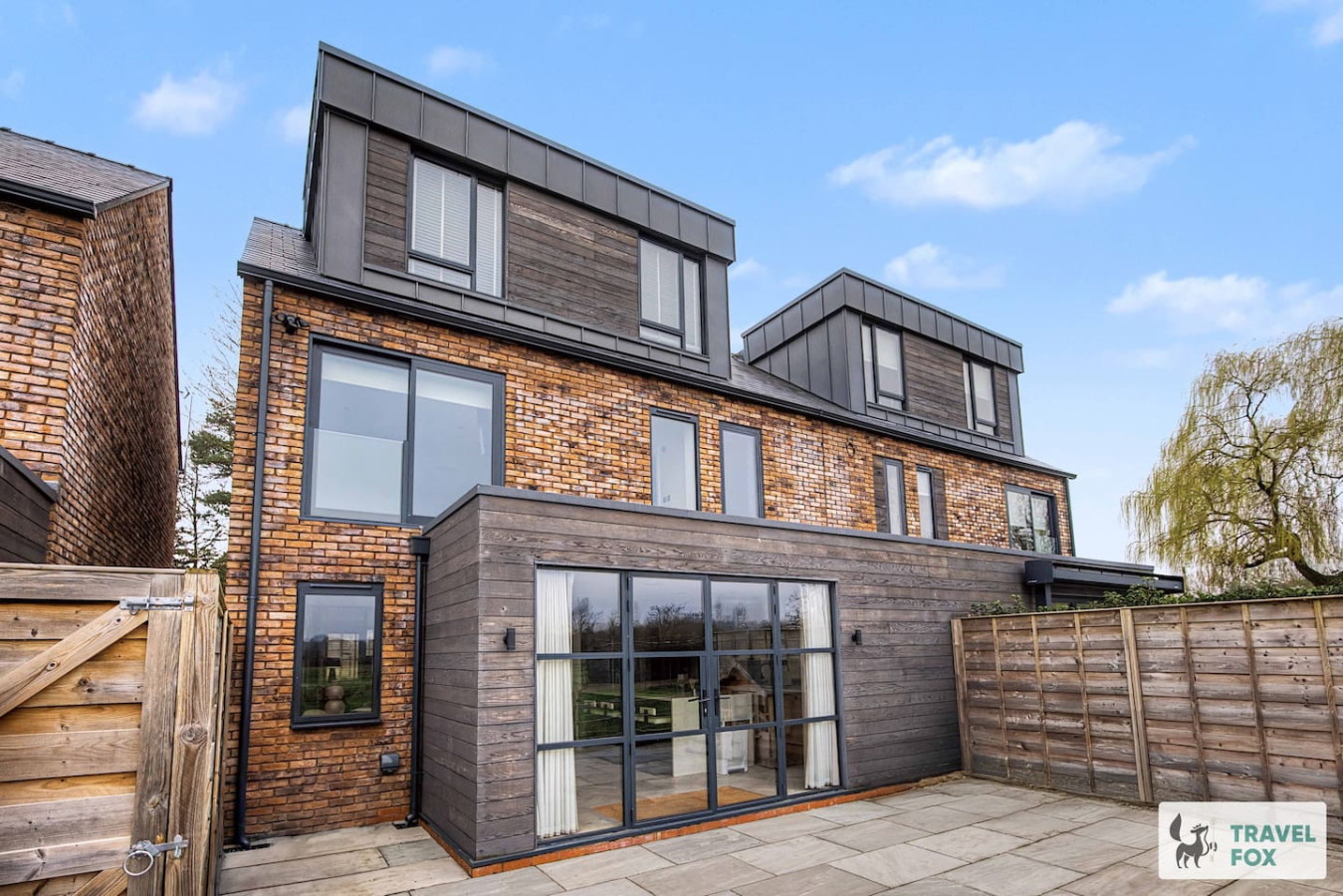
Travel Fox holiday homes around Cheshire, linked directly to their property pages.
A guide with a point of view
Written from research. Edited for real journeys.
Use the Official site links for live practical details, then use this guide for context, ideas and room to explore.
Sources
Every place on this page is checked against a published source. Each entry links the record we used and names who publishes it.
- The Carrs Park — cheshireeast.gov.uk statutory register or public authority
- Lindow Common Local Nature Reserve — cheshireeast.gov.uk statutory register or public authority
- St Bartholomew's Church — historicengland.org.uk statutory register or public authority record not machine-readable; publisher restricts automated access
- Quarry Bank — nationaltrust.org.uk national body or asset manager
- The King William — visitcheshire.com operator, sector body or destination organisation
- The Coach & Four — visitcheshire.com operator, sector body or destination organisation