
Bredon Hill village
Elmley Castle
A tree-lined Worcestershire village below Bredon Hill, with deep history, a community-run inn and walks from the doorstep.
- Best for
- Village history and Bredon Hill walking
- Give it
- Three hours for the hill circuit, or a slower village visit
- Don't miss
- St Mary’s medieval benches and Savage-family monuments
The Fox verdict
A small village with a long historical reach
Elmley Castle brings a community inn, a richly furnished Grade I church and direct access to a substantial Bredon Hill circuit into one visit.
The strongest day here pairs the village’s medieval and Tudor stories with time outdoors: choose the three-hour Bredon Hill circular or Mary Mackenzie’s shorter history walk, then pause at the Queen Elizabeth Inn or its attached tearoom.
Where to go
Places in Elmley Castle
Every place below is checked against a published source, listed with what it is and how long to give it.
Local signatures
3 placesThe Queen Elizabeth Inn
A community-run, non-profit country inn serving locally sourced homemade pub classics, backed by local shareholders and volunteers.
- Visit length
- Editorial estimate: allow around 90 minutes
- Locality
- at the foot of Main Street
- Access
- Dogs are welcome in the bar, café and outside areas, but not in the restaurant except assistance dogs.
Elmley Castle Picnic Place
A small free picnic place with a brook along one side and wildlife-rich woodland beside it.
- Visit length
- Editorial estimate: allow around 45 minutes
- Locality
- off Kersoe Lane
Elmley Castle Playing Field and Recreation Ground
The former Turnip Field, given to the village in 1932, now includes playground equipment, including an under-12s playground installed in 2007.
- Visit length
- Editorial estimate: allow around 60 minutes
- Locality
- Elmley Castle
Food & drink
1 placeBessie’s Tearoom and Virtual Village Shop
The tearoom offers cream teas, cakes, milkshakes, themed cupcakes and a children’s sweet shop, while the virtual shop supplies staples and home delivery.
- Visit length
- Editorial estimate: allow around 60 minutes
- Locality
- attached to the Queen Elizabeth Inn
Walks & outdoors
1 placeBredon Hill Circular Walk
A 6.2-mile circular with 250 metres of ascent, crossing Iron Age hillfort ramparts and passing Parson’s Folly and the Banbury Stone.
- Visit length
- Editorial estimate: Allow about three hours
- Locality
- starts and ends at the Queen Elizabeth Inn
- Access
- The route climbs steeply through fields and woodland and includes stiles and livestock fields.
History & heritage
2 placesSt Mary’s Church
A Grade I church with 11th- to 17th-century fabric, a rare two-phase medieval font, late-medieval benches and alabaster Savage-family effigies.
- Visit length
- Editorial estimate: allow around 45 minutes
- Locality
- on the village history walk
Elmley Castle Village History Walk
Mary Mackenzie’s route links the medieval market space, Old College, Old Cloisters, market cross, old mill pond, cricket field and St Mary’s.
- Visit length
- Editorial estimate: allow around 75 minutes
- Locality
- between the inn, cricket field and St Mary’s
No places match this filter. Choose All places to reset the list.
Three ways to explore Elmley Castle
Signature outings
Bredon Hill circular
Follow the 6.2-mile circuit across Iron Age hillfort ramparts, past Parson’s Folly and the Banbury Stone.
Centuries at St Mary’s
Trace fabric from the 11th to the 17th century alongside the medieval font, benches and Savage-family effigies.
A community-run inn
Pause for locally sourced homemade pub classics at the non-profit inn reopened by local shareholders in 2014.
The village story
Elmley Castle Village Guide
Community enterprise, medieval fabric and Bredon Hill meet in a Worcestershire village with an unusually layered story.
The community inn
The Queen Elizabeth Inn stands on a broad open space at the foot of Main Street, believed to have served a weekly market held here from 1254. Thirty-six local shareholders bought the lease in 2014 and reopened the pub that December as a non-profit, by which point the two other pubs in Elmley Castle had already closed. A professional kitchen and front-of-house team run it, with fifteen to twenty volunteers keeping the back office going.
The food is described as homemade pub classics, locally sourced. A sample menu from September 2025 included lamb kofta albondigas in a spicy tomato sauce, braised lamb shank in minted gravy, a Cotswold venison and mushroom pie, a cauliflower, spinach and lentil pie, and Baileys crème brûlée, with a deli board named after the queen. Off the bar there is Tall Tales, the house ale from Butcombe, with guest ales that change barrel by barrel — Butty Bach and Ledbury Bitter have both featured.
Dogs are welcome in the bar, the café and the outside areas, where there is water and a supply of free biscuits, though not in the restaurant. One of the regulars is a dog called Maggie.
Tearoom, village and hill
Attached is Bessie's tearoom, which does cream teas, cakes, milkshakes and themed cupcakes, with a small sweet shop for children. The inn also runs a virtual village shop for staples and home delivery, and sells local ales, ciders and sparkling wine from Bredon Hill.
The main street is tree-lined and runs between black-and-white timbered cottages and older red-brick ones. Above them is Bredon Hill, on whose northern slopes the village sits. Off Kersoe Lane there is a small free picnic place, with a brook down one side and wildlife-rich woodland beside it.
The Bredon Hill circular starts and ends at the inn: 6.2 miles, about three hours, with 250 metres of climbing through fields and woodland, across the ramparts of an Iron Age hillfort, past Parson's Folly and the Banbury Stone. The summit is 299 metres, with views towards the Malverns. There are stiles and fields of livestock, so it is not a stroll. For something shorter, Mary Mackenzie's village history walk links the medieval market space, the Old College, the old cloisters, the market cross, the former mill pond and the cricket field before returning to St Mary's.
Church and castle
St Mary's is Grade I, with fabric spanning the eleventh century to the seventeenth. Herringbone masonry in the walls points to a date before 1100; the tower base and south aisle are thirteenth-century, the north transept mid-fourteenth. Inside are a rare two-phase medieval font, a very complete set of late-medieval benches, and three alabaster effigies of the Savage family, who died in 1616, 1631 and 1674. Above them hangs Sir Giles Savage's funeral helmet, topped with a unicorn crest. A fourth monument, to Thomas, first Earl of Coventry, was made for Croome d'Abitot and ended up here instead after a family dispute. Pevsner called the principal monuments "amongst the best of their dates in the county."
The castle that gives the village its name survives mainly as earthworks, comparatively well preserved for their kind. They lie about half a mile south-west of the church: two Iron Age hillforts overlaid with a medieval ringwork and bailey, the ringwork raised by Robert Despenser around 1080. In 1317 Hugh le Despenser was ordered to garrison it with twenty footmen; four years later rebel barons took it and did considerable damage. In August 1575 Elizabeth I stayed with Sir William Savage and his wife at the village mansion from the 20th to the 22nd; the pub's name and sign commemorate the visit.
Domesday and the Turnip Field
In 1086 the Domesday surveyors valued the manor at seven pounds a year, up from six twenty years earlier, in an entry that also names neighbouring Charlton. The Bishop of Worcester held it, and the working lord was recorded as Robert the bursar.
The recreation ground began as the Turnip Field, given to the village in 1932 by Ernest Stevens of nearby Chapel Farm; there is a children's playground on it now. The cricket club runs senior sides and junior teams down to under-nines, with Bredon Hill rising behind the outfield.
Getting here and summer cricket
Evesham station is roughly four miles off and Pershore about four and a half, an unstaffed stop on the Cotswold Line between London and Hereford. The village is reached on minor roads, and the 565 Village Hopper calls at the inn a few times a day between Evesham and Pershore, Monday to Saturday; it is worth checking the times before you rely on it.
On summer Fridays the junior cricketers train beneath the hill, coached by ECB-qualified coaches.
Stay around Cotswolds
Make a longer stay of it
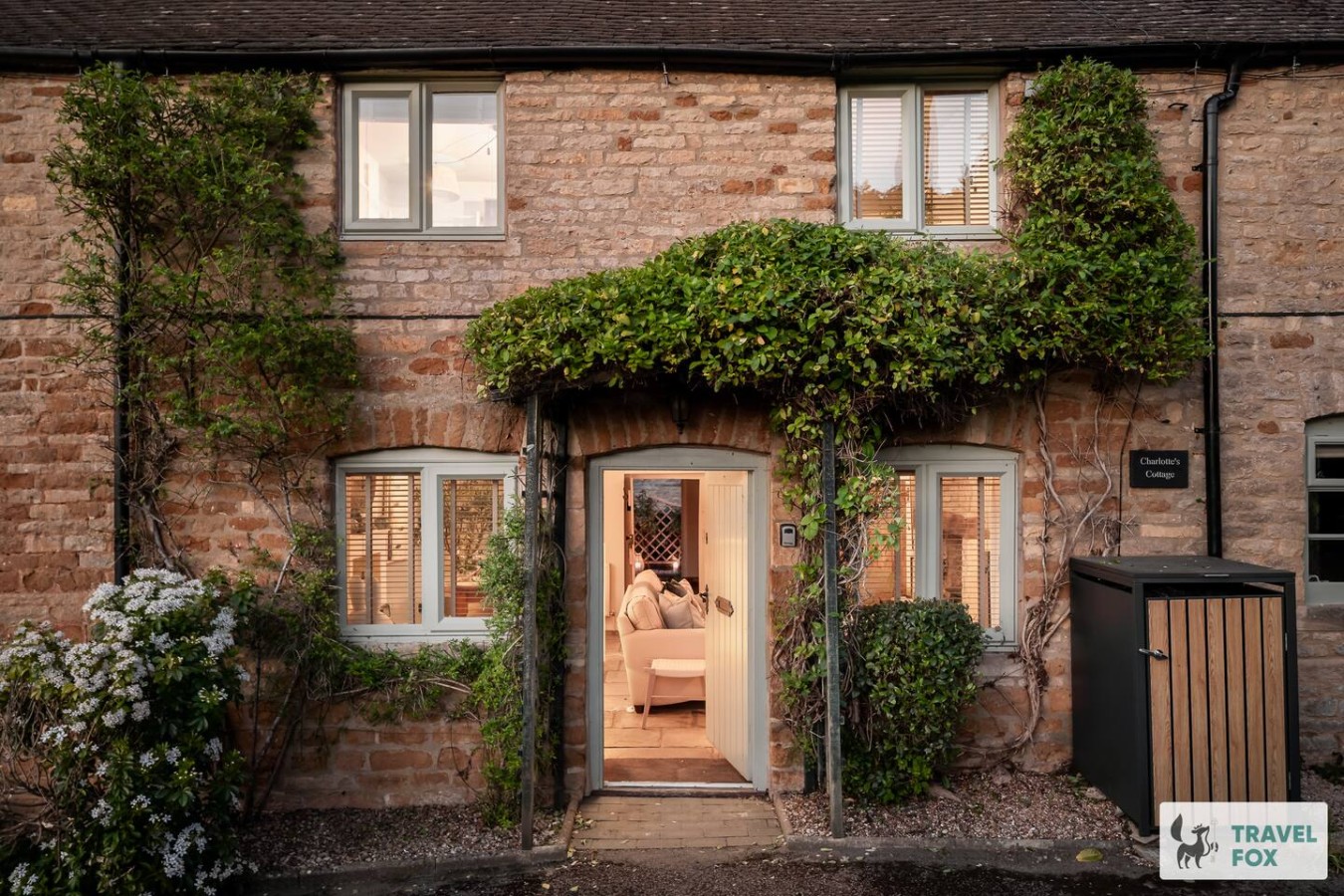
Travel Fox holiday homes around Cotswolds, linked directly to their property pages.
For homeowners
Own a holiday home near Elmley Castle?
We manage holiday lets across the Cotswolds from 12% commission, charged after cleaning costs, with no lock-in. A co-founder visits before you decide.
Holiday let management in the Cotswolds →
A guide with a point of view
Written from research. Edited for real journeys.
Use the Official site links for live practical details, then use this guide for context, ideas and room to explore.
Sources
Every place on this page is checked against a published source. Each entry links the record we used and names who publishes it.
- The Queen Elizabeth Inn — queenelizabethinn.co.uk operator, sector body or destination organisation
- Bessie’s Tearoom and Virtual Village Shop — visitworcestershire.org operator, sector body or destination organisation
- St Mary’s Church — historicengland.org.uk statutory register or public authority record not machine-readable; publisher restricts automated access
- Bredon Hill Circular Walk — queenelizabethinn.co.uk other published source
- Elmley Castle Village History Walk — queenelizabethinn.co.uk other published source
- Elmley Castle Picnic Place — worcestershire.gov.uk statutory register or public authority
- Elmley Castle Playing Field and Recreation Ground — elmleycastleparishcouncil.gov.uk statutory register or public authority