
Cotswold plateau above Stroud
Minchinhampton
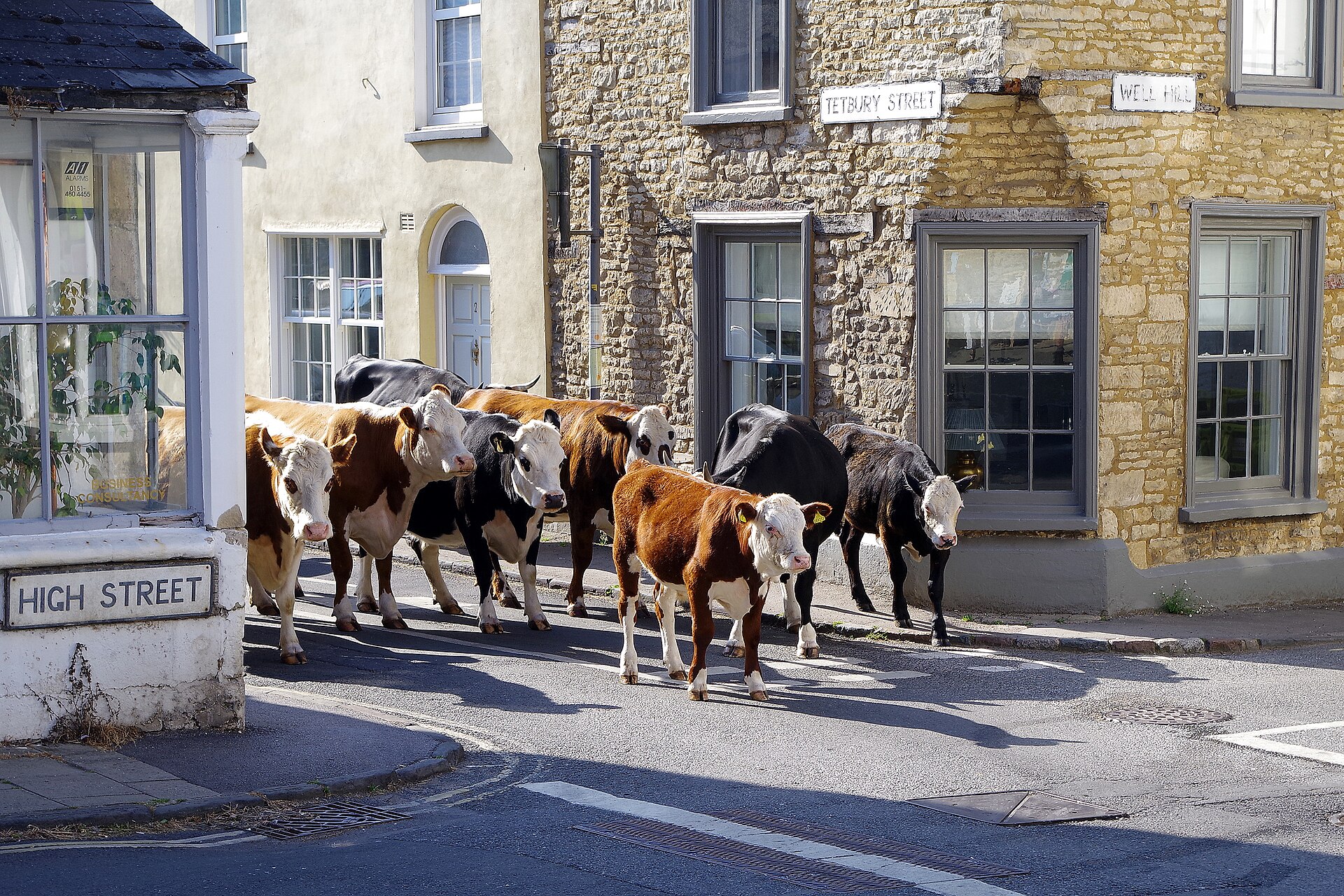
A compact limestone town where cattle can wander through the streets and the open common begins almost at the last house.
- Best for
- Common walks & old stones
- Give it
- A slow day on the hill
- Don't miss
- The Market House arches
Photo: Stephen McKay · CC BY-SA 2.0 · cropped
The Fox verdict
Come for the common. Find a town still shaped by it.
Minchinhampton is not polished into a museum piece. The market square, church, pub and bakery sit tightly together, then the landscape opens into grazed limestone grassland, old quarries and big western views.
Build your visit around one long stretch of common or a round of the town's landmarks, then leave time for a proper lunch. The pleasure here is the sudden switch between close-set Cotswold stone and an unbounded horizon.
Your picks, your pace
Make Minchinhampton yours
Choose a mood or combine the places that appeal. Your list keeps the order clear and opens a map route when you are ready to explore.
Local signatures
3 placesMinchinhampton Common
Walk out into limestone turf, old quarry hollows and long views over the Stroud valleys, in a landscape kept open by commoners' cattle.
- Visit length
- Editorial estimate: 2 hours
- Locality
- From Friday Street
- Access
- Grazing land with uneven ground and unfenced roads; keep dogs close to livestock and take care around traffic.
Church of the Holy Trinity
Look up at the Grade I church's crenellated tower, then seek out the medieval fabric, tomb recesses and memorable stonework around it.
- Visit length
- Editorial estimate: 45 min
- Locality
- By Market Square
The Crown Inn
The last pub in the historic centre is a former coaching inn with a front bar, a bank-vault snug and former stables behind.
- Visit length
- Editorial estimate: 1½ hours
- Locality
- High Street
Food & drink
2 places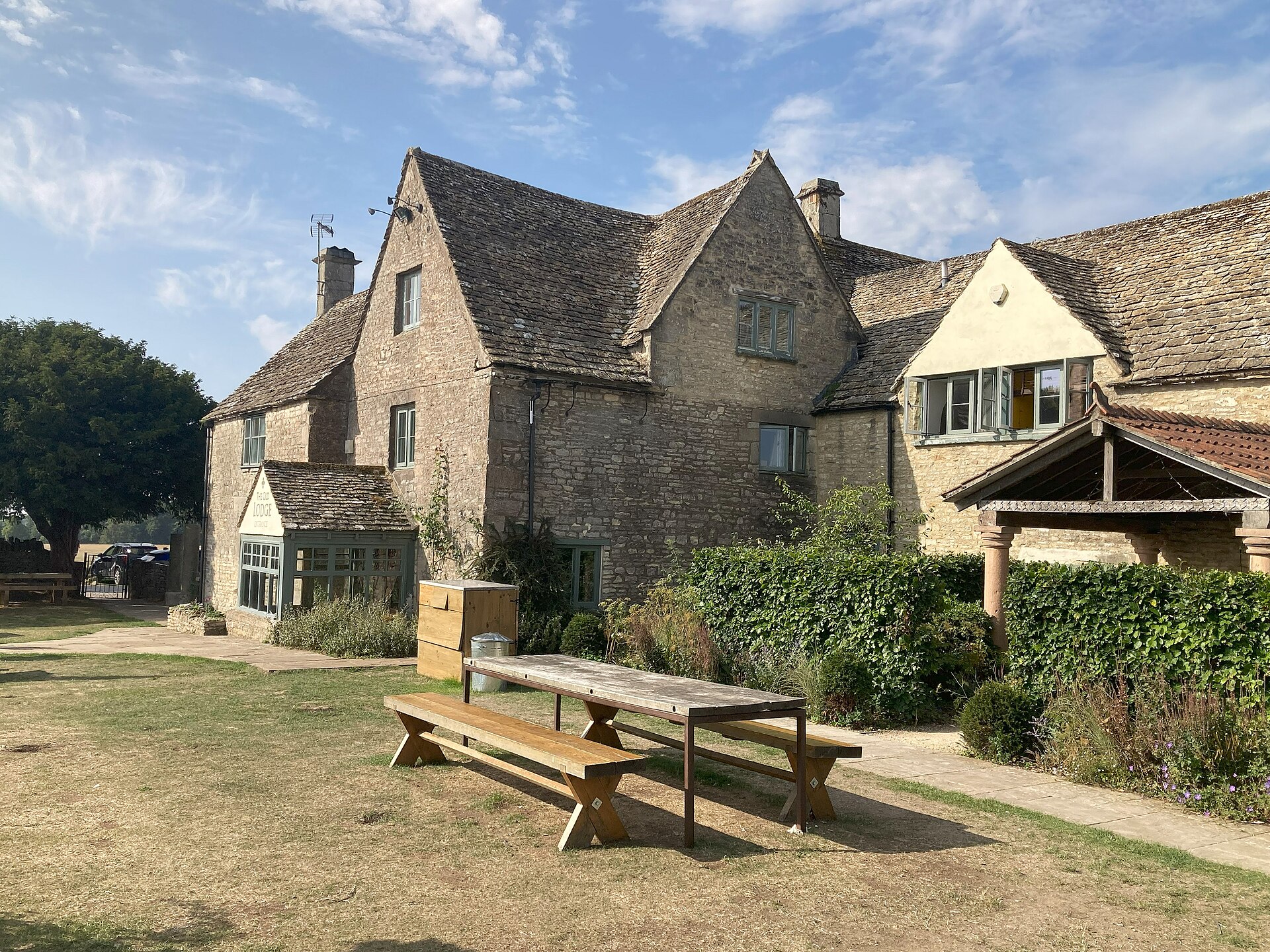
The Old Lodge
A former hunting lodge turned country inn, where a walled garden and low stone rooms make a warm landing after the open grassland.
- Visit length
- Editorial estimate: 1½ hours
- Locality
- On the common
The Ragged Cot
A country inn with fires, a generous garden and a separate barn, positioned where the plateau begins to dip away from town.
- Visit length
- Editorial estimate: 1½ hours
- Locality
- Gatcombe edge
History & heritage
2 places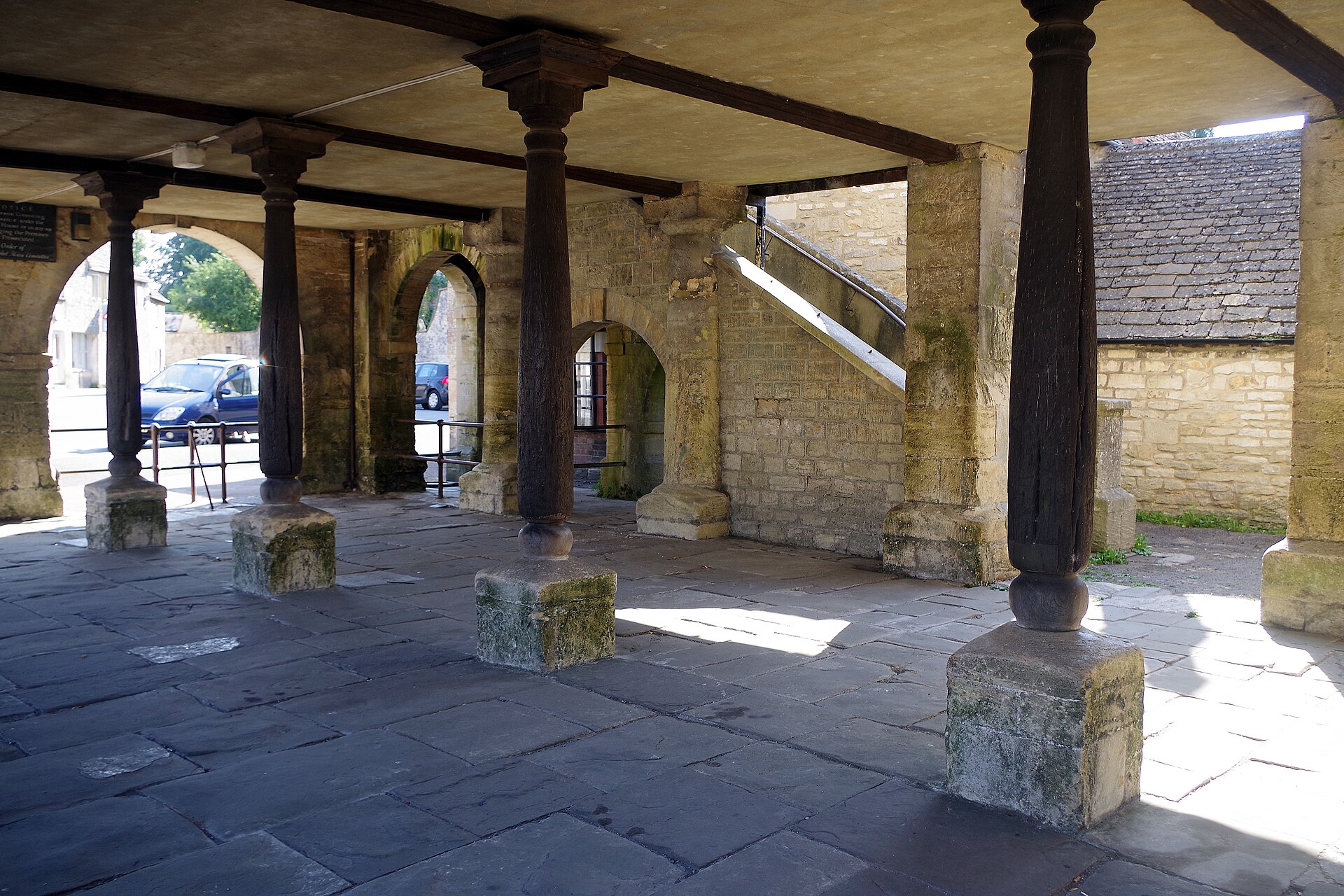
Minchinhampton Market House
Philip Sheppard's 1698 stone market house is lifted on open arches, making a sheltered place to pause beneath the old trading room.
- Visit length
- Editorial estimate: 45 min
- Locality
- Market Square
- Access
- The upper room and events follow local arrangements; check the Official site before travel.
The Bulwarks
This low, compelling earthwork is one of the oldest layers in the landscape, with prehistoric fields and quarry-scarred grassland around it.
- Visit length
- Editorial estimate: 45 min
- Locality
- Town edge
- Access
- An open archaeological landscape with uneven ground; take care near paths and grazing land.
Things to do
1 placeBulwarks Playground
A refreshed village playground beside the historic earthwork, useful for letting younger visitors reset before the next short walk.
- Visit length
- Editorial estimate: 45 min
- Locality
- Beside the Bulwarks
No places match this filter. Choose All places to reset the list.
On the map
Minchinhampton at a glance
Tap a marker to jump to its guide card.
Three ways to explore Minchinhampton
Signature outings
Meet the commoners' cattle
Watch how the working common reaches right into the town's everyday life.
Stand beneath the Market House
Read the town from its stone arcade, with the old meeting room above you.
Settle at the Old Lodge
Finish a common walk with a garden table or a fire-lit room at the old inn.
The town story
A town with grass at its gates
Minchinhampton is a wool town turned hilltop pause: close-set limestone streets, an old market arcade and a vast common that has never been smoothed into parkland.
The plateau changes the scale
Minchinhampton sits high above the Stroud valleys, but it does not perform its elevation with a grand approach. Its High Street and Market Square are tight, practical and pale with local stone. Walk beyond the last close-set buildings and the town gives way abruptly to short turf, quarry hollows and a horizon that feels far bigger than the street plan behind it.
That switch is the point of the place. The common is not a decorative village green: it is working grazing land, crossed by lanes and paths, with cattle a normal part of the view. In summer they can be as much a feature of the town as the limestone walls. Move slowly, give them room and let the landscape set the pace.
The commoning tradition becomes especially visible at Marking Day, when cattle are marked and released onto the grass. It is a useful corrective to the postcard version of the Cotswolds: this open ground survives because local rights and daily husbandry have kept it in use, not because it has been set aside as scenery.
An arcade built for wool
At the centre, the Market House explains why Minchinhampton feels like a town rather than a pretty scattering of cottages. Clothier Philip Sheppard paid for the present building in 1698, when wool had made the settlement prosperous. Its open ground floor gives the square a sheltered room outdoors; the meeting space sits above on stone and timber.
The building has never had just one life. Trade gave way to theatre, Quaker meetings, a fire engine, a lock-up, a school and civic uses. That layering is still visible in the architecture: this is not scenery placed in a square, but a working piece of the town's long memory.
Grassland with a memory
Centuries of grazing and quarrying turned former woodland into the limestone grassland shared by Minchinhampton and Rodborough commons. The shallow scoops in the turf are old quarries, not landscaped follies. Pasqueflowers, orchids and butterflies belong here because the grass remains short and open, while the routes through it keep delivering wide views towards the Severn and Golden Valley.
The National Trust has cared for the common since the Ricardo family transferred it in 1913 on terms that protected public enjoyment. The cattle are part of that continuing arrangement. Their presence is the clearest reminder that this large, apparently limitless lawn is a commons with rights, history and a living purpose.
Tower, earthwork, older ground
The Church of the Holy Trinity rises just above the square, its tower capped not by a spire but a crenellated stone coronet after the upper part of the spire was removed in the sixteenth century. Its medieval core, tomb recesses and layered restoration make it a fine counterweight to the market building's civic story. Astronomer James Bradley, whose work established stellar aberration, is buried here, adding one more unlikely scale of history to this small hill town.
A short walk east takes you to the Bulwarks, where the town's timeline drops much further back. The earthwork, prehistoric fields and traces of later use sit quietly in the open ground. It is a good place to remember that the plateau was a settled and worked landscape long before it became a Cotswold view.
The right sort of detour
Minchinhampton rewards an unhurried circuit rather than a rushed list. Follow the common towards the Old Lodge, a seventeenth-century house that became an inn and the first clubhouse of the golf club. Its stone walls and garden make a convincing place to turn a walk into lunch, especially after the exposure of the plateau.
Back in town, the Crown carries the same mix of local history and everyday usefulness. Once the principal coaching inn, it remains the pub at the centre of things. That is the rhythm to aim for: a landmark, a stretch of grass, then time indoors before heading back out into the high, cattle-grazed light.
Stay around Cotswolds
Make a longer stay of it
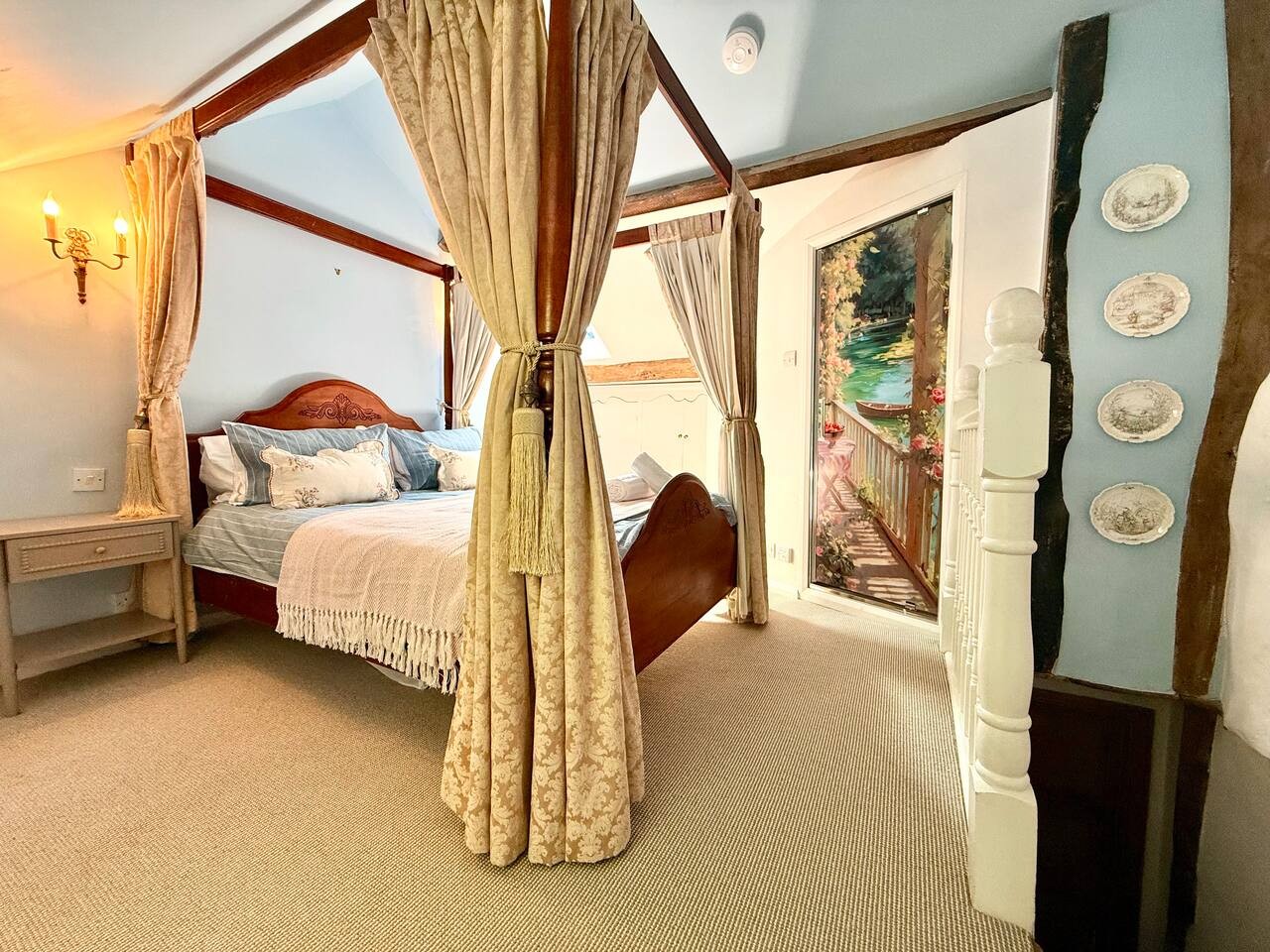
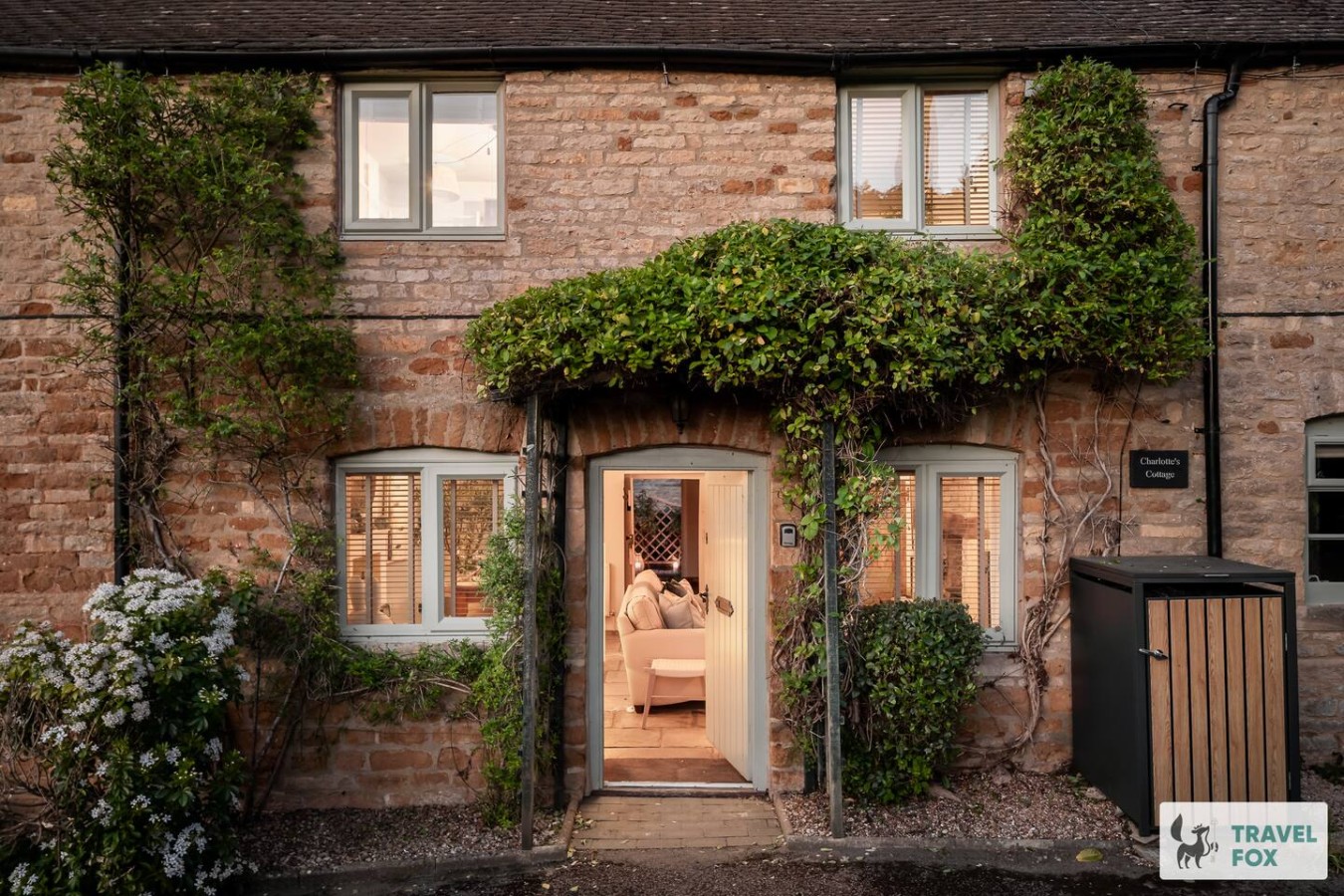
Travel Fox holiday homes around Cotswolds, linked directly to their property pages.
For homeowners
Own a holiday home near Minchinhampton?
We manage holiday lets across the Cotswolds from 12% commission, charged after cleaning costs, with no lock-in. A co-founder visits before you decide.
Holiday let management in the Cotswolds →
A guide with a point of view
Written from research. Edited for real journeys.
Use the Official site links for live practical details, then use this guide for context, ideas and room to explore.
Photography credits & licences
Third-party photographs are credited to their named creators and reused under the linked Creative Commons licence or public-domain dedication. Travel Fox stores an optimised local copy; the file-specific changes and any browser-applied display crop are disclosed below. Reused photographs link both to the Wikimedia Commons source record and to the declared source image; Travel Fox's own photographs carry no such record and are marked as ours. These image licences do not cover Travel Fox text, branding or page design.
- File:Cows in Minchinhampton - geograph.org.uk - 7240827.jpg — photograph by Stephen McKay; Stephen McKay / geograph.org.uk. Source record on Wikimedia Commons. Declared source image. Licence: CC BY-SA 2.0. File changes: Downloaded the Commons 1,920px rendition without cropping or content edits. Display changes: Used as the wide hero and common signature image.
- File:Market House, Minchinhampton - geograph.org.uk - 7241120.jpg — photograph by Stephen McKay; Stephen McKay / geograph.org.uk. Source record on Wikimedia Commons. Declared source image. Licence: CC BY-SA 2.0. File changes: Downloaded the Commons 1,920px rendition without cropping or content edits. Display changes: Used for the Market House card, signature and story detail.
- File:The Old Lodge Inn, Minchinhampton Common, Gloucestershire - geograph.org.uk - 8121309.jpg — photograph by Peter Evans; Peter Evans / geograph.org.uk. Source record on Wikimedia Commons. Declared source image. Licence: CC BY-SA 2.0. File changes: Downloaded the Commons 1,920px rendition without cropping or content edits. Display changes: Used for the Old Lodge card, signature and closing story detail.