

High on the Cotswold escarpment
Snowshill
Snowshill has a National Trust manor, the Snowshill Arms and views over the Vale of Evesham.
Snowshill Manor, Snowshill Photo: Rodw · CC BY-SA 4.0 · cropped
About this guide: Sources, checks & photo credits
Our take · Travel Fox editorial view
At a glance
Make the manor your anchor, then choose either the lavender and tower country or a muddy-boot walk through the woods. The village itself rewards a slower pace than a checklist.
- Best for
- Manor rooms & high walks
- Give it
- A full, unhurried day
- Don't miss
- Wade's Wolf's Cove

Stay nearby
Holiday homes near Snowshill. Distances are in a straight line.

Moreton-in-Marsh · 7 miles away
Wind in the Willows Moreton in Marshes
3 bedrooms · Sleeps 6
From £329 a night
Check dates
Moreton-in-Marsh · 7 miles away
The Cotswolds Hidden Gem in Moreton in Marsh
2 bedrooms · Sleeps 3
From £367 a night
Check datesGuide prices. Check dates for availability and your full stay total.
More homes near Snowshill
- Stay on the Wold - with parking! · 8 miles away
- Charlotte's Cottage, a Charming Cotswolds Getaway · 9 miles away
Your picks, your pace
Things to do in Snowshill
Choose a ready-made day or save the places that suit you. Your list stays in visiting order and opens a direct map route when you are ready to go.
Local signatures
3 places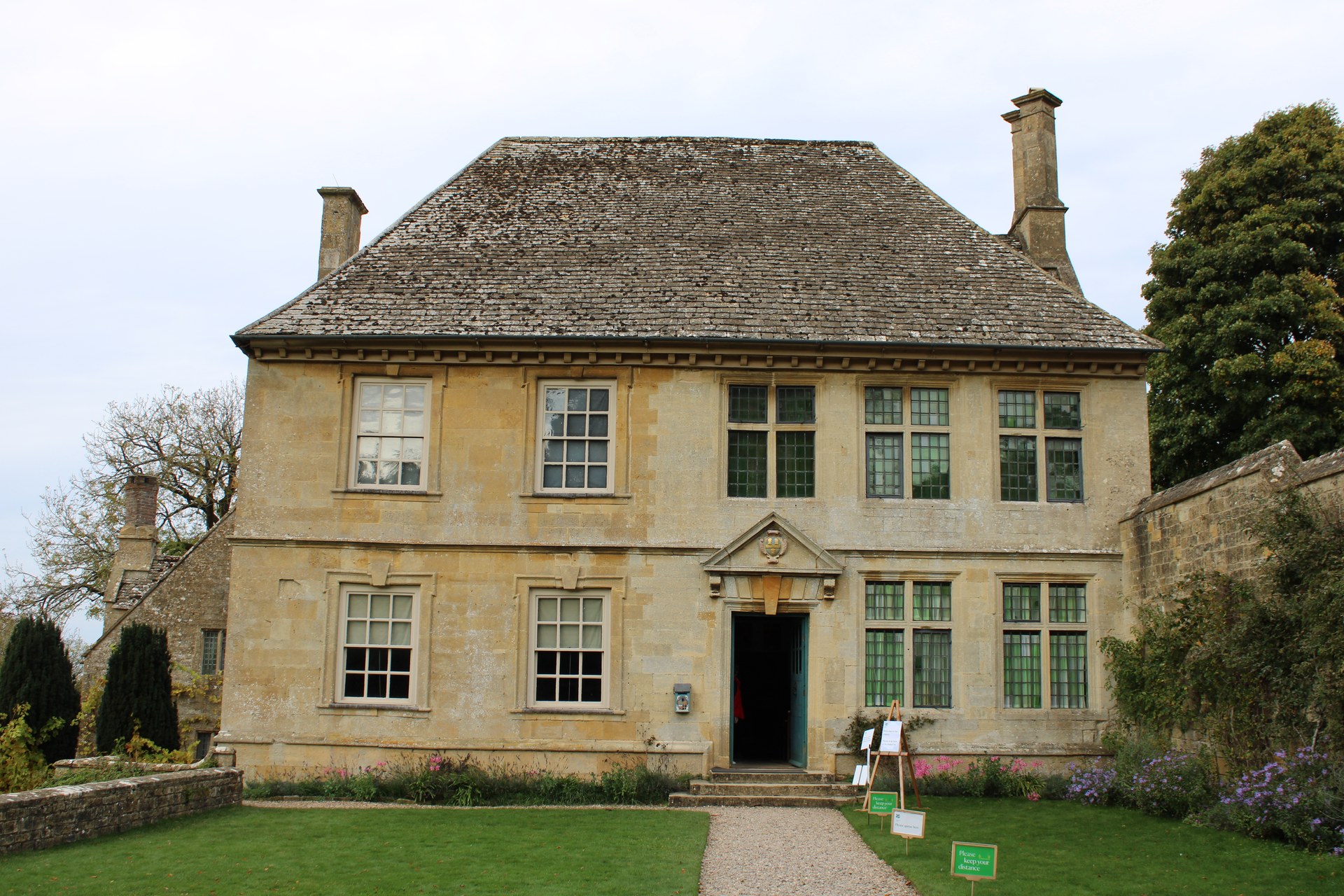 Start here
Snowshill Manor and Garden
Charles Paget Wade filled this manor with clocks, costumes, bicycles and other treasures, then shaped the garden into terraces, enclosed rooms and the miniature Wolf's Cove.
Sources for Snowshill Manor and Garden
Background information: Place reference.
- Visit length
- Editorial estimate: 2½ hours
- Locality
- At the village edge
- Access
- Visitor opening is seasonal or selected-day; check the Official site before travel.
Cotswold Lavender
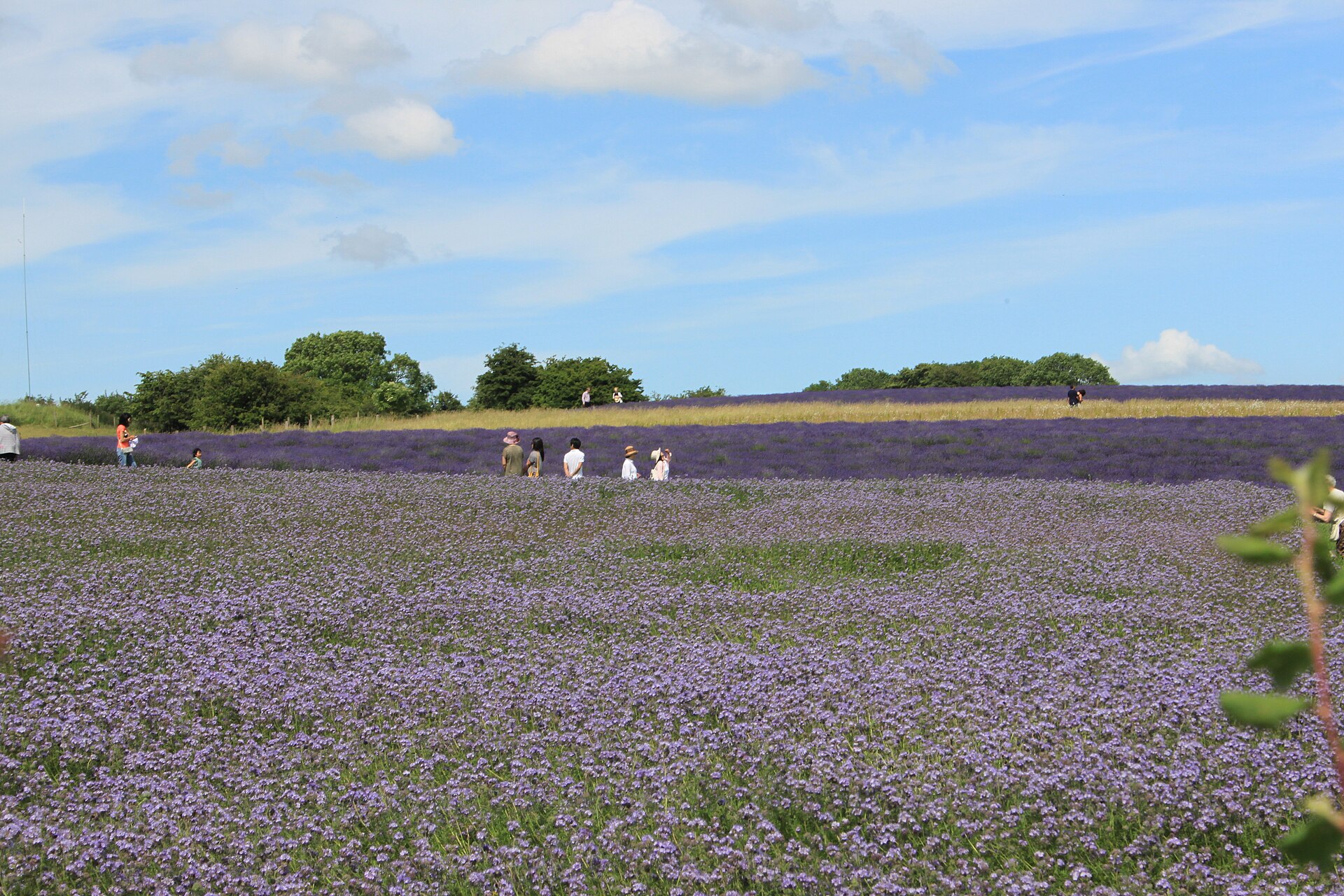
A working lavender farm with display fields, wildflower meadows, a Woodland Trail and a distillery behind the products in the Lavender Cabin.
Sources for Cotswold Lavender
Background information: Place reference.
- Visit length
- Editorial estimate: 1½ hours
- Locality
- At Hill Barn Farm
- Access
- The visitor season changes from year to year; check the Official site before travel.
Broadway Tower
A fanciful hilltop tower with an unusually rich afterlife: Capability Brown's idea, William Morris's campaign to preserve it, and far-reaching Cotswold views.
Sources for Broadway Tower
Background information: Place reference.
- Visit length
- Editorial estimate: 1 hour
- Locality
- Above Broadway
- Access
- Tower and estate access are subject to their own visitor arrangements; check the Official site before travel.
Food & drink
1 place
Snowshill Arms
The village's Donnington Brewery pub is the easy place for traditional food, a log fire, a skittle alley and a garden with a children's play area.
Sources for Snowshill Arms
Background information: Place reference.
- Visit length
- Editorial estimate: 1½ hours
- Locality
- Opposite the green
Walks & outdoors
1 placeSnowshill Manor to Littleworth Wood circular walk
This 3.5-mile circular turns from village lanes into Piper's Grove, Brough and Littleworth woods, with a stretch of the Cotswold Way and broad valley views.
Sources for Snowshill Manor to Littleworth Wood circular walk
Background information: Place reference.
- Visit length
- Editorial estimate: 1¾ hours
- Locality
- Starts at Pipers Grove Car Park
- Access
- A challenging walk with steep, uneven ground and potentially muddy sections; check the Official route page before travel.
History & heritage
1 place
St Barnabas Church
Rebuilt in 1864, the little parish church keeps an arch-braced roof, a fifteenth-century stone font and a pulpit incorporating older Jacobean panelling.
Sources for St Barnabas Church
Background information: Place reference.
- Visit length
- Editorial estimate: 30 min
- Locality
- Beside the green
Things to do
1 placeCotswold Farm Park
A substantial family day out built around rare and native farm animals, founded by rare-breed conservationist Joe Henson.
Sources for Cotswold Farm Park
Background information: Place reference.
- Visit length
- Editorial estimate: 2 hours
- Locality
- At Temple Guiting, near Guiting Power
- Access
- Activities and access vary through the year; check the Official site before travel.
No places match this filter. Choose All places to reset the list.
On the map
Snowshill at a glance
Tap a marker to jump to its guide card.
Three ways to explore Snowshill
Signature outings
Follow Wade's curiosity
Move through a house where a collector made every room its own small universe.
Settle in at the Arms
Take a proper pub break opposite the green, then carry on through the village at Snowshill pace.
Look inside St Barnabas
Find the medieval font, the altered Jacobean pulpit and Wade's resting place in the churchyard.
The village story
The story of Snowshill
Snowshill's drama comes from concentration: a sheltering fold of limestone cottages, a house full of improbable things, then a few steps to an escarpment horizon.
The pub beside the green
The Snowshill Arms stands opposite a small green, with a log fire inside and a skittle alley through the back, and for a working village of this size it is more or less the whole social apparatus. It is a Donnington Brewery house, hosted by Isobel Barr and Jacqeline Spear, and it does the things a country pub is supposed to do without making a performance of any of it. There is a beer garden, a large children's play area, and dogs are welcome. The recorded cask range has included Donnington BB, the brewery's SBA premium bitter and Cotswold Gold, with real cider alongside. You order at the bar, you sit down, and if the January regulars are anything to go by the arrangement is companionable. One recent visitor, Terry A, described the sociable pull of the place, the way the table next to you starts up a conversation until you feel quite at home.
The food is straightforward and the kitchen says so. Traditional pub cooking, homemade daily specials, sandwiches, full meals and Sunday roasts, with local asparagus when the season allows. People who have eaten here lately report fish and chips with peas, whitebait, prawn cocktail, pâté, lasagne, a burger, Brie wedges, a fish platter, and crumble and custard to finish. None of it is trying to be a restaurant, which suits the room. The building calls itself a fifteenth-century inn, though the fabric looks seventeenth-century, with later alterations. There is a local tradition that beer was once brewed on the premises before Donnington took it on, and a beerhouse stood here in 1891, owned by William Beard, with Edwin Beard occupying it by 1903.
Food and shops in a small village
Beyond the pub, the village runs thin on shops, and it is worth knowing that before you drive up. These days there is no general store, no bakery, no butcher and no Post Office. The Post Office closed on 27 August 2019, and it had a long innings: Mrs Williams took it on temporarily, then ran it until she retired in 1988 after thirty-nine years. During the 1960s and 1970s its garden held a nuclear-fallout warning installation and a weather station, which is a fair amount of Cold War infrastructure to attach to a rural Post Office. Buy your water, milk and lunch in Broadway before you climb. In the village itself, food and drink beyond the pub means the National Trust café at the manor or the seasonal Lavender Cabin at Cotswold Lavender, both with their own entrance arrangements.
The first of those is the National Trust café at Snowshill Manor, which serves hot and cold drinks, snacks and light meals, most of it prepared on site. There is indoor seating, a terrace looking down the valley, and a designated picnic area in Pipers Orchard if you would rather bring your own. Dogs on short fixed leads are allowed around reception, the shop, the café patio and the orchards, though not in the manor or the formal garden. The same complex has a gift shop, plant sales and a second-hand bookshop, so a visit can absorb a wet afternoon without much planning.
Lavender fields and woodland paths
The second is Cotswold Lavender, a working farm on the outskirts that becomes a seasonal visitor attraction when the fields come into colour. Charlie Byrd planted the first lavender here in 1999, and the operation now covers forty-five acres, including a display field of around twenty acres, with wildflower meadows, a Woodland Trail and an on-site distillery. Harvesting usually begins towards the end of July, when the crop is cut for essential oil and grains. The Lavender Cabin shop sells the results: essential oils, culinary lavender essence and grains, lavender sugar, soaps, skincare, bath products, home fragrance, and wheat-and-lavender linen warmers, including a palm-free triple-milled soap. The farm encourages picnics and the visiting season shifts year to year, so it is worth checking the current period before you set off. Byrd is direct about how the place has turned out, saying that almost everything they now do revolves around lavender.
The walking is the other reason to base yourself here, and it starts from the free parish car park by the manor. The National Trust's waymarked circular runs 3.5 miles, about an hour and three-quarters, past the church and the pub, over the stream and into Piper's Grove, Brough and Littleworth woods, using roughly a mile of the Cotswold Way before it returns. It is graded challenging, with steep climbs, uneven ground and stretches that turn muddy, and kissing gates on top of the rough, steep ground mean it is not accessible for wheelchairs. The reward is an old hawthorn-and-hazel hedge, the remains of a Victorian water system, and long views towards the Vale of Evesham and the Malverns. A longer six-mile circuit links Snowshill with Stanton through Littleworth Wood, following part of the Cotswold Way past old quarries with views over the Severn Vale towards Wales; the current route notes call it stile-free, though you should still expect gates, rough ground and steep sections. Carry a proper map.
The old village and Wade’s manor
The village you are walking through is one of Gloucestershire's highest, at roughly a thousand feet on the Cotswold escarpment above the Vale of Evesham. It is compact and nucleated, gathered around St Barnabas, the green and the pub, and it is built almost entirely from the golden-brown limestone quarried nearby: cottages set close to the lanes, steep stone-slate roofs, dormers, stone-mullioned windows, narrow chimneys and drystone walls. Some cottages may hold fabric from the sixteenth century. The particular character of the place is the way the high ground folds around the core, sheltering it from distant view, so that you can be standing among the cottages with no sense of the drop until you walk to the edge of the village and the horizon suddenly opens west. Snowshill got its name from that height. The Old English roots mean "snow hill," and a local explanation holds that snow lingered in the folds here after it had melted down in the Vale of Evesham. If Bridget Jones's Diary looks faintly familiar, the cottages appeared in the 2001 film.
St Barnabas sits at the visual centre, beside the green. The present church was rebuilt in 1864, so little survives of the earlier chapel that stood here with its west tower, pinnacles and battlements. There is a small oddity in its naming: the Ordnance Survey of the 1880s labelled the rebuilt church St George, and only by the 1903 map had it become St Barnabas. Inside are an arch-braced collar roof, a semi-octagonal pulpit that incorporates Jacobean panelling on a twentieth-century base, and a fifteenth-century octagonal stone font carved with quatrefoils and blind arcading. All the stained glass commemorates the Marshall family, who farmed the manor and Manor Farm through much of the nineteenth century. Against the south buttress stand a pair of seventeenth-century limestone chest tombs to Ane Warren and Thomas Warne, with inscribed lids and corner balusters. The war memorial, put up in 1923, was designed by the artist F. L. Griggs and built by local masons from Cotswold stone; it names five local men killed in the First World War.
The settlement is far older than any of its stone. Three round barrows south-west of the village form a scheduled monument, and when one was opened in January 1881 it held a central cist burial with an unusual Early Bronze Age assemblage: a bronze dagger, a socketed-and-tanged spearhead, a bronze crutch-headed pin and a stone battle-axe. The dagger is now in the British Museum. The manor's written record begins in AD 821, when King Coenwulf of Mercia gave the estate to Winchcombe Abbey, which still held it at the time of the Domesday survey. Domesday, taken in 1086, records twenty households — twelve villagers, two smallholders and six enslaved people — with nine plough teams between the abbey and its men, and values the whole place at five pounds, unchanged from 1066. After the Dissolution the manor passed through the Crown to Catherine Parr, then Edward VI, then Mary I, who granted it to Frances Bulstrode in 1557; by the mid-eighteenth century it had become a working farmhouse, tenanted for over a century. Parliamentary enclosure came in 1761, and sheep, wool and small quarries shaped the village for generations. Blocked windows on the house may be a legacy of the Window Tax.
The manor's modern story belongs to Charles Paget Wade, who bought the neglected house on 24 June 1919 after seeing it advertised in Country Life. An architect, artist and craftsman, he had inherited money in 1911 from Caribbean family property — the National Trust openly acknowledges that Wade's ancestors enslaved people on St Kitts, that his grandfather married a freeborn Black woman, and that Wade himself was of mixed racial heritage. He spent his fortune restoring Snowshill and filling it. All twenty rooms of the manor eventually held more than twenty thousand objects: costume, clocks, musical instruments, bicycles, arms and armour, model ships. Rooms carried names like Zenith and A Hundred Wheels. Wade lived not in the manor but next door in the spare Priest's House, and worked the garden with the Arts-and-Crafts architect M. H. Baillie Scott into a sequence of terraces and enclosed rooms with a sunken pool. He turned a byre into an open-air dining room he called Sancta Maria, and moved his model Cornish village, Wolf's Cove, from London to Snowshill, where it grew road, canal and railway systems.
His creed was two words — "Let nothing perish" — and it explains both the scale of the collection and the impulse behind it. He entertained J. B. Priestley, Virginia Woolf, Graham Greene and Queen Mary, sometimes in costume, sometimes through concealed panels. He met Mary McEwen Gore Graham in 1945, while she was working at St Patrick's Tearoom, and married her the following year. He gave the manor to the National Trust, which opened it to the public on 3 May 1952, and when he died on 28 June 1956 he was buried in the churchyard at St Barnabas, a short walk from the front door.
Getting here and lingering
Getting here is part of the character. The nearest station is Moreton-in-Marsh, about 6.9 miles from Snowshill in a straight line, with a longer road journey, and taxis are limited enough that you should book ahead; the county's bookable Robin minibus lists the Snowshill Arms as a stop, but it must be reserved in advance and is not a service you can simply flag down. By car, the village is signposted from the A44 through Broadway, and from Broadway's green it is about two and a half miles up Church Street on narrowing lanes — go slowly, and expect walkers, riders and oncoming cars on the blind stretches. Broadway itself, with its shops, food and heritage steam railway, is the practical service centre; Broadway Tower stands on the escarpment above it, and Cotswold Farm Park is about 4.5 miles from Snowshill in a straight line, with a longer road journey, for a family day.
Snowshill does not spread itself out for visitors. It is a small, high, residential village with a manor, a pub and a lavender field, and the pleasure of it is the concentration: the way you can stand by the green with the church on one side and the pub on the other, walk a few minutes, and find the whole Vale of Evesham laid out below you. Wade is buried within sight of the house he could not stop filling, and on a quiet afternoon, with the fire lit at the Arms and the collection sitting behind its doors up the lane, the two anchors of the village are a few minutes' walk apart.
Find your stay near Snowshill →
For homeowners
Own a holiday home near Snowshill?
We manage holiday lets across the Cotswolds from 12% commission, charged after cleaning costs, with no lock-in. A co-founder is available to visit before you decide.
Holiday let management in the Cotswolds →
Holiday let income calculator →
About this guide: sources, checks and photo credits
Sources and photo credits are listed below. Responsive copies are resized from the credited originals. Photo dates relate to the individual image; check current visiting arrangements with each operator.
Photography credits & licences
Third-party photographs are credited to their named creators and reused under the linked Creative Commons licence or public-domain dedication. Travel Fox stores an optimised local copy; the file-specific changes and any browser-applied display crop are disclosed below. Reused photographs link both to the Wikimedia Commons source record and to the declared source image; Travel Fox's own photographs carry no such record and are marked as ours. These image licences do not cover Travel Fox text, branding or page design.
- File:Snowshill Manor Oct 2020 04.jpg — photograph by Rodw; Rodw, CC BY-SA 4.0. Source record on Wikimedia Commons. Declared source image. Licence: CC BY-SA 4.0. File changes: Downloaded the Commons original, resized to a maximum 1920px edge and encoded as an optimised JPEG. Display changes: Displayed with responsive CSS cropping.
- File:Snowshill Arms - geograph.org.uk - 7353338.jpg — photograph by Derek Harper; © Derek Harper. Source record on Wikimedia Commons. Declared source image. Licence: CC BY-SA 2.0. File changes: Copied without byte modification from Wikimedia's declared rendition. Display changes: Displayed with responsive CSS cropping.
- File:Lavender fields at Snowshill - geograph.org.uk - 4553753.jpg — photograph by Roger Davies; © Roger Davies. Source record on Wikimedia Commons. Declared source image. Licence: CC BY-SA 2.0. File changes: Copied without byte modification from Wikimedia's declared rendition. Display changes: Displayed with responsive CSS cropping.
- File:Churchyard, Snowshill - geograph.org.uk - 6968864.jpg — photograph by Derek Harper; © Derek Harper. Source record on Wikimedia Commons. Declared source image. Licence: CC BY-SA 2.0. File changes: Copied without byte modification from Wikimedia's declared rendition. Display changes: Displayed with responsive CSS cropping.