
The Cotswold Showpiece
Broadway
A wide coaching road of independent shops and historic inns, sheltered below the dramatic limestone escarpment of Fish Hill.
- Best for
- Art galleries, independent shopping and Cotswold Way walking
- Give it
- A full day to balance village strolling with the climb to the Tower
- Don't miss
- The contrast between the sheltered High Street and the exposed Severn Vale views
Photo: Saffron Blaze · CC BY-SA 3.0 · cropped
The Fox verdict
A balanced blend of luxury and landscape
Broadway is more than a postcard village; it is a living community of craft and history.
While the wide High Street is designed for strolling and sampling artisan produce, the village's true character lies in its layers. From the 19th-century transatlantic artist colony to the mid-century genius of Gordon Russell's furniture, there is a sophisticated creative thread here. The experience is completed by the climb to the escarpment, where the intimate scale of the village gives way to some of the widest views in England.
Your picks, your pace
Make Broadway yours
Choose a mood or build your own list. Your saved stops are an ordering aid, with a direct map route when you are ready.
Local signatures
3 placesGordon Russell Design Museum
Located in the original workshops, this museum celebrates the life and work of Gordon Russell, a pioneer of modern English furniture design.
- Visit length
- Editorial estimate: around 90 minutes
- Locality
- Russell Square
Broadway Activity Park
A free three-acre site featuring a climbing wall, zipwire, space net, and dedicated areas for younger children.
- Visit length
- Editorial estimate: around 120 minutes
- Locality
- behind the fire station
Crown & Trumpet Inn
A 17th-century Cotswold-stone inn with low beams, log fires, and a reputation for traditional pies and live jazz.
- Visit length
- Editorial estimate: around 90 minutes
- Locality
- off the High Street
Food & drink
1 placeTavern by James Martin at the Lygon Arms
The public bar of a Grade II*-listed early-seventeenth-century coaching inn, known for its historic panelled rooms and modern gastro-pub menu.
- Visit length
- Editorial estimate: around 120 minutes
- Locality
- High Street
- Access
- Dog-friendly estate policy; check specific table availability in the Tavern
History & heritage
3 places
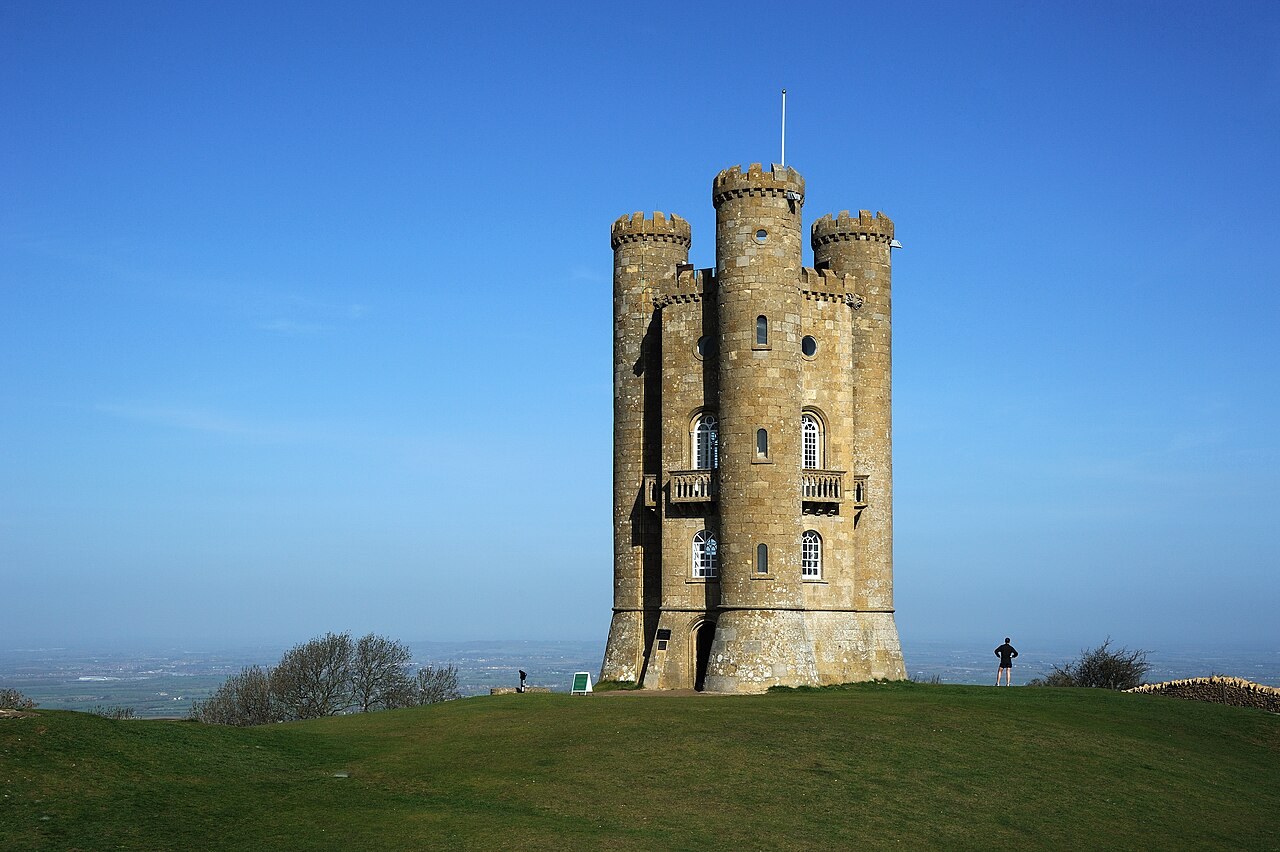
Broadway Tower
A four-storey turreted folly designed by James Wyatt and completed in 1798, offering panoramic views across the Severn Vale towards Wales.
- Visit length
- Editorial estimate: around 90 minutes
- Locality
- on Beacon Hill
- Access
- Access to the tower and nuclear bunker is separately managed
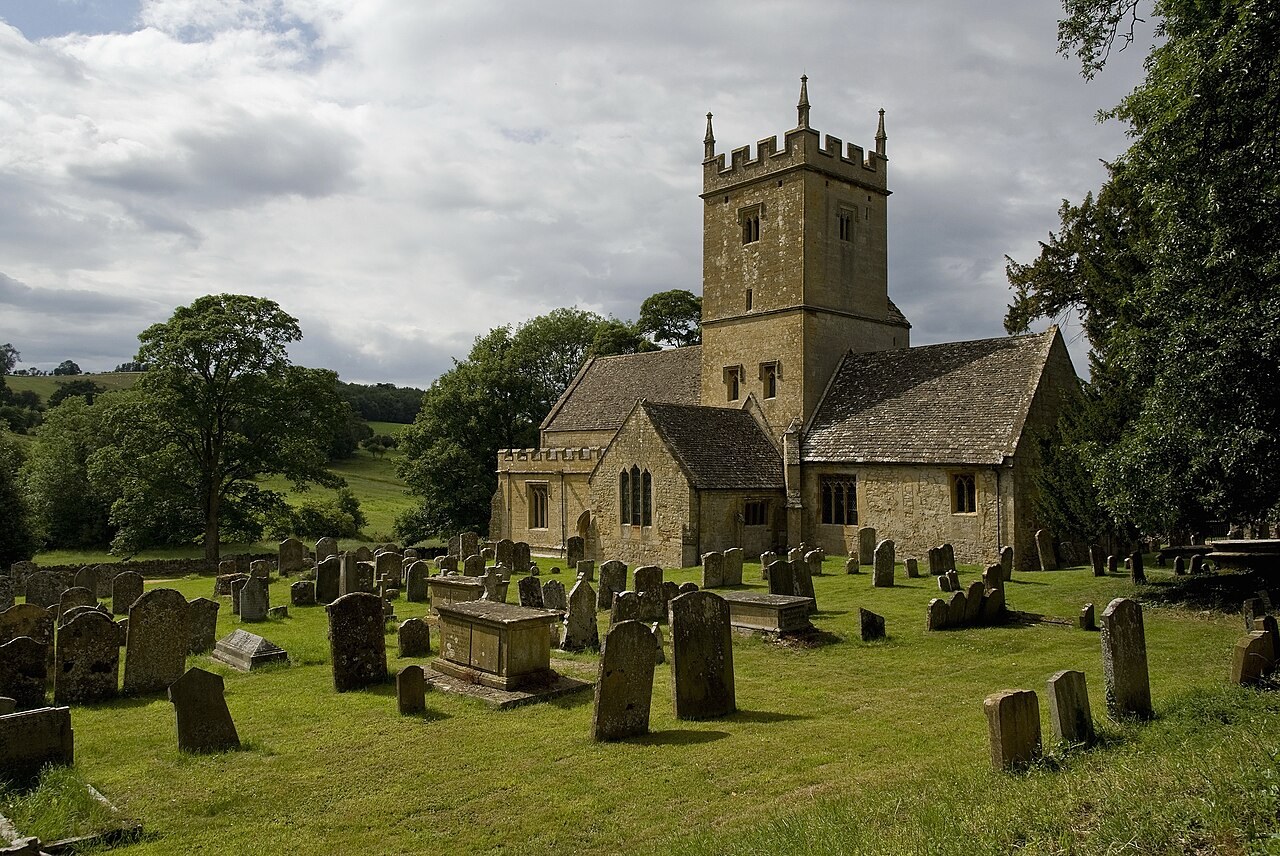
St Eadburgha
A Grade I church principally from 1400, featuring Romanesque scalloped capitals and an elaborate 1640 monument to Walter Savage.
- Visit length
- Editorial estimate: around 60 minutes
- Locality
- near Bury End
Broadway Museum & Art Gallery
A gallery and museum detailing the village's history, including the transatlantic artist colony and the local railway.
- Visit length
- Editorial estimate: around 90 minutes
- Locality
- village centre
Things to do
1 place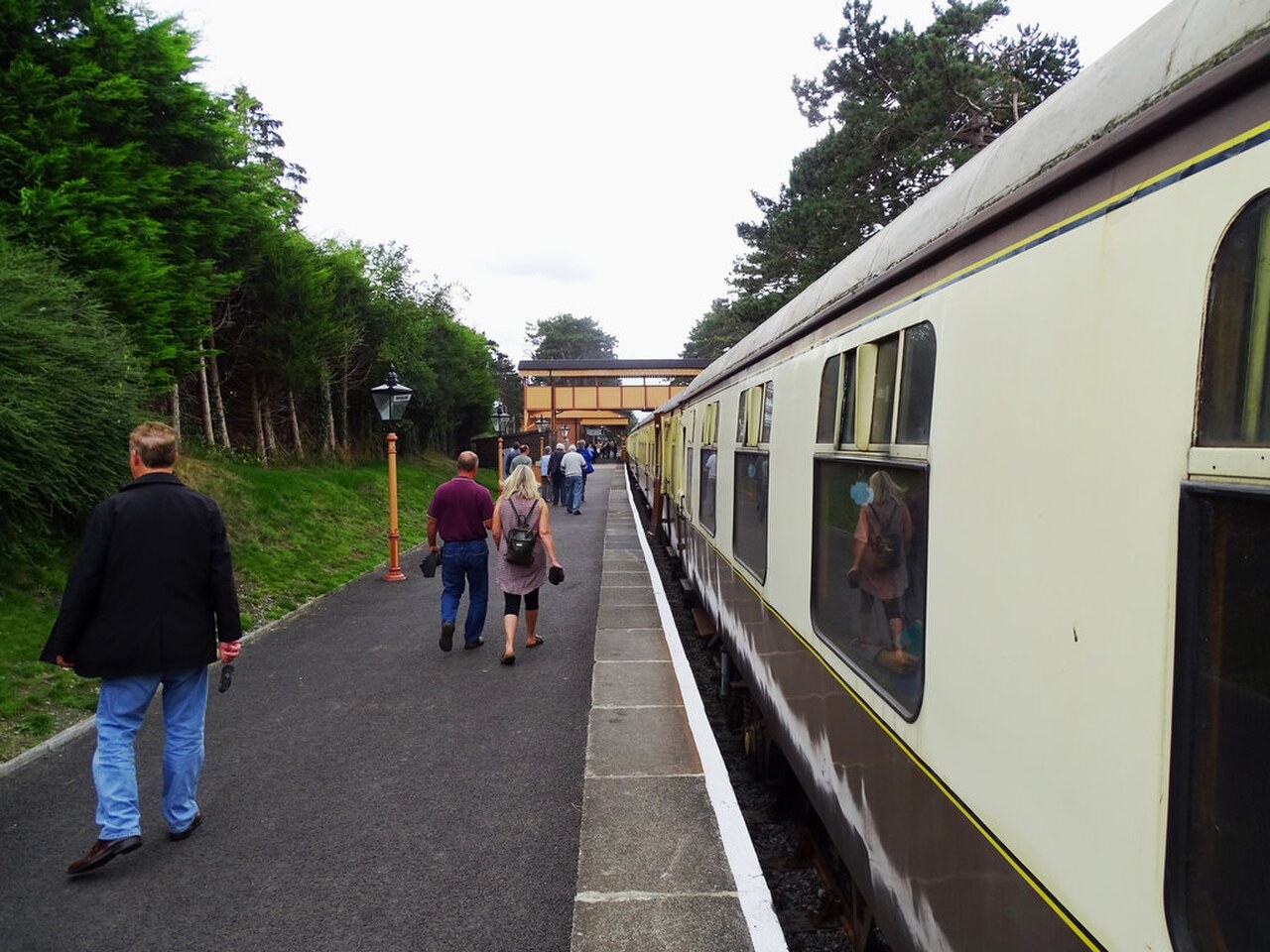
Gloucestershire Warwickshire Steam Railway
A rebuilt heritage station serving as the northern terminus for steam and diesel journeys to Cheltenham Race Course.
- Visit length
- Editorial estimate: around 240 minutes
- Locality
- village terminus
No places match this filter. Choose All places to reset the list.
On the map
Broadway at a glance
Tap a marker to jump to its guide card.
Three ways to explore Broadway
Signature outings
The View from the Top
Ascend to Broadway Tower for an exposed limestone edge and immense westward prospects across the Severn Vale.
Arrive by steam
Use Broadway station for a heritage railway journey along the Cotswold edge.
The Old Parish
Visit St Eadburgha to see where the earliest settlement clustered around the stream a mile from the modern centre.
The village story
Broadway Village Guide
From a medieval planned town to an artist's sanctuary, Broadway balances high-end design with rugged Cotswold nature.
The Broad Way and the Escarpment
The High Street at Broadway is wide enough that the buildings on either side seem to have stepped back to give each other room. Horse chestnuts stand along it, greens open out at intervals, and the whole thing runs east to west in honey-coloured limestone below the wooded rise of Fish Hill. The width is not decorative. This was the broad way that gave the village its name, the coaching road over the escarpment, and the street keeps the proportions of a place built to move horses and traffic.
Behind the village the Cotswold edge climbs sharply to Broadway Tower, and from up there the land falls away west across the Vale of Evesham towards Wales. That contrast is the thing to understand before you plan a day here: a sheltered street below, an exposed limestone edge above. The village is for strolling and eating. The top is a different weather zone.
Start with the shops, because Broadway's High Street is not somewhere you walk down once for a photograph. Most of the businesses along it are independently owned. Broadway Deli, opposite the Lygon Arms since 2002, sells cheese, charcuterie, bread and pantry goods and runs an all-day brunch café; the resident Cotswold artist Pink Harrison exhibits on its walls. Collins of Broadway has been the village butcher for more than a century, with sausages, bacon, meat pies and award-winning pork pies. Otis & Belle, an artisan bakery at 69A High Street, makes sourdough and viennoiserie by hand. John Barleycorn's stocks regional beers, ciders and build-your-own gift boxes, and the Cotswolds Distillery shop at number 33 carries the Stourton producer's single malt and dry gin.
Then there are the galleries and interiors, which take up a surprising amount of the street. Haynes Fine Art fills Picton House with twelve showrooms and a stock said to reach into the thousands of works. Pavilion Broadway arranges furniture, lighting and textiles across three showrooms and thirty-two room settings. Priory Gallery, Broadway Contemporary and Cheltenham House Antiques cover contemporary painting, ceramics, sculpture and silver. Smaller independents fill the gaps: Slate, Pairs and Sassy & Boo for fashion, Landmark and Epicentre for country and outdoor clothing, Sew U Knit for yarn, and Rikki Tikki, a toy shop in the old post office.
Independent Trade and Artisan Tastes
For a meal or a pint, Broadway has five pubs and they are easy to tell apart. The Crown & Trumpet sits a short step off the High Street, a seventeenth-century Cotswold-stone inn of four small rooms, low beams and log fires, with Flowers brewery memorabilia on the walls and live jazz and blues a regular fixture. The menu is traditional: Caroline's Famous Garlic Bread, a Beef and Guinness pie, a Fisherman's pie of smoked haddock, cod, salmon and prawn, Gloucester pork-and-leek sausages, and a Cotswold beef Sunday roast, with apple-and-cinnamon or rhubarb-and-ginger crumble after. The cask ales usually run to North Cotswold Shagweaver and Timothy Taylor Landlord, alongside a changing seasonal beer and real cider. Dogs are welcome in the bar, where you can also eat. A "Trumpet" has stood on this spot since at least 1840.
The Horse & Hound is a low-ceilinged pub and restaurant on the High Street with a bar, a snug, a log fire and a more modern garden behind. It sits directly on the Cotswold Way, which makes it popular with walkers and their dogs. The building is centuries old, its own account and the county's disagreeing over whether the fabric is sixteenth or seventeenth century. Pies are the kitchen's stated speciality, with Sunday roasts and steak alongside, and daily specials that draw on game and produce from the kitchen garden.
The Swan stands on the Green, a larger and more polished operation with a terrace facing the village and a garden behind. The menu changes often; recent diner reports have described rotisserie chicken, prawn-and-crab pappardelle, a steak-and-Malbec pie and pork belly with scallops, finishing with tiramisu or a raspberry brûlée. Purity Pure UBU is the listed regular cask beer. It is worth asking directly whether dogs may come inside.
The Broadway Hotel faces the Green too, a sixteenth-century building with log fires and a minstrels' gallery. Its public bar is the Jockey Bar, racing-themed, with a terrace over the Green and well-behaved dogs welcome to dine there or outside. Afternoon tea runs to finger sandwiches, homemade scones with Cornish clotted cream and strawberry jam, and small sweets from the pastry kitchen. CAMRA lists Goff's Broadway ales and Hook Norton Hooky among the regulars.
The Five Pubs of Broadway
The fifth is the Tavern by James Martin, the publicly accessible bar of the Lygon Arms, reached from the High Street front of a Grade II*-listed early-seventeenth-century coaching inn. There is no cask ale here, but there is Hawkstone cider and a range of bottled local beers. The food leans towards the gastro-pub; its winter menu ran to tankard prawns with lime mayonnaise, a Lygon sausage roll, the Sloppy Giuseppe burger with pulled pork and Monterey Jack, beef-shin ragù with rigatoni, and a blackberry-and-apple crumble. The Lygon markets itself as dog-friendly across the estate, with a muddy-paws station outside, though it is worth checking which tables dogs can use.
Cafés fill in around them. Hunters Tea Room, run by chef-owner John Hunter, does home cooking and cakes and welcomes dogs in the rear courtyard. Tisanes is a traditional tearoom in a seventeenth-century building, and Guilt Trip serves speciality coffee and hand-rolled doughnuts.
Now the walk most people come for. The flagship route is the four-mile Broadway and the Tower circular, part of the Cotswold Way, normally two and a half to three and a half hours, moderate but with one steep climb and no stiles. It follows old tracks up from the village to Broadway Tower, opens out the wide western views over the Severn Vale, and comes back down past St Eadburgha. If you would rather walk one way, the Cotswold Way stage from Chipping Campden crosses Dover's Hill and passes the Tower before dropping into Broadway, six miles best done with transport arranged at one end. To the south-west the trail climbs back onto the escarpment towards Stanton and Wood Stanway. The High Street is flat and easy; the moment you turn uphill you are on the edge, so carry water and wear proper shoes in the wet.
Two churches, a mile apart, record the way the village drifted downhill. St Eadburgha, the old parish church, stands about a mile south of the modern centre near Bury End, where the earliest settlement clustered around the stream. It is Grade I, principally around 1400 with late-twelfth-century Romanesque work surviving in a blocked chancel doorway and scalloped capitals, and it holds Walter Savage's elaborate 1640 monument. Both Simon Jenkins and John Betjeman included it in their surveys of the best English churches. In the newer churchyard on Snowshill Road a lychgate commemorates Francis Davis Millet, the American artist and writer who lived in Broadway and died on the Titanic; his son sent £120 towards its building in 1932, and the Latin inscription honours a man who met death while bringing hope to those in great need.
The Walk to the Tower and the Churches
When the centre of village life moved to the road, St Michael and All Angels was built in 1839–40 to Harvey Eginton's design to serve it, with an Early English west tower, a west gallery and organ, a First World War chancel screen, and a restored pulpit apparently dating to around 1600. The Roman Catholic St Saviour's, begun in 1828 as a Benedictine chapel, has a restrained classical front and a marble high altar dated 1900.
Broadway's history is one of repeated reinvention rather than preservation. The Domesday commissioners in 1086 found a very large settlement of fifty-one households, held by Pershore Abbey and worth £14 in 1066 and £16 twenty years later. The long straight street was laid out afterwards as a planned medieval town by the Abbots of Pershore, its houses on narrow plots strung along the road, its wealth from agriculture, wool and glove-making. From the 1500s the Oxford-to-London route over Fish Hill turned the place into a staging post; close to thirty inns, cider houses and hotels are known to have operated here over time, among them a Crown Inn that once had fifteen bedrooms and stabling for twenty-five horses.
When the railway reached Evesham the coaches stopped and Broadway went quiet, which is what drew the artists. From around 1870 a transatlantic colony gathered here, William Morris, Henry James, John Singer Sargent, Edwin Austin Abbey and Frank Millet among them. Sargent began Carnation, Lily, Lily, Rose in a Broadway garden in the summer of 1885, working outdoors at dusk to catch the light on two children lighting paper lanterns. The oldest inn, on the site of the present Lygon Arms, still carries John Trevis's name and the date 1620 over its door; the hotel's tradition places Charles I here with his supporters and Cromwell here the night before the Battle of Worcester in 1651, at which Charles II was defeated, though what is documented is the building and its panelled Cromwell Room rather than the visits.
The village's other great story is furniture. Sydney Russell bought the Lygon Arms in 1904 and brought his twelve-year-old son Gordon with him. Gordon left school at fifteen, learned his craft in the hotel's repair workshops, won a Military Cross in the First World War, and went on to make furniture that married handwork to machine production. Russell & Sons, founded in 1922, grew to employ around a hundred people; during the Second World War its workshops built aircraft-recognition models and parts for Mosquito aircraft while Gordon chaired the wartime Utility Furniture panel. Terence Conran called him "one of those peculiarly English geniuses who are not given the full recognition they deserve." The Gordon Russell Design Museum now occupies the old workshops in Russell Square.
A History of Artists, Design and Steam
Above the village, Broadway Tower is a folly conceived by Capability Brown for the sixth Earl of Coventry, designed by James Wyatt and finished in 1798 on Beacon Hill. Sir Thomas Phillipps ran a private press inside it from 1822 to 1862; Cormell Price, Edward Burne-Jones and William Morris used it later. Fifteen feet under the estate is a Royal Observer Corps bunker, staffed to report nuclear explosions until it closed in 1991, which gives the beauty spot an unexpected second layer. A deer herd established in the 1980s grazes the ground around the folly.
For families, the Broadway Activity Park is free, three acres behind the fire station with a climbing wall, zipwire, space net and an all-weather games cage, plus a separate area for younger children. The museum has a Wombat Trail, a treasure chest and a craft room, and makes the artist colony and railway stories tangible rather than merely architectural. The best all-day outing is the steam railway: Broadway's rebuilt station, reopened in 2018, is the northern terminus of the Gloucestershire Warwickshire line, fourteen miles of steam and heritage diesel to Cheltenham Race Course by way of Toddington and Winchcombe. That station is heritage-only, though; for the national network the nearest stops are Honeybourne, about six miles off, and Evesham, and the A44 over Fish Hill is the main road in, with an R4 bus to Evesham on weekdays.
Snowshill, a few miles south, is the obvious extension. The National Trust manor there holds more than sixteen thousand objects, clocks, musical instruments, bicycles, masks and Samurai armour, collected by the architect and artist Charles Paget Wade, who bought the house in 1919, gave its twenty rooms over to the collection and lived in the cottage across the yard. Nearby, Cotswold Lavender grows its fields at around a thousand feet for distilling, in flower from roughly mid-June.
Back down on the Green, under all of this, the ordinary village keeps going: the butcher wrapping pork pies, a dog asleep in the courtyard behind Hunters, and the bowls club still rolling, its origins going back to 1919, the adjoining tennis courts long since given over to parking.
Stay around Cotswolds
Make a longer stay of it
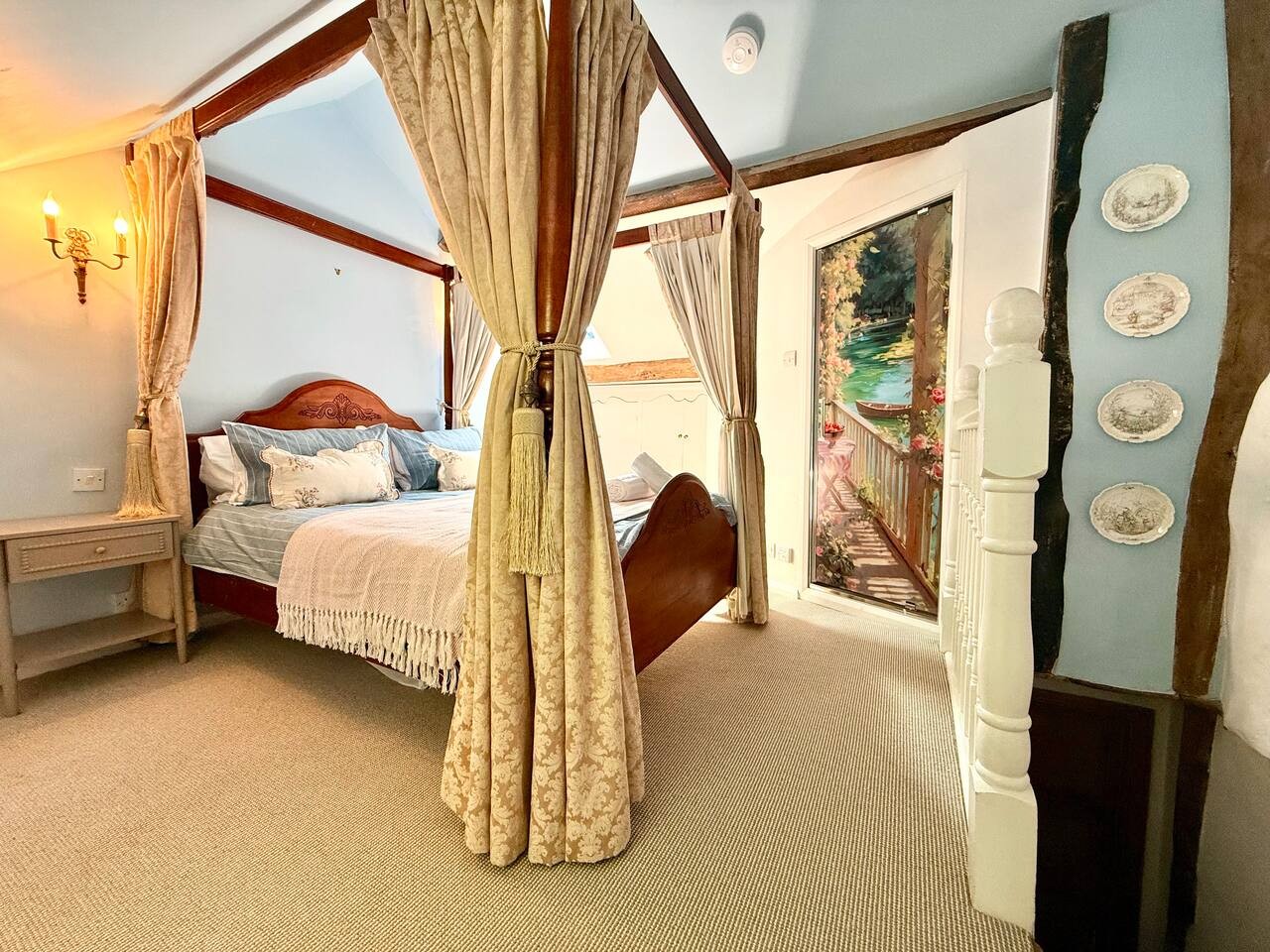
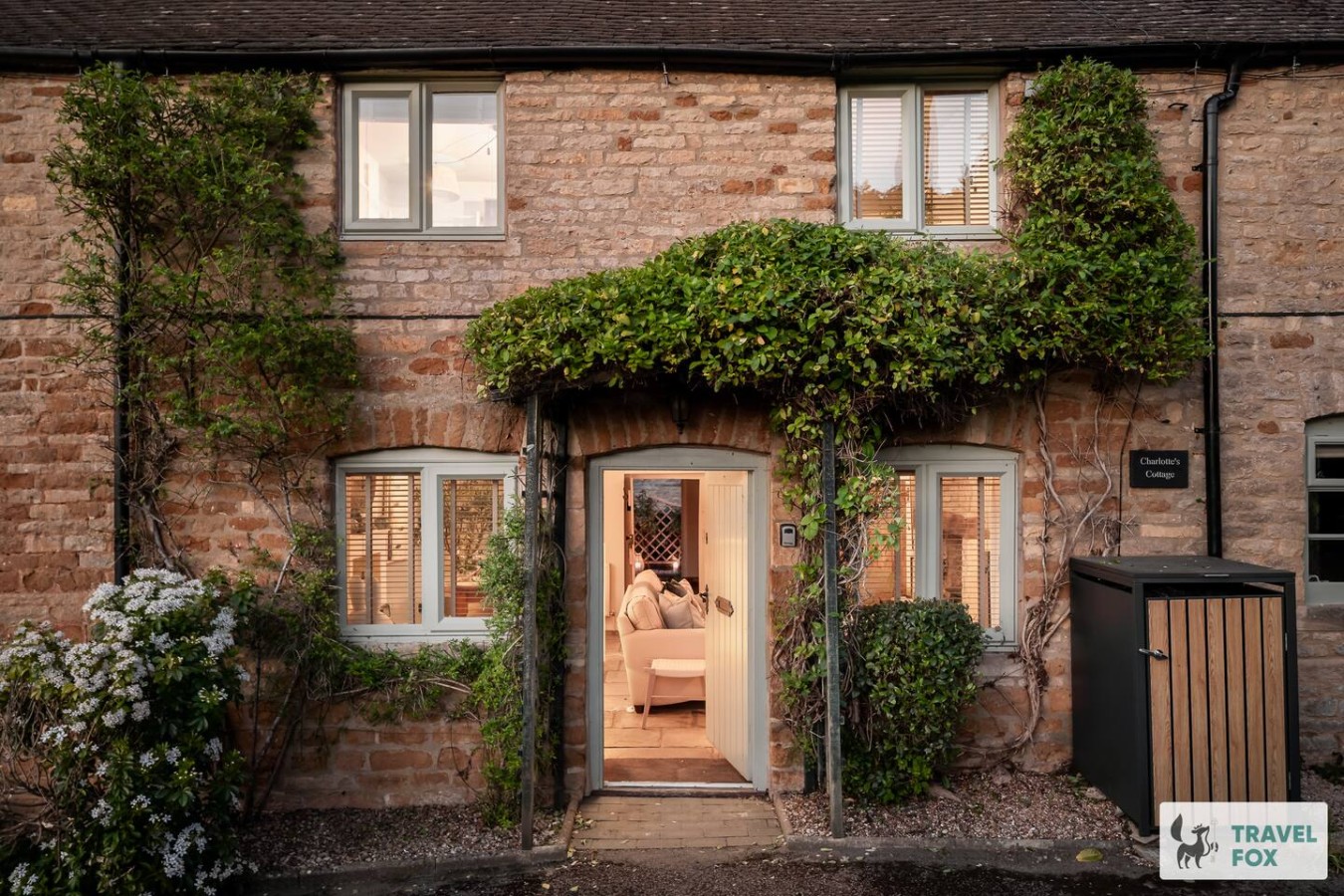
Travel Fox holiday homes around Cotswolds, linked directly to their property pages.
For homeowners
Own a holiday home near Broadway?
We manage holiday lets across the Cotswolds from 12% commission, charged after cleaning costs, with no lock-in. A co-founder visits before you decide.
Holiday let management in the Cotswolds →
A guide with a point of view
Written from research. Edited for real journeys.
Use the Official site links for live practical details, then use this guide for context, ideas and room to explore.
Photography credits & licences
Third-party photographs are credited to their named creators and reused under the linked Creative Commons licence or public-domain dedication. Travel Fox stores an optimised local copy; the file-specific changes and any browser-applied display crop are disclosed below. Reused photographs link both to the Wikimedia Commons source record and to the declared source image; Travel Fox's own photographs carry no such record and are marked as ours. These image licences do not cover Travel Fox text, branding or page design.
- File:Broadway Tower 2012.jpg — photograph by Saffron Blaze; Own work. Source record on Wikimedia Commons. Declared source image. Licence: CC BY-SA 3.0. File changes: Downloaded from Wikimedia Commons, resized to a maximum 1920px edge and encoded as an optimised JPEG. Display changes: Displayed with responsive CSS cropping.
- File:Gloucestershire Warwickshire Steam Railway station, Broadway - geograph.org.uk - 5888570.jpg — photograph by Brian Robert Marshall; Gloucestershire Warwickshire Steam Railway station, Broadway by Brian Robert Marshall. Source record on Wikimedia Commons. Declared source image. Licence: CC BY-SA 2.0. File changes: Downloaded from Wikimedia Commons, resized to a maximum 1920px edge and encoded as an optimised JPEG. Display changes: Displayed with responsive CSS cropping.
- File:St-Eadburgha Church Broadway.jpg — photograph by Saffron Blaze; Own work. Source record on Wikimedia Commons. Declared source image. Licence: CC BY-SA 3.0. File changes: Downloaded from Wikimedia Commons, resized to a maximum 1920px edge and encoded as an optimised JPEG. Display changes: Displayed with responsive CSS cropping.