
The Highest Town in the Cotswolds
Stow-on-the-Wold
A medieval wool-trading hub defined by honey-coloured limestone, ancient coaching inns, and a windswept hilltop position.
- Best for
- Antiquing and historic pubs
- Give it
- A full afternoon
- Don't miss
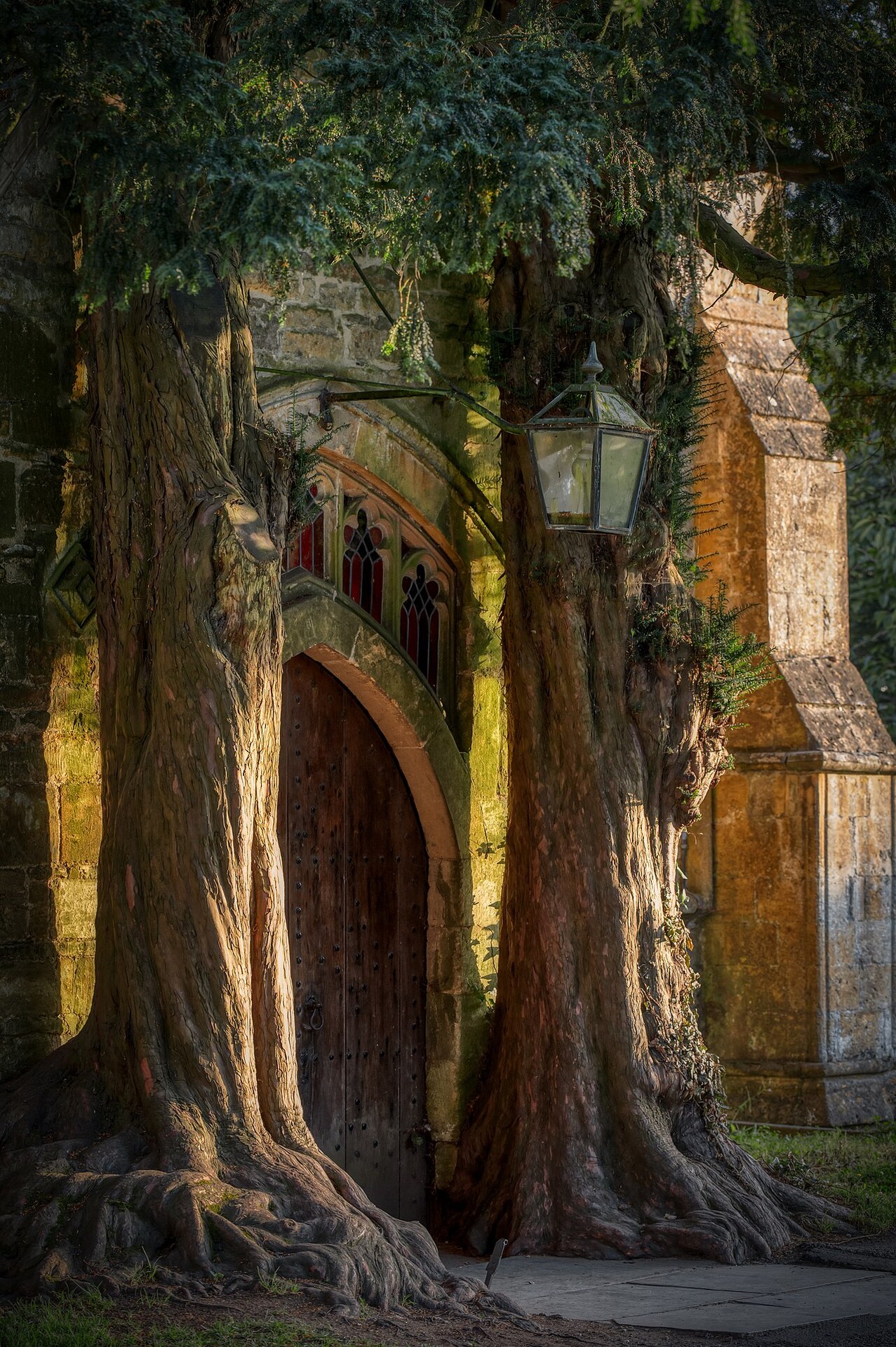
- The yew-flanked north door of St Edward's
Photo: GZagatta · CC BY-SA 4.0 · cropped
The Fox verdict
A timeless limestone sanctuary
Stow-on-the-Wold balances its formal history as a wool powerhouse with a relaxed, dog-friendly atmosphere.
Unlike some of its more manicured neighbours, Stow feels lived-in and authentic. Its large Market Square remains the heart of the town, where narrow 'tures' once funnelled thousands of sheep. Whether you are hunting for antiques along Sheep Street, tracing the steps of the English Civil War, or simply seeking a snug corner in a 17th-century pub, the town offers a genuine sense of Cotswold heritage without the polish of a museum.
Your picks, your pace
Make Stow-on-the-Wold yours
Choose a mood or build your own list. Your saved stops are an ordering aid, with a direct map route when you are ready.
Local signatures
3 placesMarket Square and Medieval Stocks
The town's focal point, ringed by honey-coloured limestone and featuring rare surviving medieval stocks and a 15th-century cross base. Look for the 'tures'—narrow alleys used for counting sheep during the wool trade.
- Visit length
- Editorial estimate: around 45 minutes
- Locality
- town centre
The Queen's Head
A 17th-century local favourite known for its snug back bar with high-backed wooden settles and Donnington Brewery ales.
- Visit length
- Editorial estimate: around 90 minutes
- Locality
- on the square
Huffkins
A family-run bakery and tearoom housed in a 17th-century listed building, famous for its traditional lardy cakes.
- Visit length
- Editorial estimate: around 60 minutes
- Locality
- on the square
Food & drink
1 place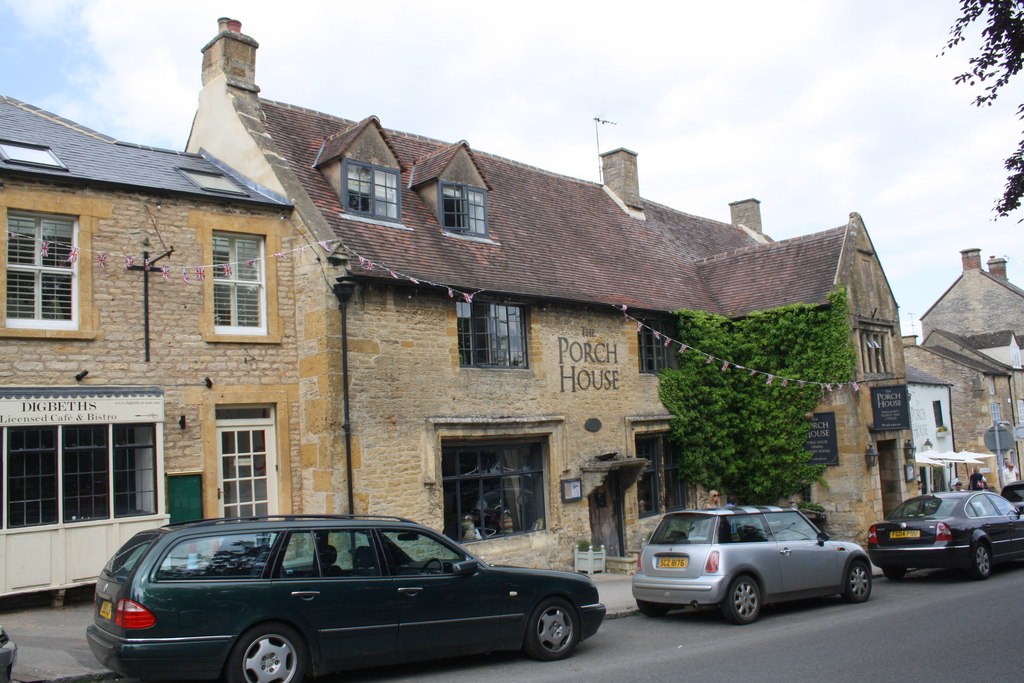
The Porch House
Claiming to be England's oldest inn (founded 947 AD), this establishment features flagstone floors, low ceilings, and 16th-century 'witch marks' carved above the fireplace to ward off evil.
- Visit length
- Editorial estimate: around 90 minutes
- Locality
- near the square
History & heritage
2 places
St Edward's Church
A Grade I listed church featuring a 15th-century tower and a north door flanked by ancient yew trees, popularly linked to Tolkien's Moria. It served as a prison for 1,000 Royalist troops after the 1646 Battle of Stow.
- Visit length
- Editorial estimate: around 60 minutes
- Locality
- far side of town
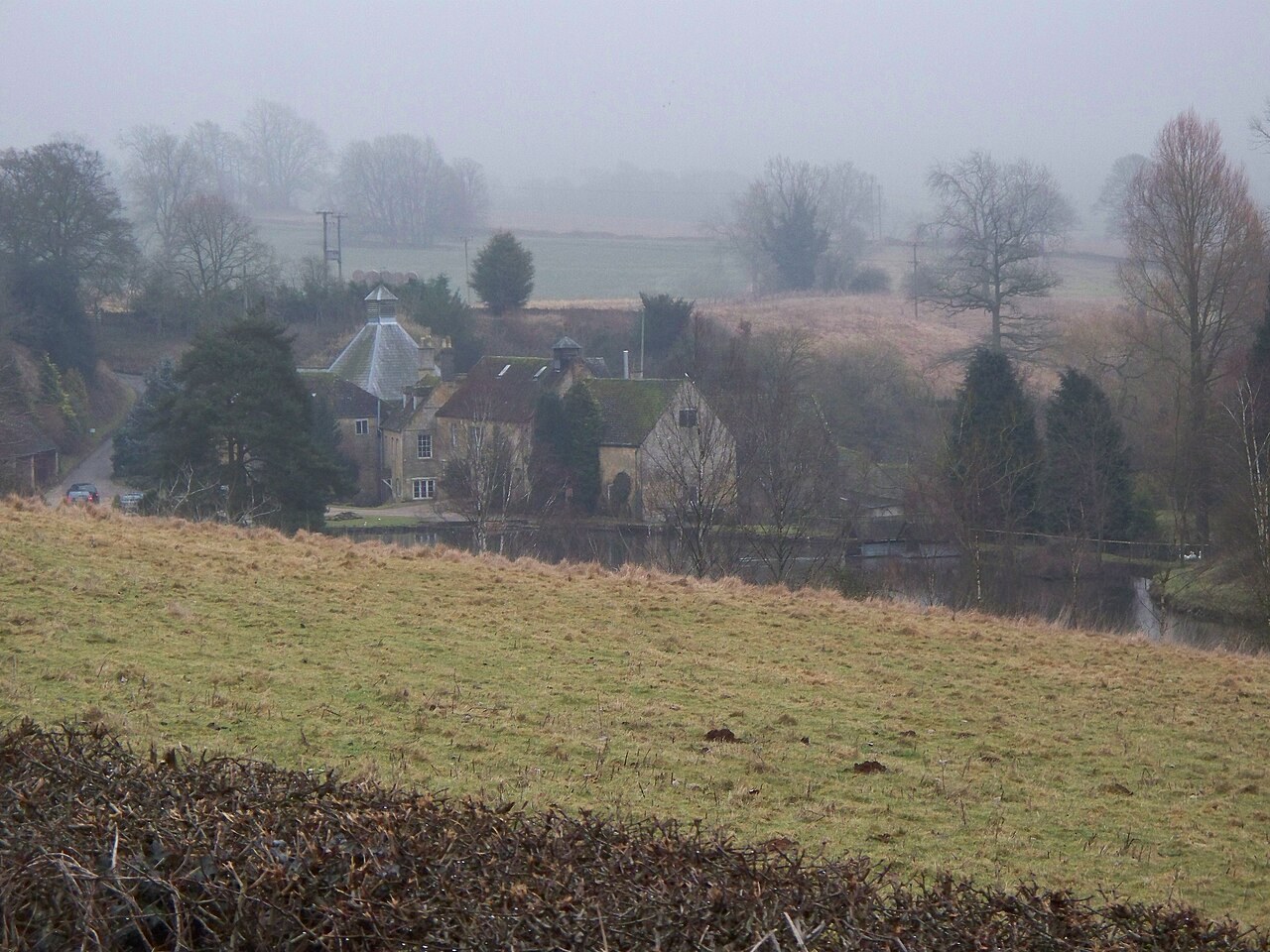
Donnington Brewery
Operating from a 13th-century watermill, this family-run brewery still uses an internal waterwheel to drive its mashing belts.
- Visit length
- Editorial estimate: around 60 minutes
- Locality
- near Donnington
- Access
- Check for tour availability in advance.
No places match this filter. Choose All places to reset the list.
On the map
Stow-on-the-Wold at a glance
Tap a marker to jump to its guide card.
Three ways to explore Stow-on-the-Wold
Signature outings
Frame the north door
Look through the churchyard yews towards St Edward's historic north door.
Saxon Roots
Enjoy a pint beneath the wonky beams of The Porch House, which claims to be the oldest inn in England.
Find the valley brewery
Pair the town with Donnington's rural brewery setting, checking visitor access before travel.
The town story
Stow-on-the-Wold Town Guide
From the blood-soaked legends of the Civil War to the quiet hum of the antique trade, Stow is a town of enduring character.
The Market Square and Wool Trade
The medieval stocks are still on the green, off to one side of the Market Square, next to the base of a 15th-century cross. They are a rare survival — most towns quietly lost their public-punishment fixtures — and Stow keeps them out in the open where anyone can sit on the grass beside them. The Old Stocks Inn across the way is named after them, which tells you how the town treats its own history: not reverently, just practically.
The square itself is the thing to get your bearings by. It's large and open, ringed by honey-coloured limestone, and it slopes gently in a way that made sense when the main traffic was sheep. Narrow walled alleys called tures run off it — the word is local — and they were built to funnel sheep down from Sheep Street and count them into the square. Daniel Defoe recorded that as many as 20,000 were sold here in a single day at the height of the wool trade. The alleys are still there, still narrow, and now they mostly funnel people carrying takeaway coffee.
You are not short of pubs. Six of them are within a short walk of the square, and they don't all do the same thing. The Porch House claims to be the oldest inn in England, with a founding date of 947 AD attached to a Saxon duke named Athelmar and a later spell run by the Knights Hospitallers. The stone porch that gives it its name was added by Thomas Shellard in 1615. Inside there are flagstone floors, wonky beams, low ceilings, and — carved above the 16th-century fireplace in the main dining room — witch marks, scratched in to ward off evil. The kitchen does Oxford Gold Ale battered haddock with crushed peas and homemade tartare, and a rump of lamb with white and green asparagus and a red wine jus. Dogs are welcome, and there's a courtyard garden.
The Queen's Head is the one locals point you to if you ask for a proper Cotswold pub. It's 17th-century, with a stone-walled front bar and a snug back bar full of high-backed wooden settles, barrels and tankards. It pours Donnington Brewery ales on tap and has turned up in the CAMRA Good Beer Guide more than once. The food is honest — braised lamb shanks, sausage and mash, homemade pies — served lunch and dinner every day except Mondays. Book if you're coming at the weekend. Your dog is welcome.
Historic Inns and Local Pubs
The King's Arms is a 500-year-old former coaching inn overlooking the square, with rustic wooden tables, a woodburner and quotes painted on the walls. King Charles I is said to have stayed here before the Battle of Naseby in 1645. The kitchen does slow-cooked pork belly and puff-pastry pot pies. The Bell at Stow, over on Park Street, is creeper-clad and beamed but lighter and more spacious than the others, with a fish specials board that regulars rate, a chef named Nick Rowberry, and live music on Sundays. The Talbot sits at the head of the square and is the livelier option, with real ales, ciders and a band most weekend evenings. The Old Stocks Inn, the boutique one, welcomes dogs in the bar, garden and library and runs a seasonal modern British menu.
For food you carry home rather than eat sitting down, Lambournes has been a butcher's shop for around a hundred years and deals in local meat, poultry and game. Huffkins is a family-run bakery and tearoom in a 17th-century listed building on the square, known for lardy cakes and breakfasts. There's an independent deli and cheese counter that has supplied the town for decades, and a farmers' market on the second Thursday of every month. Just outside town, Daylesford Organic is a farm shop on a scale that draws people from across the county — pasture-raised meat, artisan bread, handmade cheese.
Then there are the antiques. Stow is one of the best places in the Cotswolds for them, and the dealers cluster around the square and along Sheep Street — antique emporiums, galleries, the occasional gallery-cum-deli. You can spend an afternoon drifting between them without buying anything, which is more or less the intended experience.
Artisans, Antiques and Fare
The church anchors the far side of town. St Edward's is Grade I listed, with a medieval core and a 15th-century four-stage tower that stands about 88 feet high and carries what is claimed to be the heaviest ring of bells in Gloucestershire. The clock was first installed in 1580; the present one dates to 1926. But the thing everyone comes to see is the north door, set into a porch built about 300 years ago and flanked by two ancient yew trees that have grown up around it. It is popularly said to have inspired the Doors of Durin in Tolkien's Moria. The Tolkien Society hasn't confirmed it, and there's no real evidence, but the door is genuinely strange to stand in front of, and the story has stuck.
Inside there's a Crucifixion painting attributed to Gaspar de Craeyer, stained glass by Wailes and Strang, and a monument to Sir Hastings Keyte, a Royalist captain killed in the Battle of Stow at the age of 23. The church itself was pressed into service after that battle: around a thousand Royalist prisoners were held inside it, and damage from the time is still visible. The 1873 restoration was carried out by John Loughborough Pearson.
The battle in question — 21 March 1646 — was the last pitched field battle of the First English Civil War. The Royalists under Sir Jacob Astley were beaten here, roughly 1,600 prisoners taken. Astley, after his surrender, is supposed to have told his captors, "You have done your work, boys, and may go play, unless you will fall out among yourselves." Local tradition holds that so much blood ran down the street off the square that ducks bathed in it, which is offered as the origin of the name Digbeth — "duck's bath." The etymology is almost certainly made up. The town tells it anyway.
St Edward's and the Battle of Stow
The town's own history is oddly formal. It has no individual entry in Domesday Book — it grew up on the land of the manor of Maugersbury and was first called Edwardstow — but the paperwork arrived soon enough. A market charter came in 1107, a royal charter in 1330 set up a seven-day August fair, and a 1476 charter authorised two annual fairs. St Edward's Hall on the square was built in 1878, funded from unclaimed deposits left lying in the local savings bank. A twice-yearly horse and gypsy fair still runs in May and October, though it was long ago moved out of the centre to a site near Oddington after complaints.
Stow is the highest town in the Cotswolds, sitting on an exposed hill at around 800 feet, and it has never let anyone forget it. "Stow-on-the-Wold, where the wind blows cold" is the short version of a couplet the town wears almost proudly; a fuller nursery rhyme has it that "the cook no meat can dress." A. A. Gill went further and called it "the worst place in the world" in a 2005 book, a verdict most visitors decline to endorse.
The walking is good and starts from the door. The Monarch's Way — 625 miles tracing Charles II's escape after the Battle of Worcester — runs straight through. So does the Heart of England Way, heading down through Lower Swell and Lower Slaughter toward Bourton-on-the-Water. There's a five-and-a-bit-mile circular along the River Dikler through Lower Swell and Maugersbury, and a gentler four-mile route to Bourton via Lower Slaughter that takes an hour and a half or so. If you'd rather your walk had a purpose, the Donnington Way is a circular pub crawl that visits fifteen old Donnington Brewery pubs.
Town Lore and the Open Road
Which brings you back to the beer. Donnington Brewery sits about a mile and a half out, near Donnington, in a 13th-century watermill that Thomas Arkell bought in 1827. His grandson Richard started brewing there in 1865, and the internal waterwheel still turns, driving belts for the mashing and pumps for the copper. It's still owned and run by the Arkell family — Claude Arkell ran it until his death in 2007 — and its BB and SBA are what you're drinking at the Queen's Head.
Getting here is straightforward. The town sits on the A429, the old Roman Fosse Way, at a junction of several roads about four miles north of Bourton-on-the-Water. The nearest stations are Moreton-in-Marsh, four miles off, and Kingham, about five, both on the London Paddington to Worcester line; area buses link Stow to Moreton, Bourton, Cheltenham and Chipping Norton. Stow had its own station once, from 1881 until 1962, on a Great Western branch line.
John Entwistle, the bassist from The Who, bought a large Victorian house near the town in 1976 and is buried from St Edward's. His funeral was held in the church with the yew-flanked door, a few steps from the stocks on the green and the alleys built for counting sheep — which is about the range of things Stow keeps side by side without appearing to think it strange.
Stay around Cotswolds
Make a longer stay of it
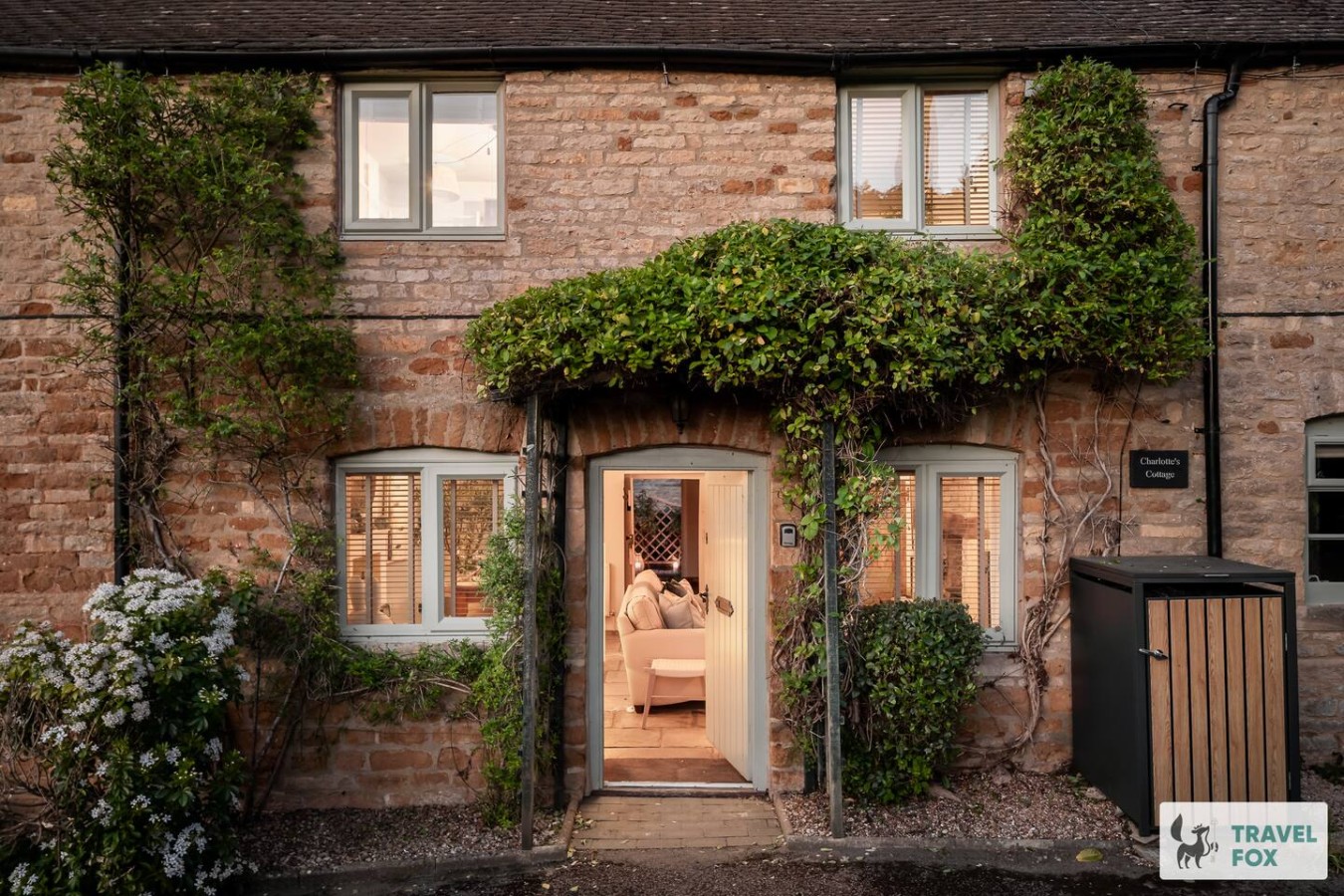
Travel Fox holiday homes around Cotswolds, linked directly to their property pages.
A guide with a point of view
Written from research. Edited for real journeys.
Use the Official site links for live practical details, then use this guide for context, ideas and room to explore.
Photography credits & licences
Third-party photographs are credited to their named creators and reused under the linked Creative Commons licence or public-domain dedication. Travel Fox stores an optimised local copy; the file-specific changes and any browser-applied display crop are disclosed below. Reused photographs link both to the Wikimedia Commons source record and to the declared source image; Travel Fox's own photographs carry no such record and are marked as ours. These image licences do not cover Travel Fox text, branding or page design.
- File:Yew trees at St Edward's Church.jpg — photograph by GZagatta; Own work. Source record on Wikimedia Commons. Declared source image. Licence: CC BY-SA 4.0. File changes: Downloaded from Wikimedia Commons, resized to a maximum 1920px edge and encoded as an optimised JPEG. Display changes: Displayed with responsive CSS cropping.
- File:'The Porch House', formerly the Royalist Hotel - geograph.org.uk - 4664479.jpg — photograph by Roger Templeman; 'The Porch House', formerly the Royalist Hotel by Roger Templeman. Source record on Wikimedia Commons. Declared source image. Licence: CC BY-SA 2.0. File changes: Downloaded from Wikimedia Commons, resized to a maximum 1920px edge and encoded as an optimised JPEG. Display changes: Displayed with responsive CSS cropping.
- File:Donnington Brewery - geograph.org.uk - 1718496.jpg — photograph by Michael Dibb; Michael Dibb. Source record on Wikimedia Commons. Declared source image. Licence: CC BY-SA 2.0. File changes: Downloaded from Wikimedia Commons, resized to a maximum 1920px edge and encoded as an optimised JPEG. Display changes: Displayed with responsive CSS cropping.