
Legends in the Vale
Ruthin
A hilltop market town of carved roofs, timber frames, prison history and an Arthurian stone.
- Best for
- Compact heritage, independent shops and family stops
- Give it
- A half-day around the historic centre
- Don't miss
- Maen Huail and St Peter's carved roof
Photo: Rosser1954 · CC BY-SA 4.0 · cropped
The Fox verdict
A small town with unusually deep layers
Ruthin brings medieval architecture, dark civic history and an Arthurian legend into a compact town visit.
Start with Maen Huail and the half-timbered and Georgian setting of St Peter's Square, then move between the church's carved roof, Ruthin Gaol, Nantclwyd y Dre and the former station site now occupied by the craft centre. Ruthin Park and the Castle Hotel add family time and a food-and-drink stop without sending the day far from town.
Where to go
Places in Ruthin
Every place below is checked against a published source, listed with what it is and how long to give it.
Local signatures
3 placesNantclwyd y Dre
One of Wales's oldest timber-framed townhouses, with a core dated to 1435/1436, period rooms, the restored Lord's Garden and a live batcam for its attic roost.
- Visit length
- Editorial estimate: Allow around 90 minutes
- Locality
- Ruthin
Ruthin Park
A family recreation stop with swings, slides, a zip wire, picnic areas, walking paths, a small skate park and a rugby field.
- Visit length
- Editorial estimate: Allow around 60 minutes
- Locality
- Ruthin
The Castle Hotel
A Georgian coaching inn dating from around 1730, now a Wetherspoon pub and hotel, with rotating cask ales and seven uneven dormers known as the eyes of Ruthin.
- Visit length
- Editorial estimate: Allow around 75 minutes
- Locality
- St Peter's Square
History & heritage
3 places
Maen Huail
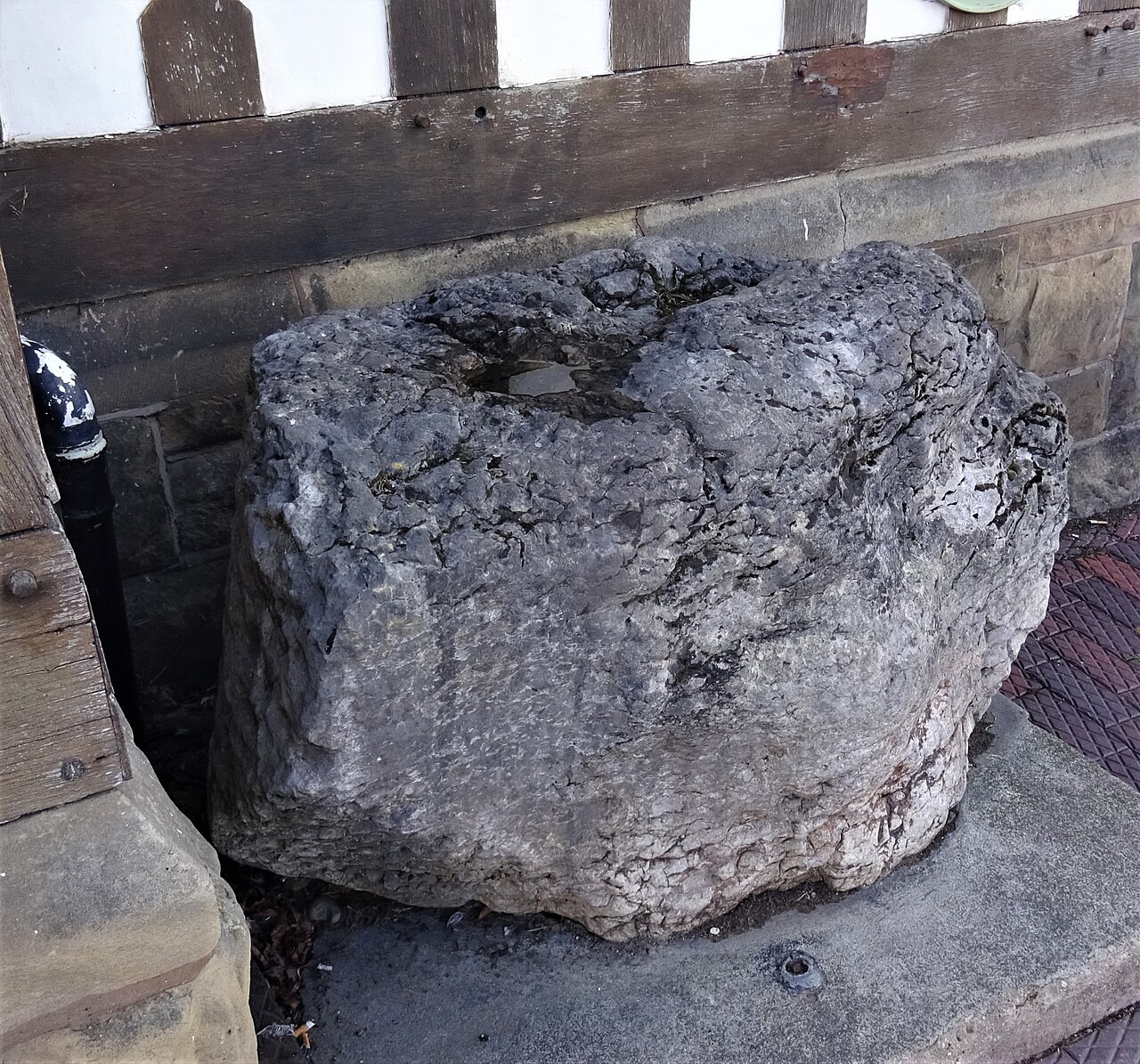
A 1.2-metre weathered limestone boulder whose Arthur-and-Huail beheading legend was first recorded around 1550; it was more likely a market, civic or preaching stone.
- Visit length
- Editorial estimate: Allow around 20 minutes
- Locality
- St Peter's Square
Collegiate and Parochial Church of St Peter
A Grade I collegiate parish church founded in 1310, with a double-nave plan and a late-medieval north nave roof carrying more than 400 carved panels.
- Visit length
- Editorial estimate: Allow around 45 minutes
- Locality
- St Peter's Square
Ruthin Gaol
A former gaol that began as a bridewell in 1654 and is now a museum; its only execution was that of William Hughes in 1903.
- Visit length
- Editorial estimate: Allow around 90 minutes
- Locality
- Ruthin
No places match this filter. Choose All places to reset the list.
Three ways to explore Ruthin
Signature outings
Arthur's roadside stone
Read the plaque beside Maen Huail, then look past the beheading legend to its more likely role as a market, civic or preaching stone.
Four hundred carved panels
Inside St Peter's, the double-naved church's northern roof carries more than 400 panels of flowers, badges and family heraldry.
From bridewell to museum
Ruthin Gaol traces a prison history beginning with the 1654 bridewell and ending as a museum after its closure in 1916.
The town story
Ruthin Town Guide
The original Travel Fox account, preserved verbatim, moves from Arthurian legend and the square to cafés, pubs, church, gaol, transport and bats.
The Stone and the Square
On St Peter's Square there is a weathered limestone boulder about four feet long, sitting on a plinth by the roadside. This is Maen Huail, and tradition holds that King Arthur beheaded a man on it. The story goes that Arthur and Huail had quarrelled over a woman, Huail wounded Arthur's knee, and then made the mistake of taunting him about the resulting limp. The legend was first written down around 1550. The stone was more probably a market or preaching stone, but the plaque records the beheading anyway.
The square is the crown of the town, ringed by black-and-white half-timbered and Georgian buildings. Ruthin reputedly has more listed buildings than any other market town in North Wales, and most of the ones worth seeing are here. The specialist independent shops and cafes cluster around the same few hundred yards.
Cafés and the Castle Hotel
The Nest Coffee Shop looks out over the square, doing tea and cake with books and board games and a view of the medieval buildings opposite. Te yn y Grug is a deli stocking local cheese, honey, hampers, wine from Gwinllan Conwy Vineyard, Pant y Foel gin and beer from Bragdy Mona.
The pub of note is the Castle Hotel, a fine Georgian building of around 1730 that started life as the White Lion. Two maltsters and a master brewer once worked here supplying ale to the Myddelton family's other inns. The seven dormer windows set at different levels in the steep roof are known locally as the eyes of Ruthin. It is now a Wetherspoon, which North Wales Live called "the poshest Wetherspoon in Wales", and it is in CAMRA's Good Beer Guide. Charles Darwin is reputed to have stayed the night.
Local Pints and St Peter's
For a more local pint, the Wine Vaults is a free house with a verandah over the square and a games room with darts and pool. The Feathers keeps its old beams under a modern makeover. In its droving heyday Ruthin reputedly had a pub for every week of the year; by 2007 only eleven remained.
The church of St Peter dominates the skyline. Founded in 1310, it is one of the very rare collegiate parish churches in Wales, and it is double-naved — two rectangles of equal length side by side, divided by a row of pillars. The northern nave roof carries over 400 carved panels of flowers, badges and family heraldry, dated to between 1485 and 1508.
Rebellion, Gaol and Arrival
History here runs dark in places. Owain Glyndŵr burned the whole town to the ground on 16 September 1400 at the start of his rebellion. The Old Courthouse of 1401 still has the remains of a gibbet beam projecting from its north-west wall. Ruthin Gaol, which began as a bridewell in 1654, is now a museum; only one man was ever executed there, William Hughes, hanged in 1903.
There is no railway — the line to Denbigh closed in 1962, and its old station is now a roundabout and the Craft Centre. The A525 and A494 converge on the town, and the TrawsCymru T8 runs hourly through to Chester.
Nantclwyd y Dre and the Batcam
In the attic of Nantclwyd y Dre, one of the oldest timber-framed houses in Wales, there is a maternity roost of lesser horseshoe bats, with a live batcam so you can watch them.
Stay around Denbighshire
Make a longer stay of it
Travel Fox holiday homes around Denbighshire, linked directly to their property pages.
A guide with a point of view
Written from research. Edited for real journeys.
Use the Official site links for live practical details, then use this guide for context, ideas and room to explore.
Photography credits & licences
Third-party photographs are credited to their named creators and reused under the linked Creative Commons licence or public-domain dedication. Travel Fox stores an optimised local copy; the file-specific changes and any browser-applied display crop are disclosed below. Reused photographs link both to the Wikimedia Commons source record and to the declared source image; Travel Fox's own photographs carry no such record and are marked as ours. These image licences do not cover Travel Fox text, branding or page design.
- File:The Maen Huail, a stone boulder at St Peter's Square, Ruthin, Denbighshire,.jpg — photograph by Rosser1954; Own work. Source record on Wikimedia Commons. Declared source image. Licence: CC BY-SA 4.0. File changes: Downloaded from Wikimedia Commons, resized to a maximum 1920px edge and encoded as an optimised JPEG. Display changes: Displayed with responsive CSS cropping.
Sources
Every place on this page is checked against a published source. Each entry links the record we used and names who publishes it.
- Maen Huail — cadwpublic-api.azurewebsites.net other published source
- Collegiate and Parochial Church of St Peter — cadwpublic-api.azurewebsites.net other published source
- Ruthin Gaol — denbighshire.gov.uk statutory register or public authority
- Nantclwyd y Dre — denbighshire.gov.uk statutory register or public authority
- Ruthin Park — denbighshire.gov.uk statutory register or public authority
- The Castle Hotel — coflein.gov.uk statutory register or public authority