
Estuary port
Topsham
Gravity-poured ale, tidal paths, merchant history and bird-rich mudflats between Exeter and Exmouth.
- Best for
- Estuary walks, maritime history and independent food
- Give it
- A day paced by the river and ferry
- Don't miss
- The Goat Walk and gravity-poured ale at the Bridge Inn
Photo: Derek Harper · CC BY-SA 2.0 · cropped
The Fox verdict
A tidal town with an unhurried rhythm
Topsham brings historic inns, independent food and maritime stories to the edge of the Exe Estuary.
Follow the raised Goat Walk for mudflat and boat views, watch winter birds at Bowling Green Marsh, or trace the port's history through its quayside inns. Darts Farm and the Bridge Inn give the food-and-drink side of Topsham two very different anchors.
Where to go
Places in Topsham
Every place below is checked against a published source, listed with what it is and how long to give it.
Local signatures
3 placesPassage House Inn
A traditional riverside inn opened in 1721 and named for the ferry passage across the Exe, with indoor and outdoor riverside seating.
- Visit length
- Editorial estimate: Allow around 75 minutes
- Locality
- Ferry Road, by the old ferry crossing
Darts Farm
A destination farm shop and food village with an on-site butcher, fishmonger, deli, bakery and cyder maker, developed from Ronald Dart's fruit-and-veg hut.
- Visit length
- Editorial estimate: Allow around 90 minutes
- Locality
- Topsham, EX3 0QH
St Margaret's Church
A Grade II* church with a 14th- or 15th-century Perpendicular Gothic red-sandstone tower and a limestone Gothic Revival body rebuilt in 1874-76.
- Visit length
- Editorial estimate: Allow around 45 minutes
- Locality
- Above the estuary
Food & drink
2 placesThe Bridge Inn
A Grade II-listed pink pub run by five generations of the same family since 1897, with an ever-changing range of ales served by gravity from the cellar.
- Visit length
- Editorial estimate: Allow around 60 minutes
- Locality
- Bridge Hill, beside the bridge over the River Clyst
- Access
- Traditional ploughman's, sandwiches and snacks are served from 12 to 2 only; this is an ale house first.
The Lighter Inn
A riverside pub and restaurant in a building whose 1760 section was once the Customs House, named for the lighters that moved cargo between ships and shore.
- Visit length
- Editorial estimate: Allow around 75 minutes
- Locality
- Topsham Quay, overlooking the Exe Estuary
Walks & outdoors
2 places
The Goat Walk
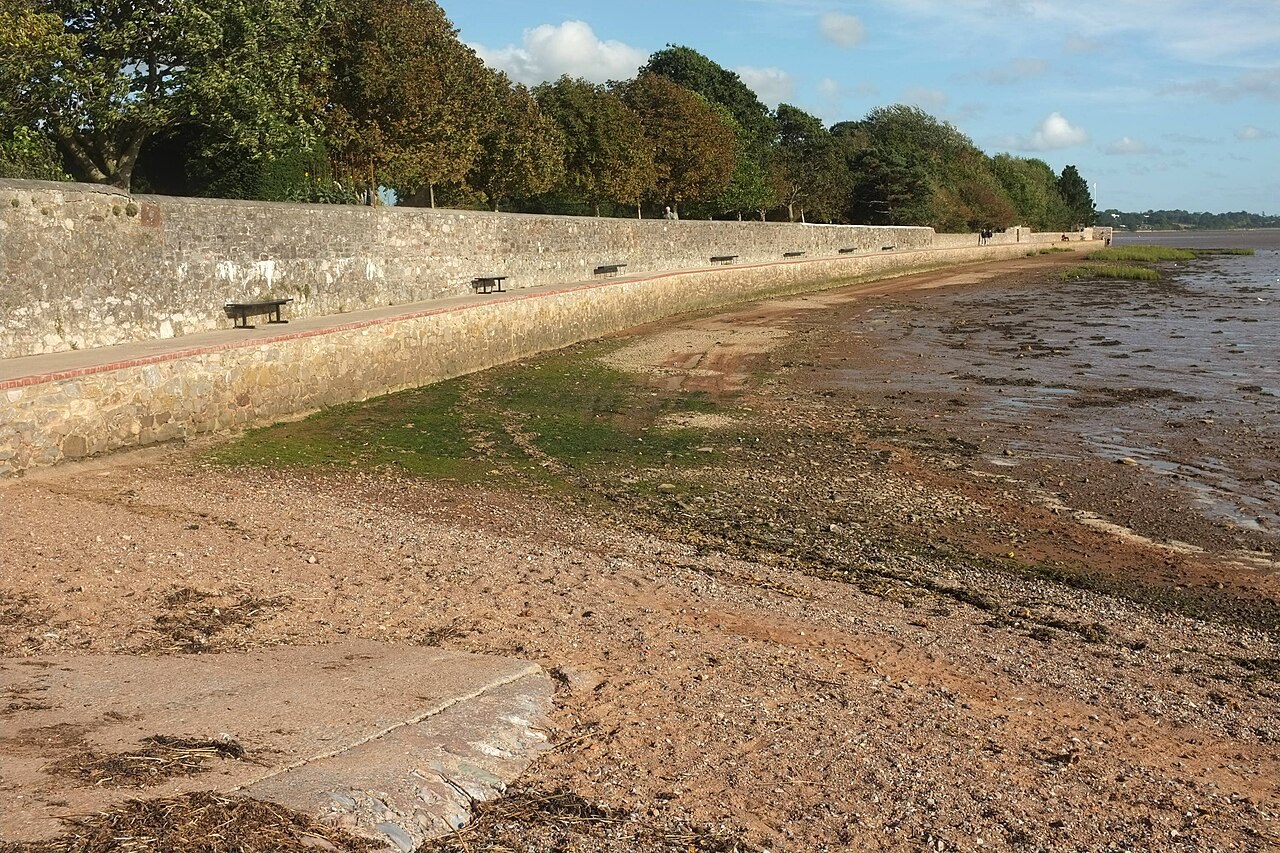
A short raised riverside path with wide views across estuary mudflats, moored boats and birdlife, carrying the blunt name chosen at a 1908 council meeting.
- Visit length
- Editorial estimate: Allow around 60 minutes for the town-and-estuary loop
- Locality
- Along the River Exe from near the Quay
- Access
- The path is flat, well-defined and pushchair-friendly.
RSPB Bowling Green Marsh
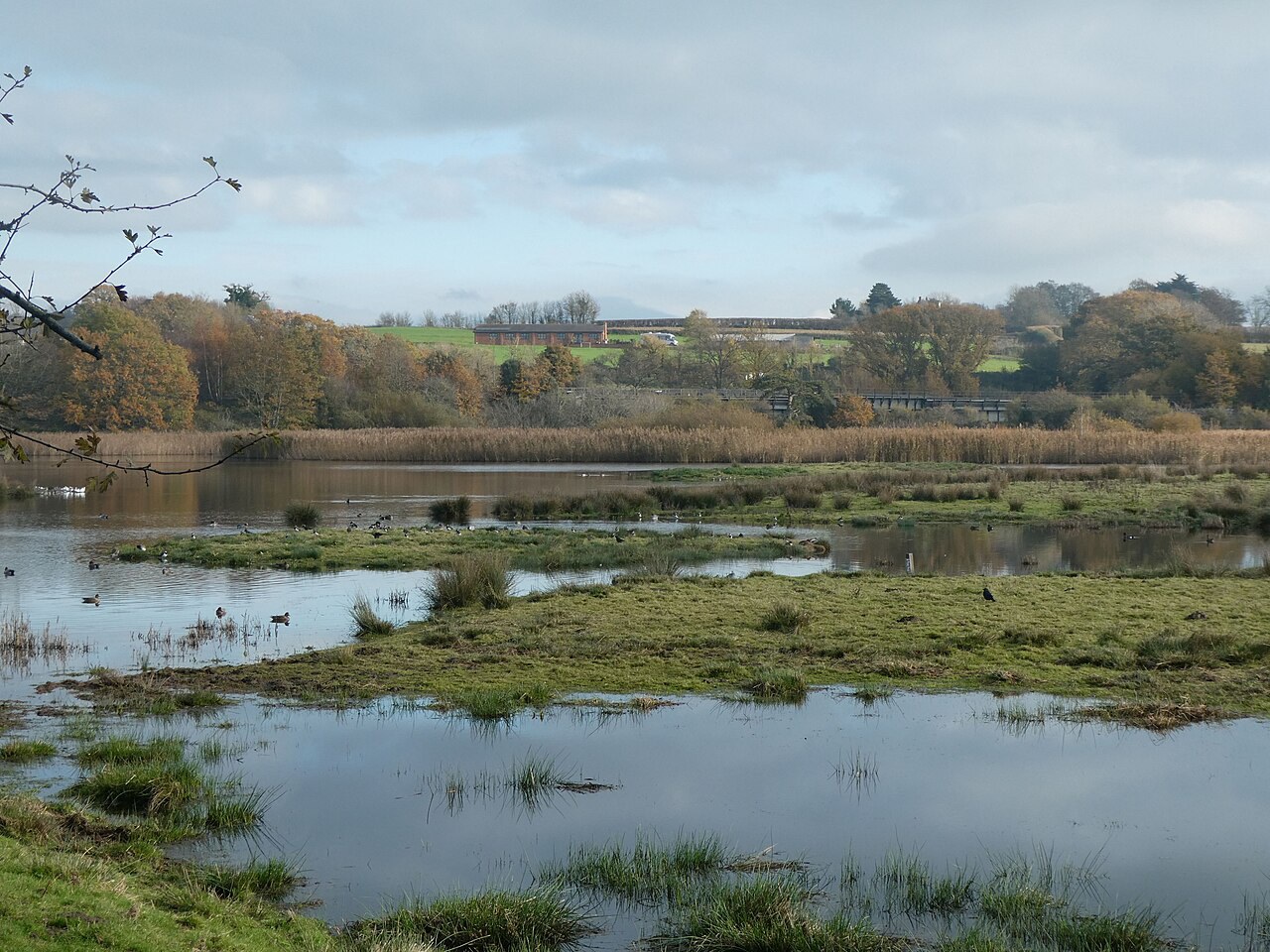
The main high-tide roost for the north of the estuary, where hundreds of black-tailed godwit and wigeon can feed close to the hide in winter.
- Visit length
- Editorial estimate: Allow around 90 minutes
- Locality
- At the Exe and Clyst confluence
- Access
- The hide and viewing platform are wheelchair-accessible.
Things to do
2 placesExe Estuary Trail
A shared walking and cycling route through Topsham, running north to Exeter and south around the Exe Estuary.
- Visit length
- Editorial estimate: Allow around 120 minutes for a Topsham section
- Locality
- Passing through Topsham
- Access
- The shared cycle and walking path is traffic-free, flat and pushchair- and bike-friendly.
Topsham Ferry
A short estuary crossing that connects Topsham with walks on the Exminster and Turf side of the Exe.
- Visit length
- Editorial estimate: Allow around 30 minutes for the crossing
- Locality
- Across the River Exe
- Access
- The foot ferry opens up walks on the Exminster and Turf side, including the canal towpath.
No places match this filter. Choose All places to reset the list.
Three ways to explore Topsham
Signature outings
Gravity from the cellar
At the Bridge Inn, the ever-changing ales are served by gravity direct from the cellar in a pub run by the same family since 1897.
Walk the estuary edge
The raised Goat Walk gives wide views over Exe mudflats, moored boats and birdlife from near the Quay.
Winter birds at the hide
At Bowling Green Marsh, black-tailed godwit and wigeon feed close to the hide in winter.
The village story
Topsham Village Guide
Historic inns, estuary paths and maritime stories in a tidal town between Exeter and Exmouth.
Ale and a royal visit
The Bridge Inn pours its beer by gravity, straight from casks in the cellar, and has been run by five generations of the same family since 1897. It sits pink and Grade II listed at Bridge Hill, beside the bridge over the River Clyst, with a few wooden benches outside overlooking the water. Food is ploughman's, sandwiches and snacks, served twelve to two and no later. The ale comes first here, and everyone seems to understand that.
In March 1998 the Queen visited, her first official visit to a pub. She left with a crate of commemorative ale and remarked that Prince Philip would enjoy it.
Quayside inns and independent food
Down at the Quay, the Lighter Inn occupies part of a 1760 building that was once the Customs House, back when Topsham was an international port and named for the lighters that carried cargo between ship and shore. Further along Ferry Road, the Passage House Inn opened in 1721 beside the ferry across the Exe that still runs today. On Fore Street, the Globe Hotel has traded since the sixteenth century — log fires, wood panelling, Sunday roasts and St Austell ales — and the Salutation, a former coaching inn, now runs a Michelin Guide restaurant and a fishmonger, and keeps its old cobbled courtyard.
Darts Farm began in 1972 as a hut at the bottom of a field selling Ronald Dart's fruit and veg. It now employs around 130 and holds a butcher, fishmonger, deli, bakery and cyder maker, run by Ronald's three sons, Paul, Michael and James. Fore Street and the Strand fill in the rest with independent galleries, delis and specialist shops.
The Goat Walk and estuary routes
The Goat Walk is a raised path along the edge of the Exe, flat and pushchair-friendly, with wide views across the mudflats and moored boats. It was named at a council meeting in 1908, when someone tired of the fancier suggestions being floated said, "But it's nowt but a bloody goat walk!" and the name stuck.
The Exe Estuary Trail runs traffic-free north to Exeter and south around the water, and the foot ferry crosses to the Turf side and its canal towpath. Bowling Green Marsh, an RSPB reserve at the confluence of the Exe and Clyst, is a short walk from the High Street, and in winter black-tailed godwit and wigeon feed close to the hide.
Merchant houses and the Avocet Line
Along the Strand stand the Dutch-gabled merchants' houses, tall and narrow, with curved parapets that echo Amsterdam and gardens set across the road so merchants could watch their own ships come in. The wealth came from serge and sailcloth sold to the Low Countries, and the town built ships too, among them HMS Terror, later lost with Franklin in the Arctic.
Trains run about every half hour on the Avocet Line to Exeter and Exmouth, Topsham the single passing place where the track briefly becomes two. Exeter is four miles north, just off the A376.
Museum stories and the tidal pace
The Topsham Museum, in seventeenth-century buildings on the estuary front, keeps period rooms, shipbuilding history and memorabilia of Vivien Leigh, who married a local solicitor here in 1932. Vivian Stanshall of the Bonzo Dog Doo-Dah Band lived and died here.
The ferry still crosses on demand, and the tide sets the pace. One visitor guide reckons that here time has slowed down, and nothing is urgent.
Stay around Devon
Make a longer stay of it
Travel Fox holiday homes around Devon, linked directly to their property pages.
A guide with a point of view
Written from research. Edited for real journeys.
Use the Official site links for live practical details, then use this guide for context, ideas and room to explore.
Photography credits & licences
Third-party photographs are credited to their named creators and reused under the linked Creative Commons licence or public-domain dedication. Travel Fox stores an optimised local copy; the file-specific changes and any browser-applied display crop are disclosed below. Reused photographs link both to the Wikimedia Commons source record and to the declared source image; Travel Fox's own photographs carry no such record and are marked as ours. These image licences do not cover Travel Fox text, branding or page design.
- File:Goat Walk, Topsham - geograph.org.uk - 5122069.jpg — photograph by Derek Harper; Goat Walk, Topsham by Derek Harper. Source record on Wikimedia Commons. Declared source image. Licence: CC BY-SA 2.0. File changes: Downloaded from Wikimedia Commons, resized to a maximum 1920px edge and encoded as an optimised JPEG. Display changes: Displayed with responsive CSS cropping.
- File:Bowling Green Marsh RSPB Reserve, Topsham - geograph.org.uk - 7358131.jpg — photograph by David Smith; Bowling Green Marsh RSPB Reserve, Topsham by David Smith. Source record on Wikimedia Commons. Declared source image. Licence: CC BY-SA 2.0. File changes: Downloaded from Wikimedia Commons, resized to a maximum 1920px edge and encoded as an optimised JPEG. Display changes: Displayed with responsive CSS cropping.
Sources
Every place on this page is checked against a published source. Each entry links the record we used and names who publishes it.
- The Bridge Inn — thebridgeinntopsham.co.uk operator, sector body or destination organisation
- The Lighter Inn — lighterinn.co.uk operator, sector body or destination organisation
- Passage House Inn — passagehouseinntopsham.co.uk operator, sector body or destination organisation
- Darts Farm — dartsfarm.co.uk operator, sector body or destination organisation
- St Margaret's Church — achurchnearyou.com national body or asset manager
- The Goat Walk — historicengland.org.uk statutory register or public authority record not machine-readable; publisher restricts automated access
- Exe Estuary Trail — exe-estuary.org operator, sector body or destination organisation
- RSPB Bowling Green Marsh — rspb.org.uk national body or asset manager
- Topsham Ferry — topshamturfferry.com operator, sector body or destination organisation