
Limestone heights and Washington history
Warton
A linear Lancashire village beneath Warton Crag, with medieval fabric, Washington family history and Morecambe Bay country close by.
- Best for
- Limestone walks and Washington history
- Give it
- A half day for the village and Crag
- Don't miss
- The Washington arms inside St Oswald's
The Fox verdict
A village where limestone and lineage meet
Warton brings together the ascent of its Crag, the Washington story in St Oswald's and the remains of a rare medieval rectory.
The Crag supplies ancient woodland, limestone pavement, a hillfort, a beacon and views across Morecambe Bay. Back in the village, St Oswald's preserves the Washington arms and family tree, while Warton Old Rectory adds a surviving 14th-century stone house to the historical trail.
Where to go
Places in Warton
Every place below is checked against a published source, listed with what it is and how long to give it.
Local signatures
3 placesThe George Washington
A traditional village inn with several distinct areas and a dining room, home-cooked food, real ales, a beer garden and four en-suite rooms.
- Visit length
- Editorial estimate: Allow around 90 minutes
- Locality
- Main Street
Warton Old Rectory
A rare surviving large 14th-century stone house with great hall and chambers, now a ruin in the care of English Heritage and free to visit.
- Visit length
- Editorial estimate: Allow around 30 minutes
- Locality
- Parsonage Court
RSPB Leighton Moss
The largest reedbed in north-west England, with nature trails, a sensory garden, café and shop, and wildlife including bitterns, bearded tits, marsh harriers, egrets, otters and red deer.
- Visit length
- Editorial estimate: Allow around 2 hours
- Locality
- near Silverdale
Walks & outdoors
1 placeWarton Crag
Paths climb through ancient woodland and limestone pavement to a summit hillfort and the 1988 beacon, with views towards the Cumbrian hills, the Pennines, the Lancashire plain and Morecambe Bay.
- Visit length
- Editorial estimate: Allow around 2 hours
- Locality
- directly behind the village
History & heritage
3 placesSt Oswald's Church
The largely 15th-century church has a 62-foot tower funded by Robert Washington, Washington family arms displayed indoors and a family tree tracing George Washington's ancestry.
- Visit length
- Editorial estimate: Allow around 45 minutes
- Locality
- Warton village
Leighton Hall
A historic house and gardens close to Warton village.
- Visit length
- Editorial estimate: Allow around 1 hour
- Locality
- Carnforth
Carnforth Station Heritage Centre
A heritage centre at the station used for the 1945 film Brief Encounter.
- Visit length
- Editorial estimate: Allow around 1 hour
- Locality
- Carnforth
No places match this filter. Choose All places to reset the list.
Three ways to explore Warton
Signature outings
Warton Crag
Follow paths through ancient woodland and limestone pavement towards the hillfort, beacon and wide views over Morecambe Bay.
The arms inside St Oswald's
See the Washington arms of three stars and two bars, moved inside the church in 1955 to protect the stone from weathering.
The Old Rectory ruins
Explore the remains of a rare large 14th-century stone house built with a great hall and chambers.
The village story
Warton Village Guide
Pies and pints beneath the Crag, a medieval market legacy and the Lancashire roots of the Washington family.
Two village inns
The Malt Shovel Inn is known for its pies. There is a cheese and onion pie that turns up on the specials board, and a chicken, ham and leek pie with a light crust and creamy filling, and the food is homemade and served from noon until half seven every day, with a full takeaway service if you would rather eat back at the cottage. It is a free house, run by a village family for the benefit of the village, which is not a phrase most pubs can use with a straight face. CAMRA describes the bar as "comfort without ostentation or trendiness." The regular ale is Wainwright Gold, with four changing beers alongside it, and there are inherited photographs on the walls that the same CAMRA entry says are worth close examination.
Further along Main Street is the George Washington, which locals still call the Bull, because it was the Black Bull before it took the name it carries now. It pre-dates 1825. There are cask ales — JW Lees Bitter, Manchester Pale Ale, a couple of rotating guests — and home-cooked evening meals Thursday to Saturday, Sunday lunch until six, four en-suite rooms upstairs, and a beer garden at the foot of the Crag.
The climb up Warton Crag
The Crag is the point of Warton. It rises straight up behind the houses to 163 metres, the highest ground in the Arnside and Silverdale Area of Outstanding Natural Beauty, and the paths climb through ancient woodland and limestone pavement to a hillfort and a beacon. The pavement is reckoned the finest example in Lancashire. Peregrines nest in the disused quarry, and pearl-bordered and high brown fritillaries breed on the grassland. From the top you can see north to the Cumbrian hills, east to the Pennines, and out across the sands of Morecambe Bay.
A medieval market village
The village itself is a single line of houses along Main Street, with burgage plots still visible between the street and Back Lane — the leftovers of a Wednesday market granted in 1200, along with a gallows and an ordeal pit, in the reign of King John.
The Washington connection
St Oswald's church has a 62-foot tower funded in the fifteenth century by Robert Washington, and carved into it are the Washington family arms: three stars and two bars, said to have shaped the design of the American flag. The Washingtons lived here from about 1300; Thomas Washington was vicar until 1823 and the last of them in the village. George Washington, seven generations along, never came. The stone arms were moved indoors in 1955 to stop them weathering away, and every 4 July the Stars and Stripes is flown from the tower, using a flag given by American soldiers who passed through in the war and reputed to have flown over the Capitol.
From Wartun to the fell race
Domesday lists the place as Wartun, four carucates, held before the Conquest by Earl Tostig and partly waste by 1086. Carnforth, a mile and a half off with the station and the M6 nearby, grew faster on limestone and railways and overtook it in a few decades. Warton kept the Crag, and the fell race up it that the children run every sports day.
Stay around Lancashire
Make a longer stay of it
Travel Fox holiday homes around Lancashire, linked directly to their property pages.
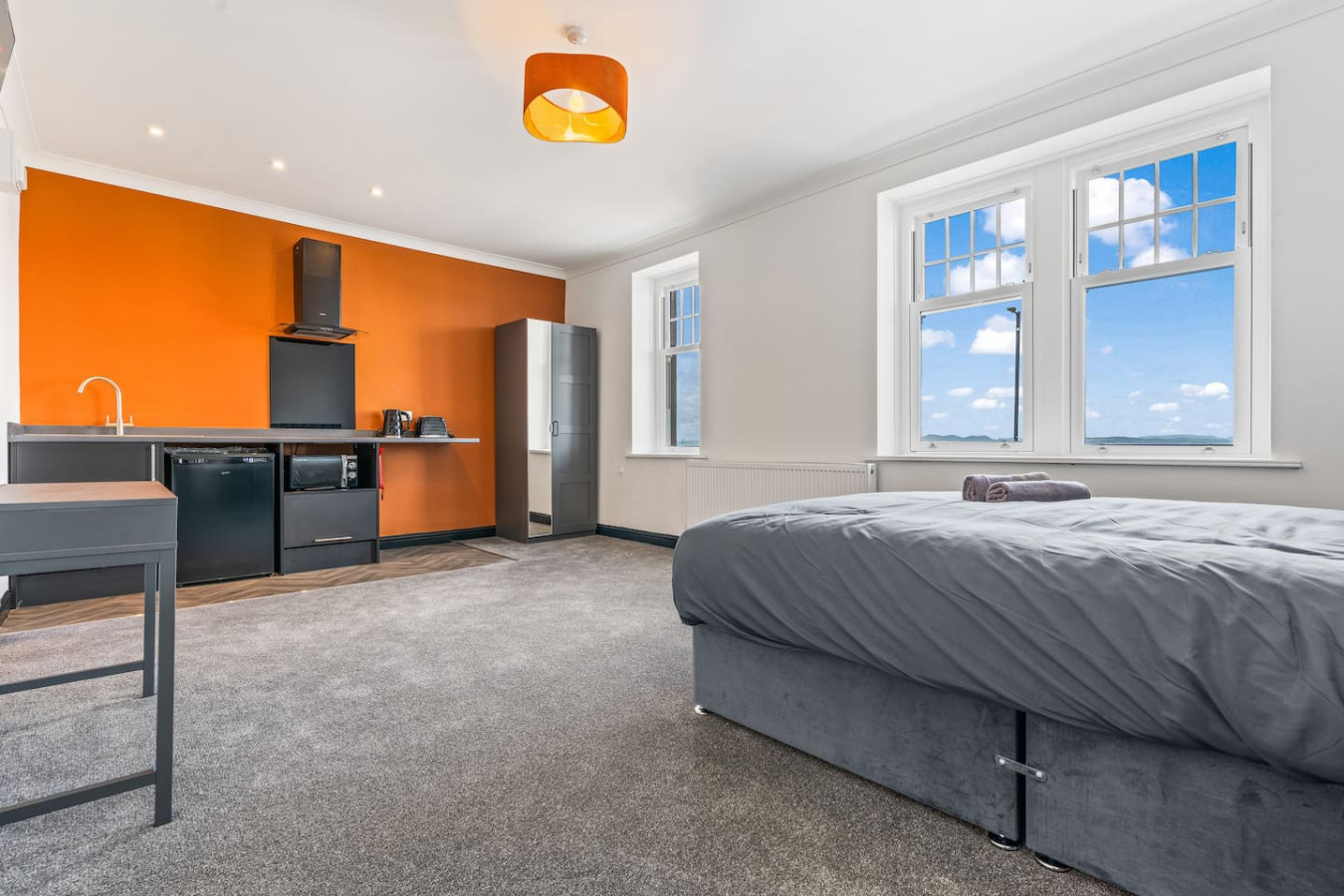
A guide with a point of view
Written from research. Edited for real journeys.
Use the Official site links for live practical details, then use this guide for context, ideas and room to explore.
Sources
Every place on this page is checked against a published source. Each entry links the record we used and names who publishes it.
- Warton Crag — lancswt.org.uk other published source
- St Oswald's Church — historicengland.org.uk statutory register or public authority record not machine-readable; publisher restricts automated access
- The George Washington — georgewashingtonwarton.co.uk operator, sector body or destination organisation
- Warton Old Rectory — english-heritage.org.uk national body or asset manager
- RSPB Leighton Moss — rspb.org.uk national body or asset manager
- Leighton Hall — leightonhall.co.uk operator, sector body or destination organisation
- Carnforth Station Heritage Centre — carnforthheritage.co.uk operator, sector body or destination organisation