
Loch, woods and Highland views
Balmaha
A small east-shore settlement where Conic Hill, wooded paths and the ferry to Inchcailloch meet at Balmaha Bay.
- Best for
- Loch views, hillwalking and short woodland trails
- Give it
- A half day, or longer with the island ferry
- Don't miss
- The Highland Boundary Fault view from Conic Hill
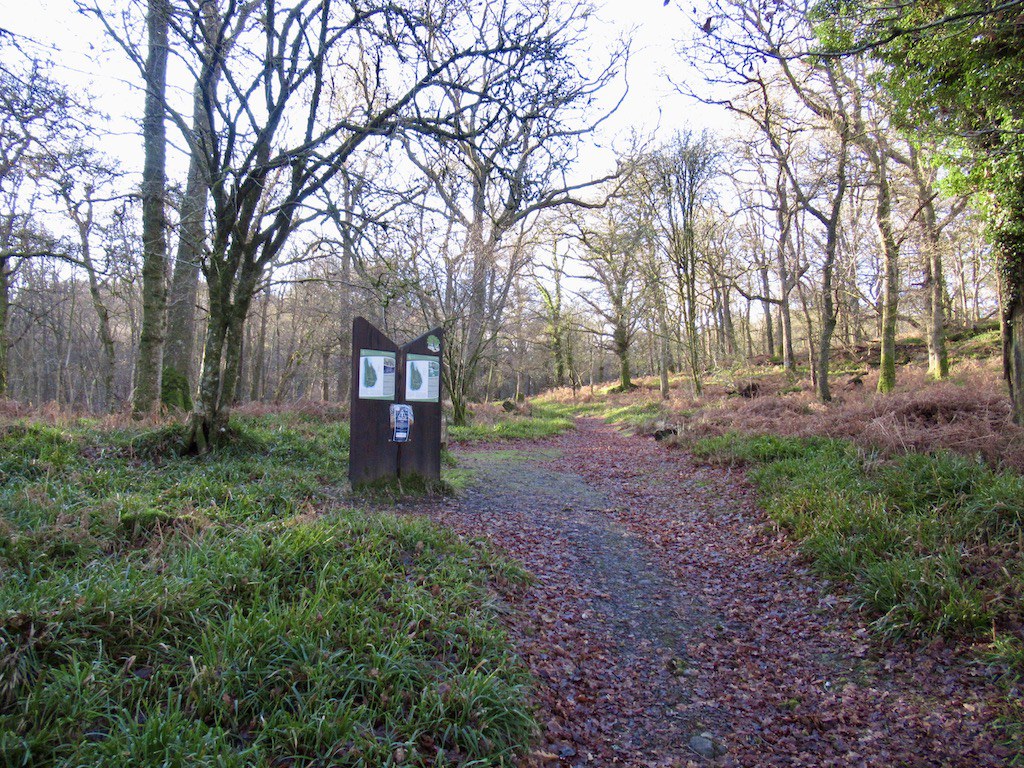
Photo: Richard Webb · CC BY-SA 2.0 · cropped
The Fox verdict
A compact gateway to hill, woodland and island
Balmaha brings together Loch Lomond's east-shore landscape, short and long walks, island history and a small cluster of useful food stops.
Climb Conic Hill for the island-lined fault view, take the shorter Millennium Forest Trail to Craigie Fort, or cross from the long-established boatyard to Inchcailloch. Back by the bay, the visitor centre, Tom Weir's Rest and the Oak Tree family's pub, shop and coffee-and-ice-cream stop make a practical base.
Where to go
Places in Balmaha
Every place below is checked against a published source, listed with what it is and how long to give it.
Local signatures
3 placesMillennium Forest Trail and Craigie Fort
A moderate loop climbing to the wooded Craigie Fort viewpoint before following an oak-lined shore with views to Inchcailloch and Ben Lomond.
- Visit length
- Editorial estimate: Allow about 45 minutes
- Locality
- Balmaha
- Access
- Surfaces include loose gravel, uneven rocky steps and a short rough section; the route also has two road crossings.
The Oak Tree Inn
A family-run country inn with a traditional bar, restaurant, real fire, accommodation, an extensive whisky bar and changing Loch Lomond Brewery ales.
- Visit length
- Editorial estimate: around 90 minutes
- Locality
- Balmaha
St Mocha Coffee Shop and Ice Cream Parlour
The original St Mocha, opened in 2014, serving Loch Lomond Coffee roasted in Balmaha and Loch Lomond ice cream made on site, including vegan ice cream.
- Visit length
- Editorial estimate: around 45 minutes
- Locality
- Balmaha
Food & drink
1 placeBalmaha Village Shop
A general store for everyday groceries, wine and spirits, walking and outdoor equipment, Scottish gifts and named local lines including Balmaha Honey.
- Visit length
- Editorial estimate: around 20 minutes
- Locality
- beside The Oak Tree Inn
Walks & outdoors
2 placesConic Hill
A climb from Balmaha to a 361 m hill on the Highland Boundary Fault, with views across Loch Lomond's islands, the Luss and Arrochar hills and Ben Lomond.
- Visit length
- Editorial estimate: Allow about 2-3 hours
- Locality
- from Balmaha
- Access
- The established path has steps; the final summit detour includes a short rocky scramble.
Inchcailloch
An island with three linked paths, a beach and picnic area at Port Bawn, and a ruined 13th-century church beside a burial ground used until 1947.
- Visit length
- Editorial estimate: Allow about 60 minutes for the Summit Path
- Locality
- across the water from Balmaha
- Access
- The island has compost toilets but no running water or refuse collection; carry water and remove litter.
History & heritage
2 placesTom Weir's Rest
A free lochside picnic stop with Tom Weir's bronze figure, a mountain garden, interpretation and views over the bay.
- Visit length
- Editorial estimate: around 30 minutes
- Locality
- Balmaha Bay
Macfarlane and Son's Balmaha Boatyard and Ferry
A boatyard established in 1863 that operates the short ferry from Balmaha to Inchcailloch.
- Visit length
- Editorial estimate: around 30 minutes for the crossing
- Locality
- Balmaha
- Access
- The ferry operates weather permitting; schedules must be checked with the operator.
Things to do
1 placeBalmaha Visitor Centre
A National Park centre where staff provide maps and advice alongside interpretation of local wildlife, geology and history; the site also has children's activities, toilets and a play area.
- Visit length
- Editorial estimate: around 30 minutes
- Locality
- Balmaha
No places match this filter. Choose All places to reset the list.
Three ways to explore Balmaha
Signature outings
See the loch open below
Conic Hill's climb reveals the Highland Boundary Fault in the island chain across Loch Lomond, with views beginning before the summit.
Meet a Loch Lomond storyteller
Tom Weir's bronze figure looks over Balmaha Bay from a free picnic stop with a mountain garden and interpretation.
Walk into centuries of history
Inchcailloch combines short island paths with a ruined 13th-century church and a MacGregor burial ground.
The village story
Balmaha Village Guide
A lochside village shaped by Conic Hill, island crossings, working woodland and the West Highland Way.
Bay, Hill and Village Life
A bronze statue of Tom Weir sits at the edge of Balmaha Bay, at a lochside picnic stop that carries his name. Weir was a mountaineer, conservationist, writer and broadcaster, best remembered for the television series Weir's Way, and a founder member of Friends of Loch Lomond & The Trossachs. Rhona Weir unveiled the figure in December 2014, during what would have been his centenary year. He was not a Balmaha man; he lived a few miles off at Gartocharn. But the spot he now looks out over — Tom Weir's Rest, with its mountain garden and view across the water — was a run-down picnic site before it was given his name, and it has since recorded more than a million visits.
That is a lot of visits for a place this size. Balmaha is a scatter of buildings pressed between the loch, the wooded knoll of Craigie Fort and the western foot of Conic Hill, the humped ridge that rises straight up out of the village. It comes down to a car park, a few shops and a pub, without one obvious centre. The B837 comes in from farmland to the south, squeezes through the narrow Pass of Balmaha and carries on north toward Rowardennan, where it stops; there is no road around the loch.
The pub is the Oak Tree Inn, and it stands beside the old oak it takes its name from, directly on the West Highland Way. Sandy and Lucy Fraser opened it, newly built, in 1997, and their eight children have all worked in what it has grown into since. What it has grown into is most of the village's commercial life: the pub itself, rooms, a village shop, a coffee-and-ice-cream shop and a production kitchen, all clustered around the National Park car park. The bar has a real fire, three hand pumps pouring changing ales from the Loch Lomond Brewery — a recent one was Bonnie and Blonde, a four per cent session blond — and a long whisky list.
Food from the Oak Tree Family
The kitchen runs to Cullen skink, homemade steak pie, herb-crusted creamy macaroni cheese, a chickpea, sweet-potato and spinach curry, vegetable pakora, the Oak Tree Classic Burger and pizzas, including one called Naughty Nina. A private vintage bus can be booked for dinner, with fish and chips, pizzas or burgers, or a Scottish Experience of haggis, clapshot and creamy pepper sauce. Some of what the kitchen uses is grown on site or made nearby. The business keeps herbs, strawberries, apples, plums and rhubarb on site — a large polytunnel went up in 2010 — makes its own Balmaha Honey and Loch Lomond ice cream, and roasts Loch Lomond Coffee in the village. Its butcher, Skinners of Kippen, has supplied it for years.
The Frasers won their first Scotland's Pub of the Year title in 2012, and Sandy Fraser was given a lifetime-achievement award at the Scottish Pub & Club Awards in 2021. Dogs are welcome — the inn asks you to note one when you book a table — and there is a Best Pet-Friendly Hotel award to go with the practice. The beer garden sits beneath the oak; there is also a covered, heated marquee for when the weather closes in.
The village shop next door opened in 2009 and does the job the West Highland Way requires of it: everyday groceries, wine and spirits, walking and outdoor kit and Scottish gifts, with Arran Sense of Scotland toiletries, Loch Lomond Rocks candles and the Balmaha Honey on the shelves. It is a useful resupply rather than a supermarket, which matters if you are walking through and carrying your own weight. St Mocha, the coffee shop and ice-cream parlour, opened here in 2014 and remains the place where the coffee is roasted and the ice cream churned; the tubs run to chocolate, strawberry, raspberry ripple, salted caramel and mint choc chip, with a vegan option alongside.
Hill Paths, Forest and Ferry
Most people, though, are here to walk, and the walk is Conic Hill. The path leaves the village and climbs to a 361-metre top in about two to three hours there and back — four kilometres, 350 metres of ascent, steps for much of the way and a short rocky scramble if you want the true summit. The hill sits on the Highland Boundary Fault, the geological seam where Lowland Scotland gives way to Highland, and from the top the fault line is legible as a chain of islands running southwest down the loch: Inchcailloch, Torrinch, Creinch, Inchmurrin. Ben Lomond and the Arrochar Alps stand beyond, lowland farmland and shelterbelts behind. The views begin well before the top, which is worth knowing on a busy morning, because the car park and the hill's popularity mean the centre and the paths can get congested.
For something shorter, the Millennium Forest Trail loops about a mile and a quarter up to the Craigie Fort viewpoint and back along an oak-lined shore, with Inchcailloch and Ben Lomond in view; allow three-quarters of an hour, and expect loose gravel, some rough rocky steps and two road crossings. Gentler still, a paved path runs from the main car park past Tom Weir's garden and along Pier Road to a viewing platform over the bay. That is the one to take if you want the loch without the gradient, and it is the clearest option for anyone with a pushchair or a wheelchair. The visitor centre on the same site has maps, toilets, a play area and staff who can tell you about the wildlife, the geology and the local history.
The island in the bay is Inchcailloch, and reaching it is half the reason to come. Macfarlane and Son have run the boatyard since 1863, and the short ferry across is theirs; the same family has carried the loch mail since 1948, out to Inchtavannich, Inchmurrin, Inchcruin and Inchfad. On the island, three linked paths take you round: a central path of fifteen or twenty minutes, a low shore path with steps, and a steeper summit path to a viewpoint along the ridge. There is a beach and picnic area at Port Bawn, compost toilets, and no tap and no bins, so you carry water in and litter out.
Island Faith and Working History
Inchcailloch means the island of the old, or cowled, woman, and the woman is taken to be St Kentigerna, an Irish missionary who settled there in the early eighth century and died on the island. The church that came later, now a ruin, probably dates from the first half of the thirteenth century, and for something like five hundred years the people of Balmaha rowed across for Sunday worship, the village bay serving as the mainland embarkation point. The parish moved off the island in the seventeenth century, but the burial ground stayed in use until 1947. It became a MacGregor burial place; Gregor MacGregor, an uncle of Rob Roy who died in 1623, lies among the family here.
The village earned its living less romantically than the view suggests. In the mid-nineteenth century it was scattered houses, a pier where the loch steamers called, a cottage for the Duke of Montrose's boatmen, and a works that turned wood into pyroligneous acid — crude wood acid and dye inputs for the textile trade down the Vale of Leven. Turnbull & Co. got through around 700 tons of small wood a year, and the local oakwoods also supplied bark to the tanneries of Glasgow. None of it stands now.
At the upper end of the village, three flats called Montrose House began around 1891 as a single building: a holiday home the Duchess of Montrose commissioned from the architect Robert Bryden, inspired by the Fresh-Air Fortnight movement, to give underprivileged Glasgow children a spell out of the city. It held up to thirty of them in four upstairs dormitories, with a playroom, a dining room, rooms for the matron and maid, and a sick-room. The Old Manse, older again, was begun in the mid-eighteenth century and built facing Inchcailloch, back when the island church was still where the parish looked. The National Park offers two readings of the village's own name — the pass of Saint Mo-Cha, after that narrow gap the road takes north, or the settlement of Mo Thatha — and does not settle between them.
The Way In and Out
Balmaha has one genuine claim to a first. The West Highland Way, Scotland's first officially designated long-distance footpath, was opened here on 6 October 1980. Tom and Rhona Weir came for the ceremony; the rain drove the whole thing into a marquee. Rhona Weir wrote afterwards, in the Gartocharn school log, "It is hoped that this Walk will be preserved for today's children." The Way still leaves Balmaha beside the oak and climbs straight out of the village onto the hill, seven miles back to Drymen over Conic Hill in one direction and on toward Rowardennan in the other.
Getting here without a car takes a little planning. The nearest station is Balloch, just over ten miles off, about fifty minutes from Glasgow Queen Street Low Level, with McColl's 309 bus running on from Balloch and Drymen and terminating at the Balmaha car park. In season, from March to October, a waterbus crosses the loch to Luss on the far shore, which turns a long drive round the water into a forty-five-minute boat ride.
Come down off the hill in the late afternoon and the village does the small things well. The fire is lit in the bar, the ice cream is being made two doors along, and the boat is coming back across from the island.
Stay around Loch Lomond
Make a longer stay of it
Travel Fox holiday homes around Loch Lomond, linked directly to their property pages.
For homeowners
Own a holiday home near Balmaha?
We manage holiday lets across the UK from 12% commission, charged after cleaning costs, with no lock-in. A co-founder visits before you decide.
How our holiday let management works →
A guide with a point of view
Written from research. Edited for real journeys.
Use the Official site links for live practical details, then use this guide for context, ideas and room to explore.
Photography credits & licences
Third-party photographs are credited to their named creators and reused under the linked Creative Commons licence or public-domain dedication. Travel Fox stores an optimised local copy; the file-specific changes and any browser-applied display crop are disclosed below. Reused photographs link both to the Wikimedia Commons source record and to the declared source image; Travel Fox's own photographs carry no such record and are marked as ours. These image licences do not cover Travel Fox text, branding or page design.
- File:Information boards, Inchcailloch - geograph.org.uk - 7073377.jpg — photograph by Richard Webb; Information boards, Inchcailloch by Richard Webb. Source record on Wikimedia Commons. Declared source image. Licence: CC BY-SA 2.0. File changes: Downloaded from Wikimedia Commons, resized to a maximum 1920px edge and encoded as an optimised JPEG. Display changes: Displayed with responsive CSS cropping.
Sources
Every place on this page is checked against a published source. Each entry links the record we used and names who publishes it.
- Conic Hill — lochlomond-trossachs.org other published source
- Millennium Forest Trail and Craigie Fort — forestryandland.gov.scot statutory register or public authority
- Tom Weir's Rest — lochlomondtrossachs.org.uk other published source
- Balmaha Visitor Centre — lochlomond-trossachs.org other published source
- Macfarlane and Son's Balmaha Boatyard and Ferry — balmahaboatyard.co.uk operator, sector body or destination organisation
- Inchcailloch — lochlomond-trossachs.org other published source
- The Oak Tree Inn — theoaktreeinn.co.uk operator, sector body or destination organisation
- Balmaha Village Shop — theoaktreeinn.co.uk other published source
- St Mocha Coffee Shop and Ice Cream Parlour — stmocha.co.uk operator, sector body or destination organisation