
Border town, layered history
Monmouth
Cross a fortified medieval bridge into a town of Norman history, independent character and wooded Wye Valley walks.
- Best for
- Medieval landmarks and hill walks
- Give it
- A full day, or a slower weekend
- Don't miss
- Monnow Bridge and the Kymin circular
Photo: Bob Crowther · CC BY 2.0 · cropped
The Fox verdict
A border town of medieval landmarks and river-valley walking
Monmouth combines a unique fortified bridge, a castle birthplace and an old priory church with river-valley walking.
Monmouth spreads up Monnow Street from Monnow Bridge, while the Kymin adds a wooded hill and two 18th-century landmarks. Historic inns, a family park and the leisure centre make it possible to shape the day around weather and pace.
Your picks, your pace
Make Monmouth Town Guide | Travel Fox yours
Choose a mood or build your own list. Your saved stops are an ordering aid, with a direct map route when you are ready.
Local signatures
3 placesMonmouth Castle
The remains of the Norman castle built around 1067, later favoured by the House of Lancaster and remembered as the birthplace of Henry V in 1386.
- Visit length
- Editorial estimate: around 45 minutes
- Locality
- in Monmouth
The Punch House
A historic coaching inn serving local and national real ales, with outdoor dining and a notably dog-friendly welcome.
- Visit length
- Editorial estimate: around 90 minutes
- Locality
- on Agincourt Square
- Access
- Food, drink and outdoor dining depend on current service; check the Official site before travel.
Chippenham Park
A family green space with avenues of trees and a children's play area, beside land used for bowls, tennis, football, rugby and cricket.
- Visit length
- Editorial estimate: around 75 minutes
- Locality
- in Monmouth
Food & drink
1 placeRobin Hood Inn
A traditional 16th-century inn entered through a broad Tudor arch, with low beamed rooms and a long connection to Monmouth's Catholic history.
- Visit length
- Editorial estimate: around 75 minutes
- Locality
- by Monnow Bridge
- Access
- Check food availability before making it a meal stop.
Walks & outdoors
1 place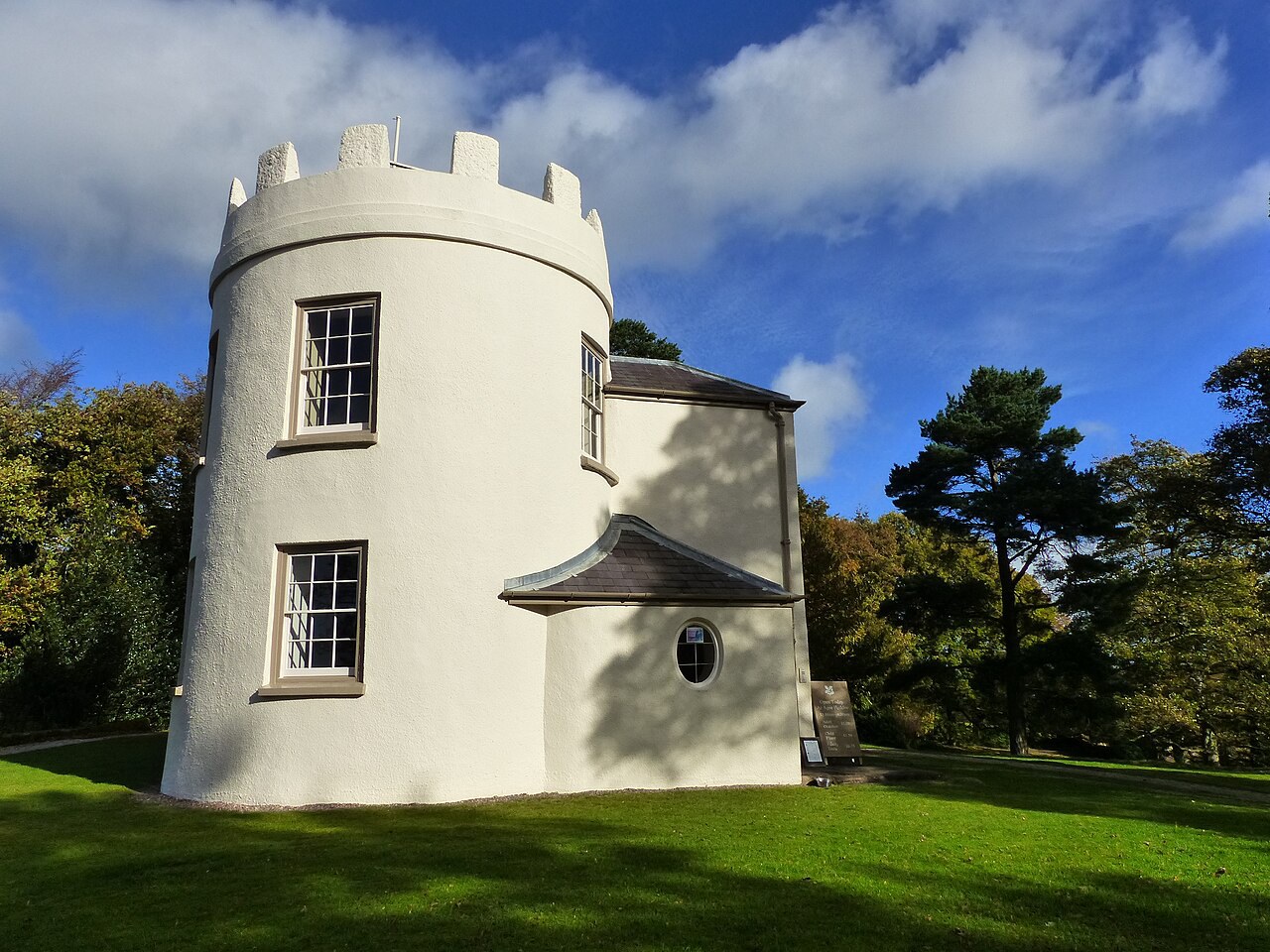
The Kymin
A moderate circular climb from Monmouth reaches the National Trust's 18th-century Round House and Naval Temple before returning by the Offa's Dyke Path.
- Visit length
- Editorial estimate: around 3 hours for the circular walk
- Locality
- on the wooded hill above Monmouth
History & heritage
2 places
Monnow Bridge
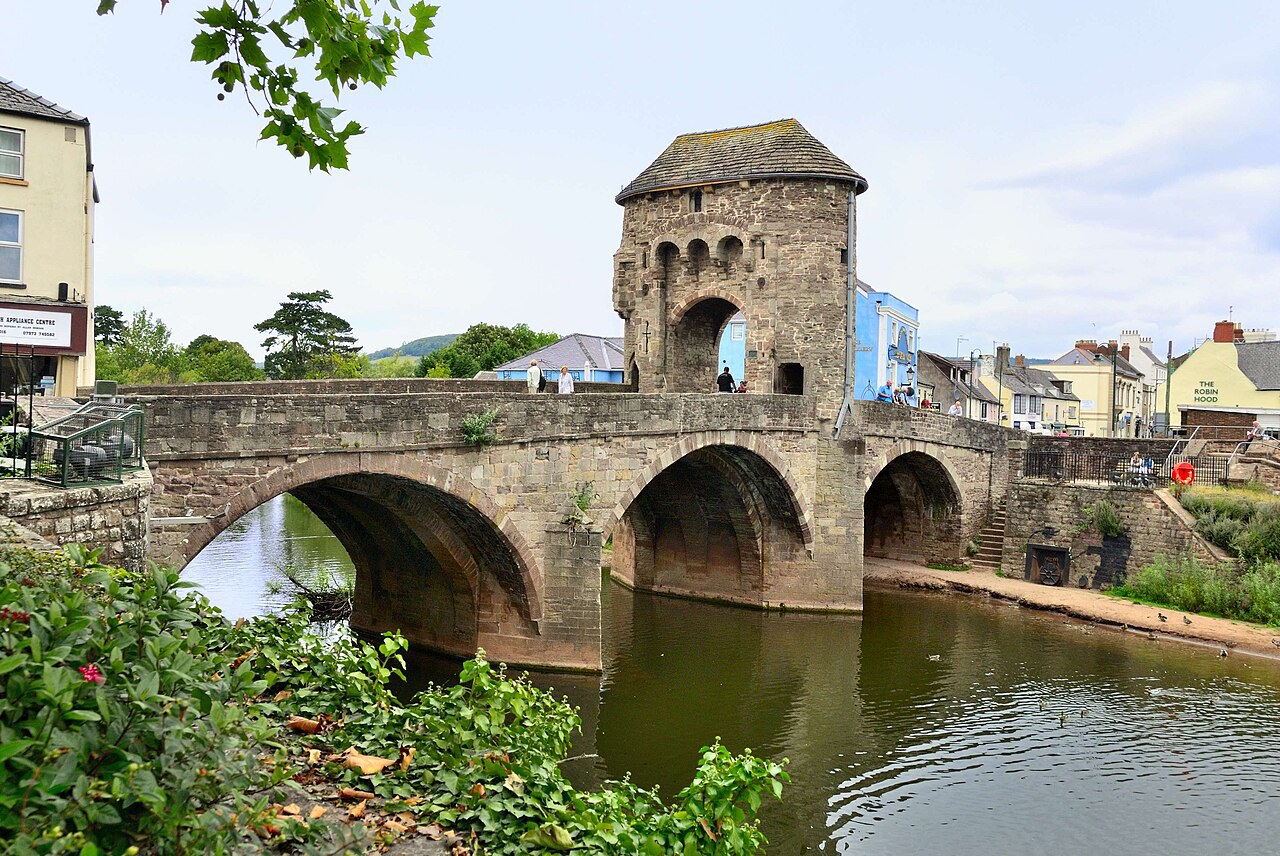
A pedestrianised stone bridge and central gatehouse built around 1300, described in the research as Britain's only remaining fortified bridge of its kind.
- Visit length
- Editorial estimate: around 30 minutes
- Locality
- at the foot of Monnow Street
St Mary's Priory Church
A Grade II* church founded as a Benedictine priory, with a 14th-century tower, an octagonal needle spire and a major collection of Nelson memorabilia.
- Visit length
- Editorial estimate: around 45 minutes
- Locality
- in Monmouth
Things to do
1 placeMonmouth Leisure Centre
An indoor activity option with a 25-metre pool, sauna, steam room, Jacuzzi, gym and dedicated exercise studios.
- Visit length
- Editorial estimate: around 2 hours
- Locality
- in Monmouth
- Access
- Activities and swimming sessions vary; check the Official site before travel.
No places match this filter. Choose All places to reset the list.
On the map
Monmouth at a glance
Tap a marker to jump to its guide card.
Three ways to explore Monmouth
Signature outings
Walk Through Monnow Gate
Cross the pedestrianised medieval bridge beneath the surviving gatehouse that once controlled entry to the town.
Find the Gilded Cockerel
Follow St Mary's octagonal needle spire to the gilded cockerel weather vane, about 205 feet above the ground.
Walk to the Kymin
Take the moderate circular to the 18th-century Round House and Naval Temple, returning towards Monmouth on the Offa's Dyke Path.
The town story
Monmouth Town Guide
A fortified river crossing leads into a border town shaped by trade, faith, famous names and the wooded hills above the Wye.
The Gate on the Monnow
Monnow Bridge is a stone bridge with a gatehouse sitting in the middle of it, built around 1300 and now the only fortified river bridge left in Britain. You cross it on foot to get into the old town. It was designed to control who came and went, and these days it mostly controls where people stand to take photographs.
The town proper spreads up Monnow Street from the bridge, on a low spur of land where the Monnow runs into the Wye. This is two miles from the English border and, being low-lying between two floodplains, it floods. The Welsh name, Trefynwy, means "Town on the Monnow," which is about as much as a name can be asked to do.
Shops and Old Inns
Monnow Street is where the shops are. The Marches Delicatessen sells chutneys, jams and local spirits including Monmouth Gin and Silver Circle. A few doors along, Fingal-Rock is a wine merchant run by Tom Innes, a former barrister who opened it in 1987 as a cheese shop and switched to wine only in 2003; Burgundy is his subject. There's a third-generation butcher at number 34 selling meat from farms in Herefordshire and Monmouthshire, and a cluster of four shops at 31–33 run by Cath and Brenda Elsmore — a cook shop, a café, a toy shop, and a clothing and gift shop, which between them cover most eventualities.
For a pub, the Robin Hood Inn is the oldest thing here, or near enough — two low beamed rooms behind a wide Tudor arch, entered through a great wooden door. For over a century an upstairs room was used for secret Catholic masses, and in 1778 it was licensed as a "Publick Catholic Chapel." Traces of the religious paintings turned up under the plaster in the last century.
Square and Spire
On Agincourt Square, the Punch House pours Wye Valley Butty Bach and was named Wales's Most Dog Friendly Pub by Rover.com. The Gate House sits by the bridge, overlooking the river.
St Mary's Priory Church has an octagonal needle spire with a gilded cockerel weather vane 205 feet up — the tallest thing in town. Pevsner's John Newman called it "large and austere." Inside is one of the largest collections of Nelson memorabilia anywhere, left by Lady Llangattock. Nelson himself came in 1802, dined on the square, and remarked, "To be known at such a little gut of the river as the Wye fills me with astonishment."
Famous Names and Hill Paths
Two other men from here travelled further. Geoffrey of Monmouth wrote his History of the Kings of Britain around 1136 and more or less invented the King Arthur legend. Charles Rolls, of Rolls-Royce, has a statue on Agincourt Square; he died in a plane crash in 1910, aged 32. Henry V was born in the castle in 1386.
The walking is the reason many people come. The Peregrine Path runs level along an old railway line to Symonds Yat, buggy-friendly and flat. A steeper 7.5-mile circular climbs to the Kymin, where the National Trust keeps an 18th-century Round House and a Naval Temple, and returns along Offa's Dyke.
A Town the Railway Left
There is no railway station. All four lines closed by 1964, and the Troy station building was carted off and rebuilt in Gloucestershire, where it still stands, doing someone else's job.
Stay around Monmouthshire
Make a longer stay of it
Travel Fox holiday homes around Monmouthshire, linked directly to their property pages.
A guide with a point of view
Written from research. Edited for real journeys.
Use the Official site links for live practical details, then use this guide for context, ideas and room to explore.
Photography credits & licences
Third-party photographs are credited to their named creators and reused under the linked Creative Commons licence or public-domain dedication. Travel Fox stores an optimised local copy; the file-specific changes and any browser-applied display crop are disclosed below. Reused photographs link both to the Wikimedia Commons source record and to the declared source image; Travel Fox's own photographs carry no such record and are marked as ours. These image licences do not cover Travel Fox text, branding or page design.
- File:Monmouth - Monnow Bridge.jpg — photograph by Bob Crowther; Flickr : Monmouth - Monnow Bridge. Source record on Wikimedia Commons. Declared source image. Licence: CC BY 2.0. File changes: Downloaded from Wikimedia Commons, resized to a maximum 1920px edge and encoded as an optimised JPEG. Display changes: Displayed with responsive CSS cropping.
- File:Round House at the Kymin, Monmouth - geograph.org.uk - 4210727.jpg — photograph by Ruth Sharville; Round House at the Kymin, Monmouth by Ruth Sharville. Source record on Wikimedia Commons. Declared source image. Licence: CC BY-SA 2.0. File changes: Downloaded from Wikimedia Commons, resized to a maximum 1920px edge and encoded as an optimised JPEG. Display changes: Displayed with responsive CSS cropping.
Sources
Every place on this page is checked against a published source. Each entry links the record we used and names who publishes it.
- Monnow Bridge — coflein.gov.uk statutory register or public authority
- St Mary's Priory Church — monmouthmarchesma.org.uk other published source
- Monmouth Castle — cadw.gov.wales statutory register or public authority
- The Kymin — nationaltrust.org.uk national body or asset manager
- The Punch House — thepunchhousemonmouth.co.uk operator, sector body or destination organisation
- Robin Hood Inn — camra.org.uk operator, sector body or destination organisation
- Monmouth Leisure Centre — monmouthshire.gov.uk statutory register or public authority
- Chippenham Park — monmouthshire.gov.uk statutory register or public authority