
Market town, deeper histories
Neath
Browse a Victorian market, follow Neath’s rugby story and make time for wooded parkland, monastic ruins and water-powered industry.
- Best for
- Market browsing, layered history and park walks
- Give it
- A full day across the centre and nearby sites
- Don't miss
- The market hall, Gnoll cascades and Neath Abbey
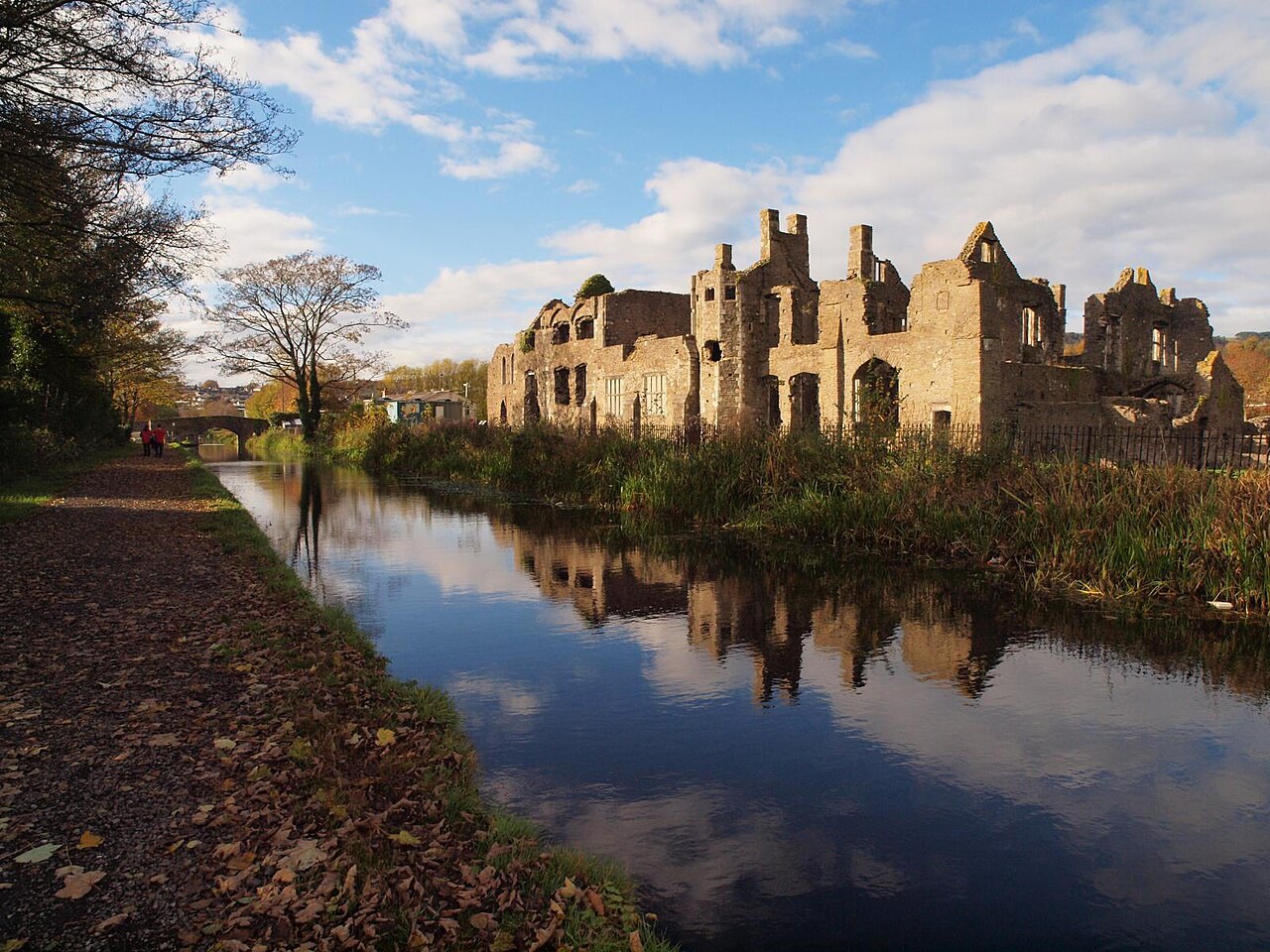
Photo: Gareth Lovering Photography from Swansea, Wales UK · CC BY-SA 2.0 · cropped
The Fox verdict
A market town with more than one past
Neath rewards a day that moves from a living covered market to rugby heritage, old churches, landscaped parkland and substantial abbey ruins.
The town centre is strongest when its everyday life and history are taken together: market stalls under an 1837 roof, a pub in the former police station, medieval and Victorian churches, and The Gnoll’s rugby identity. Gnoll Country Park, Neath Abbey and Aberdulais then widen the visit into woodland, monastic remains and industrial history.
Where to go
Places in Neath
Every place below is checked against a published source, listed with what it is and how long to give it.
Local signatures
3 placesNeath Indoor Market
A Grade II listed covered market dating to 1837, with food traders, cafés, Welsh crafts and an eclectic mix of other stalls.
- Visit length
- Editorial estimate: around 60 minutes
- Locality
- Green Street, Neath town centre
- Access
- Trading-day access applies; check the Official site before travel.
The Gnoll
The home ground of Neath RFC, the Welsh All Blacks, a club established in 1871 and associated with the black kit and white cross pattée.
- Visit length
- Editorial estimate: around 60 minutes
- Locality
- Neath
- Access
- Check Neath RFC information before planning a visit.
Aberdulais Tin Works and Waterfall
A waterfall-powered industrial site with more than four centuries of history and a large electricity-generating waterwheel beside the River Dulais gorge.
- Visit length
- Editorial estimate: around 90 minutes
- Locality
- Aberdulais, near Neath
- Access
- Check the Official site for current visitor access before travel.
Food & drink
1 placeThe David Protheroe
A Wetherspoon pub in Neath’s former police station, named for the town’s first policeman and serving permanent and changing real ales.
- Visit length
- Editorial estimate: around 60 minutes
- Locality
- Windsor Road, opposite Neath railway station
Walks & outdoors
1 placeGnoll Country Park
Woodland and lakeside trails cross the historic estate, linking duck ponds, eighteenth-century step cascades, play areas and the visitor centre.
- Visit length
- Editorial estimate: around 120 minutes
- Locality
- Gnoll Estate, Neath
History & heritage
3 placesSt Thomas’ Church
A church recorded by 1298 whose oldest surviving fabric is the base of its medieval tower, dated to around 1340.
- Visit length
- Editorial estimate: around 30 minutes
- Locality
- Neath
- Access
- Check the Official site before planning an interior visit.
St David’s Church
A Grade II* Victorian Gothic church built in 1866 in the First Pointed style to a design by John Norton.
- Visit length
- Editorial estimate: around 30 minutes
- Locality
- Neath
- Access
- Check the Official site before planning an interior visit.
Neath Abbey
Substantial Cadw-cared ruins of the abbey founded around 1130, later enlarged into one of Wales’s richest abbeys and reused for copper smelting.
- Visit length
- Editorial estimate: around 75 minutes
- Locality
- on the edge of Neath
No places match this filter. Choose All places to reset the list.
Three ways to explore Neath
Signature outings
Work the market aisles
Arrive hungry for a circuit of Neath Indoor Market’s food traders and cafés beneath its Victorian covered roof.
Follow water through the Gnoll
Link lakeside paths, duck ponds and the pair of eighteenth-century step cascades in Gnoll Country Park.
Trace the abbey’s two lives
Explore Neath Abbey’s monastic ruins and look for the site’s later chapter of copper smelting.
The town story
Neath Town Guide
Police-station pints, a living Victorian market, Welsh rugby history and the green and ruined places around the town.
Police-station pints and market stalls
The David Protheroe pours its pints in what used to be the town's police station. It stood on Windsor Road, opposite the railway station, and locked people up until January 1996, when it became a Wetherspoon. The name belongs to David Protheroe, appointed Neath's first policeman in 1836. Three permanent real ales and up to four changing beers rotate across the bar, often including something brewed locally, with real ciders usually on too.
Neath is a market town, and the market is the reason to arrive hungry. Neath Indoor Market runs off Green Street under a Grade II listed roof that went up in 1837, the year Victoria came to the throne, at a reported cost of £1,650. Over fifty stalls fill it: butchers, greengrocers, florists, a model shop, Welsh crafts, hairdressers, and cafés serving traditional Welsh food. It opens half past eight to five, Monday to Saturday, and it is one of the few markets of its kind left in Wales.
Brewing and rugby tradition
For beer with more history attached, the Cross Keys Hotel dates to the 1800s and keeps a hundred-year-old fireplace, a full-sized snooker table in its own room, and regular live bands. One reviewer called it "a great traditional pub very well run by the landlord with a good pint." The Borough Arms brews its own at the back of the building for drinking in-house only, bought in 2019 by a landlord who used to brew for a living. The Prince of Wales has its own microbrewery too, and does home-cooked meals; the pasties come recommended.
The Castle Hotel is where eleven rugby clubs met on 12 March 1881 to found the Welsh Rugby Union. Admiral Nelson is said to have stayed there on his way to Milford Haven. Neath RFC, the Welsh All Blacks, have played at The Gnoll in their white cross pattée since 1871.
Parkland, churches and abbey stone
The Gnoll is also where you walk. Gnoll Estate Country Park covers 240 acres of woodland trails, lakeside paths, four duck ponds and a pair of eighteenth-century step cascades, with three playgrounds, indoor soft play and summer pitch-and-putt. The Visitor Centre café has a south-facing balcony over the lake. The foundations of the old Gnoll House, seat of the Mackworth family, still lie in the grounds.
St Thomas' Church is mentioned as early as 1298; the base of its tower dates to around 1340. St David's, Victorian Gothic by John Norton, went up in 1866. Older than either is Neath Abbey, founded around 1130 and grown into the largest and richest abbey in Wales before its dissolution in 1539. Parts were later put to work smelting copper. The Tudor antiquary John Leland, who saw it beforehand, called it "the fairest abbey of all Wales." Cadw look after the ruins now.
Rails, roads and home-grown names
Neath railway station puts you on the South Wales Main Line, with trains to Swansea, Cardiff and London Paddington; the A465 links to the M4. Swansea is seven miles west, the Gower and the Brecon Beacons both within reach.
Ray Milland was born here in 1907 and went on to win an Oscar. Katherine Jenkins was born here too. Both left, as people do, but the market still opens at half past eight.
Stay around Neath Port Talbot
Make a longer stay of it
Travel Fox holiday homes around Neath Port Talbot, linked directly to their property pages.
For homeowners
Own a holiday home near Neath?
We manage holiday lets across the UK from 12% commission, charged after cleaning costs, with no lock-in. A co-founder visits before you decide.
How our holiday let management works →
A guide with a point of view
Written from research. Edited for real journeys.
Use the Official site links for live practical details, then use this guide for context, ideas and room to explore.
Photography credits & licences
Third-party photographs are credited to their named creators and reused under the linked Creative Commons licence or public-domain dedication. Travel Fox stores an optimised local copy; the file-specific changes and any browser-applied display crop are disclosed below. Reused photographs link both to the Wikimedia Commons source record and to the declared source image; Travel Fox's own photographs carry no such record and are marked as ours. These image licences do not cover Travel Fox text, branding or page design.
- File:74 Neath Abbey 6th Nov 2010 (5) (6378219687).jpg — photograph by Gareth Lovering Photography from Swansea, Wales UK; 74 Neath Abbey 6th Nov 2010 (5). Source record on Wikimedia Commons. Declared source image. Licence: CC BY-SA 2.0. File changes: Downloaded from Wikimedia Commons, resized to a maximum 1920px edge and encoded as an optimised JPEG. Display changes: Displayed with responsive CSS cropping.
Sources
Every place on this page is checked against a published source. Each entry links the record we used and names who publishes it.
- Neath Indoor Market — npt.gov.uk statutory register or public authority
- The David Protheroe — jdwetherspoon.com other published source
- St Thomas’ Church — churchinwales.org.uk other published source
- St David’s Church — churchinwales.org.uk other published source
- The Gnoll — npt.gov.uk statutory register or public authority
- Gnoll Country Park — npt.gov.uk statutory register or public authority
- Neath Abbey — cadw.gov.wales statutory register or public authority
- Aberdulais Tin Works and Waterfall — nationaltrust.org.uk national body or asset manager