
Parkland, peaks and deep history
Margam
Free-roaming deer, family adventures and layers of Welsh history gather below Margam Mountain.
- Best for
- Deer, heritage and family days
- Give it
- A full day in and around the park
- Don't miss
- The abbey, castle and Orangery
Photo: RobinLeicester · CC BY-SA 4.0 · cropped
The Fox verdict
A country estate that carries Margam's story
Come for the deer and parkland, then stay for medieval stones, estate architecture and hillside views.
Margam is not a conventional village-centre day out. Its strength is the concentration of parkland, family activities and historic sites around Margam Country Park, from the working abbey nave and carved-stone museum to the Orangery, castle and ruined Capel Mair above them.
Where to go
Places in Margam
Every place below is checked against a published source, listed with what it is and how long to give it.
Local signatures
3 placesMargam Castle
A Grade I listed Tudor-Gothic mansion designed by Thomas Hopper for Christopher Rice Mansel Talbot, with a grand staircase hall and octagonal tower.
- Visit length
- Editorial estimate: Allow around 45 minutes
- Locality
- within Margam Country Park
- Access
- The castle is used for events and conferences; check the official site before travel.
Margam Stones Museum
A small Victorian former schoolhouse holding an important collection of Celtic stone crosses spanning the sixth to sixteenth centuries.
- Visit length
- Editorial estimate: Allow around 45 minutes
- Locality
- Margam
Go Ape Margam
A high-ropes adventure course set within Margam Country Park, a short walk from the abbey.
- Visit length
- Editorial estimate: Allow around 2 hours 30 minutes
- Locality
- within Margam Country Park
Food & drink
2 placesThe Margam Deer
A family-friendly carvery pub with pub classics, meat-free dishes, cask ales, a sunny beer garden and children's play areas.
- Visit length
- Editorial estimate: Allow around 1 hour 30 minutes
- Locality
- Port Talbot
The Twelve Knights
A pub, restaurant and inn serving pub classics, carvery and Sunday lunch, with cask ales.
- Visit length
- Editorial estimate: Allow around 1 hour 30 minutes
- Locality
- Margam Road on the Taibach-Margam side of Port Talbot
Walks & outdoors
2 placesMargam Country Park
Explore parkland, woods, ornamental gardens and open hillside where fallow, red and Père David's deer roam freely.
- Visit length
- Editorial estimate: Allow around 2 hours
- Locality
- Margam
Capel Mair
Walk up to the ruined fourteenth- to fifteenth-century chapel for views over the castle, abbey and Orangery.
- Visit length
- Editorial estimate: Allow around 1 hour 30 minutes
- Locality
- Graig Fawr above the park
History & heritage
2 places
The Orangery
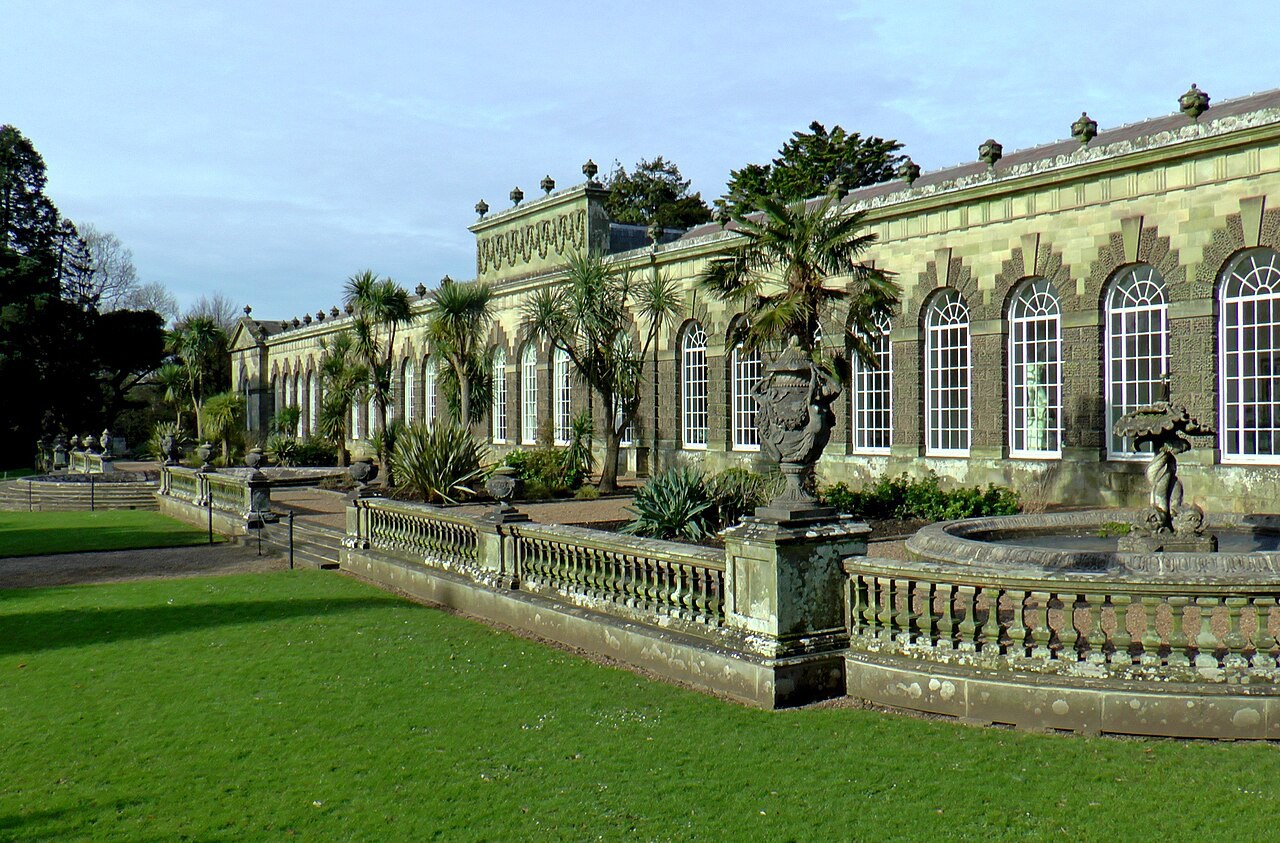
Anthony Keck's 327-foot Orangery was built to house the estate's inherited citrus trees and is the longest orangery in Britain.
- Visit length
- Editorial estimate: Allow around 30 minutes
- Locality
- within Margam Country Park
Margam Abbey
The surviving nave of the Cistercian abbey founded in 1147 remains in parish use, with Mansel tombs, William Morris glass and a rare Augustus Gern organ.
- Visit length
- Editorial estimate: Allow around 45 minutes
- Locality
- Margam
- Access
- This remains an active parish church.
Things to do
1 placeFairytale Village
A family area for under-tens with miniature Tudor houses and an adventure castle.
- Visit length
- Editorial estimate: Allow around 1 hour
- Locality
- within Margam Country Park
No places match this filter. Choose All places to reset the list.
Three ways to explore Margam
Signature outings
Meet Margam's deer herds
Look across the open parkland for fallow, red and rare Père David's deer roaming freely.
Walk the Orangery frontage
Take in the 327-foot building Anthony Keck designed to shelter the estate's inherited citrus trees.
Explore miniature Tudor houses
Give younger visitors time for the themed houses and adventure castle in the under-tens' Fairytale Village.
The village story
Margam Village Guide
A deer park, medieval abbey and ambitious estate architecture gathered beneath Margam Mountain.
Deer Park and Family Adventures
Fallow and red deer graze the open parkland at Margam, along with a herd of Père David's deer, the rarest of the three, introduced via a breeding programme at Whipsnade. They roam free across roughly 850 acres of grass, woods and hillside, and they do not move for you. This is the centre of the place. Margam has no shopping street to speak of — the everyday errands happen in Port Talbot and Taibach next door — but it has the country park, and the park is the reason to come.
The park has a visitor centre with a café, a gift shop and toilets, which handles the practical side of a day here. For children there is the Fairytale Village, a cluster of miniature Tudor houses and an adventure castle for the under-tens, an adventure playground for slightly older ones, a farm trail with ponies, pigs, goats and rare breeds, and a narrow-gauge railway. Go Ape runs a high-ropes course within the park, a short walk from the abbey. The ornamental gardens sit below the hill.
Tables, Tombs and Parish History
For eating, the Margam Deer Carvery serves a carvery seven days a week alongside mixed grill, roast beef, lasagne, burgers and meat-free dishes, with sundaes, cheesecakes and sticky toffee pudding after. It has a sunny beer garden with a toddler and play area, welcomes dogs, and is ranked fourth of the 232 restaurants in Neath Port Talbot. The Twelve Knights, a Marston's pub, restaurant and inn on Margam Road, does a carvery and Sunday lunch and keeps cask ales. Its name comes from the twelve knights of Glamorgan.
The Abbey Church of St Mary the Virgin is the surviving nave of a Cistercian abbey founded in 1147, and it is the only Cistercian abbey nave in Wales still used as a parish church. Inside are Renaissance tombs of the Mansel family, William Morris stained glass, and a rare pipe organ by Augustus Gern. Ordinary Margam people were not admitted here; they worshipped up the hill at Capel Mair, whose fourteenth-century ruin you can still walk to for a view down over the castle, abbey and Orangery.
The Orangery, Castle and Mountain
The Orangery, built by Anthony Keck between 1787 and 1793 to house inherited citrus trees, runs to 327 feet, which makes it the longest orangery in Britain. Margam Castle above it is a Tudor-Gothic mansion by Thomas Hopper, built in the 1830s for Christopher Rice Mansel Talbot, whose family gave Port Talbot its name. In June 1898 a gamekeeper, Robert Scott, was shot and killed by a poacher on the grounds; he is now the castle's most-reported ghost, said to climb the main staircase, and the park runs paranormal ghost-hunt evenings on the strength of it.
The walking ranges from short waymarked park trails of two or three miles to the Mynydd Margam Circular, a little over seven miles with a good climb, and shorter scrambles up to the Iron Age hillfort at Mynydd-y-Castell. Port Talbot Parkway station is a short way north, and the M4 comes off at junction 39 right beside the park.
Industry Beyond the Deer Park
Behind the deer and the mountain, on the far skyline, sits one of Britain's largest steelworks. Both have been here a long time. The deer keep grazing regardless.
Stay around Neath Port Talbot
Make a longer stay of it
Travel Fox holiday homes around Neath Port Talbot, linked directly to their property pages.
For homeowners
Own a holiday home near Margam?
We manage holiday lets across the UK from 12% commission, charged after cleaning costs, with no lock-in. A co-founder visits before you decide.
How our holiday let management works →
A guide with a point of view
Written from research. Edited for real journeys.
Use the Official site links for live practical details, then use this guide for context, ideas and room to explore.
Photography credits & licences
Third-party photographs are credited to their named creators and reused under the linked Creative Commons licence or public-domain dedication. Travel Fox stores an optimised local copy; the file-specific changes and any browser-applied display crop are disclosed below. Reused photographs link both to the Wikimedia Commons source record and to the declared source image; Travel Fox's own photographs carry no such record and are marked as ours. These image licences do not cover Travel Fox text, branding or page design.
- File:Margam Park Orangery terrace, Port Talbot.JPG — photograph by RobinLeicester; Own work. Source record on Wikimedia Commons. Declared source image. Licence: CC BY-SA 4.0. File changes: Downloaded from Wikimedia Commons, resized to a maximum 1920px edge and encoded as an optimised JPEG. Display changes: Displayed with responsive CSS cropping.
Sources
Every place on this page is checked against a published source. Each entry links the record we used and names who publishes it.
- Margam Country Park — margamcountrypark.co.uk operator, sector body or destination organisation
- Margam Castle — margamcountrypark.co.uk operator, sector body or destination organisation
- The Orangery — margamcountrypark.co.uk other published source
- Margam Stones Museum — cadw.gov.wales statutory register or public authority
- Margam Abbey — porthcawlandkenfig.org.uk other published source record not machine-readable; publisher restricts automated access
- Fairytale Village — margamcountrypark.co.uk other published source
- Go Ape Margam — npt.gov.uk statutory register or public authority
- Capel Mair — nationalchurchestrust.org national body or asset manager
- The Margam Deer — margamdeercarveryporttalbot.co.uk operator, sector body or destination organisation
- The Twelve Knights — marstonsinns.co.uk other published source