
Scattered across field and wood
Boldre
A hilltop church, two historic pubs and an ancient-woodland circuit spread across a parish with no true centre.
- Best for
- Woodland walking, church history and country pubs
- Give it
- About 2h10 for the woodland circuit
- Don't miss
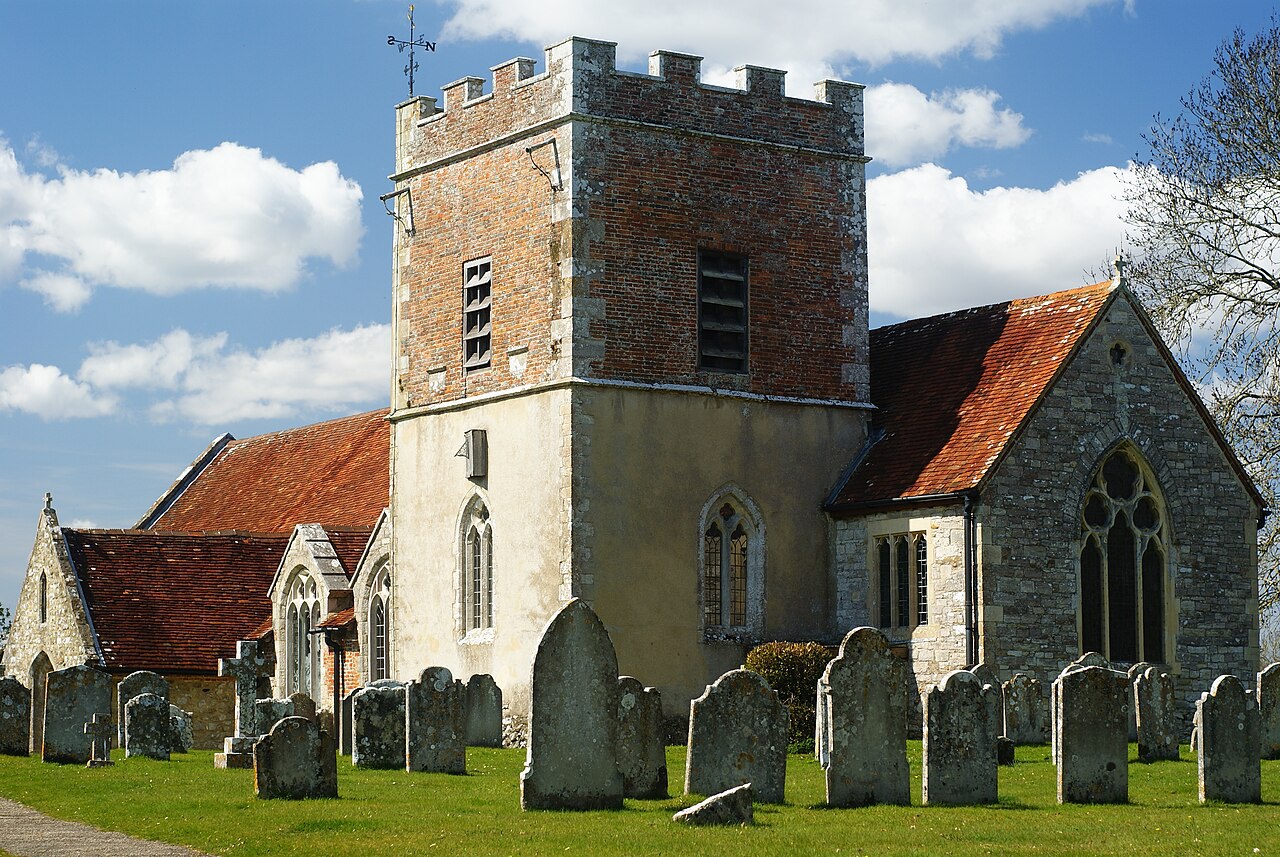
- The HMS Hood memorial at St John the Baptist
Photo: Peter Trimming · CC BY-SA 2.0 · cropped
The Fox verdict
A scattered parish worth joining up slowly
Boldre has no village centre; its church, inns, farmland and woodland are dispersed above the Lymington River.
The reward is an unusually varied small-place visit: a late-11th-century church with the HMS Hood memorial, two historic country pubs and a four-and-a-bit-mile circuit through Roydon Woods and beside the Lymington River.
Where to go
Places in Boldre
Every place below is checked against a published source, listed with what it is and how long to give it.
Local signatures
3 placesThe Red Lion, Boldre
A traditional country inn with locally sourced game and seafood, changing specials, homemade puddings and a name drawn from the legend of the antlered Stratford Lyon.
- Visit length
- Editorial estimate: around 90 minutes
- Locality
- Boldre
- Access
- Dogs are welcome and are provided with treats; the garden includes a covered patio.
St John the Baptist, Boldre
A church with a late-11th-century core, a huge iron key associated with Beaulieu Abbey and an HMS Hood memorial whose Book of Remembrance contains 1,415 names.
- Visit length
- Editorial estimate: around 45 minutes
- Locality
- High on a hill, well away from any village
Boldre Village / Roydon Woods circuit
An easy circuit through ancient woodland, heath, grassland, ponds and streams, crossing the Lymington River twice before returning alongside the river to Boldre Bridge.
- Visit length
- Editorial estimate: About 2 hours 10 minutes
- Locality
- From St John's church through Roydon Woods Nature Reserve
- Access
- Mostly firm, level ground; wet and muddy in winter. Dogs must be kept on leads in the reserve.
Food & drink
1 placeFleur de Lys, Pilley
A thatched country pub claiming the New Forest's oldest-pub title, with its first pint traced to 1096 and a displayed list of landlords dating from 1498.
- Visit length
- Editorial estimate: around 90 minutes
- Locality
- Pilley, in Boldre parish
Walks & outdoors
1 placeRoydon Woods Nature Reserve
A nature reserve of ancient woodland, heath, grassland, ponds and streams, with coppiced hazel, butcher's broom, wild garlic and bluebells among its characteristic plants.
- Visit length
- Editorial estimate: Allow around 2 hours 10 minutes for a woodland visit
- Locality
- On the Boldre Village / Roydon Woods circuit
- Access
- Dogs must be kept on leads in the reserve.
No places match this filter. Choose All places to reset the list.
Three ways to explore Boldre
Signature outings
The thatched Fleur de Lys
Look for the thick thatch and the list of landlords dating back to 1498 inside the Pilley pub that claims a first pint in 1096.
Roydon Woods Nature Reserve
Explore ancient woodland, heath, grassland, ponds and streams, with coppiced hazel, butcher's broom and wild garlic along the reserve's paths.
The Roydon Woods circuit
Follow the four-and-a-bit-mile loop from the church through ancient woodland, across the Lymington River twice and back towards Boldre Bridge.
The village story
Boldre Village Guide
Pubs, church history and ancient woodland in a New Forest parish with no true centre.
A Parish Without a Centre
Boldre doesn't have a middle. The church, the cottages and the two pubs are scattered across seven and a half thousand acres of farmland and woodland above the Lymington River, so finding any one of them tends to involve a lane you weren't certain was a road. The parish stretches to take in Pilley, Battramsley, South Baddesley and a few other hamlets, none of which cluster either. There is no green, no square, no obvious place to stand and say you have arrived.
The Red Lion is the pub most people mean when they say Boldre. It dates to the 17th century, or the 15th depending on who you ask, and it is named after the Stratford Lyon — a giant red lion with stag's antlers that a verderer called John Stratford supposedly drew out of Haresmede wood in the early 1400s, with sightings reported into the twentieth century. The kitchen leans on what's local: fresh Lymington dressed crab, venison from the Forest, beef Wellington, and puddings that people drive for — smoked Hampshire trout pâté with pickled cucumber and malted grain bread, roast Hampshire beef with Yorkshire pudding and creamy leeks, lime and stem ginger cheesecake. There's a vegan cherry lattice pie served with New Forest vegan vanilla ice cream. Dogs get treats. The garden has a covered patio for when the New Forest does what it usually does.
Pilley's Ancient Pub and the Hilltop Church
Over at Pilley, the Fleur de Lys makes a bolder claim: oldest pub in the New Forest, first pint traced to 1096, with a list of landlords going back to 1498 displayed inside under a thick thatched roof. The food matches the ambition — Steve's aged fillet beef Wellington at £40, whole grilled lemon sole with caper butter, a whole dressed Isle of Wight crab, Sunday roast sirloin.
St John the Baptist sits, in the words of the parish itself, "high on a hill and well away from any kind of village, dominating the surrounding countryside of field and wood." The core is late-11th-century chalk rubble and flint, and three sarsen stones in the foundations suggest people were worshipping on the spot around 2000 BC. A huge iron key once carried by the monks of Beaulieu Abbey is still used to open the doors. Inside is a memorial to HMS Hood, whose last admiral worshipped here before the ship went down to the Bismarck in 1941 with all but three of 1,418 men; the Book of Remembrance lists 1,415 names.
Roydon Woods and Boldre's Domesday Record
The walking runs from the church down through Roydon Woods, an ancient-woodland nature reserve of coppiced hazel, butcher's broom and wild garlic, crossing the Lymington River twice on a level four-and-a-bit-mile loop. Bluebells in spring, mud in winter, dogs on leads throughout.
Lymington and its station are two miles south; the A337 does the rest. The Domesday surveyors thought less of the place — in 1086 the manor was recorded as waste, no villagers, worth three pounds to a lord named Hugh of St Quentin.
William Gilpin's Legacy
William Gilpin was vicar here from 1771, the man who taught England the word "picturesque." He funded schools for forty village children partly by selling his own drawings, and he's buried in the churchyard on the hill he wrote about.
Stay around New Forest
Make a longer stay of it
Travel Fox holiday homes around New Forest, linked directly to their property pages.
A guide with a point of view
Written from research. Edited for real journeys.
Use the Official site links for live practical details, then use this guide for context, ideas and room to explore.
Photography credits & licences
Third-party photographs are credited to their named creators and reused under the linked Creative Commons licence or public-domain dedication. Travel Fox stores an optimised local copy; the file-specific changes and any browser-applied display crop are disclosed below. Reused photographs link both to the Wikimedia Commons source record and to the declared source image; Travel Fox's own photographs carry no such record and are marked as ours. These image licences do not cover Travel Fox text, branding or page design.
- File:St.John the Baptist, Boldre, Hampshire - geograph.org.uk - 1794059.jpg — photograph by Peter Trimming; Peter Trimming. Source record on Wikimedia Commons. Declared source image. Licence: CC BY-SA 2.0. File changes: Downloaded from Wikimedia Commons, resized to a maximum 1920px edge and encoded as an optimised JPEG. Display changes: Displayed with responsive CSS cropping.
Sources
Every place on this page is checked against a published source. Each entry links the record we used and names who publishes it.
- The Red Lion, Boldre — historicengland.org.uk statutory register or public authority record not machine-readable; publisher restricts automated access
- Fleur de Lys, Pilley — fleurdelys-pilley.com operator, sector body or destination organisation
- St John the Baptist, Boldre — historicengland.org.uk statutory register or public authority record not machine-readable; publisher restricts automated access
- Boldre Village / Roydon Woods circuit — newforestnpa.gov.uk statutory register or public authority
- Roydon Woods Nature Reserve — hiwwt.org.uk other published source