
Green, boundary and open Forest
Nomansland
A common-edge village gathered around a pony-grazed cricket green on the Wiltshire–Hampshire line.
- Best for
- The village green, cricket story and open Forest
- Give it
- A half day with time for a meal
- Don't miss
- The climb toward Pipers Wait
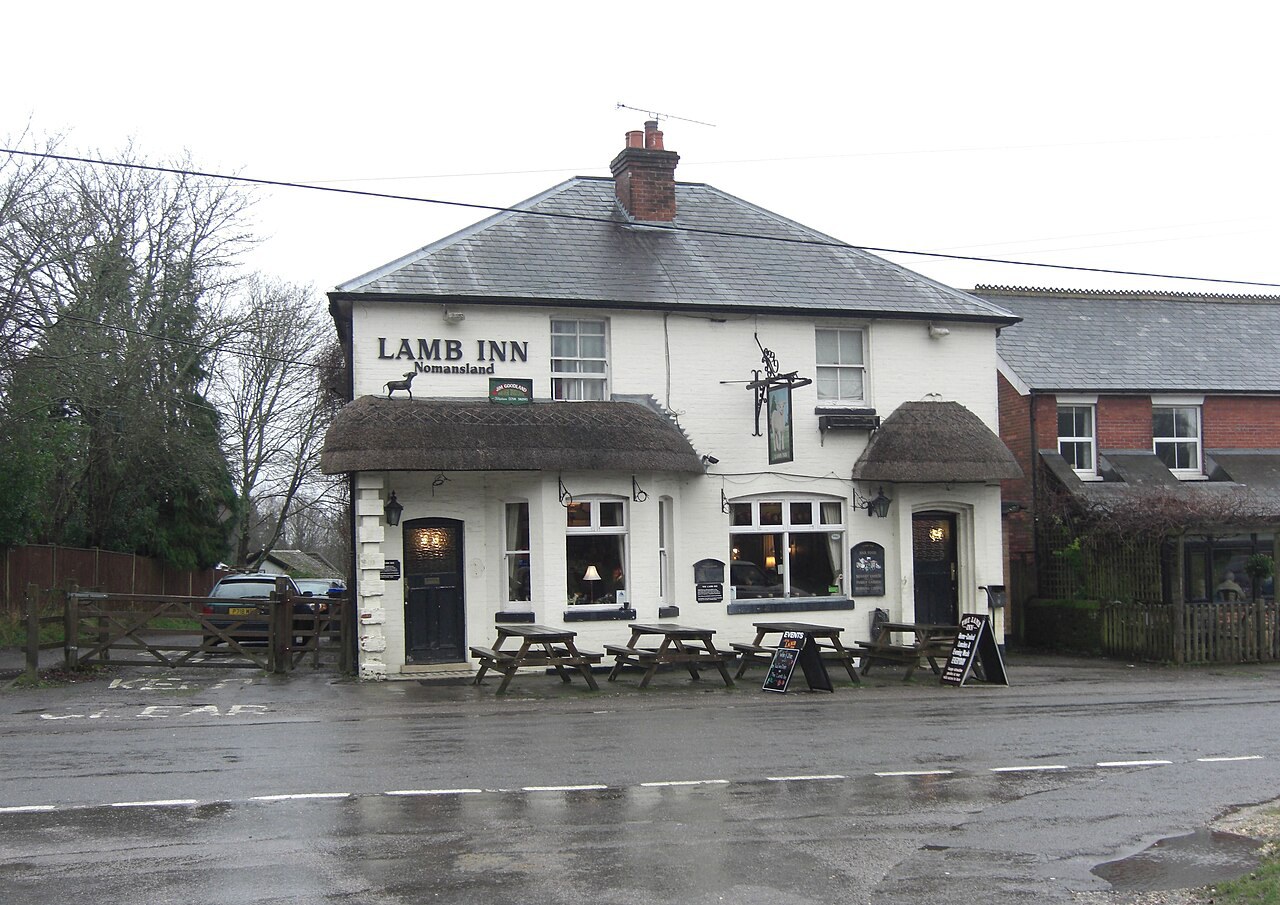
Photo: Stuart Logan · CC BY-SA 2.0 · cropped
The Fox verdict
A village where the green tells the story
Come for the cricket common and county-line curiosity; stay for a pub or bistro meal and a walk toward the heath.
Nomansland centres on a large open green grazed by ponies and donkeys, with a cricket pitch whose boundary has its own unlikely road-crossing history. The Lamb Inn and Les Mirabelles give the village two contrasting places to eat, while Forest Road leads west toward Pipers Wait and the open Forest.
Where to go
Places in Nomansland
Every place below is checked against a published source, listed with what it is and how long to give it.
Local signatures
3 placesNomansland Village Green
A large open common with the village cricket pitch, grazed by ponies and donkeys and described as free open space for children and picnics.
- Visit length
- Editorial estimate: Allow around 45 minutes
- Locality
- at the heart of the village
Les Mirabelles
A French country bistro founded by Alsatian patron Claude Laage in former village cottages, with pavement tables overlooking the cricket pitch.
- Visit length
- Editorial estimate: Allow around 90 minutes
- Locality
- across the green
Church of St Peter, Bramshaw
A Grade II* parish church with a mid-13th-century west end, a late-15th-century roof and substantial rebuilding in 1828–29.
- Visit length
- Editorial estimate: Allow around 45 minutes
- Locality
- on the Hampshire side
Food & drink
1 place
The Lamb Inn
A traditional New Forest country pub with home-cooked pies, six hand-pumped beers, real cider and retained old-fashioned interior details.
- Visit length
- Editorial estimate: Allow around 90 minutes
- Locality
- Forest Road
- Access
- Dogs are allowed everywhere except the restaurant, and food is served throughout the pub.
Walks & outdoors
1 placePipers Wait
The highest point in the New Forest at 129 metres above Ordnance Datum, reached as Forest Road climbs west from the village onto open Forest.
- Visit length
- Editorial estimate: Allow around 75 minutes
- Locality
- adjacent to the village
History & heritage
1 place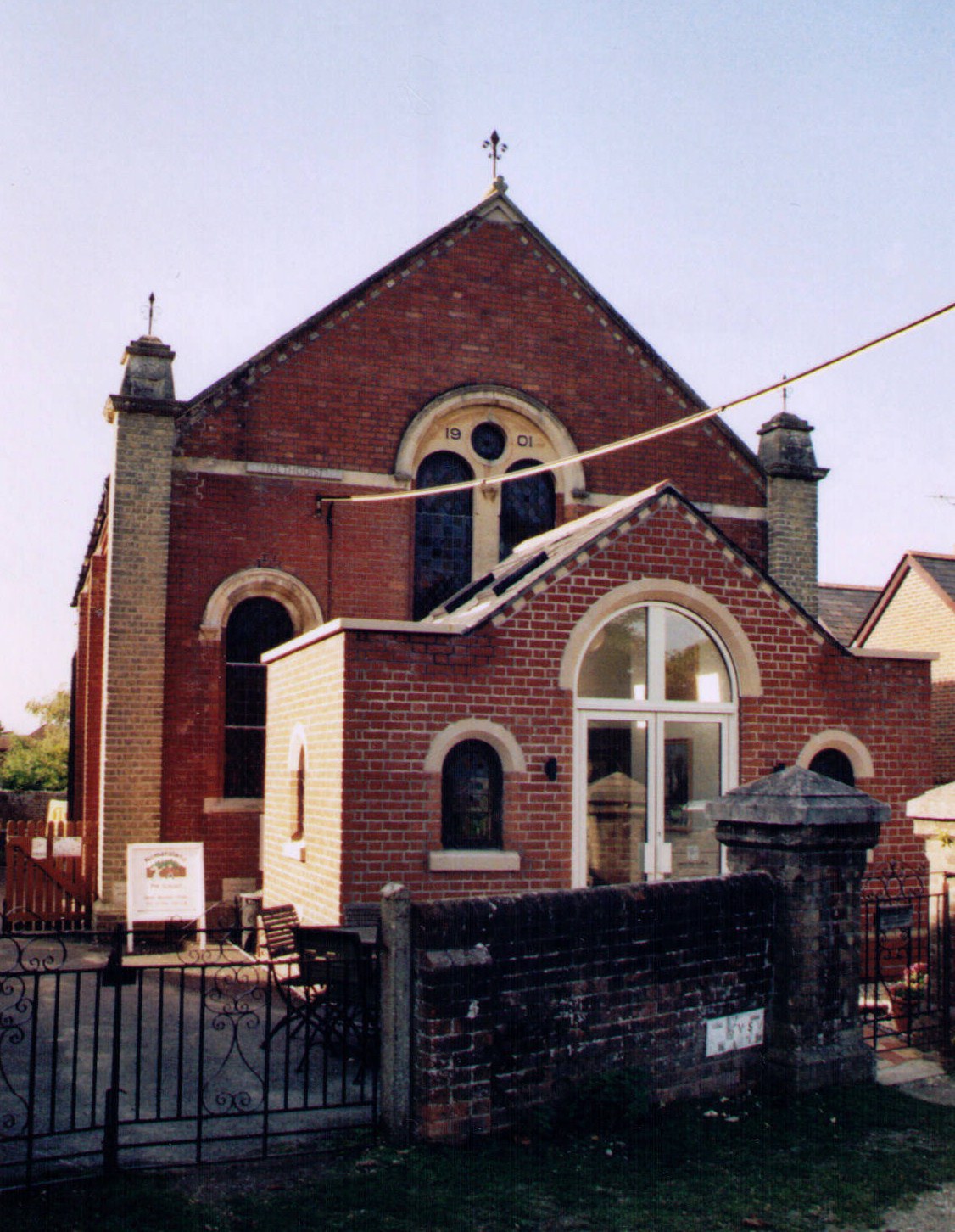
Nomansland Methodist Chapel
The chapel was built in 1901 on the green, replacing a mid-19th-century Primitive Methodist chapel.
- Visit length
- Editorial estimate: Allow around 30 minutes
- Locality
- on the village green
No places match this filter. Choose All places to reset the list.
Three ways to explore Nomansland
Signature outings
Pies, ales and pub quirks
The Lamb pairs home-cooked pies and real ales with swirly carpet, a wooden bar and collections of Toby jugs, tankards and mirrors.
Cricket on the green
See the pitch where roads became the boundary in 1973 after the earlier layout had crossed two public roads.
A 1901 landmark
The Methodist chapel stands on the green where a mid-19th-century Primitive Methodist chapel stood before it.
The village story
Nomansland Village Guide
A county-line village built around a pony-grazed green, with two places to eat and open Forest routes close by.
Cricket, Common and County Line
The cricket pitch at Nomansland used to cross two public roads, which meant a well-struck six could take out the roof tiles of a nearby cottage. This carried on until 1973, when the pitch was repositioned so the roads became the boundary instead. The club has played on the green since 1926, and the green itself is the whole point of the village — a large open common grazed by ponies and donkeys, with a single street arranged around it.
The county line runs straight through it. The road divides Wiltshire from Hampshire, with the green on the Hampshire side, so you can stand on the boundary while the ponies wander across it without a care.
Two Places to Eat
You come here for two very different places to eat. The Lamb Inn, on Forest Road, is a New Forest country pub built in the 1880s and now 142 years old. Sarah and Lee ran it for 27 years before Debbie and Duane Lewis of Country Inns took over; the new owners kept the swirly carpet, the wooden bar, and the collections of Toby jugs, tankards and mirrors. The kitchen does home-cooked pies with a rotating Pies of the Week menu, a steak and ale pie with crispy pastry, and slow-cooked lamb shoulder. The "Big Daddy" roast puts three roast meats, crispy potatoes, vegetables, Yorkshire pudding and gravy on one plate. There are six hand-pumped beers, real cider, and a doggy station where dogs wait for treats. Dogs go everywhere except the restaurant.
Across the green is Les Mirabelles, a French country bistro that Claude Laage, originally from Alsace, founded more than thirty years ago in a run of former village cottages. The set lunch is £24.50 for two courses, £27.50 for three, and there's a bistro menu called "Le Frog." The pavement tables look out over the cricket pitch, and the wild ponies and donkeys wander past while you eat. Reviewers rate the value, the cleanliness and the cheese knowledge; some note the patron can seem reserved with people he hasn't met.
Chapel, High Point and Golden Road
There's no shop and no Anglican church of its own. A Methodist chapel, built in 1901 on the green, stands where a mid-19th-century Primitive Methodist chapel stood before it.
Walk west out of the village on Forest Road and the ground climbs to Pipers Wait, at 129 metres the highest point in the New Forest — which in this landscape of heath, gorse and grazed lawn still only amounts to about 423 feet. South runs the "Golden Road," a honey-coloured gravel track laid when a stream was dammed to serve the Schulze gunpowder factory at Eyeworth, closed in the 1920s though Eyeworth Pond remains.
How No Man's Land Got Its Name
The name is the best thing about the place. In October 1802 John Shergold built a cottage the Crown said sat on Forest land. The court found in his favour but ruled the plot belonged to neither the Crown nor the Bishop of Winchester — no man's land — and by some accounts set off a same-day land rush as others staked their own claims.
Getting Here
Salisbury is about ten miles north-west for the train; the bus, service 763, comes through roughly every four hours, so bring a car. Then again, most people are here for the green, and the ponies don't keep a timetable.
Stay around New Forest
Make a longer stay of it
Travel Fox holiday homes around New Forest, linked directly to their property pages.
A guide with a point of view
Written from research. Edited for real journeys.
Use the Official site links for live practical details, then use this guide for context, ideas and room to explore.
Photography credits & licences
Third-party photographs are credited to their named creators and reused under the linked Creative Commons licence or public-domain dedication. Travel Fox stores an optimised local copy; the file-specific changes and any browser-applied display crop are disclosed below. Reused photographs link both to the Wikimedia Commons source record and to the declared source image; Travel Fox's own photographs carry no such record and are marked as ours. These image licences do not cover Travel Fox text, branding or page design.
- File:The Lamb Inn, Nomansland - geograph.org.uk - 3313372.jpg — photograph by Stuart Logan; The Lamb Inn, Nomansland by Stuart Logan. Source record on Wikimedia Commons. Declared source image. Licence: CC BY-SA 2.0. File changes: Downloaded from Wikimedia Commons, resized to a maximum 1920px edge and encoded as an optimised JPEG. Display changes: Displayed with responsive CSS cropping.
- File:Nomansland Methodist Chapel - geograph.org.uk - 2155414.jpg — photograph by Michael FORD; Nomansland Methodist Chapel by Michael FORD. Source record on Wikimedia Commons. Declared source image. Licence: CC BY-SA 2.0. File changes: Downloaded from Wikimedia Commons, resized to a maximum 1920px edge and encoded as an optimised JPEG. Display changes: Displayed with responsive CSS cropping.
Sources
Every place on this page is checked against a published source. Each entry links the record we used and names who publishes it.
- Nomansland Village Green — landford-pc.gov.uk statutory register or public authority
- The Lamb Inn — thelambnomansland.co.uk operator, sector body or destination organisation
- Les Mirabelles — lesmirabelles.co.uk operator, sector body or destination organisation
- Nomansland Methodist Chapel — apps.wiltshire.gov.uk statutory register or public authority
- Church of St Peter, Bramshaw — achurchnearyou.com national body or asset manager
- Pipers Wait — thenewforest.co.uk other published source