
Forest-edge community
Woodgreen
A village shaped by a community-owned shop, an old country pub, remarkable 1930s murals and paths into the Avon valley landscape.
- Best for
- Village life, social history and walking
- Give it
- A village visit or a longer 2–3-hour circular
- Don't miss
- The named local people in the village-hall murals
Photo: Mike Faherty · CC BY-SA 2.0 · cropped
The Fox verdict
A small village with its own story on the walls
Woodgreen brings together a community-run shop, a country pub and a painted record of 1930s village life.
The village hall murals turn fruit picking, cider-making, folk dancing and poaching into a rare social record, while the community shop tells a later story of residents campaigning to keep a local hub alive. Add the Hale and Woodgreen circular or Castle Hill for a broader view of the Forest edge and Avon valley.
Where to go
Places in Woodgreen
Every place below is checked against a published source, listed with what it is and how long to give it.
Local signatures
3 places
Start here
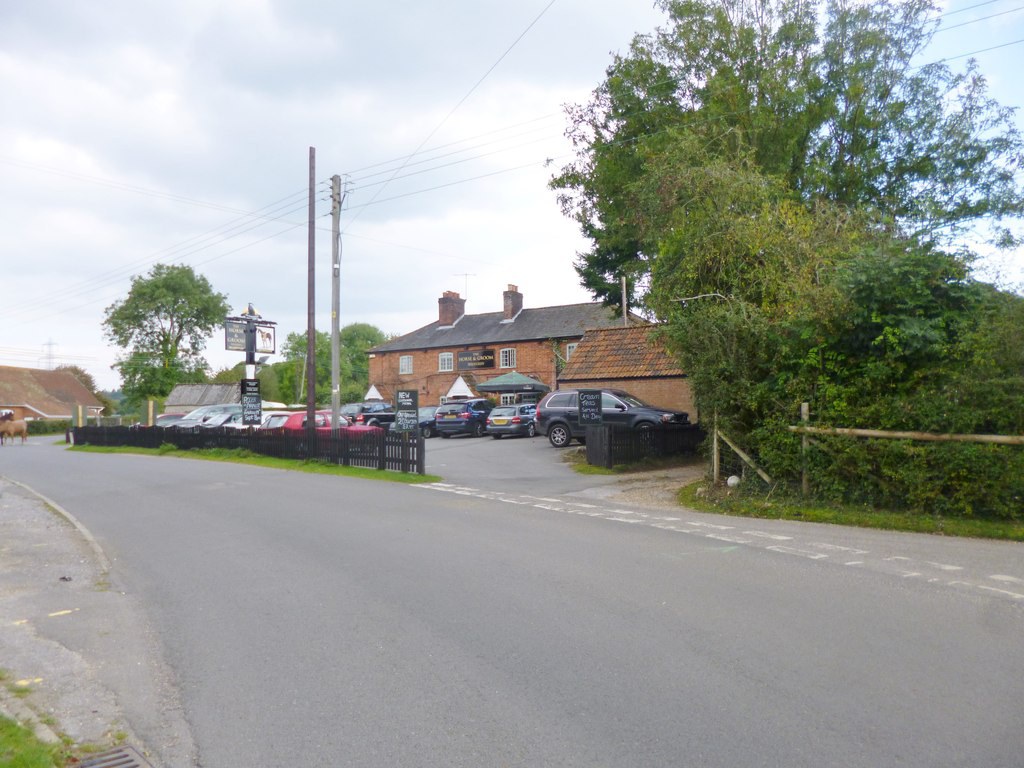
The Horse and Groom
A traditional country pub reported to date from around 1740, serving all-day, locally sourced food and three regular ales plus a guest from four handpumps.
- Visit length
- Editorial estimate: Allow around 90 minutes
- Locality
- High Street, Woodgreen
Woodgreen Community Shop and Post Office
A community-owned shop and Post Office with bread baked on the premises, homemade cakes, local produce, ice cream, tea and coffee, indoor and outdoor seating and a New Forest information point.
- Visit length
- Editorial estimate: Allow around 30 minutes
- Locality
- Woodgreen
Hale and Woodgreen Circular
A 5.7-mile route across woodland and field tracks, passing Hatchet Green's thatched cob cottages, tree avenues, a wildlife pond and views across the Avon valley.
- Visit length
- Editorial estimate: Allow 2–3 hours
- Locality
- Hale and Woodgreen
- Access
- Moderate walking with a few short steep gradients, 12 stiles, gates and a footbridge; woodland, field and bridleway tracks can be muddy.
History & heritage
3 places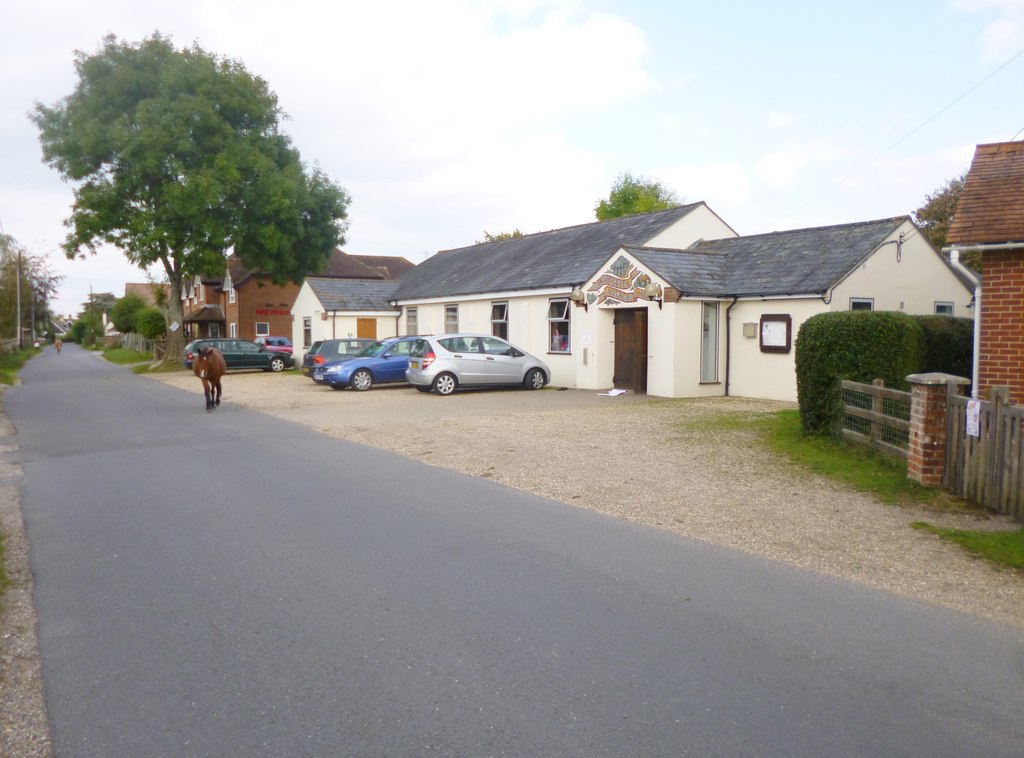
Woodgreen Village Hall
A Grade II-listed hall built in 1930–31, with murals by Edward Payne and Robert Baker showing about fifty named local people at work and celebration.
- Visit length
- Editorial estimate: Allow around 45 minutes
- Locality
- Woodgreen
- Access
- The hall hosts events and exhibitions, and the murals are a free visitor draw.
Church of St Boniface
A modest building constructed in 1913 as a church reading room, dedicated as St Boniface in 1949 and extended to its present size in 1963.
- Visit length
- Editorial estimate: Allow around 30 minutes
- Locality
- Woodgreen
Castle Hill
An oval ring motte with an outer bailey over an earlier Iron Age hillfort, possibly connected with fighting in 1148, with views over the Avon valley.
- Visit length
- Editorial estimate: Allow around 60 minutes
- Locality
- one mile south of Woodgreen
No places match this filter. Choose All places to reset the list.
Three ways to explore Woodgreen
Signature outings
Food and Local Ale
Choose all-day, locally sourced food at the Horse and Groom, where four handpumps carry three regular ales and a guest.
The Murals' Named Faces
Look across the village-hall murals for around fifty named locals shown poaching, dancing, fruit picking and making cider.
Castle Hill's Long View
Take in the Avon valley from an earthwork viewpoint recorded as a visitor attraction for two hundred years.
The village story
Woodgreen Village Guide
A Forest-edge village where a country pub, community shop and painted hall carry the story into the surrounding landscape.
Food, Ale and Welcome at the Horse and Groom
The Horse and Groom has stood on Woodgreen's High Street since around 1740, which makes it older than most of the village around it. It has a large front bar, a smaller one for locals, and a restaurant. The food is all-day and locally sourced: steak and ale pie, a duck pancake pizza, cheese and jalapeño soup, deep fried brie, and a rotation of South African dishes among the specials. The Sunday roasts get singled out for praise, and the portions are generous enough that reviewers mention it. One TripAdvisor review is titled simply "I wish all country pubs were like this."
Four handpumps pour three regular ales plus a guest — Hop Back, Downton and Dead Duck have all appeared — and the pub is CAMRA LocAle accredited. There is seating at the front and a small garden at the back, and visiting dogs are handed biscuits.
The Community Shop and the Village on the Walls
The other hub is the Woodgreen Community Shop and Post Office, which the village owns outright. It was threatened with closure in 2006; rather than lose it, residents spent more than four years campaigning, bought the lease, and reopened on 14 May 2011. Bread is baked on the premises, cakes are made fresh daily, and there is ice cream, local produce, crafts and a New Forest information point, with tea, coffee and seating indoors or out. The shop describes itself as "a meeting place, communication centre, and an important lynch-pin of village life," which after that campaign is hard to argue with.
The village hall, built in 1930–31, is the reason people who don't live here turn up. It is Grade II listed, not for its architecture but for its murals. A local resident, Vaughan Nash, came up with the idea; his friend Sir William Rothenstein, a former Principal of the Royal College of Art, secured a £100 Carnegie grant for two RCA graduates, Edward Payne and Robert Baker, to paint them. The oils were thinned with paraffin wax and turpentine, and about fifty named locals appear, with their names on plaques beneath: poachers looking down from Castle Hill, folk dancing, fruit picking, the flower show, the Horse and Groom, cider-making, and the caretaker lighting the stove.
From Reading Room to St Boniface
St Boniface, the church, started life in 1913 as a reading room and was dedicated as a church only in 1949. It is modest and unlisted, and shares its parish with neighbouring Hale.
Walking to Hale and Castle Hill
The walking is good. A 5.7-mile circular links Hale and Woodgreen across woodland and field tracks, past the thatched cob cottages of Hatchet Green and a wildlife pond thick with dragonflies. One mile south is Castle Hill, a motte-and-bailey earthwork raised over an Iron Age hillfort, possibly a siege castle from the 1148 fighting between Stephen and Matilda. Its viewpoint over the Avon valley has been drawing visitors, the record notes, for two hundred years.
A Forest-edge Settlement and How to Arrive
Woodgreen is not old by New Forest standards. It grew from a late-1600s squatter settlement of families scratching a living on the Forest edge, and became a parish of its own only in 1858. Dean station, on the Salisbury line, is the nearest rail; otherwise it is minor lanes off the A338 and a car. Its own welcome pack calls it "the New Forest's loveliest village," and the murals suggest it has thought so for a while.
Stay around New Forest
Make a longer stay of it
Travel Fox holiday homes around New Forest, linked directly to their property pages.
A guide with a point of view
Written from research. Edited for real journeys.
Use the Official site links for live practical details, then use this guide for context, ideas and room to explore.
Photography credits & licences
Third-party photographs are credited to their named creators and reused under the linked Creative Commons licence or public-domain dedication. Travel Fox stores an optimised local copy; the file-specific changes and any browser-applied display crop are disclosed below. Reused photographs link both to the Wikimedia Commons source record and to the declared source image; Travel Fox's own photographs carry no such record and are marked as ours. These image licences do not cover Travel Fox text, branding or page design.
- File:Woodgreen, Horse ^ Groom - geograph.org.uk - 4175631.jpg — photograph by Mike Faherty; Woodgreen, Horse & Groom by Mike Faherty. Source record on Wikimedia Commons. Declared source image. Licence: CC BY-SA 2.0. File changes: Downloaded from Wikimedia Commons, resized to a maximum 1920px edge and encoded as an optimised JPEG. Display changes: Displayed with responsive CSS cropping.
- File:Woodgreen Village Hall - geograph.org.uk - 4175235.jpg — photograph by Mike Faherty; Woodgreen Village Hall by Mike Faherty. Source record on Wikimedia Commons. Declared source image. Licence: CC BY-SA 2.0. File changes: Downloaded from Wikimedia Commons, resized to a maximum 1920px edge and encoded as an optimised JPEG. Display changes: Displayed with responsive CSS cropping.
Sources
Every place on this page is checked against a published source. Each entry links the record we used and names who publishes it.
- The Horse and Groom — thehorsepub.co.uk operator, sector body or destination organisation
- Woodgreen Community Shop and Post Office — woodgreenshop.org operator, sector body or destination organisation
- Woodgreen Village Hall — woodgreenvillagehall.uk operator, sector body or destination organisation
- Church of St Boniface — facultyonline.churchofengland.org other published source
- Hale and Woodgreen Circular — newforestnpa.gov.uk statutory register or public authority
- Castle Hill — walks.woodgreenshop.org other published source