
Inside the Severn loop
Shrewsbury
Medieval shuts and timber-framed houses define a town of riverside walks, historic pubs and a market full of independent traders.
- Best for
- Riverside walks, medieval streets and historic pubs
- Give it
- Time for a walk, a market visit and a pub stop
- Don't miss
- The Quarry and its Dingle garden
Photo: Richard Law · CC BY-SA 2.0 · cropped
The Fox verdict
A medieval town shaped by the Severn
Shrewsbury brings a largely intact medieval street plan, riverside parkland, stained glass and traditional pubs into one compact town story.
Follow the shuts towards the River Severn, pause in the Quarry and the Dingle, then choose between the Market Hall, historic churches and pubs whose buildings and interiors carry centuries of town history.
Your picks, your pace
Make Shrewsbury Town Guide | Travel Fox yours
Choose a mood or build your own list. Your saved stops are an ordering aid, with a direct map route when you are ready.
Local signatures
3 placesThe Dingle
A sunken flower garden created by Percy Thrower from a wet quarry that had produced poor-quality red sandstone.
- Visit length
- Editorial estimate: Allow around 45 minutes
- Locality
- within the Quarry
Shrewsbury Castle
Roger de Montgomery began the red-sandstone castle in 1074 on the only land approach into the town; its grounds are also identified in the brief for recreation.
- Visit length
- Editorial estimate: Allow around 60 minutes
- Locality
- on the only land approach into the town
The Loggerheads
A Grade II listed traditional real-ale pub with a nationally important four-room interior and traditional games including darts, dominoes and shove ha'penny.
- Visit length
- Editorial estimate: Allow around 60 minutes
- Locality
- Church Street
Food & drink
4 placesShrewsbury Market Hall
An indoor market with nearly 60 independent businesses, including a butcher and deli, fishmonger, wholefoods shop, wine merchant and cafe.
- Visit length
- Editorial estimate: Allow around 75 minutes
- Locality
- Shrewsbury
The Three Fishes
A traditional pub in a late-fifteenth-century Grade II listed building, noted in the brief for classic ales and CAMRA recognition.
- Visit length
- Editorial estimate: Allow around 60 minutes
- Locality
- Fish Street
The Nag's Head
A traditional pub in a Grade II listed timber-framed building, with pork pies, changing real ales and a beer garden described as remarkably large for a town-centre pub.
- Visit length
- Editorial estimate: Allow around 75 minutes
- Locality
- Wyle Cop
The Armoury
A book-lined former armoury overlooking the River Severn, described in the brief as a popular riverside gastropub with local ales and wine.
- Visit length
- Editorial estimate: Allow around 90 minutes
- Locality
- Victoria Quay
Walks & outdoors
1 place
The Quarry
A 29-acre riverside park in a loop of the Severn, with lawns for picnics, riverside walks and boating on the river.
- Visit length
- Editorial estimate: Allow around 75 minutes
- Locality
- in a loop of the Severn
History & heritage
3 placesSt Mary's Church
A Grade I church with one of England's tallest spires and an outstanding stained-glass collection, including a celebrated fourteenth-century Jesse window.
- Visit length
- Editorial estimate: Allow around 45 minutes
- Locality
- Shrewsbury
Old St Chad's
Grade II* medieval remains with twelfth-century fabric and a late-fifteenth-century Lady Chapel, surviving after most of the church collapsed in 1788.
- Visit length
- Editorial estimate: Allow around 30 minutes
- Locality
- Shrewsbury
Shrewsbury Abbey
Founded by Roger de Montgomery in 1083 as a Norman Benedictine house, the abbey later became famous as the setting for Ellis Peters's Brother Cadfael novels.
- Visit length
- Editorial estimate: Allow around 60 minutes
- Locality
- Shrewsbury
No places match this filter. Choose All places to reset the list.
On the map
Shrewsbury at a glance
Tap a marker to jump to its guide card.
Three ways to explore Shrewsbury
Signature outings
Walk the Quarry
Use the 29-acre Quarry for a riverside stroll or picnic inside the Severn loop.
See St Mary's
Find the celebrated fourteenth-century Jesse window among St Mary's collection of medieval and continental stained glass.
Browse the Market Hall
Browse an indoor market bringing together nearly 60 independent businesses.
The town story
Shrewsbury Town Guide
The original Travel Fox guide to Shrewsbury's shuts, Severn loop, pubs, market, park and long town history.
Streets inside the Severn loop
The shuts of Shrewsbury are narrow alleys that run downhill to the river, and there are enough of them that the medieval street plan has survived more or less intact. Over 660 buildings are listed, including fifteenth- and sixteenth-century timber-framed houses in black and white, leaning over steep streets. Ireland's Mansion on the High Street is one of the grander ones, built in 1575 for a wool merchant.
The town sits inside a tight loop of the River Severn, almost surrounded by water, with only one land approach that a red-sandstone castle guards. Most walking here is riverside, crossing back and forth by the English Bridge and the Welsh Bridge.
Historic pubs by street and river
For a pub, the Loggerheads on Church Street is the one to start with. It is Grade II listed, with a nationally important interior of four rooms, each with a different feel, and it still runs darts, dominoes and shove ha'penny. The name comes from the three leopards' faces — loggerheads — on the town's coat of arms. Nearby on Fish Street, the Three Fishes occupies a late-fifteenth-century building and takes its beer seriously enough to have been CAMRA's second Pub of the Year in 2024.
The Nag's Head sits on Wyle Cop, has done since before 1780, and keeps a beer garden that is large for a town-centre pub. It serves pork pies and a changing selection of real ales — Salopian Shropshire Gold, Timothy Taylor Landlord, Stonehouse Station Bitter among them. It is reputedly haunted, and appears on the Shrewsbury Ghost Trail. To eat by the water, the Armoury is a book-lined former armoury on Victoria Quay overlooking the Severn.
Market, park and church
The indoor Market Hall was named Britain's Favourite Market in 2018, 2023 and 2024, and holds nearly 60 independent traders. Wild Street Kitchen, a butcher and deli run by two former Michelin-starred chefs, sells "Game Changer" venison burgers and pasture-fed beef. Barkworths Seafoods sources from inshore day boats, and Iron & Rose pours organic wine. The Shrewsbury biscuit, a rich shortbread, has carried the town's name since it first appeared in a recipe book in 1658.
At the centre of town is the Quarry, 29 acres of riverside park inside the Severn loop, where you can picnic, walk or take a Sabrina Boat trip. Its heart is the Dingle, a sunken flower garden. St Mary's Church has one of the tallest spires in England and a fourteenth-century Jesse window; Pevsner called its nave arcades "the finest piece of architecture in the church."
Castle, abbey and connections
Roger de Montgomery began the castle in 1074 and founded the abbey in 1083 — the abbey that Ellis Peters later made famous as the home of Brother Cadfael. In 1403 the Battle of Shrewsbury was fought just north of town, the first time English archers fired on each other on home soil. Charles Darwin was born at The Mount in 1809 and boarded at Shrewsbury School, which he disliked, calling it "narrow and classical."
The station is a striking Victorian building in the centre, with regular trains to Birmingham, Manchester and Cardiff; the A5 and A49 run close by. The Dingle garden was the work of Percy Thrower, Britain's first celebrity television gardener, who as parks superintendent made a flower garden out of an old wet quarry that had only ever produced poor red sandstone.
Stay around Shropshire
Make a longer stay of it
Travel Fox holiday homes around Shropshire, linked directly to their property pages.
A guide with a point of view
Written from research. Edited for real journeys.
Use the Official site links for live practical details, then use this guide for context, ideas and room to explore.
Photography credits & licences
Third-party photographs are credited to their named creators and reused under the linked Creative Commons licence or public-domain dedication. Travel Fox stores an optimised local copy; the file-specific changes and any browser-applied display crop are disclosed below. Reused photographs link both to the Wikimedia Commons source record and to the declared source image; Travel Fox's own photographs carry no such record and are marked as ours. These image licences do not cover Travel Fox text, branding or page design.
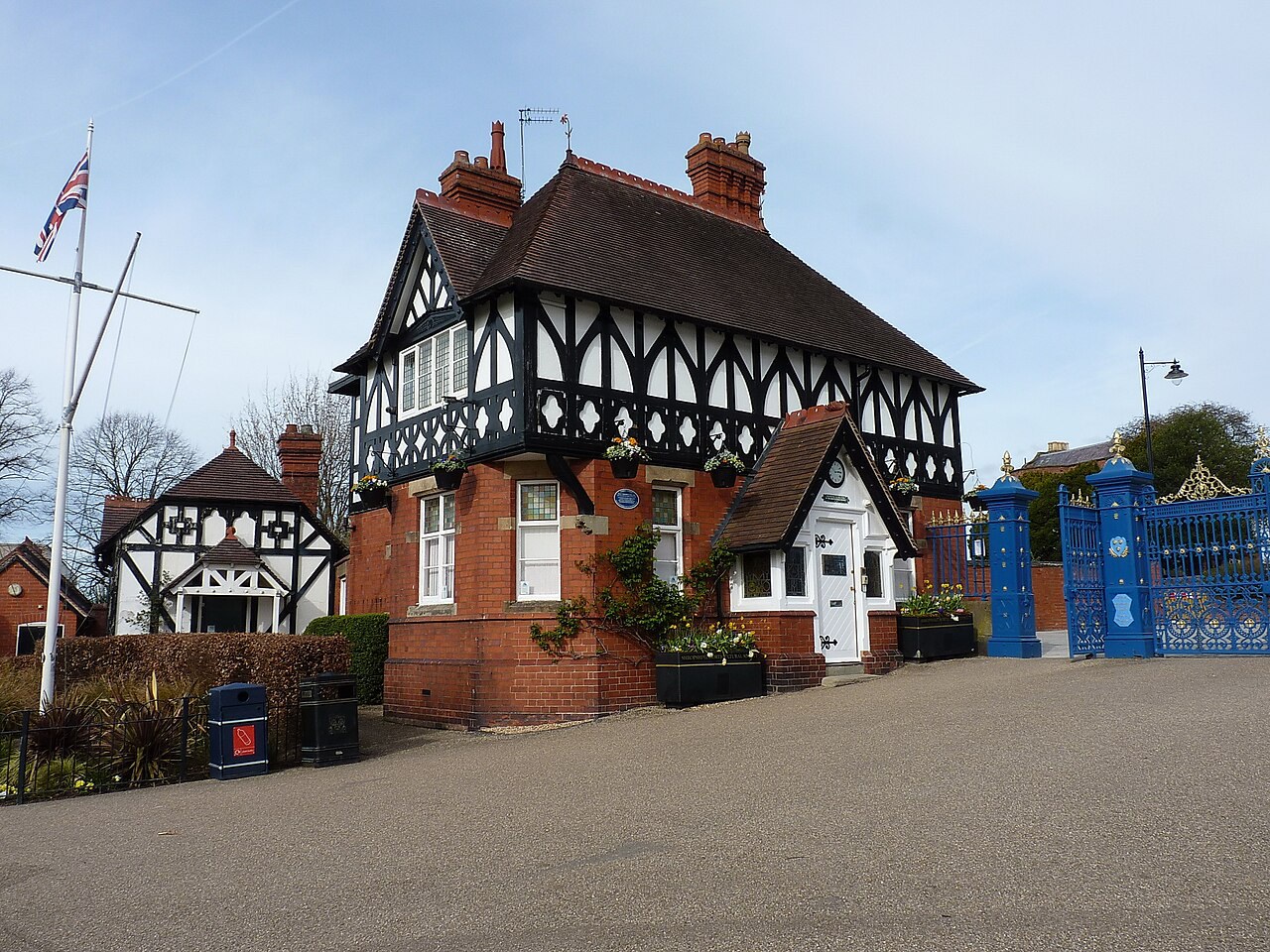
- File:The Quarry park Lodge, Shrewsbury - geograph.org.uk - 6096936.jpg — photograph by Richard Law; The Quarry park Lodge, Shrewsbury by Richard Law. Source record on Wikimedia Commons. Declared source image. Licence: CC BY-SA 2.0. File changes: Downloaded from Wikimedia Commons, resized to a maximum 1920px edge and encoded as an optimised JPEG. Display changes: Displayed with responsive CSS cropping.
Sources
Every place on this page is checked against a published source. Each entry links the record we used and names who publishes it.
- The Quarry — shrewsburytowncouncil.gov.uk statutory register or public authority
- The Dingle — shrewsburytowncouncil.gov.uk statutory register or public authority
- St Mary's Church — visitchurches.org.uk operator, sector body or destination organisation
- Old St Chad's — historicengland.org.uk statutory register or public authority record not machine-readable; publisher restricts automated access
- Shrewsbury Castle — historicengland.org.uk statutory register or public authority
- Shrewsbury Abbey — shrewsburyabbey.com operator, sector body or destination organisation
- Shrewsbury Market Hall — shrewsburymarkethall.co.uk operator, sector body or destination organisation
- The Loggerheads — loggerheadsshrewsbury.co.uk operator, sector body or destination organisation
- The Three Fishes — historicengland.org.uk statutory register or public authority record not machine-readable; publisher restricts automated access
- The Nag's Head — historicengland.org.uk statutory register or public authority record not machine-readable; publisher restricts automated access
- The Armoury — brunningandprice.co.uk other published source