
Sandstone and heath
Barlavington
A scattered West Sussex parish of rough sandstone, sunken lanes and painterly lowland heath.
- Best for
- Quiet church architecture and heathland walking
- Give it
- A half day with time for the surrounding villages
- Don't miss
- St Mary's blocked arcade and high-set piscina
Photo: Ian Hawfinch · CC BY-SA 2.0 · cropped
The Fox verdict
A small parish with deep Sussex roots
Come for a secluded medieval church, then range out through heath, woodland and old village inns.
Barlavington is intimate rather than panoramic: a rural parish of scattered farms and sunken lanes, with a little-restored sandstone church as its anchor. There is no pub or shop in the village, but Duncton, Graffham and Sutton supply worthwhile stops, while Lavington Common opens onto the landscape in which Ivon Hitchens lived and painted.
Where to go
Places in Barlavington
Every place below is checked against a published source, listed with what it is and how long to give it.
Local signatures
3 placesThe Cricketers, Duncton
A family-run pub and restaurant in a 16th-century coaching inn, with a large inglenook, seasonal locally sourced cooking and a garden suited to families and walkers.
- Visit length
- Editorial estimate: Allow around 75 minutes
- Locality
- Duncton
Graffham Village Shop
A community-minded grocery and café stocking local dairy and meat, nearby free-range eggs, resident-made cakes, seasonal produce and named Sussex food and drink.
- Visit length
- Editorial estimate: Allow around 30 minutes
- Locality
- Graffham
Petworth House and Park
A National Trust house with works by Van Dyck, Turner, Reynolds and Gainsborough, Grinling Gibbons carvings, servants' quarters and a Capability Brown deer park.
- Visit length
- Editorial estimate: Allow around 2 hours
- Locality
- Petworth
Food & drink
2 placesThe Foresters Arms, Graffham
A 400-year-old village inn with a relaxed, locally focused restaurant, local ales, a garden and a welcome for dogs, walkers and cyclists.
- Visit length
- Editorial estimate: Allow around 75 minutes
- Locality
- Graffham
The White Horse Inn, Sutton
A food-led country inn with rooms, fires and a terrace.
- Visit length
- Editorial estimate: Allow around 90 minutes
- Locality
- Sutton
Walks & outdoors
1 placeLavington and Duncton Circular Walk
An official five- to six-mile circuit through heath and forest, passing Burton Park church, Chingford Pond and Duncton Mill while following part of the Serpent Trail.
- Visit length
- Editorial estimate: Allow around 2½ hours
- Locality
- Lavington Common
- Access
- Uneven sandy heath paths and woodland tracks can be muddy after rain.
History & heritage
2 places
St Mary's Church, Barlavington
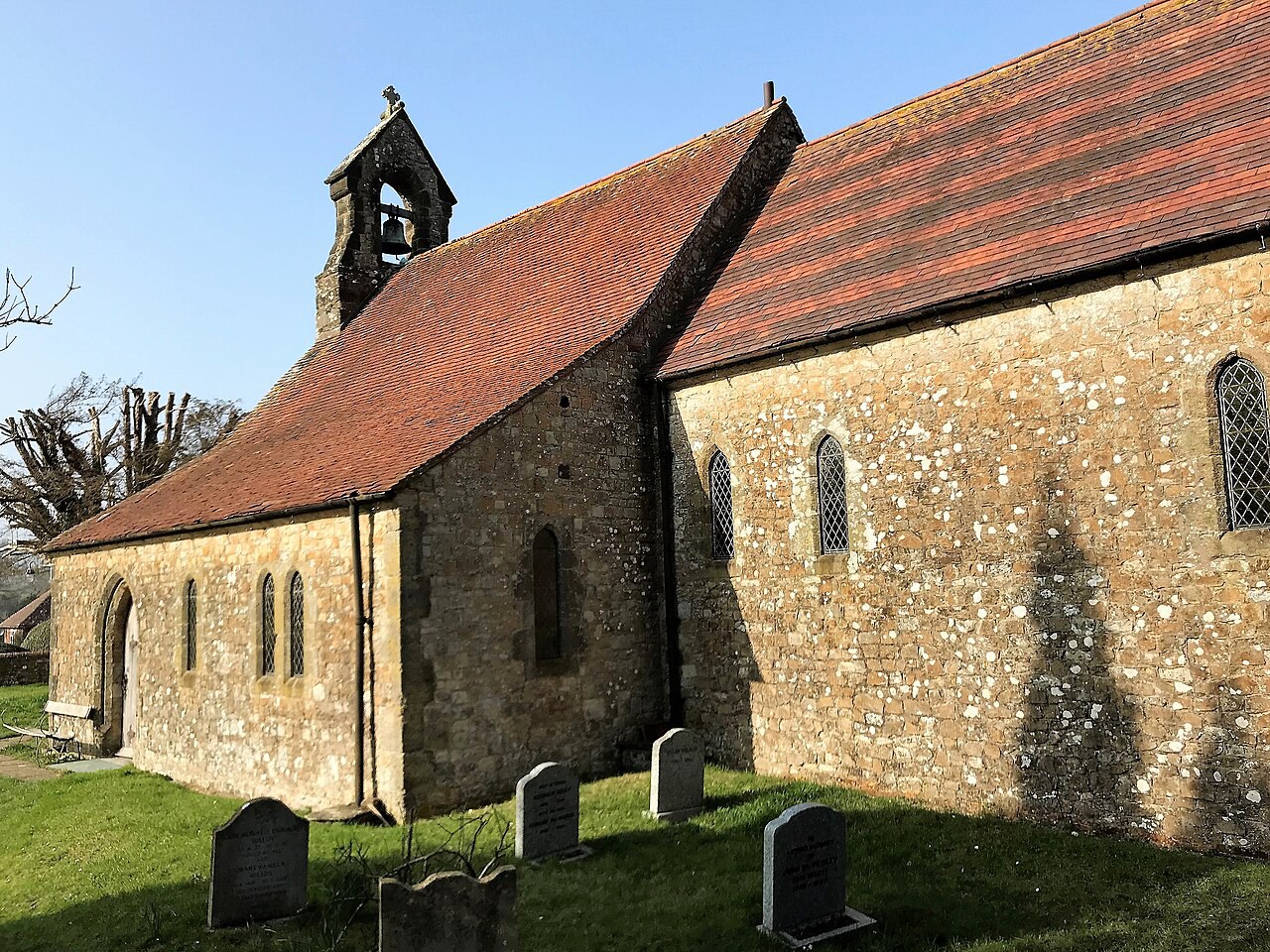
A secluded Grade I sandstone church, largely early 13th-century, with a blocked arcade, high-set piscina, reused medieval roof corbels and Minton floor tiles.
- Visit length
- Editorial estimate: Allow around 40 minutes
- Locality
- Barlavington
Bignor Roman Villa
A family-run charitable site preserving a Roman home with exceptional mosaic floors, including a Medusa head, plus a tearoom.
- Visit length
- Editorial estimate: Allow around 90 minutes
- Locality
- Bignor
No places match this filter. Choose All places to reset the list.
Three ways to explore Barlavington
Signature outings
Trace the ghost arcade
At St Mary's, follow the blocked outline of a north arcade for an aisle that may never have been built.
Follow Hitchens's heath
Cross sandy heath, woodland and pond country on the official circuit through the landscape Ivon Hitchens painted outdoors.
Look down at Rome
Study the Medusa head and other mosaic floors preserved inside the Roman home at Bignor.
The village story
Barlavington Village Guide
A secluded church, scattered farms and painterly heathland beneath the South Downs.
A Sandstone Church in a Scattered Parish
St Mary's stands at the end of a farm turning, with a working farm for its only close neighbour. It is small and built of rough sandstone; the Victorians restored it in 1873–74, rebuilding the south aisle and adding a stone belfry, but carefully enough that it still reads as little touched. Most of what you see inside is early thirteenth century: a nave, chancel and south aisle, two round-headed lancets at the east end, and a piscina set unusually high beneath a south lancet. Some of the roof corbels are medieval, reused from older work. A blocked arcade in one wall outlines a north aisle that, as far as anyone can tell, was never built. There are Minton floor tiles and an oak Annunciation carved by A. Ayres in 1967.
The parish is 397 hectares of scattered farms and sunken lanes, about four miles south of Petworth and east of the A285, inside the South Downs National Park. There's no pub or shop in the village; for either, you drive or walk to Duncton or Graffham.
Coaching Inns and Country Kitchens
The Cricketers at Duncton is a sixteenth-century coaching inn on the A285 with a large inglenook fireplace. It was The Swan until 1867, when John Wisden bought it, renamed it and leased it to the Sussex fast bowler James "Jem" Dean. Dean is said to have died there on Christmas Day 1881, sitting in the inglenook with a pint in his hand. The kitchen now cooks Sussex game, fish and locally sourced sirloin, and there is a children's menu and a large garden.
Two other pubs are nearby. The Foresters Arms at Graffham is a four-hundred-year-old inn where the chef, Thiago, puts fish and chips and burgers at the centre of things; dogs are welcome and there is a garden. The White Horse at Sutton aims higher, with slow-cooked pork belly in five-spice miso caramel, a Mediterranean fish stew of pollock, king prawn and mussels, squid-ink risotto with red mullet, and tandoori cauliflower with naan and saag aloo. Ben is the head chef.
Village Provisions and Heathland Paths
For provisions, drive to Graffham Village Shop, which is also a café. It sells Sussex Charmer cheese, Goodwood lager, Hennings wine, free-range eggs from just over a mile away, and cakes made by people who live in the village. Its owners, Thievandiram and Vasukee Jeevathasan — Jeeva and Vasu — were named local Community Champions in 2020, and Jeeva later received the British Empire Medal for keeping the village supplied through the pandemic.
The walking is the reason to stay. A five- to six-mile circuit from Lavington Common follows part of the Serpent Trail past Burton Park church, Chingford Pond and Duncton Mill, with a detour to The Cricketers if you want one. It is mostly flat, over sandy heath and woodland that turns muddy after rain, and somewhere along it is a sculpture called the Lavington Lizard.
From Domesday to Day-Trip Country
The Domesday commissioners found twenty households and two mills, and valued the manor at seven pounds. Pulborough station is about five miles north-east; the Compass 99 covers the lanes Monday to Saturday, and stops at Barlavington Manor if you book it ahead. Petworth House and its deer park lie four miles north, and Bignor Roman Villa, with its Medusa mosaic, has been letting visitors in since 1814.
Ivon Hitchens and Lavington Light
The painter Ivon Hitchens lived on Lavington Common from 1940 until his death in 1979. He worked outdoors and largely ignored the skyline of the Downs, painting instead the light in woodland clearings and the reflections in millponds close to home. Patrick Heron called his work a "profound personal identification of a painter with a special place, or landscape".
Stay around South Downs
Make a longer stay of it
Travel Fox holiday homes around South Downs, linked directly to their property pages.
For homeowners
Own a holiday home near Barlavington?
We manage holiday lets across the UK from 12% commission, charged after cleaning costs, with no lock-in. A co-founder visits before you decide.
How our holiday let management works →
A guide with a point of view
Written from research. Edited for real journeys.
Use the Official site links for live practical details, then use this guide for context, ideas and room to explore.
Photography credits & licences
Third-party photographs are credited to their named creators and reused under the linked Creative Commons licence or public-domain dedication. Travel Fox stores an optimised local copy; the file-specific changes and any browser-applied display crop are disclosed below. Reused photographs link both to the Wikimedia Commons source record and to the declared source image; Travel Fox's own photographs carry no such record and are marked as ours. These image licences do not cover Travel Fox text, branding or page design.
- File:The Parish Church of St Mary, Barlavington - geograph.org.uk - 6767269.jpg — photograph by Ian Hawfinch; The Parish Church of St Mary, Barlavington by Ian Hawfinch. Source record on Wikimedia Commons. Declared source image. Licence: CC BY-SA 2.0. File changes: Downloaded from Wikimedia Commons, resized to a maximum 1920px edge and encoded as an optimised JPEG. Display changes: Displayed with responsive CSS cropping.
Sources
Every place on this page is checked against a published source. Each entry links the record we used and names who publishes it.
- St Mary's Church, Barlavington — historicengland.org.uk statutory register or public authority record not machine-readable; publisher restricts automated access
- The Cricketers, Duncton — thecricketersduncton.co.uk operator, sector body or destination organisation
- The Foresters Arms, Graffham — forestersarmsgraffham.com operator, sector body or destination organisation
- The White Horse Inn, Sutton — whitehorseinn-sutton.co.uk operator, sector body or destination organisation
- Graffham Village Shop — graffhamvillageshop.co.uk operator, sector body or destination organisation
- Lavington and Duncton Circular Walk — southdowns.gov.uk statutory register or public authority
- Petworth House and Park — nationaltrust.org.uk national body or asset manager
- Bignor Roman Villa — bignorromanvilla.co.uk operator, sector body or destination organisation record not machine-readable; publisher restricts automated access