
Mosaics beneath the Downs
Bignor
A small downland settlement where Roman floors, medieval church fabric and paths over Bignor Hill reward a deliberately paced visit.
- Best for
- Roman history and South Downs walking
- Give it
- A full day with time for the villa and ridge
- Don't miss
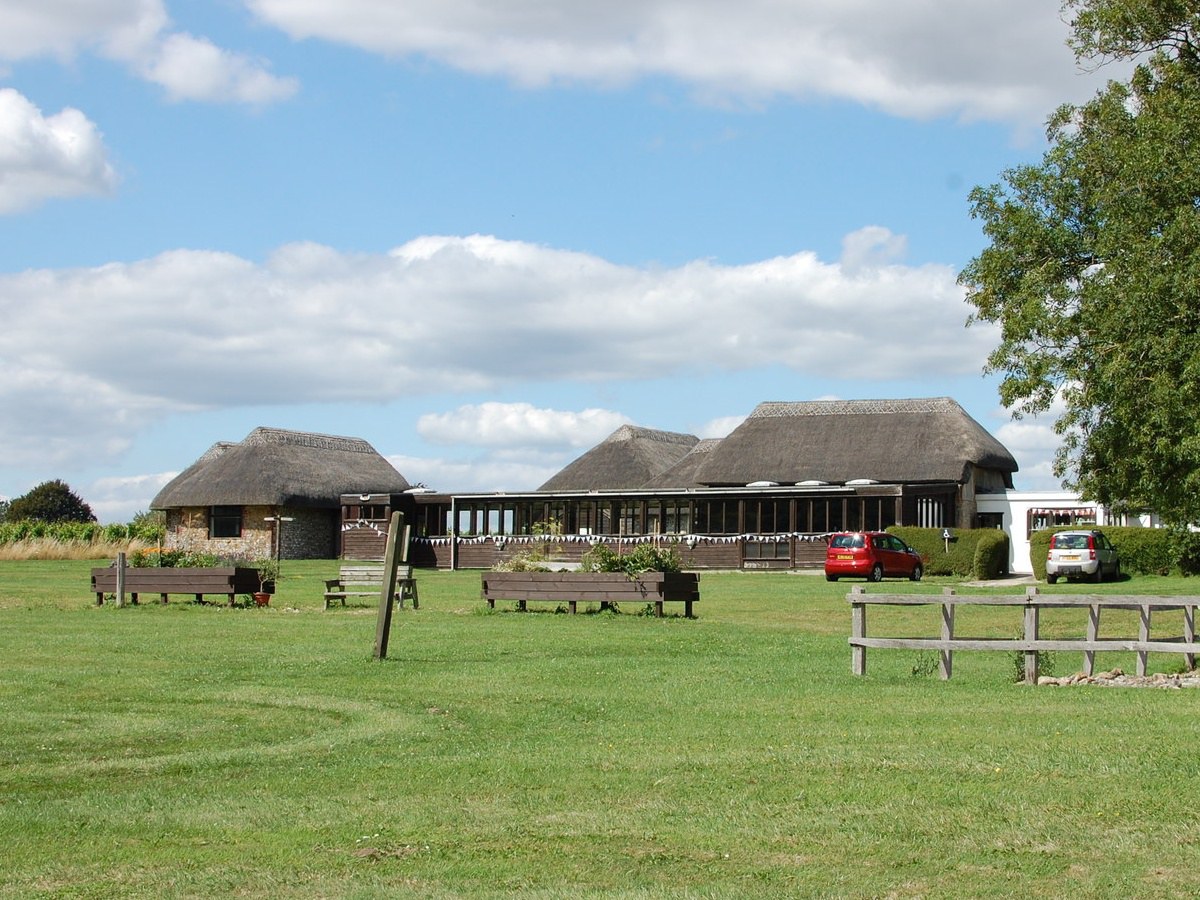
- The covered mosaics at Bignor Roman Villa
Photo: Trevor Harris · CC BY-SA 2.0 · cropped
The Fox verdict
Roman mosaics beneath a chalk ridge
Bignor pairs an unusually tangible Roman site with a medieval church, seasonal farm visits and direct access to the high South Downs.
The villa is the defining visit, with mosaics and hypocaust remains still displayed in situ, but Bignor works best as a layered countryside day: pause at Holy Cross, choose a ridge walk or a seasonal farm activity, then continue to one of the nearby country inns.
Where to go
Places in Bignor
Every place below is checked against a published source, listed with what it is and how long to give it.
Local signatures
3 places
Start here
Bignor Roman Villa
Covered, in-situ mosaics and hypocaust remains reveal a Roman building that grew into a palatial courtyard villa; the site also has a tearoom and picnic space.
- Visit length
- Editorial estimate: Allow around 2 hours
- Locality
- on a slope above Bignor
- Access
- Check the official visitor information before travel.
Bignor Hill Dark Sky Discovery Site
An official Dark Sky Discovery Site in the core of the South Downs International Dark Sky Reserve, with free public parking and the possibility of seeing the Milky Way on clear nights.
- Visit length
- Editorial estimate: Allow around 1 hour
- Locality
- on Bignor Hill
- Access
- The Milky Way may be visible on clear nights; consult the National Park's dark-sky guidance before a visit.
The White Horse Inn, Sutton
A modern British country inn with a restaurant, bar, bedrooms and garden terrace, focusing on seasonal Sussex produce.
- Visit length
- Editorial estimate: Allow around 90 minutes
- Locality
- in Sutton
- Access
- Dogs are welcomed in the pub and bar and on leads in the garden; check the official site for current dining arrangements.
Food & drink
1 placeThe Squire & Horse
A family-run freehouse serving gastropub-style food with local sourcing where possible in a building the pub dates to the 16th century.
- Visit length
- Editorial estimate: Allow around 90 minutes
- Locality
- at Bury Common
- Access
- Menus change; check the official site for the current food offer before travel.
Walks & outdoors
2 placesBridle Road to Bignor Walk
A moderate National Trust circuit climbing through woodland to Gumber Corner, following Stane Street past chalk grassland and reaching Nore Hill Folly.
- Visit length
- Editorial estimate: Allow around 3 hours
- Locality
- between Slindon and the Bignor ridge
- Access
- The route has stiles and uneven roots; dogs need close control around livestock.
South Downs Way at Bignor Hill
A ridge section of the national trail with views across the Sussex Weald and towards the sea, crossing a particularly visible stretch of Roman Stane Street.
- Visit length
- Editorial estimate: Allow around 90 minutes
- Locality
- on the ridge at Bignor Hill
- Access
- This is an exposed outdoor trail section; check current trail conditions and choose a distance suitable for the day.
History & heritage
1 placeThe Parish Church of the Holy Cross
A Grade I church with a Norman chancel arch, an 11th-century tub font, a medieval screen and chest, and 19th-century Kempe glass.
- Visit length
- Editorial estimate: Allow around 45 minutes
- Locality
- in Bignor village
Things to do
1 placeBignor Farms
Bignor Farms, run by Will and Lisa Tupper, advertises seasonal sunflower-maze, pumpkin-patch and farm-visit activities alongside its campsite.
- Visit length
- Editorial estimate: Allow around 90 minutes
- Locality
- at Bignor
- Access
- Activities are seasonal; check the official site for the current visitor offer before travel.
No places match this filter. Choose All places to reset the list.
Three ways to explore Bignor
Signature outings
Walk through Roman Bignor
Explore covered mosaic floors, baths and hypocaust remains at a villa that expanded into a palatial courtyard complex in the early fourth century.
Holy Cross through the centuries
Look for the Norman chancel arch, plain 11th-century tub font and mid-14th-century screen with original cusped roundels.
Follow the bridle road
Take the moderate 6.5-mile National Trust circuit through woodland, along Stane Street and onwards to Nore Hill Folly.
The village story
Bignor Village Guide
Roman floors, medieval details and high downland paths define this small West Sussex settlement beneath the South Downs.
The Villa Beneath the Fields
On a south-facing slope above a valley, under a set of covered, protective buildings, lie the mosaic floors of a Roman villa that lay hidden in a farmer's field before anyone knew it was there. In 1811 George Tupper struck the summer dining-room's basin with his plough. John Hawkins of nearby Bignor Park took charge of the digging and brought in the antiquary Samuel Lysons to supervise; the first shelters went up in 1812, and visitors have been coming since 1814. The Tupper family still runs the place.
What began around AD 200 as a timber-framed building had become masonry by around AD 225–250 and, by the early fourth century, a courtyard villa with baths, hypocausts and mosaics that remain in situ under cover. The finds include jewellery, statuary, pottery, lead water pipes and the burial of a female baby. There is a tearoom doing cream teas, a picnic area with downland views, and Roman-armour talks.
Farm Seasons and Medieval Fabric
A short way off, Bignor Farms is run by Will and Lisa Tupper and turns over with the seasons: a sunflower maze, a pumpkin patch, farm visits and a campsite.
The Parish Church of the Holy Cross is Grade I and mostly thirteenth-century, though the chancel arch is Norman and the font is a plain eleventh-century tub. Inside there is a mid-fourteenth-century screen with its original cusped roundels, an arcaded chest of around 1400, and Kempe glass of 1883. G. E. Street restored the building in 1876–78. Historic England, weighing it up, settled on "average quality medieval church not over-restored." It appears in Domesday, where Bignor sat in Bury hundred with sixteen households and two mills valued together at twenty-eight shillings.
Ridge Paths and Country Inns
The South Downs Way runs along the ridge at Bignor Hill and crosses one of the clearest surviving stretches of Stane Street, the Roman road, whose raised agger still reaches about ten metres wide. From Slindon, a moderate six-and-a-half-mile National Trust circuit climbs through woodland to Gumber Corner, follows a mile of that same road past chalk grassland with pyramidal orchids, and reaches Nore Hill Folly with the sea in view; there are stiles and tree roots, and dogs need close control because of livestock. A longer eleven-mile loop from Duncton Hill takes in Crown Tegleaze, Upwaltham, West Burton and Sutton. The National Trust car park on Bignor Hill is free, and, being a Dark Sky Discovery Site, the hill gives you the Milky Way on a clear night.
For dinner you go out of the village. The White Horse at Sutton has an AA-Rosette kitchen under Ben Miller, cooking slow-cooked pork belly with five-spice miso caramel and a Sussex cheeseboard of Idle Hour, Sussex Blue, Woodside Red and Sussex Camembert. Sir Ian Anstruther saved it from closure in 1972 and appears as the groom on the sign. The Squire & Horse on Bury Common has been run by Nicholas and Wendy for more than twenty-six years, with Nicholas at the stove.
Bignor Park in Art and War
Bignor Park, private but visible in the history, was the childhood home of the poet Charlotte Turner Smith, who filled her verse with it; Constable came in 1834 and painted watercolours. During the First World War it became a Red Cross hospital under Josephine Johnstone, who was seventy-one when it opened and treated 513 patients in 1917 alone.
Planning the Approach
Amberley station is 3.3 miles off, the approach lanes are narrow and patchily surfaced, and the bus needs at least 30 minutes' notice. One option is to come by car, park at the top of the hill, and walk down into the village where a plough turned up Roman mosaics in 1811.
Stay around South Downs
Make a longer stay of it
Travel Fox holiday homes around South Downs, linked directly to their property pages.
For homeowners
Own a holiday home near Bignor?
We manage holiday lets across the UK from 12% commission, charged after cleaning costs, with no lock-in. A co-founder visits before you decide.
How our holiday let management works →
A guide with a point of view
Written from research. Edited for real journeys.
Use the Official site links for live practical details, then use this guide for context, ideas and room to explore.
Photography credits & licences
Third-party photographs are credited to their named creators and reused under the linked Creative Commons licence or public-domain dedication. Travel Fox stores an optimised local copy; the file-specific changes and any browser-applied display crop are disclosed below. Reused photographs link both to the Wikimedia Commons source record and to the declared source image; Travel Fox's own photographs carry no such record and are marked as ours. These image licences do not cover Travel Fox text, branding or page design.
- File:Bignor Roman Villa - geograph.org.uk - 3599416.jpg — photograph by Trevor Harris; Trevor Harris. Source record on Wikimedia Commons. Declared source image. Licence: CC BY-SA 2.0. File changes: Downloaded from Wikimedia Commons, resized to a maximum 1920px edge and encoded as an optimised JPEG. Display changes: Displayed with responsive CSS cropping.
Sources
Every place on this page is checked against a published source. Each entry links the record we used and names who publishes it.
- Bignor Roman Villa — bignorromanvilla.co.uk operator, sector body or destination organisation record not machine-readable; publisher restricts automated access
- The Parish Church of the Holy Cross — historicengland.org.uk statutory register or public authority record not machine-readable; publisher restricts automated access
- Bignor Farms — bignorfarms.com operator, sector body or destination organisation record not machine-readable; publisher restricts automated access
- Bignor Hill Dark Sky Discovery Site — southdowns.gov.uk statutory register or public authority
- Bridle Road to Bignor Walk — nationaltrust.org.uk national body or asset manager
- South Downs Way at Bignor Hill — nationaltrail.co.uk other published source
- The White Horse Inn, Sutton — whitehorseinn-sutton.co.uk operator, sector body or destination organisation
- The Squire & Horse — squireandhorsebury.co.uk operator, sector body or destination organisation