
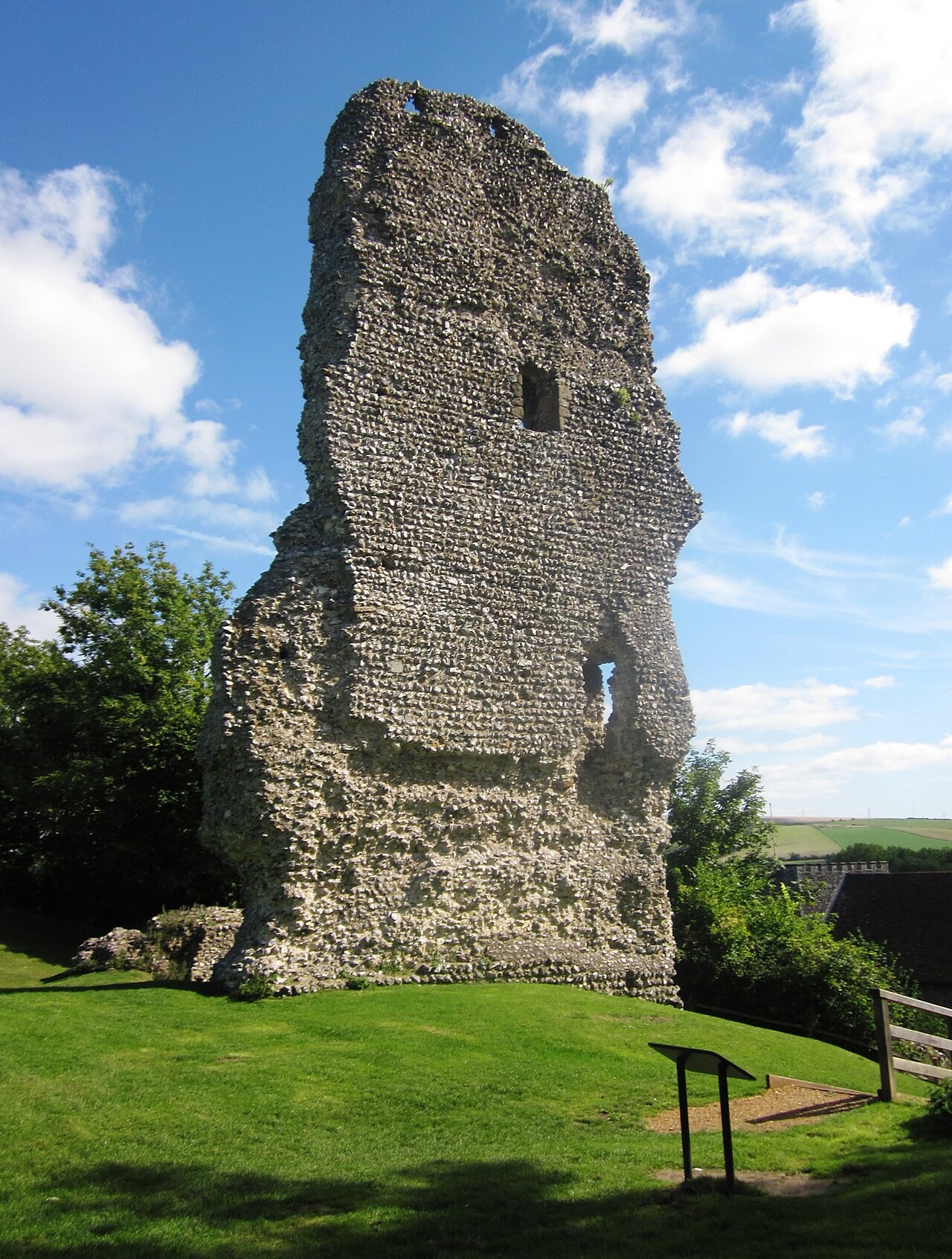
Castle, causeway and river
Bramber
A one-street South Downs village where Norman ruins, a restored pilgrim house and easy Adur-side paths reward a slow visit.
- Best for
- Norman history and gentle riverside walking
- Give it
- A relaxed half day
- Don't miss
- The keep wall above the Adur floodplain
Photo: Margaret Anne Clarke · CC BY-SA 3.0 · cropped
The Fox verdict
Small village, unusually deep history
Bramber joins a castle, Norman church and fifteenth-century house to accessible paths beside the River Adur.
Come for a compact heritage visit, then choose between the broad surfaced Riverside Walk, the paths and new raised walkways of Bramber Brooks, or a meal in the Castle Inn's streamside garden. Nearby Steyning Museum adds the strange afterlife of local taxidermist Walter Potter.
Your picks, your pace
Make Bramber yours
Choose a mood or build your own list. Your saved stops are an ordering aid, with a direct map route when you are ready.
Local signatures
3 placesThe Castle Inn Hotel
A country inn on a site used for hospitality since the early thirteenth century, with a large garden running down to a stream and dog-friendly dining areas.
- Visit length
- Editorial estimate: Allow around 90 minutes
- Locality
- Bramber village
Bramber Brooks Nature Reserve
More than forty acres of medieval salterns, cut paths, ponds, raised walkways and a community orchard planted with Egremont Russet and Sussex Mother apples.
- Visit length
- Editorial estimate: Allow around 60 minutes
- Locality
- between the castle foot and River Adur
- Access
- Keep dogs out of the western wildlife enclosure.
Steyning Museum
A local museum covering Bramber and its district from prehistory onwards, including one of Walter Potter's canaries.
- Visit length
- Editorial estimate: Allow around 60 minutes
- Locality
- neighbouring Steyning
- Access
- Check visitor opening before travel.
Walks & outdoors
1 placeRiverside Walk for All
An easy 2.2-mile out-and-back on a broad surfaced path beside the Adur, suitable for wheelchairs, mobility buggies and pushchairs.
- Visit length
- Editorial estimate: Allow around 90 minutes
- Locality
- beside the River Adur
History & heritage
3 placesSt Mary's House
A restored fifteenth-century timber-framed pilgrim house with five acres of topiary, themed garden rooms, a ginkgo and Victorian pineapple pits.
- Visit length
- Editorial estimate: Allow around 2 hours
- Locality
- Bramber village
- Access
- Visitor access follows published open days; check the Official site before travel.
The Parish Church of St Nicholas
William de Braose's largely Norman castle church, notable for rare early capitals carved with heads and a possible fox-and-goose scene.
- Visit length
- Editorial estimate: Allow around 30 minutes
- Locality
- Bramber village
- Access
- Check the church site before planning an interior visit.
Bramber Castle
The administrative centre of the medieval Rape of Bramber, now a ruined castle with a surviving keep wall about fourteen metres high.
- Visit length
- Editorial estimate: Allow around 60 minutes
- Locality
- Bramber village
- Access
- Free daylight access is by a muddy, uneven track; dogs must be kept on leads.
No places match this filter. Choose All places to reset the list.
On the map
Bramber at a glance
Tap a marker to jump to its guide card.
Three ways to explore Bramber
Signature outings
House and garden rooms
Tour St Mary's close-studded fifteenth-century wing, then wander among its animal topiary, pineapple pits and themed gardens.
The wall above Bramber
Follow the uneven track to Bramber Castle's earthworks and the surviving keep wall, still about fourteen metres high.
A riverside route for all
Take the broad surfaced path from The Street for an easy 2.2-mile out-and-back beside the River Adur.
The village story
Bramber Village Guide
A one-street village shaped by hospitality, conquest, pilgrimage, the Adur and one famously eccentric museum-maker.
The Inn and the One-Street Village
The garden at the Castle Inn runs down to a stream and seats seventy-two, which is a good deal of garden for a village of one street. An inn or coaching house has stood on the site since the early thirteenth century; the oldest part of the present building is seventeenth-century, and it has carried the Castle Inn name since Victorian times. The kitchen does traditional fish and chips, pan-roasted trout and a chargrilled Sussex lamb Barnsley chop, and the Sunday menu extends to duck-and-orange pâté, roast leg of lamb, confit pork belly and a roast vegetable-and-cashew Wellington. Harvey's Sussex Best and Downlands Bramber are the regular ales, with Dark Star Hophead or Riverside changing alongside. Dogs get treats and bowls, and there are dining areas and bedrooms set aside for them.
That matters more than it might, because there are no shops in Bramber at all. For those you go to neighbouring Steyning, or across the Adur to Upper Beeding. The Tollgate, a sixteen-bedroom B&B, is without a working kitchen for now while its communal areas are rebuilt, and sends its guests to the Castle Inn to eat.
A Pilgrim House and Norman Church
Bramber is essentially one linear street, originally a causeway, laid in the lee of the Downs where the Adur floodplain begins. You can take that in slowly. St Mary's House stands along it: a close-studded timber-framed range, the surviving fifteenth-century wing built for the Wardens of the Bridge, monks from Sele Priory. The pilgrim inn on the site dates from around 1470. Inside there are original first-floor casements, fine chimney-pieces and a painted-panelled room; outside, five acres hold animal topiary, a ginkgo, Victorian pineapple pits and a set of themed garden rooms. Roger Linton and Peter Thorogood bought the semi-derelict house in 1984 and restored it with friends and volunteers. Simon Jenkins later listed it among "England's Thousand Best Houses". There is a tearoom, and you can visit it without buying a ticket for the house and gardens.
Up the slope sits the Church of St Nicholas, founded around 1073 as the castle church of William de Braose and still largely Norman. The crossing capitals are the thing to look for: carved heads, and what may be a fox and a goose, which Nairn and Pevsner called "a perfect example of late C11 work in Caen stone". The tower above them is a hollow eighteenth-century addition.
The Rise and Fall of Bramber Castle
De Braose raised Bramber Castle here by 1073 to run the surrounding rape. It passed out of the family's hands early in the next century when King John seized it after Lady de Braose refused to hand over her sons as hostages; she and the boys later starved in Windsor Castle. Subsidence brought the castle down in the sixteenth century, and its stone went into local roads. What is left is free to walk in during daylight, dogs on leads, though the track up is muddy and uneven. The keep wall still stands about fourteen metres high.
Along the Adur
The Riverside Walk for All follows the Adur for an easy, broad surfaced 2.2 miles out and back from The Street, wide enough for wheelchairs and pushchairs, with herons and kingfishers along it. From the same footbridge you can pick up the South Downs Way and the Downs Link; Monarch's Way also crosses the parish. The Downs Link runs south to Botolphs and Shoreham-by-Sea, four miles off, where the nearest station is. Below the castle, Bramber Brooks spreads across more than forty acres of old medieval salt workings, with new ponds and raised walkways finished in 2025 and a community orchard of Egremont Russet and Sussex Mother apples.
Walter Potter's Curious Legacy
The strangest resident was Walter Potter, who grew up at the Castle Inn when it was the White Lion and put his first tableau of stuffed animals in the garden in 1861. His museum of comic taxidermy — two-headed lambs, four-legged chickens — drew excursion crowds for decades before it moved on in the 1970s and was sold off at auction in 2003. One of his canaries survives in the Steyning Museum, which is as close as Bramber now keeps him.
Stay around South Downs
Make a longer stay of it
Travel Fox holiday homes around South Downs, linked directly to their property pages.
For homeowners
Own a holiday home near Bramber?
We manage holiday lets across the UK from 12% commission, charged after cleaning costs, with no lock-in. A co-founder visits before you decide.
How our holiday let management works →
A guide with a point of view
Written from research. Edited for real journeys.
Use the Official site links for live practical details, then use this guide for context, ideas and room to explore.
Photography credits & licences
Third-party photographs are credited to their named creators and reused under the linked Creative Commons licence or public-domain dedication. Travel Fox stores an optimised local copy; the file-specific changes and any browser-applied display crop are disclosed below. Reused photographs link both to the Wikimedia Commons source record and to the declared source image; Travel Fox's own photographs carry no such record and are marked as ours. These image licences do not cover Travel Fox text, branding or page design.
- File:Bramber Castle 1.jpg — photograph by Margaret Anne Clarke; Own work. Source record on Wikimedia Commons. Declared source image. Licence: CC BY-SA 3.0. File changes: Downloaded from Wikimedia Commons, resized to a maximum 1920px edge and encoded as an optimised JPEG. Display changes: Displayed with responsive CSS cropping.
Sources
Every place on this page is checked against a published source. Each entry links the record we used and names who publishes it.
- The Castle Inn Hotel — castleinnhotel.co.uk operator, sector body or destination organisation
- St Mary's House — stmarysbramber.co.uk operator, sector body or destination organisation
- The Parish Church of St Nicholas — 3bschurch.org.uk other published source
- Bramber Castle — english-heritage.org.uk national body or asset manager
- Riverside Walk for All — southdowns.gov.uk statutory register or public authority
- Bramber Brooks Nature Reserve — horsham.gov.uk statutory register or public authority record not machine-readable; publisher restricts automated access
- Steyning Museum — steyningmuseum.org.uk operator, sector body or destination organisation