
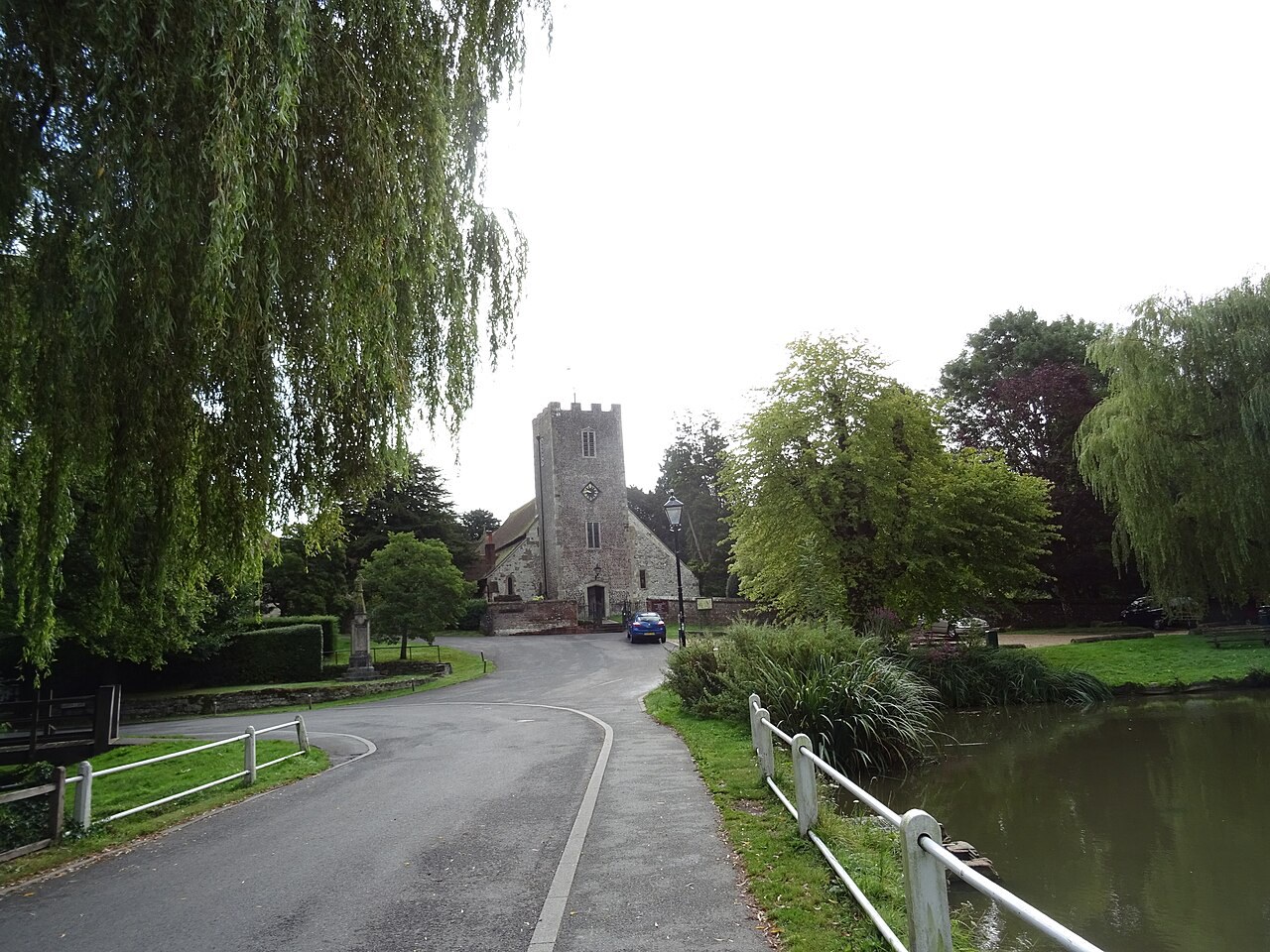
Pond, paths and chalk
Buriton
A spring-line village where wooded quarry paths climb from the pond towards the open South Downs.
- Best for
- Village history and direct downland walks
- Give it
- A half day, or longer with the country park
- Don't miss
- The old chalk workings above the pond
Photo: Stephjeb · CC BY-SA 4.0 · cropped
The Fox verdict
A small village with a steep route into the Downs
Buriton combines a pond-centred village stop with a medieval church, a nature reserve in former chalk workings and signed paths towards Queen Elizabeth Country Park.
Come for the contrast between water and chalk: begin beside the spring-fed pond, look inside St Mary's, follow the old railway beds through the chalk pits, then return for a meal at The Nest or continue to the country park.
Where to go
Places in Buriton
Every place below is checked against a published source, listed with what it is and how long to give it.
Local signatures
3 placesBuriton Pond
A large spring-fed pond with an outflowing stream, set below the wooded slopes of the South Downs scarp.
- Visit length
- Editorial estimate: around 20 minutes
- Locality
- at the heart of Buriton
The Nest Hotel & Restaurant
A 14-bedroom village hotel with a restaurant serving changing menus built around fresh, seasonal, locally sourced ingredients and pub classics.
- Visit length
- Editorial estimate: around 90 minutes
- Locality
- in Buriton village
- Access
- Well-behaved small dogs are welcome in the bar area on a short lead and outside on the terrace, but not in the main restaurant; staying guests can request packed lunches.
Buriton Chalk Pits Local Nature Reserve
Industrial-history and natural-history trails follow old narrow-gauge railway beds through former limeworks now recolonised by chalk-grassland plants.
- Visit length
- Editorial estimate: around 90 minutes
- Locality
- on the slopes above Buriton
- Access
- The paths climb through former chalk workings; expect a steep ascent from the village.
Walks & outdoors
1 placeHangers Way: Buriton to Queen Elizabeth Country Park
A signed 2.5-mile section passing beneath War Down and its recorded Bronze Age burial mounds before finishing at the country park visitor centre.
- Visit length
- Editorial estimate: around 60 minutes
- Locality
- between Buriton and Queen Elizabeth Country Park
- Access
- This is a linear walk; plan onward or return travel before setting out.
History & heritage
1 place
Church of St Mary
A Grade II* church with a 12th-century nave, a square Purbeck-stone font on five columns and an unusual open-framed timber chancel arch.
- Visit length
- Editorial estimate: around 35 minutes
- Locality
- in Buriton village
Things to do
1 placeQueen Elizabeth Country Park
A woodland and downland country park with walking, cycling, an adventure play trail, play areas, a café and a visitor centre.
- Visit length
- Editorial estimate: around 120 minutes
- Locality
- at the southern end of the Buriton Hangers Way section
No places match this filter. Choose All places to reset the list.
Three ways to explore Buriton
Signature outings
Walk the chalk-pit trails
Follow old narrow-gauge railway beds through former limeworks where chalk-grassland plants have recolonised the reserve.
Find the Purbeck-stone font
See the 12th-century square font raised on five columns and the unusual open-framed timber chancel arch.
Continue into the country park
Pair woodland and downland walking with the adventure play trail, play areas and visitor centre.
The village story
Buriton: water below, chalk above
The original Travel Fox guide follows Buriton from its spring-fed pond and village tables to old limeworks, long-distance paths and the people who shaped its history.
Water, chalk and a walkers' inn
The pond sits at the centre of Buriton, spring-fed and large enough that the stream leaving it has somewhere to go. Behind it, wooded slopes climb sharply toward the open downs. That is the shape of the place: houses gathered on the Greensand terrace at the foot of the South Downs scarp, water in front and chalk behind.
The Nest is where you eat, and where you stay if you want to. It has fourteen bedrooms and a bar serving local Flower Pots ales, sparkling wine from Hambledon Vineyard and coffee roasted in Winchester. The restaurant serves fresh, seasonal, locally sourced food built around pub classics, and its menus change regularly. Current highlights include ribeye steak, Sunday roast and pizza; almost all dishes are or can be made gluten-free. Well-behaved small dogs are welcome in the bar area on a short lead and on the terrace, but not in the main restaurant. Staying guests can request packed lunches.
Wartime stories and a sociable Post Office
During the Second World War, a village pub’s garage became a kitchen for American troops and the building’s rooms an officers’ mess; when they left, landlady Mary Carter found blankets, a ham and tins of food in a cupboard.
The village Post Office in the Seward Room offers stamps and banking alongside occasional local meat and sausages, olive oil and Buriton tea towels, plus free tea, coffee and biscuits for anyone who lingers.
A medieval church and paths through the Downs
St Mary's is worth the few minutes it takes. The nave is 12th-century, and inside it stands a square font of Purbeck stone from the same period, raised on five columns; the chancel arch is an open timber frame, which is rare. Somewhere in the churchyard, in an unmarked grave, lies John Goodyer, the 17th-century botanist who first sorted out the four main kinds of British elm and left his library to Magdalen College.
Walking is what draws people here. The Hangers Way runs straight through: two and a half miles north to Petersfield across small fields and shallow valleys, or the same distance south to Queen Elizabeth Country Park, passing beneath War Down and its seven Bronze Age burial mounds. From Buriton pond, the Shipwrights Way follows a gravel track through the old chalk workings; its steep section is about three hundred metres long before the route joins the South Downs Way and continues through a wooded valley. The full five-mile route from Petersfield has no stiles or gates.
From limeworks to literary history
Those pits were a working quarry from around 1860, when B. J. Forder began burning chalk for lime and shifting it on narrow-gauge railways; the work went on for over seventy years, until the Second World War. The ground is a nature reserve now, the old rail beds turned to footpaths and chalk-grassland flowers moved back in. Come in spring and the slopes carry violets, primroses, cowslips and bluebells, with wild orchids later on the chalk.
Edward Gibbon lived at Buriton Manor for much of the later 18th century. When the railway works began in 1853 and the opening ceremony drew a crowd, the Portsmouth Times reported the place "frightened out of its peacefulness."
Family stops, rail links and hop seasons
Families have a recreation ground with a playground, goalposts, a basketball backboard and a tennis club. A short walk south brings the family to woodland and downland paths, a café, a visitor centre and an adventure play trail.
Once a year the village used to fill with hop-pickers up from Portsmouth. They camped near the Maple Inn, the local children were let out of school to help, and the dried hops went back to the city by train.
Stay around South Downs
Make a longer stay of it
Travel Fox holiday homes around South Downs, linked directly to their property pages.
For homeowners
Own a holiday home near Buriton?
We manage holiday lets across the UK from 12% commission, charged after cleaning costs, with no lock-in. A co-founder visits before you decide.
How our holiday let management works →
A guide with a point of view
Written from research. Edited for real journeys.
Use the Official site links for live practical details, then use this guide for context, ideas and room to explore.
Photography credits & licences
Third-party photographs are credited to their named creators and reused under the linked Creative Commons licence or public-domain dedication. Travel Fox stores an optimised local copy; the file-specific changes and any browser-applied display crop are disclosed below. Reused photographs link both to the Wikimedia Commons source record and to the declared source image; Travel Fox's own photographs carry no such record and are marked as ours. These image licences do not cover Travel Fox text, branding or page design.
- File:Church of St Mary in Buriton.jpg — photograph by Stephjeb; Own work. Source record on Wikimedia Commons. Declared source image. Licence: CC BY-SA 4.0. File changes: Downloaded from Wikimedia Commons, resized to a maximum 1920px edge and encoded as an optimised JPEG. Display changes: Displayed with responsive CSS cropping.
Sources
Every place on this page is checked against a published source. Each entry links the record we used and names who publishes it.
- Buriton Pond — easthants.gov.uk statutory register or public authority
- The Nest Hotel & Restaurant — thenesthotelburiton.co.uk operator, sector body or destination organisation
- Church of St Mary — historicengland.org.uk statutory register or public authority record not machine-readable; publisher restricts automated access
- Buriton Chalk Pits Local Nature Reserve — buriton.info operator, sector body or destination organisation
- Hangers Way: Buriton to Queen Elizabeth Country Park — hants.gov.uk statutory register or public authority record not machine-readable; publisher restricts automated access
- Queen Elizabeth Country Park — hants.gov.uk statutory register or public authority record not machine-readable; publisher restricts automated access