
Chalk, cricket and cellars
Hambledon
A Hampshire valley village where Saxon stonework, the origins of first-class cricket and Hambledon Vineyard, England’s oldest commercial vineyard, fit into one unhurried visit.
- Best for
- Cricket history, chalk walks and vineyard visits
- Give it
- A full day, or a focused half-day
- Don't miss
- The Saxon church fabric and Broadhalfpenny Down
Photo: Tim Sheerman-Chase · CC BY 2.0 · cropped
The Fox verdict
A small village with an unusually deep scorecard
Hambledon rewards visitors who pair its compact valley streets with one carefully chosen outing onto the chalk.
Begin with the Church of St Peter and St Paul and the old yew in its churchyard, then choose between vineyard cellars, flower-rich Speltham Down or the cricket ground at Broadhalfpenny Down. West Street’s tearoom and The Vine Inn make useful pauses without turning the day into a drive between distant attractions.
Where to go
Places in Hambledon
Every place below is checked against a published source, listed with what it is and how long to give it.
Local signatures
3 placesThe Vine Inn
A 16th-century, oak-beamed pub with fireplaces, board games, darts, a beer garden and an unusual well inside; dogs are welcome throughout.
- Visit length
- Editorial estimate: Allow around 60 minutes
- Locality
- Hambledon village
Hambledon Vineyard
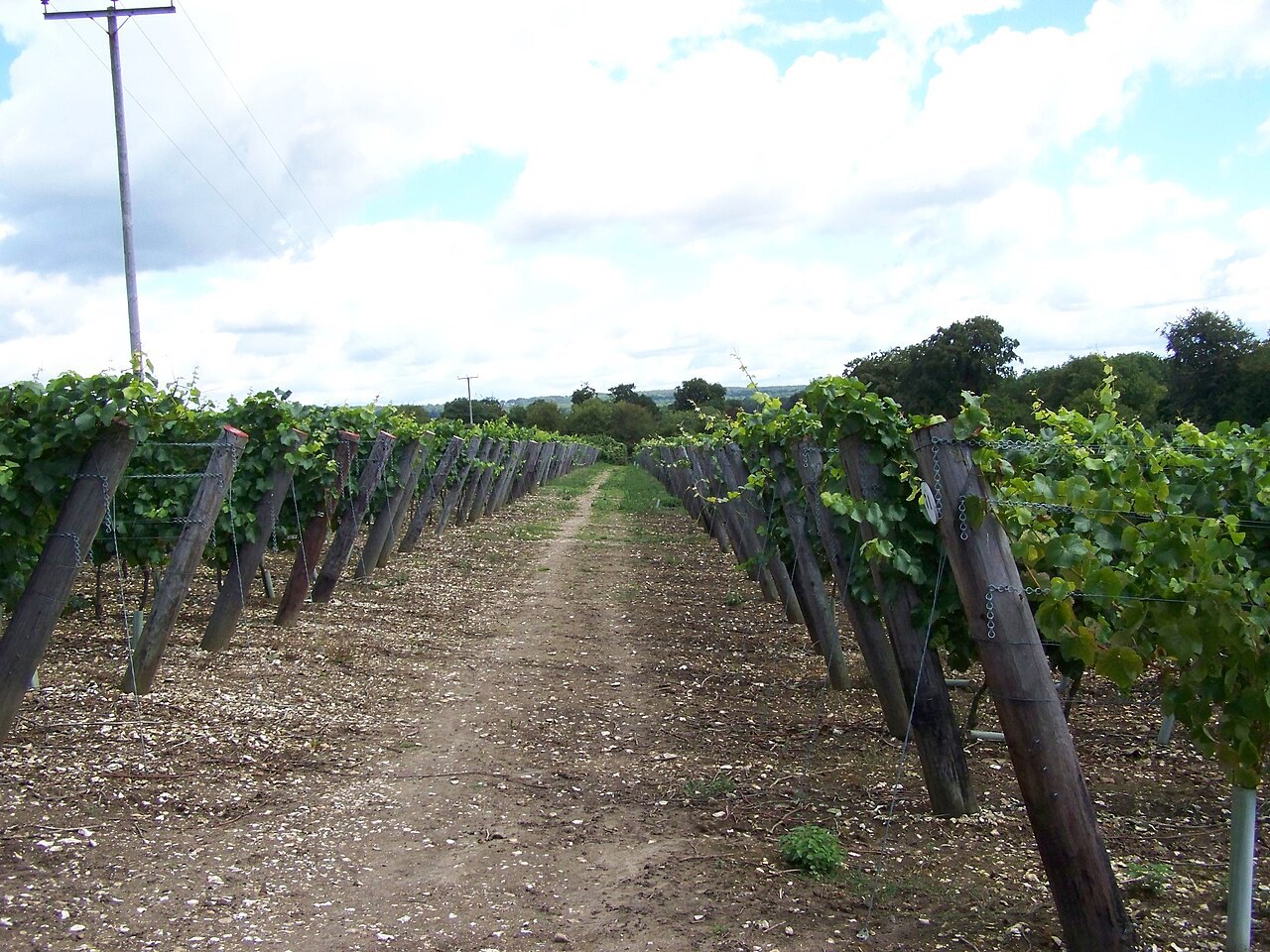
Hambledon Vineyard, England’s oldest commercial vineyard, offers tours, tastings, chalk-cut underground cellars, a restaurant, terrace and cellar-door shop.
- Visit length
- Editorial estimate: Allow around 150 minutes
- Locality
- Hambledon’s chalk slopes
Speltham Down
National Trust-owned downland crossed by the Wayfarer’s Walk, with cowslips, buttercups, ox-eye daisies and several orchid species in spring and summer.
- Visit length
- Editorial estimate: Allow around 120 minutes
- Locality
- On the Wayfarer’s Walk through Hambledon
Food & drink
2 placesThe Old Forge Tea Room
A dog-friendly West Street tearoom serving breakfast, lunch, cakes, coffee and tea.
- Visit length
- Editorial estimate: Allow around 60 minutes
- Locality
- West Street
The Bat & Ball
A historic country pub and restaurant opposite Broadhalfpenny Down, with cricket memorabilia, food, a winter fire and summer alfresco dining.
- Visit length
- Editorial estimate: Allow around 75 minutes
- Locality
- Opposite Broadhalfpenny Down
History & heritage
2 places
Church of St Peter and St Paul
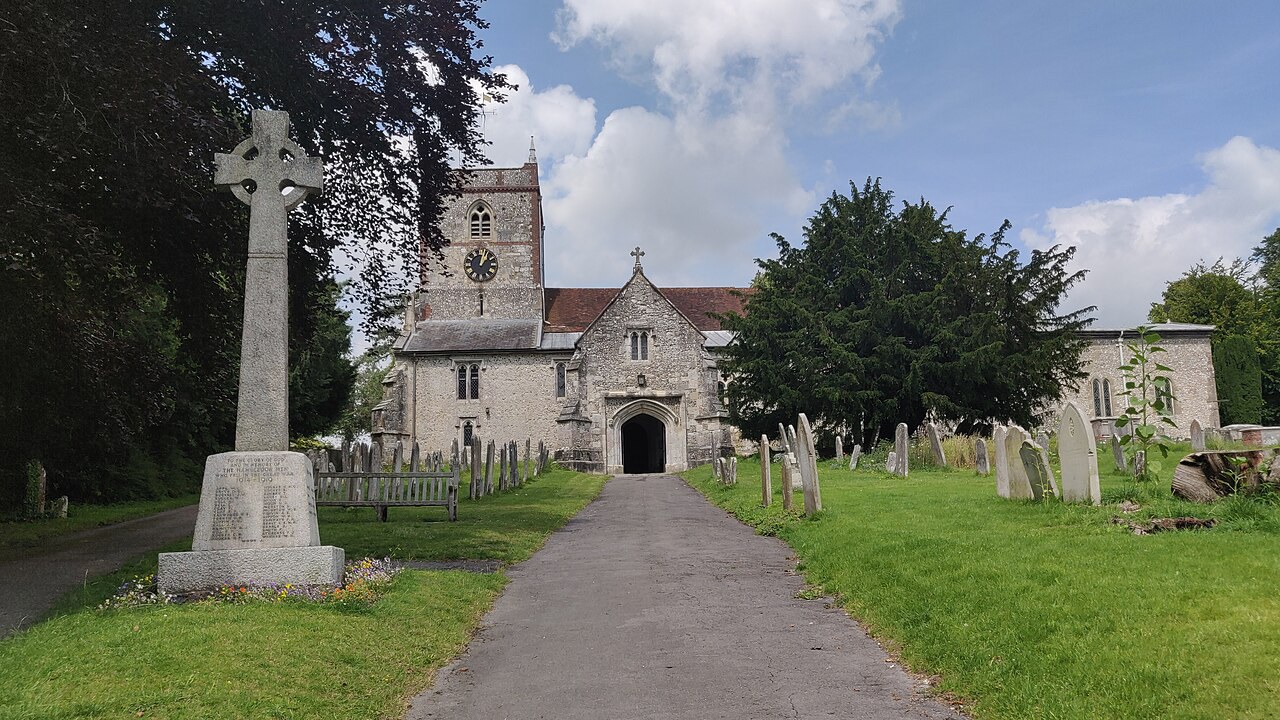
A Grade I church retaining a Saxon nave and chancel, Norman arches, dog-tooth ornament, chancel squints and the colours of the Hambledon Volunteers.
- Visit length
- Editorial estimate: Allow around 45 minutes
- Locality
- Top of the High Street
Broadhalfpenny Down
The Hambledon Club’s historic ground, associated with the development of the third stump and regulated bat width and with the inaugural first-class match.
- Visit length
- Editorial estimate: Allow around 60 minutes
- Locality
- Clanfield road outside Hambledon
Things to do
2 placesVillage Hall Play Park
A play park for toddlers through primary age with an accessible roundabout, swings, play tower, tunnel and all-weather surface, plus adjacent ball-play equipment.
- Visit length
- Editorial estimate: Allow around 60 minutes
- Locality
- Beside Hambledon Village Hall
Hambledon Tennis Court
A village tennis court bookable by registered users, with children’s racquets and balls available to borrow.
- Visit length
- Editorial estimate: Allow around 60 minutes
- Locality
- Behind the church
- Access
- A fee applies to use by registered users.
No places match this filter. Choose All places to reset the list.
Three ways to explore Hambledon
Signature outings
Find Saxon work inside
Look for the surviving Saxon nave and chancel, then the later Norman arches, dog-tooth ornament and chancel squints.
Tour the chalk cellars
Pair a vineyard tour or tasting with the estate’s chalk-cut underground cellars and south-facing slopes.
See cricket on the Down
Look for the 1908 Cornish granite monument to the Hambledon Club's contribution to cricket.
The village story
Hambledon: wells, wickets and chalk
Explore Hambledon from an unusual well inside a village pub to Saxon church fabric, cricket history and paths over the Downs.
The well and the valley
Inside The Vine Inn there is a well. The pub occupies a 16th-century, oak-beamed building with fireplaces, board games and darts, and the well sits within it as a plain fact of the room rather than a feature anyone has thought to explain. Dogs are welcome throughout, with water bowls and treats laid on. The pub also has a beer garden and cask ales.
The village runs along the floor of a valley, an old riverbed enclosed by chalk hills, farmland and woodland inside the South Downs National Park. It is a linear place: cottages and timber-framed houses climb the slopes and line the valley streets, with the church holding the top of the High Street and Manor Farm at the bottom, opposite. The farm is a rare stone-and-flint manor house of about 1200, later extended in timber framing.
West Street and the chalk slopes
On West Street you will find the day-to-day life of the place. The People's Market covers everyday shopping and still runs milk and newspaper deliveries and a dry-cleaning collection. A few doors along, The Old Forge Tea Room does breakfast, lunch, cakes and coffee, and takes dogs.
Hambledon Vineyard, founded in 1952 by Major-General Sir Guy Salisbury-Jones on south-facing chalk slopes, is England’s oldest commercial vineyard; the first commercial wines followed in 1955. It runs tours and tastings, chalk-cut underground cellars, a terrace and a restaurant working with Hampshire, foraged and kitchen-garden produce. The estate’s wine list is led by its own sparkling wines. The visit makes a half-day without a drive.
Where cricket took shape
The reason most people have heard of the place is two miles off, on the Clanfield road. Broadhalfpenny Down was used from around 1750 by the Hambledon Club, whose players helped settle the third stump and the width of the bat. A Hampshire v All England match that began on 24 June 1772 for 500 guineas is counted as the first first-class fixture. A granite monument of 1908 marks the ground, and across the road The Bat & Ball, where the Hambledon Club kept a room, still displays memorabilia of Richard Nyren, landlord and leading cricketer from 1760 to 1771. The ground still hosts cricket played by the Brigands and Hambledon CC.
The village that produced all this then quietly declined. It once supported as many as twelve pubs. Writing in 1826, William Cobbett found "there is now not even the name of the market left."
A Saxon church and royal flight
The Church of St Peter and St Paul, Grade I listed, keeps a Saxon nave and chancel inside centuries of enlargement, along with Norman arches, dog-tooth carving and chancel squints; its tower was rebuilt after a fire late in the 18th century. It holds the colours of the Hambledon Volunteers, raised against a feared Napoleonic invasion. In the churchyard a hollow yew, locally called the Domesday Yew, is thought to be about a thousand years old. The Domesday surveyors of 1086 valued the whole place at five pounds, with a single mill worth a shilling.
Charles II, fleeing after Worcester, is said to have spent the night of 13 October 1651 here disguised as a poor yeoman; the cottage is now called King's Rest. Hambledon also gave the Navy William Lashly, the stoker who went south with Scott on both Antarctic expeditions.
Downland paths and family pauses
For walking, a ten-mile circular from West Street climbs Windmill Down, which looks over all three of the village’s cricket grounds. The Wayfarer’s Walk crosses Speltham Down, National Trust land that carries cowslips, ox-eye daisies and orchids through spring and summer. The Monarch’s Way passes through as well.
The play park was revamped in 2023, and the tennis court behind the church is available to registered non-village families for a fee. Rowlands Castle is the nearest station; the B2150 carries you out through West Street towards Droxford. On a quiet evening the church stands over the High Street, where it has been the centre of the village for more than a thousand years, and the yew in the churchyard grows on below.
Stay around South Downs
Make a longer stay of it
Travel Fox holiday homes around South Downs, linked directly to their property pages.
For homeowners
Own a holiday home near Hambledon?
We manage holiday lets across the UK from 12% commission, charged after cleaning costs, with no lock-in. A co-founder visits before you decide.
How our holiday let management works →
A guide with a point of view
Written from research. Edited for real journeys.
Use the Official site links for live practical details, then use this guide for context, ideas and room to explore.
Photography credits & licences
Third-party photographs are credited to their named creators and reused under the linked Creative Commons licence or public-domain dedication. Travel Fox stores an optimised local copy; the file-specific changes and any browser-applied display crop are disclosed below. Reused photographs link both to the Wikimedia Commons source record and to the declared source image; Travel Fox's own photographs carry no such record and are marked as ours. These image licences do not cover Travel Fox text, branding or page design.
- File:St Peter and St Paul's Church, Hambledon 1.jpg — photograph by Tim Sheerman-Chase; https://www.flickr.com/photos/68932647@N00/53863191029/. Source record on Wikimedia Commons. Declared source image. Licence: CC BY 2.0. File changes: Downloaded from Wikimedia Commons, resized to a maximum 1920px edge and encoded as an optimised JPEG. Display changes: Displayed with responsive CSS cropping.
- File:Hambledon Vineyard - geograph.org.uk - 2037210.jpg — photograph by Margaret Sutton; Hambledon Vineyard by Margaret Sutton. Source record on Wikimedia Commons. Declared source image. Licence: CC BY-SA 2.0. File changes: Downloaded from Wikimedia Commons, resized to a maximum 1920px edge and encoded as an optimised JPEG. Display changes: Displayed with responsive CSS cropping.
Sources
Every place on this page is checked against a published source. Each entry links the record we used and names who publishes it.
- The Vine Inn — vineinnhambledon.co.uk operator, sector body or destination organisation
- The Old Forge Tea Room — hambledon-pc.gov.uk statutory register or public authority
- Hambledon Vineyard — hambledonvineyard.co.uk operator, sector body or destination organisation
- Church of St Peter and St Paul — historicengland.org.uk statutory register or public authority record not machine-readable; publisher restricts automated access
- Broadhalfpenny Down — broadhalfpennydown.com operator, sector body or destination organisation
- The Bat & Ball — batandballclanfield.co.uk operator, sector body or destination organisation
- Speltham Down — hambledon-pc.gov.uk statutory register or public authority
- Village Hall Play Park — hambledon-pc.gov.uk statutory register or public authority
- Hambledon Tennis Court — hambledon-pc.gov.uk statutory register or public authority