
Downs at the doorstep
Kingston near Lewes
A tranquil East Sussex village with chalk hills above The Street, a historic pub, a rare tapsel gate and easy links to Lewes and Rodmell.
- Best for
- Steep Downs walks, village history and a country-pub stop
- Give it
- A half day in the village, or longer with Rodmell or Lewes
- Don't miss
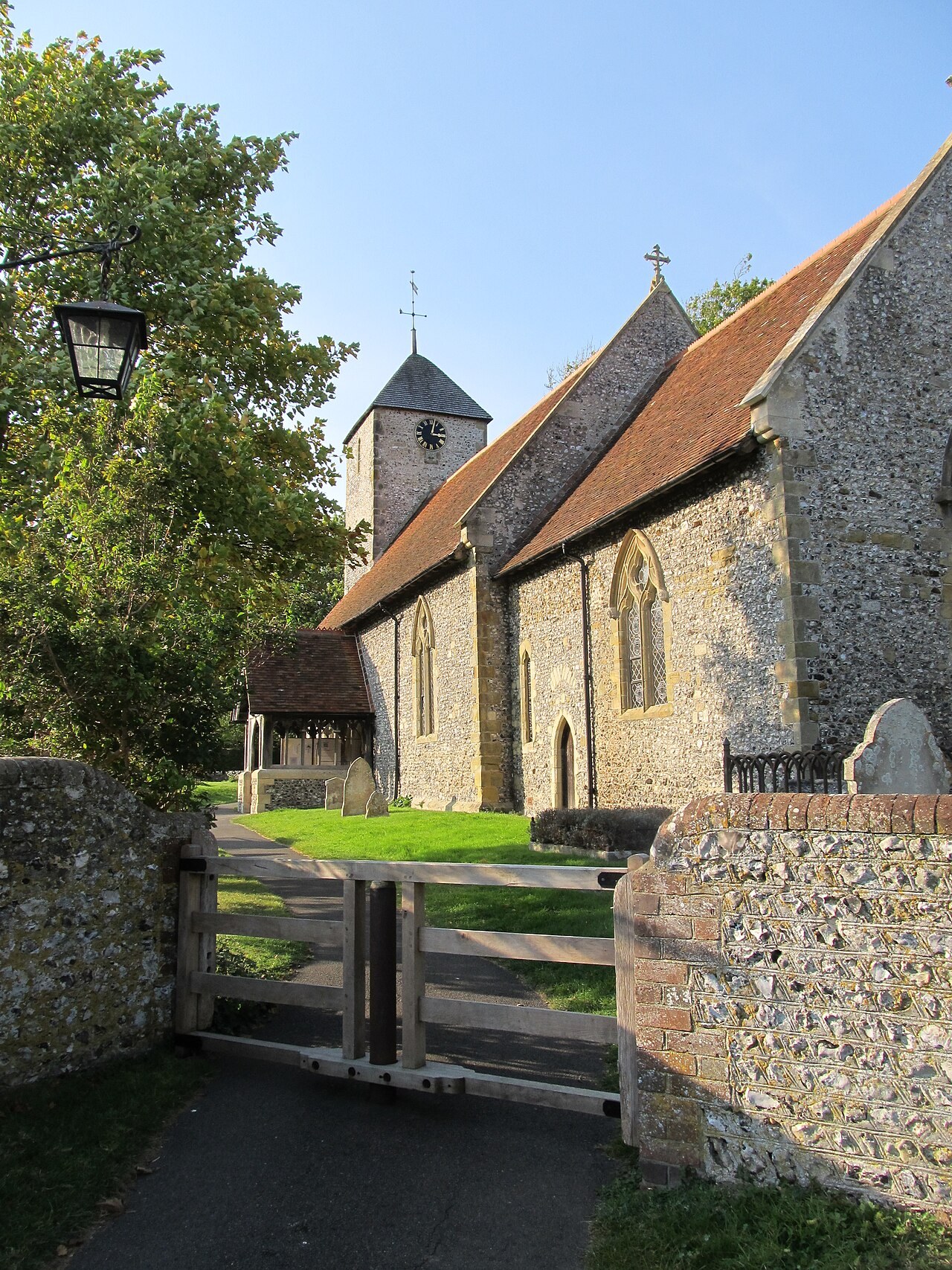
- St Pancras Church's pivoting tapsel gate
Photo: Wheeltapper · CC BY-SA 3.0 · cropped
The Fox verdict
A small village with the Downs built into the day
Kingston near Lewes works best as a slow village visit shaped around a hill walk, a historic church and a well-earned stop at The Juggs.
The Street rises towards the chalk downs while the village itself offers an early 14th-century church, two recreation greens and a farm focused on agroecology. Lewes and Virginia Woolf's Monk's House add substantial nearby options without turning Kingston into a base for distant attractions.
Where to go
Places in Kingston near Lewes
Every place below is checked against a published source, listed with what it is and how long to give it.
Local signatures
3 placesLovebrook
A 33-acre agroecological farm with a food forest, farm shop, cafe, camping, therapeutic work and rewilding projects.
- Visit length
- Editorial estimate: around 75 minutes
- Locality
- Kingston
- Access
- Check the Official site for current farm-shop, cafe and activity availability before travel.
The Juggs Pub Walk
A five-mile circular climbing to 613 feet for views over Kingston's valleys before returning to the pub.
- Visit length
- Editorial estimate: around 3 hours
- Locality
- starting at The Juggs
- Access
- Expect steep hills and inclines; the pub also offers a shorter version.
Kingston Village Green
The central public green has a children's play area, while Kingston's greens also support sport and community events.
- Visit length
- Editorial estimate: around 45 minutes
- Locality
- behind The Juggs
Food & drink
1 placeThe Juggs
A traditional pub in a Grade II timber-framed building, with oak beams, two bar areas, a garden and a covered terrace.
- Visit length
- Editorial estimate: around 90 minutes
- Locality
- The Street
- Access
- The pub describes itself as family- and pet-friendly.
History & heritage
3 places
St Pancras Church
A Grade II* early 14th-century church with an unusually consistent Decorated Gothic character and a rare pivoting tapsel gate in its churchyard.
- Visit length
- Editorial estimate: around 30 minutes
- Locality
- Kingston
- Access
- Check locally for current interior access before travel.
Monk's House
The 17th-century home bought by Virginia and Leonard Woolf in 1919, with Virginia's garden writing lodge still in place.
- Visit length
- Editorial estimate: around 90 minutes
- Locality
- Rodmell
- Access
- Small visitor capacity means visits must be pre-booked.
Anne of Cleves House
A 15th-century house granted to Henry VIII's fourth wife, although she never lived there.
- Visit length
- Editorial estimate: around 75 minutes
- Locality
- Lewes
- Access
- Check the Official site for current visitor access before travel.
Things to do
1 placeSt Pancras Green
A recreation green with two tennis courts, youth football and the Community Pavilion.
- Visit length
- Editorial estimate: around 60 minutes
- Locality
- St Pancras Green
- Access
- Court, pitch and pavilion use may depend on local availability; check the parish council information.
No places match this filter. Choose All places to reset the list.
Three ways to explore Kingston near Lewes
Signature outings
Oak beams and a garden
Pause at The Juggs for a traditional country-pub setting with two bar areas, a garden and a covered terrace.
A rare Sussex tapsel gate
Visit St Pancras Church for its consistent Decorated Gothic character and a tapsel gate with documentary evidence from 1729.
Virginia Woolf's garden lodge
Pre-book Monk's House to see the Rodmell home Virginia and Leonard Woolf bought in 1919 and Virginia's surviving garden writing lodge.
The village story
Kingston near Lewes Village Guide
A source-locked journey from The Juggs and its old ridge road to chalk-down views, village heritage and nearby literary history.
The Juggs and the old ridge road
The Juggs stands on The Street, with oak beams, a garden and a covered terrace. It was a private house until 1955, when the timber-framed building — seventeenth-century or older, later faced in flint with red-brick dressings — became the village's pub. It is family- and dog-friendly, and one recent visitor summed it up as a "Proper country pub with a lovely relaxed atmosphere." The kitchen runs to pub classics, focaccia sandwiches, traditional pies and plant-based burgers, with Sunday roasts that recent diners have found generous — beef, or a mix of beef, lamb and pork. Korean-style chicken wings, mussels and scampi and chips turn up as well. The pub advertises award-winning ales.
The name is worth a note. Juggs Road, the old ridge track that climbs out of the village, began as a Roman route and carried on as a medieval droveway, and "Juggs" is thought to have been an early nickname for someone from Brighton.
Up to the Downs, back to the farm
From the pub door a five-mile circular walk climbs steeply to 613 feet and back, looking down over Kingston's valleys; a shorter version exists for less committed legs. The Street itself runs up to the South Downs Way, with the chalk downs looming directly above the rooftops. Higher up the views open to Lewes, the Cliffe chalk pits, Mount Caburn and Firle Beacon. Sheep and cattle work the lower slopes.
For food beyond the pub there is Lovebrook, a 33-acre agroecological farm in Kingston with a food forest, a farm shop and a cafe serving tea, coffee and pastries. Its veg-box scheme grows chemical-free seasonal vegetables, mostly from the Kingston market garden and supplemented with UK organic produce in colder months, and a drop-in Family Nature Club runs crafts, growing and harvesting for children. There is no general village shop now; the old shop and post office, probably a seventeenth-century granary before its conversion, is a house.
A rare gate and a flint-built village
St Pancras church is small and aisleless, early fourteenth-century, restored after a lightning strike in 1865. Pevsner called its tower "curiously tall and slender." Its churchyard has a tapsel gate — one that pivots on a central post rather than swinging on hinges — one of only six known in Sussex, with documentary evidence from 1729, the earliest such evidence identified for any of them.
The rest of the village rewards a slow walk: flint walls, tile hanging and red-brick dressings, cottages set among old farmhouses, all within a conservation area of 23 listed buildings. Kingston Manor's sixteenth-century wing incorporated material taken from St Pancras Priory in Lewes after its dissolution in 1538. Look across the fields and the outlines of the three Saxon laines, the old open strips, are still legible under the later Enclosure grid.
Lewes, Rodmell and village life
Lewes is two miles north — a Norman castle, the priory ruins, the market town's independent shops — reachable by the Monday-to-Saturday 123 bus from the Gows Croft stop in about seven minutes, or on foot along Kingston Ridge. The same corridor passes Rodmell and Monk's House, where Virginia Woolf's garden writing lodge still stands.
Behind The Juggs, the village green has a children's play area, and over on St Pancras Green there are two tennis courts and a pavilion. On a summer evening the cricket is at one end of the village and the covered terrace at the other.
Stay around South Downs
Make a longer stay of it
Travel Fox holiday homes around South Downs, linked directly to their property pages.
For homeowners
Own a holiday home near Kingston near Lewes?
We manage holiday lets across the UK from 12% commission, charged after cleaning costs, with no lock-in. A co-founder visits before you decide.
How our holiday let management works →
A guide with a point of view
Written from research. Edited for real journeys.
Use the Official site links for live practical details, then use this guide for context, ideas and room to explore.
Photography credits & licences
Third-party photographs are credited to their named creators and reused under the linked Creative Commons licence or public-domain dedication. Travel Fox stores an optimised local copy; the file-specific changes and any browser-applied display crop are disclosed below. Reused photographs link both to the Wikimedia Commons source record and to the declared source image; Travel Fox's own photographs carry no such record and are marked as ours. These image licences do not cover Travel Fox text, branding or page design.
- File:Tapsel gate at St Pancras Church, Kingston near Lewes.jpg — photograph by Wheeltapper; Own work. Source record on Wikimedia Commons. Declared source image. Licence: CC BY-SA 3.0. File changes: Downloaded from Wikimedia Commons, resized to a maximum 1920px edge and encoded as an optimised JPEG. Display changes: Displayed with responsive CSS cropping.
Sources
Every place on this page is checked against a published source. Each entry links the record we used and names who publishes it.
- The Juggs — thejuggs.co.uk operator, sector body or destination organisation
- Lovebrook — lovebrook.org operator, sector body or destination organisation
- St Pancras Church — historicengland.org.uk statutory register or public authority record not machine-readable; publisher restricts automated access
- The Juggs Pub Walk — thejuggs.co.uk operator, sector body or destination organisation
- Kingston Village Green — kingston-pc.gov.uk statutory register or public authority
- St Pancras Green — kingston-pc.gov.uk statutory register or public authority
- Monk's House — nationaltrust.org.uk national body or asset manager
- Anne of Cleves House — sussexpast.co.uk other published source