
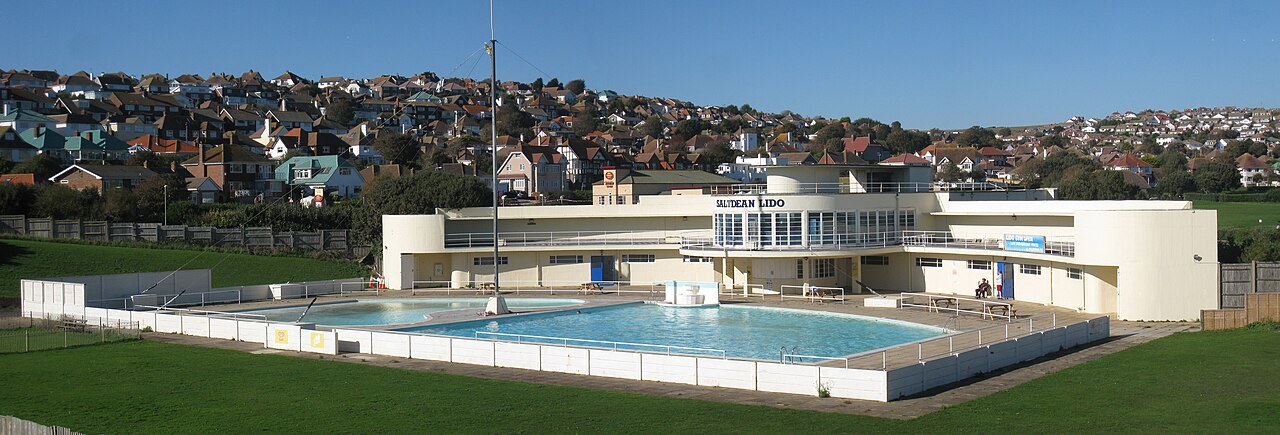
Telscombe, East Sussex
Telscombe
A dead-end downland village where a flint church, grazing common and the legacy of Ambrose Gorham explain the calm behind the coast.
- Best for
- Quiet downland and medieval church history
- Give it
- A half day, or longer with Rodmell or the coast
- Don't miss
- The four-mile Tye circuit and St Laurence's carved piscina
Photo: Oast House Archive · CC BY-SA 2.0 · cropped
The Fox verdict
A village shaped by the road that never continues
Come for the contrast between open chalk downland and a compact group of flint buildings sheltered from the coastal spread nearby.
St Laurence and Telscombe Tye are the core visit. Rodmell adds food and literary history, while Newhaven Fort or Saltdean Lido can round out a longer day.
Your picks, your pace
Make Telscombe yours
Choose a mood or build your own list. Your saved stops are an ordering aid, with a direct map route when you are ready.
Local signatures
3 placesSt Laurence, Telscombe Village
A Grade I flint church with a chiefly 12th-century nave and chancel, a 13th-century font, a carved 12th-century piscina and wall paintings commissioned by Ambrose Gorham.
- Visit length
- Editorial estimate: Allow around 35 minutes when access has been arranged.
- Locality
- Telscombe Village
- Access
- Contact the church in advance so that it can be opened for your visit.
Telscombe Tye
Open common and access land running from the village towards the cliff top, with rights of way, broad downland views, a restored dew pond and surviving Bronze Age earthworks.
- Visit length
- Editorial estimate: Allow around 90 minutes for the mapped four-mile circuit.
- Locality
- Telscombe Village and the coastal downland
- Access
- Livestock graze the open common, so keep dogs under close control.
Monk's House
Virginia and Leonard Woolf's 17th-century retreat, with Bloomsbury interiors, Leonard's garden and the writing lodge where Virginia wrote most of her major works.
- Visit length
- Editorial estimate: Allow around 75 minutes for the house and garden.
- Locality
- Rodmell
- Access
- The small property opens on selected days and requires pre-booking.
Food & drink
1 placeAbergavenny Arms
A traditional 15th-century country pub serving home-cooked food, local cask ales, continental beers and wine.
- Visit length
- Editorial estimate: Allow around 75 minutes for a meal.
- Locality
- Rodmell
- Access
- The published menus are samples, so check the current menu before travel.
History & heritage
1 placeNewhaven Fort
A 19th-century fort completed in 1871, with exhibitions, guided tours and an adventure playground.
- Visit length
- Editorial estimate: Allow around 1 hour 45 minutes.
- Locality
- Newhaven
Things to do
1 place
Saltdean Lido
A restored Grade II* modernist lido designed by Richard William Herbert Jones and opened in 1938, with swimming, a children's splash pool, fitness and food facilities.
- Visit length
- Editorial estimate: Allow around 75 minutes for a swim visit.
- Locality
- Saltdean
- Access
- Check the official site for current swimming availability before travel.
No places match this filter. Choose All places to reset the list.
On the map
Telscombe at a glance
Tap a marker to jump to its guide card.
Three ways to explore Telscombe
Signature outings
Cross Telscombe Tye
Follow the four-mile circuit across the grazed common, past the restored dew pond and into the village by bridleway.
Explore Newhaven Fort
Set aside a longer stop for the 19th-century fort's exhibitions, guided tours and adventure playground.
Take to Saltdean Lido
Pair the old village with a swim at the restored Grade II* lido on the developed coastal side of the Downs.
The village story
Telscombe Village Guide
A terminating lane, a flint church and open downland give this small village its unusual calm behind the Sussex coast.
A Lane That Ends Here
The lane into Telscombe comes from the north and ends there. It leaves the C7 between Lewes and Newhaven, runs for two miles across open ground, and stops at a group of flint buildings folded into a coombe of the chalk Downs. The sea is close, just over the hill to the south, but no road runs through to it. To reach the coast by car you go the long way round to Peacehaven, about eight miles. Telscombe sits in its dip and lets the rest of the coast get on with being developed.
There is no pub here, no shop. What there is, mainly, is the church, the village hall and the down.
Flint, Faith and a Grand National
St Laurence stands at the centre, Grade I and built of flint. The site is recorded as having had a church by AD 966; the nave and chancel you see are largely twelfth-century, with the north aisle, north-east chapel and west tower added late in the same century. Inside there is a thirteenth-century font, of the same broad family as the one at Piddinghoe down the valley, and a twelfth-century piscina with a projecting marble bowl carved underneath with something like acanthus leaves. Above the chancel arch are wall paintings from 1905, commissioned by Ambrose Gorham. The Victoria County History called the reconstructed chancel arch "a pseudo-Norman monstrosity." The church is not reliably open, so arrange to have it unlocked before you come.
Gorham is the reason much of Telscombe looks the way it does. A bookmaker, he came to live at Stud Farm around 1890 and trained horses on the gallops up on the Tye. In 1902 his mare Shannon Lass, trained by James Hackett, won the Grand National at 20 to 1. Gorham put money into restoring the church, and when he died in 1933 he left his village property in trust. Gorham's Gift still owns eight cottages and Stud Farm, maintains the listed buildings and the village hall, and exists in part to keep the place quiet.
From Village Buildings to Open Down
The other buildings repay a slow look. The Manor House, eighteenth-century with an older interior and a round flint tower added in the nineteenth, once belonged to the National Trust and served as lodgings for visiting judges, down to a chauffeured car. Old School Cottage was the village school, built around 1840, and is now a private house.
Above the village is Telscombe Tye, 211 acres of open downland registered as common and access land, grazed by sheep and extending towards the cliff top. A four-mile circuit from Longridge Avenue crosses the Tye, passes a restored dew pond and comes into the village by bridleway; it is mostly level and takes about ninety minutes. Two Bronze Age bowl barrows and a long cross-dyke survive in the turf. Keep dogs close where the sheep are.
Out to Rodmell for Food and Woolf
For food you go out. The Abergavenny Arms at Rodmell, a fifteenth-century pub, has served Sussex Smokie, Harvey's beer-battered haddock, Turner's local pork sausages with mash and onion gravy, and a beetroot and goat's-cheese tarte tatin — worth checking the current menu before you set off. It stands close to Monk's House, where the Woolfs lived and Virginia wrote in a lodge at the bottom of the garden. A nearby station is Southease, on the Lewes–Seaford line, unstaffed and without refreshments.
When the Tye Falls Quiet
Come evening the walkers have gone back over the Tye, the lane carries nobody through to anywhere, and the sheep have the down to themselves.
Stay around South Downs
Make a longer stay of it
Travel Fox holiday homes around South Downs, linked directly to their property pages.
For homeowners
Own a holiday home near Telscombe?
We manage holiday lets across the UK from 12% commission, charged after cleaning costs, with no lock-in. A co-founder visits before you decide.
How our holiday let management works →
A guide with a point of view
Written from research. Edited for real journeys.
Use the Official site links for live practical details, then use this guide for context, ideas and room to explore.
Photography credits & licences
Third-party photographs are credited to their named creators and reused under the linked Creative Commons licence or public-domain dedication. Travel Fox stores an optimised local copy; the file-specific changes and any browser-applied display crop are disclosed below. Reused photographs link both to the Wikimedia Commons source record and to the declared source image; Travel Fox's own photographs carry no such record and are marked as ours. These image licences do not cover Travel Fox text, branding or page design.
- File:Saltdean Lido - geograph.org.uk - 2105537.jpg — photograph by Oast House Archive; Saltdean Lido by Oast House Archive. Source record on Wikimedia Commons. Declared source image. Licence: CC BY-SA 2.0. File changes: Downloaded from Wikimedia Commons, resized to a maximum 1920px edge and encoded as an optimised JPEG. Display changes: Displayed with responsive CSS cropping.
Sources
Every place on this page is checked against a published source. Each entry links the record we used and names who publishes it.
- St Laurence, Telscombe Village — achurchnearyou.com national body or asset manager
- Telscombe Tye — telscombetowncouncil.gov.uk statutory register or public authority
- Abergavenny Arms — abergavennyarms.com operator, sector body or destination organisation
- Monk's House — nationaltrust.org.uk national body or asset manager
- Newhaven Fort — newhavenfort.org.uk operator, sector body or destination organisation
- Saltdean Lido — saltdeanlido.co.uk operator, sector body or destination organisation