
Inside the great henge
Avebury
A Wiltshire village set within and around the world's largest stone circle, with open access to stones, banks and a wider prehistoric landscape.
- Best for
- Prehistoric monuments and open-air exploring
- Give it
- A full day across the village and nearby monuments
- Don't miss
- Walking among the free, unfenced stones
Photo: LizzRoe · CC BY-SA 4.0 · cropped
The Fox verdict
A village woven through a prehistoric monument
Avebury combines an open stone circle and henge with a church, manor, pubs and paths into the surrounding ritual landscape.
The great bank, ditch and sarsen stones give the visit its scale, while Alexander Keiller's excavations and re-erections explain much of the scene today. Beyond the circle, West Kennet Avenue, Silbury Hill, West Kennet Long Barrow and Windmill Hill extend the story across the chalk downs.
Where to go
Places in Avebury
Every place below is checked against a published source, listed with what it is and how long to give it.
Local signatures
3 placesThe Red Lion
A late-16th-century farmhouse turned dining pub, built around an 86-foot well now covered with glass and used as a table.
- Visit length
- Editorial estimate: allow around 90 minutes
- Locality
- 6 Green Street, Avebury
- Access
- Dogs are welcome, and disabled facilities are available.
Avebury Manor and Garden
A Grade I listed manor begun around 1557 and restored room by room in styles from the Tudor period to the 20th century, with walled garden rooms, raised walks, a rose garden and orchard.
- Visit length
- Editorial estimate: allow around 75 minutes
- Locality
- on the site of Avebury Priory
- Access
- Visitors can touch the replica furniture and sit on the chairs.
West Kennet Long Barrow
A Neolithic chambered tomb reached across the fields near Silbury Hill, extending a visit into the prehistoric landscape.
- Visit length
- Editorial estimate: allow around 90 minutes
- Locality
- across the fields near Silbury Hill
- Access
- Visitors can walk into the chambered tomb.
Food & drink
1 placeWaggon and Horses
A 16th-century thatched coaching inn on the old Bath Road, now a Wadworth carvery with a sarsen stone in its fabric and a Dickens connection.
- Visit length
- Editorial estimate: allow around 90 minutes
- Locality
- Beckhampton, in Avebury parish
- Access
- A dedicated children's play area is available.
History & heritage
5 placesAvebury Henge and Stone Circles
The world's largest stone circle sits within a bank-and-ditch henge about 420 metres across, with surviving sarsen stones among the village.
- Visit length
- Editorial estimate: allow around 75 minutes
- Locality
- Avebury
- Access
- The stone circle and henge are free, open and unfenced; visitors can walk among the stones, climb the banks and picnic.
Church of St James
A Grade I listed church with an Anglo-Saxon core and a rare painted 15th-century rood loft hidden until its rediscovery in 1812.
- Visit length
- Editorial estimate: allow around 30 minutes
- Locality
- beside Avebury Manor, just outside the henge
West Kennet Avenue
A double row of standing stones, re-excavated and partly re-erected by Alexander Keiller in 1934–35.
- Visit length
- Editorial estimate: allow around 90 minutes
- Locality
- from the henge's southern entrance toward The Sanctuary
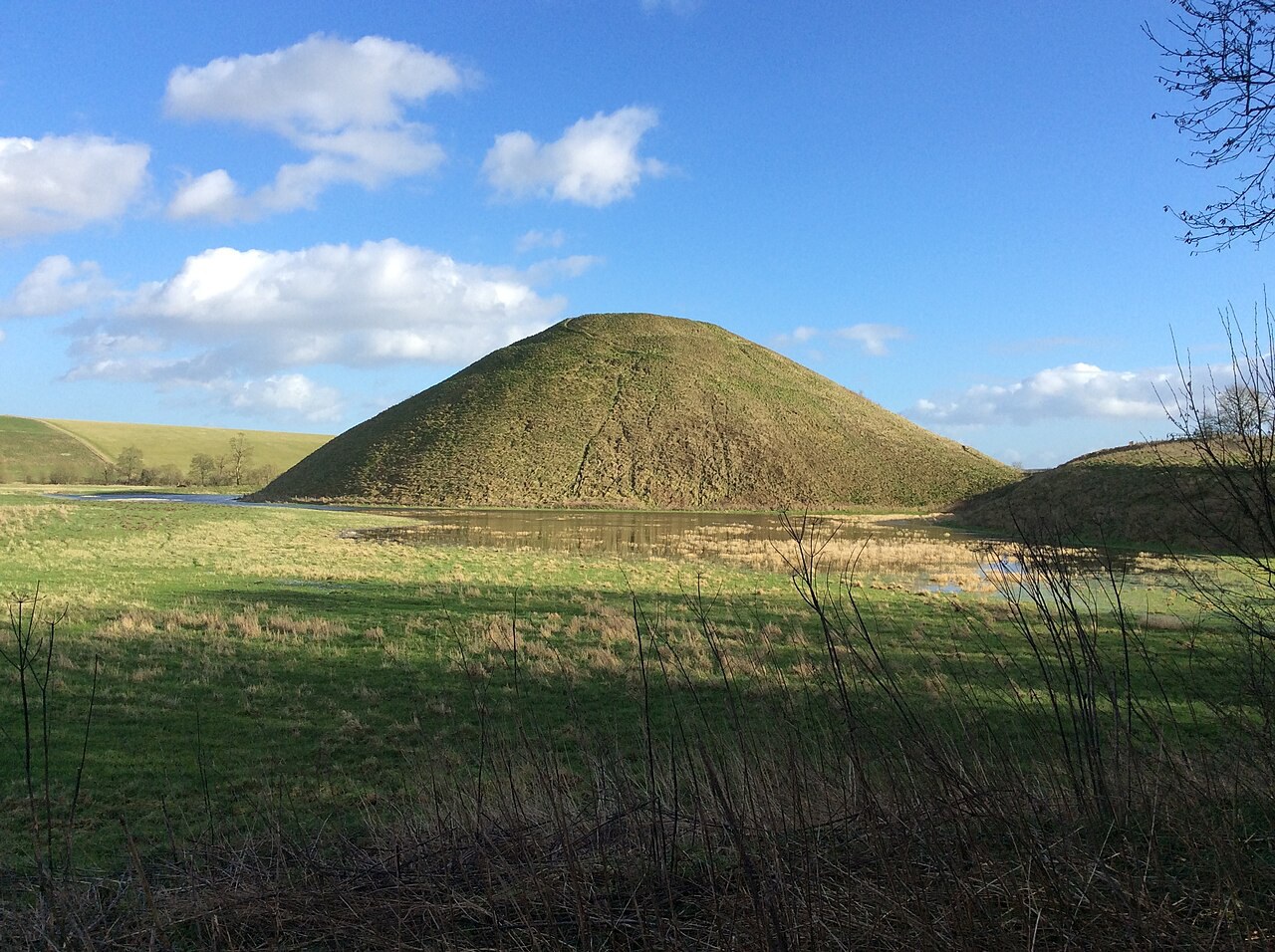
Silbury Hill
The largest man-made prehistoric mound in Europe and an unmistakable landmark on the approach to Avebury.
- Visit length
- Editorial estimate: allow around 30 minutes
- Locality
- south of the village
- Access
- The hill is viewable from the roadside.
Windmill Hill
A Neolithic causewayed enclosure excavated by Alexander Keiller, reached in the chalk-down landscape around Avebury.
- Visit length
- Editorial estimate: allow around 90 minutes
- Locality
- north-west of the village
No places match this filter. Choose All places to reset the list.
Three ways to explore Avebury
Signature outings
The great henge
Move among the standing stones, climb the banks and seek out the quieter north-west sector of the free, open henge.
St James's hidden rood loft
See the rare painted 15th-century rood loft that survived after parishioners hid it behind plaster for three centuries.
Silbury's unmistakable profile
View Europe's largest man-made prehistoric mound rising south of the village.
The village story
Avebury Village Guide
Pubs, practical stops and the people and monuments that shaped Avebury's extraordinary setting.
Pubs inside and beyond the henge
The Red Lion is the only pub in the world that stands inside a stone circle. Its tables sit within the Neolithic henge at Avebury, and one of them is the glass cover over an 86-foot well, which is where you'll be eating if you get that seat. The building started as a farmhouse in the late 16th century and has been a pub since 1802. It is also, by reputation, one of the most haunted in the country. The food is a Chef & Brewer menu of pub classics, a Sunday roast reviewers keep coming back for, and specials that have included Korean chicken and a duck-leg dish. The sticky toffee pudding gets singled out. Dogs are welcome, and there's a beer garden with local cask ales.
A mile west at Beckhampton, the Waggon and Horses is a 16th-century thatched coaching inn on the old Bath Road, now a Wadworth carvery with a children's play area. It has a sarsen stone in its fabric, believed quarried at Avebury, and a literary footnote: Charles Dickens used it as the model for the inn in "The Bagman's Tale" in The Pickwick Papers.
Old Farmyard stops and transport
For everything else, the Old Farmyard is where you head. The National Trust shop sells plants, fudge, and locally crafted things — recycled silver jewellery, soaps, candles. Next to it, Circles Café does pasties, jacket potatoes, soup and children's lunchboxes. Cobblestones Bookshop occupies an old stables and takes its name from the cobbled floor still underfoot; the stock runs from classic fiction to cookery and gardening. There's a community shop and post office on the High Street. For a village of 582 people, the coverage is generous.
Getting here means driving — there's no railway, and Swindon, eleven miles off, is the nearest mainline station. The number 42 bus links Marlborough and Calne, Monday to Saturday, never on a Sunday.
Inside the great henge
The stones themselves are free, unfenced, and open. You can walk among them, climb the banks, and picnic where you like — the quieter north-west sector is the one to aim for. This is the largest stone circle in the world: a bank-and-ditch henge about 420 metres across, once holding around 98 sarsen stones, some over 40 tons.
Much of what you see is the work of one man. Alexander Keiller, heir to the Dundee marmalade firm, bought some 950 acres from 1925, re-erected buried stones and marked the sites of lost ones. In 1938 he found a skeleton beneath a toppled megalith, buried with three silver coins from around 1320 and a pair of iron scissors — an itinerant barber-surgeon, it seems, crushed while helping bring the stone down.
Antiquaries and St James's Church
The antiquary John Aubrey came upon the place while out hunting in 1649 and later told Charles II that "Avebury does as much exceed in greatness the so renowned Stonehenge, as a cathedral doeth a parish church."
The Church of St James stands just outside the henge, beside the manor. Its core is Anglo-Saxon, around the year 1000, and it holds a rare painted 15th-century rood loft — one of only about 24 left in Britain. Parishioners dismantled it and hid it behind plaster on the nave wall, where it lay forgotten for three centuries until a renovation in 1812 found it again, still painted, waiting behind the wall.
Stay around Wiltshire
Make a longer stay of it
Travel Fox holiday homes around Wiltshire, linked directly to their property pages.
A guide with a point of view
Written from research. Edited for real journeys.
Use the Official site links for live practical details, then use this guide for context, ideas and room to explore.
Photography credits & licences
Third-party photographs are credited to their named creators and reused under the linked Creative Commons licence or public-domain dedication. Travel Fox stores an optimised local copy; the file-specific changes and any browser-applied display crop are disclosed below. Reused photographs link both to the Wikimedia Commons source record and to the declared source image; Travel Fox's own photographs carry no such record and are marked as ours. These image licences do not cover Travel Fox text, branding or page design.
- File:Neolithic Silbury Hill, Wiltshire.jpg — photograph by LizzRoe; Own work. Source record on Wikimedia Commons. Declared source image. Licence: CC BY-SA 4.0. File changes: Downloaded from Wikimedia Commons, resized to a maximum 1920px edge and encoded as an optimised JPEG. Display changes: Displayed with responsive CSS cropping.
Sources
Every place on this page is checked against a published source. Each entry links the record we used and names who publishes it.
- Avebury Henge and Stone Circles — nationaltrust.org.uk national body or asset manager
- The Red Lion — historicengland.org.uk statutory register or public authority record not machine-readable; publisher restricts automated access
- Church of St James — historicengland.org.uk statutory register or public authority record not machine-readable; publisher restricts automated access
- Avebury Manor and Garden — nationaltrust.org.uk national body or asset manager
- West Kennet Avenue — nationaltrust.org.uk national body or asset manager
- Silbury Hill — english-heritage.org.uk national body or asset manager
- West Kennet Long Barrow — english-heritage.org.uk national body or asset manager
- Windmill Hill — nationaltrust.org.uk national body or asset manager
- Waggon and Horses — wadworth.co.uk other published source