
Spire, market and meadows
Salisbury
A planned medieval city where the cathedral's 404-foot spire rises above old inns, a charter market and five converging river valleys.
- Best for
- Cathedral history and water-meadow walks
- Give it
- A full day across the city and meadows
- Don't miss
- The 1215 Magna Carta and the Town Path view
Photo: Simon Burchell · CC BY-SA 4.0 · cropped
The Fox verdict
A medieval new town still shaped by its cathedral
Salisbury brings a remarkably unified cathedral, a market trading since 1227 and chalk-stream water meadows into one visit.
The cathedral anchors the story: its main body was completed in 38 years after the move from Old Sarum, and it holds the best-preserved of four surviving 1215 Magna Carta copies. Around it are the charter market, the sole surviving Poultry Cross, old pubs and the Town Path view across Harnham Water Meadows.
Your picks, your pace
Make Salisbury Town Guide | Travel Fox yours
Choose a mood or build your own list. Your saved stops are an ordering aid, with a direct map route when you are ready.
Local signatures
3 placesSalisbury Cathedral
Built from 1220, the cathedral has England's tallest spire, the best-preserved surviving 1215 Magna Carta copy, the oldest working mechanical clock and William Pye's Infinity Font.
- Visit length
- Editorial estimate: allow around 100 minutes
- Locality
- Salisbury
The Haunch of Venison
An old traditional pub with records reaching back to 1320, low oak beams, original stone fireplaces and a replica mummified hand tied to the Demented Whist Player legend.
- Visit length
- Editorial estimate: allow around 75 minutes
- Locality
- on Minster Street
Town Path and Harnham Water Meadows
The Town Path crosses 17th-century floated meadows and gives the classic view of the cathedral rising beyond the water meadows, associated with Constable's 1831 painting.
- Visit length
- Editorial estimate: allow around 90 minutes
- Locality
- across the Harnham water meadows
- Access
- Easy walking on pavements and paths; pushchair-friendly.
Food & drink
2 placesSalisbury Charter Market
A twice-weekly open-air market for fresh produce, local crafts, clothing, flowers and household goods, trading on the same square since 1227.
- Visit length
- Editorial estimate: allow around 60 minutes
- Locality
- on the Market Square
- Access
- The open-air charter market is held on Tuesday and Saturday.
Reeve the Baker
A family bakery established in 1940, now run by a third-generation Reeve baker; the Butcher Row branch has an upstairs cafe overlooking the Market Place.
- Visit length
- Editorial estimate: allow around 45 minutes
- Locality
- Butcher Row
History & heritage
3 placesPoultry Cross
A 15th-century hexagonal covered market cross and the only survivor of the four market crosses that once stood in Salisbury.
- Visit length
- Editorial estimate: allow around 20 minutes
- Locality
- in the Market Place
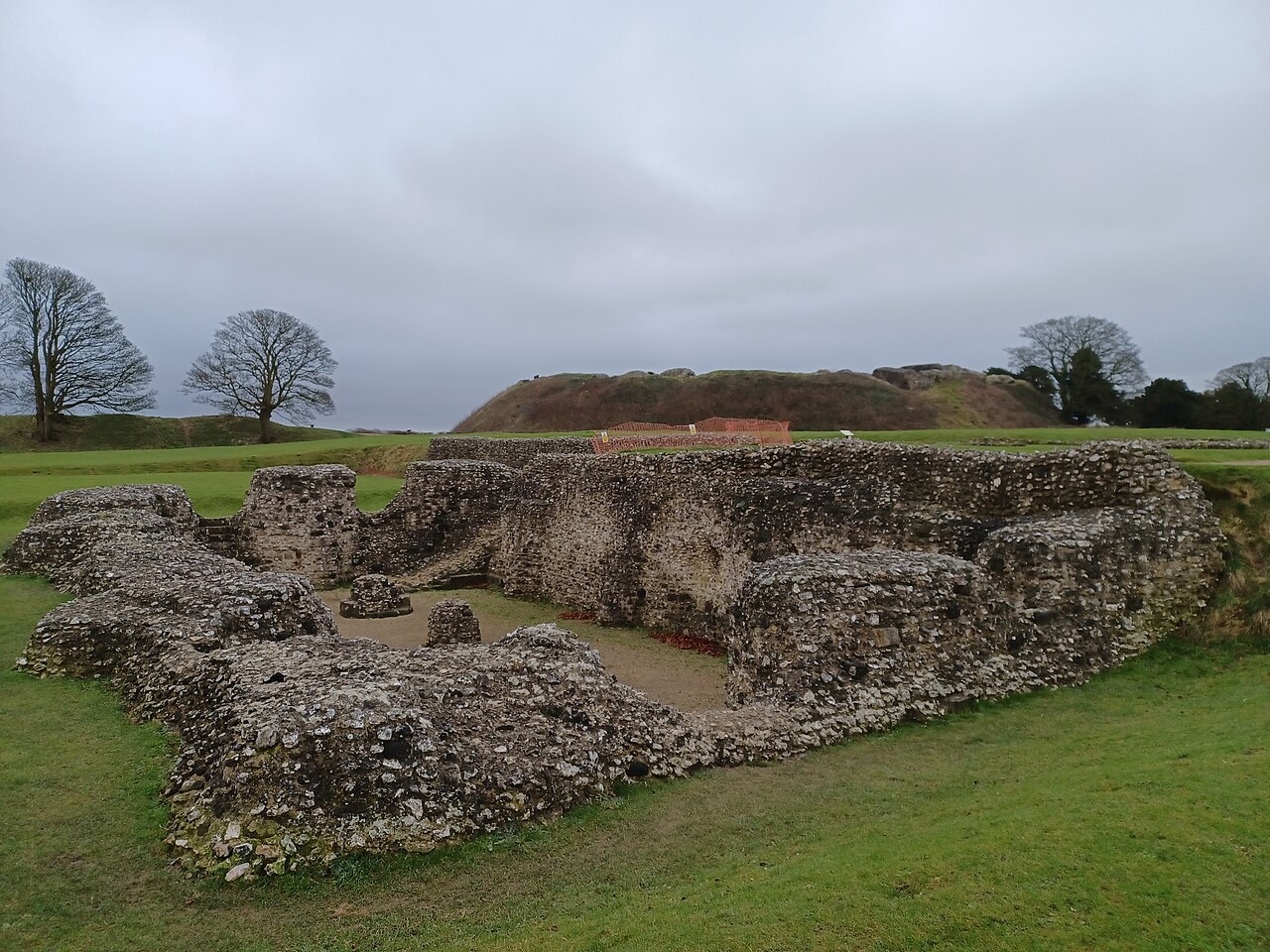
Old Sarum
An English Heritage Iron Age hillfort with ramparts and the site of Salisbury's original cathedral and royal castle.
- Visit length
- Editorial estimate: allow around 120 minutes
- Locality
- about 2 miles north
Arundells
The Grade II* listed former home of Sir Edward Heath, who lived here from 1985 until his death in 2005, is now open to visitors.
- Visit length
- Editorial estimate: allow around 60 minutes
- Locality
- 59 Cathedral Close
Things to do
1 placeQueen Elizabeth Gardens
A riverside park opened in the early 1960s for the Queen's coronation, with a children's play park, paddling area and cathedral views across the meadows.
- Visit length
- Editorial estimate: allow around 45 minutes
- Locality
- riverside park
No places match this filter. Choose All places to reset the list.
On the map
Salisbury at a glance
Tap a marker to jump to its guide card.
Three ways to explore Salisbury
Signature outings
Trade on the old square
Browse produce, crafts, clothing and flowers at the Tuesday and Saturday charter market, held on the Market Square since 1227.
Circle the Poultry Cross
Examine the 15th-century hexagonal shelter, the only survivor of the four market crosses that once divided Salisbury's trades.
Trace Old Sarum
Walk the Iron Age ramparts at the hillfort where the royal castle and Salisbury's original cathedral once stood.
The town story
Salisbury Town Guide
Old inns, a singular cathedral, market traditions and the water-meadow view that binds Salisbury together.
A Hand of Aces and Old Pubs
In a glass case at the Haunch of Venison, on Minster Street, there is a mummified severed hand clutching a set of playing cards. It is a replica now, the original having been stolen in 2004 and again in 2010 and returned both times, but the story stays the same: around 1820 a stranger cheating at whist had aces fall from his cuff, and a local butcher took his hand off at the wrist. The pub is said to be haunted by the man, known as the Demented Whist Player. Records of an inn here go back to 1320, and the building has low oak beams, original stone fireplaces, an open fire, and an upstairs restaurant called the House of Lords. One pub round-up called it "the most atmospheric — a medieval interior with low beams, an open fire and a hand-drawn pint." They pour Wadworth and guest ales, plus beers from Hop Back Brewery a few miles off.
It is not the only old pub in walking distance. The Wig and Quill does English food cooked to order and makes a speciality of Sunday roasts. The New Inn began as three cottages and opened as a coaching inn in 1809. Rai d'Or, whose name means a ray of golden light, sits on the site of a house built in the 1200s to house the men building the cathedral.
Cathedral and the New Town
That cathedral is the reason for all of it. Salisbury was laid out from 1220 as a planned new town on a grid of "chequers," after the bishop gave up on the wind-blown hilltop of Old Sarum and moved down to the Avon. The main body of the cathedral went up in 38 years, unusually quick, which is why it holds together as one design where most cathedrals are a committee of centuries. Pevsner called it "the beau idéal of Early English Gothic design" and the Close "the most beautiful of England's closes." The spire is 404 feet, the tallest in England and the tallest surviving pre-15th-century spire in the world. Inside are the world's oldest working mechanical clock, the best-preserved of the four surviving 1215 Magna Carta copies, and William Pye's Infinity Font, the only cathedral font with its own water supply.
Market Traditions
Tuesdays and Saturdays the Market Square fills with the charter market, trading on the same ground since 1227. Reeve the Baker has been going since 1940, now run by the third-generation Reeve; the Butcher Row shop has a café upstairs looking over the Market Place. Nearby stands the Poultry Cross, a hexagonal covered market cross and the only survivor of four that once stood in the city.
Constable's Water Meadows
For a walk, take the Town Path across the Harnham water meadows — under two miles, flat, pushchair-friendly. This is where Constable stood in 1831 to paint the cathedral rising over the meadows, past the Old Mill and Queen Elizabeth Gardens. The meadows are 17th-century "floated" ones, warmed by chalk-stream water to bring the grass on early.
Five Rivers and Routes Out
Salisbury sits where five rivers meet — the Avon, Nadder, Bourne, Wylye and Ebble. The station runs to Waterloo, Exeter and Bristol, and Stonehenge is nine miles up the road. William Golding taught at Bishop Wordsworth's School here for twenty-one years, marking essays under the tallest spire in the country.
Stay around Wiltshire
Make a longer stay of it
Travel Fox holiday homes around Wiltshire, linked directly to their property pages.
A guide with a point of view
Written from research. Edited for real journeys.
Use the Official site links for live practical details, then use this guide for context, ideas and room to explore.
Photography credits & licences
Third-party photographs are credited to their named creators and reused under the linked Creative Commons licence or public-domain dedication. Travel Fox stores an optimised local copy; the file-specific changes and any browser-applied display crop are disclosed below. Reused photographs link both to the Wikimedia Commons source record and to the declared source image; Travel Fox's own photographs carry no such record and are marked as ours. These image licences do not cover Travel Fox text, branding or page design.
- File:Old Sarum, Salisbury 012.jpg — photograph by Simon Burchell; Own work. Source record on Wikimedia Commons. Declared source image. Licence: CC BY-SA 4.0. File changes: Downloaded from Wikimedia Commons, resized to a maximum 1920px edge and encoded as an optimised JPEG. Display changes: Displayed with responsive CSS cropping.
Sources
Every place on this page is checked against a published source. Each entry links the record we used and names who publishes it.
- Salisbury Cathedral — salisburycathedral.org.uk operator, sector body or destination organisation
- The Haunch of Venison — historicengland.org.uk statutory register or public authority record not machine-readable; publisher restricts automated access
- Salisbury Charter Market — salisburycitycouncil.gov.uk statutory register or public authority
- Reeve the Baker — reevethebaker.co.uk operator, sector body or destination organisation
- Poultry Cross — historicengland.org.uk statutory register or public authority record not machine-readable; publisher restricts automated access
- Town Path and Harnham Water Meadows — salisburywatermeadows.org.uk operator, sector body or destination organisation
- Queen Elizabeth Gardens — salisburycitycouncil.gov.uk statutory register or public authority
- Old Sarum — english-heritage.org.uk national body or asset manager
- Arundells — arundells.org operator, sector body or destination organisation