

Castle walls and Strait views
Beaumaris
An unfinished medieval fortress, a broad waterfront facing Eryri and centuries of stories gathered into one small Anglesey town.
- Best for
- Medieval history and Menai Strait views
- Give it
- A day for the castle, waterfront and old town
- Don't miss
- The unfinished concentric castle
Photo: Llywelyn2000 · CC BY-SA 4.0 · cropped
The Fox verdict
A waterfront town built around an unfinished masterpiece
Beaumaris pairs Edward I's castle and a medieval church with old court buildings and the Menai Strait waterfront.
Come for the symmetrical castle that was never completed, then stay for Siwan's travelled stone coffin, the gaol's working penal treadwheel, the Jacobean courtroom and the view across the Strait to Eryri. Gelato, historic inns, a coastal walk and wildlife cruises give the history a change of pace.
Where to go
Places in Beaumaris
Every place below is checked against a published source, listed with what it is and how long to give it.
Local signatures
3 placesBeaumaris to Penmon Point Walk
A coastal walk passing the castle, continuing to medieval Penmon Priory and ending at the black-and-white Trwyn Du lighthouse with views towards Puffin Island.
- Visit length
- Editorial estimate: about 2.5 hours one way for 7.25 km at roughly 3 km/hour; allow longer for stops or conditions.
- Locality
- Beaumaris to Penmon Point
Starida Puffin Island Cruise
A WiSe-accredited Puffin Island boat trip with chances to see breeding seabirds, the grey-seal colony and occasional porpoises or bottlenose dolphins.
- Visit length
- Editorial estimate: about 90 minutes
- Locality
- from the pier
Red Boat Gelato
A Beaumaris gelateria with a rotating menu of flavours including Bara Brith, plus gluten-free options.
- Visit length
- Editorial estimate: about 30 minutes
- Locality
- 34 Castle Street
Food & drink
2 placesYe Olde Bull's Head Inn
A Grade II* listed inn of 17th-century origin, substantially rebuilt and enlarged in 1766, now offering pub and restaurant dining.
- Visit length
- Editorial estimate: about 75 minutes
- Locality
- Castle Street
George & Dragon
A pub of timber-framed origin, probably built in 1610, with exposed beams, a rediscovered historic fireplace, Robinsons cask ales and traditional food.
- Visit length
- Editorial estimate: about 75 minutes
- Locality
- Church Street
History & heritage
4 placesBeaumaris Castle
Edward I began this symmetrical concentric castle in 1295, but funds were diverted to his Scottish wars and the towers never reached their intended height.
- Visit length
- Editorial estimate: about 90 minutes
- Locality
- Beaumaris
St Mary's and St Nicholas's Church
A Grade I church with medieval misericords, the Bulkeley alabaster tomb and the stone coffin and effigy lid of Siwan, wife of Llywelyn the Great.
- Visit length
- Editorial estimate: about 45 minutes
- Locality
- Beaumaris

Beaumaris Gaol
The 1829 county prison retains a condemned cell, scaffold and one of Britain's last working penal treadwheels, which pumped water to the cells.
- Visit length
- Editorial estimate: About one hour
- Locality
- Beaumaris
Beaumaris Courthouse
Built in 1614, this Jacobean courthouse preserves a main courtroom that survives much as it did in the Stuart period.
- Visit length
- Editorial estimate: About one hour
- Locality
- Beaumaris
No places match this filter. Choose All places to reset the list.
Three ways to explore Beaumaris
Signature outings
The castle that stopped short
Walk the walls-within-walls design and see how Edward I's masterpiece kept its low, unfinished towers after money was diverted to war in Scotland.
A princess's coffin
Look for the stone coffin of Siwan, wife of Llywelyn the Great, which was once used as a horse-watering trough before reaching the church.
Labour that pumped water
See one of Britain's last working penal treadwheels and learn why prisoners' labour here supplied water to the cells above.
The town story
Beaumaris: fair marsh, unfinished castle
Gelato and old inns lead into a story of castle ambition, travelled tombs, punishment, seafaring and the Welsh voice of the town today.
Gelato, waterfront and old inns
Red Boat Gelato on Castle Street has a repertoire of more than 150 flavours, including Bara Brith, fig, blackcurrant cheesecake and rhubarb and custard. Specials change daily, and gluten-free cones are available. Take a cone down to the seafront and eat it facing Eryri across the Menai Strait.
That's the thing about Beaumaris. It sits on the eastern shore of Anglesey, at the point where the Menai Strait opens out, and the mountains of Eryri are directly across the channel. The seafront is wide and flat, the buildings behind it are Georgian, and the whole arrangement of sea, mountains and old stone makes one of the most attractive waterfronts in North Wales. The town's own name comes from the Norman-French for it: beau marais, fair marsh, which is what Edward I's clerks made of a low-lying spit of land that had previously been a Viking landing called Porth y Wygyr, the port of the Vikings.
The George and Dragon on Church Street dates from the sixteenth century, and its most significant surviving feature is a painted roof truss dated 1610.
The Liverpool Arms on Castle Street has a traditional bar, restaurant and dog-friendly dining. The Bold Arms adds another pub stop, with a large bar, pool and sport on television.
Coaching tales, food and castle walls
Ye Olde Bull's Head on Castle Street is a Grade II* listed coaching inn with 17th-century origins, substantially rebuilt and enlarged in 1766. It served travellers on the London-to-Holyhead route before the Menai Suspension Bridge changed the journey. Charles Dickens stayed in 1859, and Samuel Johnson was another guest. In 1646 General Thomas Mytton took Beaumaris Castle from the Royalists for Parliament.
For food beyond the pubs, the Pier House Café and Bistro serves modern British cooking on the seafront, using seasonal ingredients from local farms; it welcomes dogs, and fish and chips are a favourite. Happy Valley Café is a stop for sandwiches, millionaire's shortbread and homemade Welsh cakes. W. T. Roberts Bakery covers breakfast rolls, croissants and cakes.
Beaumaris Castle explains why the town exists. Edward I began it in 1295, and the planned town grew alongside it. Master James of St George designed a remarkably symmetrical fortress: walls within walls, a moat and a dock that let supply ships reach the gate. Its concentric plan is celebrated as a landmark of medieval military architecture, and the castle has formed part of a UNESCO World Heritage Site since 1986.
An unfinished fortress and a princess's coffin
It was never finished. Money went to Edward's Scottish wars instead. Work stopped by 1300, resumed briefly in 1306 and petered out around 1330, leaving the towers short of their intended height. At its peak, the project involved around 1,800 workmen, 450 stonemasons and 375 quarriers, with summer estimates as high as 3,500. A survey in 1343 put the remaining cost at 684 pounds, but the work was never completed. The result is a remarkably complete design in an unfinished building.
St Mary's and St Nicholas's Church was founded around 1330 to serve the new town. Grade I listed, it retains a fourteenth-century nave and a chancel rebuilt around 1500. Its late medieval choir stalls and carved misericords are linked to the dissolved Franciscan friary at Llanfaes. In the north aisle, a late fifteenth-century alabaster tomb may commemorate William Bulkeley, the castle's deputy constable, and his wife Elen, or their son Rowland and his wife Alice.
But the object to find is a plain stone coffin. It belonged to Joan — Siwan in Welsh — the wife of Llywelyn the Great and the illegitimate daughter of King John. She died in 1237 and was buried at the Llanfaes friary. When the friary was dissolved in 1537 her tomb was lost, and the coffin turned up some time later being used as a trough to water horses. It was rescued, moved to a mausoleum on the Bulkeley estate in 1808, and finally brought into the church in the late 1920s. A medieval princess, daughter of an English king and wife of a Welsh one, spent a good stretch of the intervening centuries as farmyard plumbing.
Gaol, coast and wildlife cruises
The Gaol and Courthouse bring the town's history down to human scale. Built in 1614, the Courthouse kept holding Assize Courts until 1971, and its main courtroom survives much as it did in Stuart times. The Gaol was built in 1829. Prisoners faced chains, whipping and confinement in a dark cell; the building retains a condemned cell, a scaffold and a working penal treadwheel that pumped water to the cells. The prison was enlarged in 1867 and closed in 1878.
Walk it off along the shore. The path to Penmon Point is about four and a half miles, passing the castle and the medieval priory at Penmon before reaching Trwyn Du, the black-and-white striped lighthouse looking across to Puffin Island. Beaumaris also sits on the Anglesey Coastal Path, the 130-mile loop of the whole island, so you can pick up a longer stretch in either direction across farmland, coastal heath and cliff. Or just walk the promenade to the pier and watch the light move over the mountains, which costs nothing and never gets old.
Boats from Beaumaris Pier head out towards Puffin Island. Starida is accredited under the WiSe responsible wildlife-watching scheme, while Seacoast Safaris runs cruises aboard Neptune Explorer around the island, the bridges and the Swellies. Breeding seabirds include guillemots, razorbills, kittiwakes and puffins; grey seals live around the island, and porpoises or bottlenose dolphins may appear in the Strait.
Old houses, onward travel and Welsh voices
The Tudor Rose at 32 Castle Street is a surviving timber-framed hall house, with timbers dating from the 1480s; one was felled in the winter of 1485–86. Above the town, the Bulkeley family established Baron Hill in 1618. Death duties after the First World War strained the estate, and a fire during the Second World War left the mansion ruinous.
Beaumaris has never had a railway station. Bangor, on the mainland, is the nearest rail stop, with route 58 linking it to town. By road, the approach crosses the Menai Bridge and follows about four miles of the A545 along the coast. In Menai Bridge, Sosban and the Old Butchers received a Michelin star in 2016 and serves a surprise tasting menu.
Around 1,100 people lived in Beaumaris at the 2021 census, and more than a third could speak Welsh. On the green, with the Strait catching the light, Welsh belongs to the everyday sound of the town as much as English.
Stay around Anglesey
Make a longer stay of it
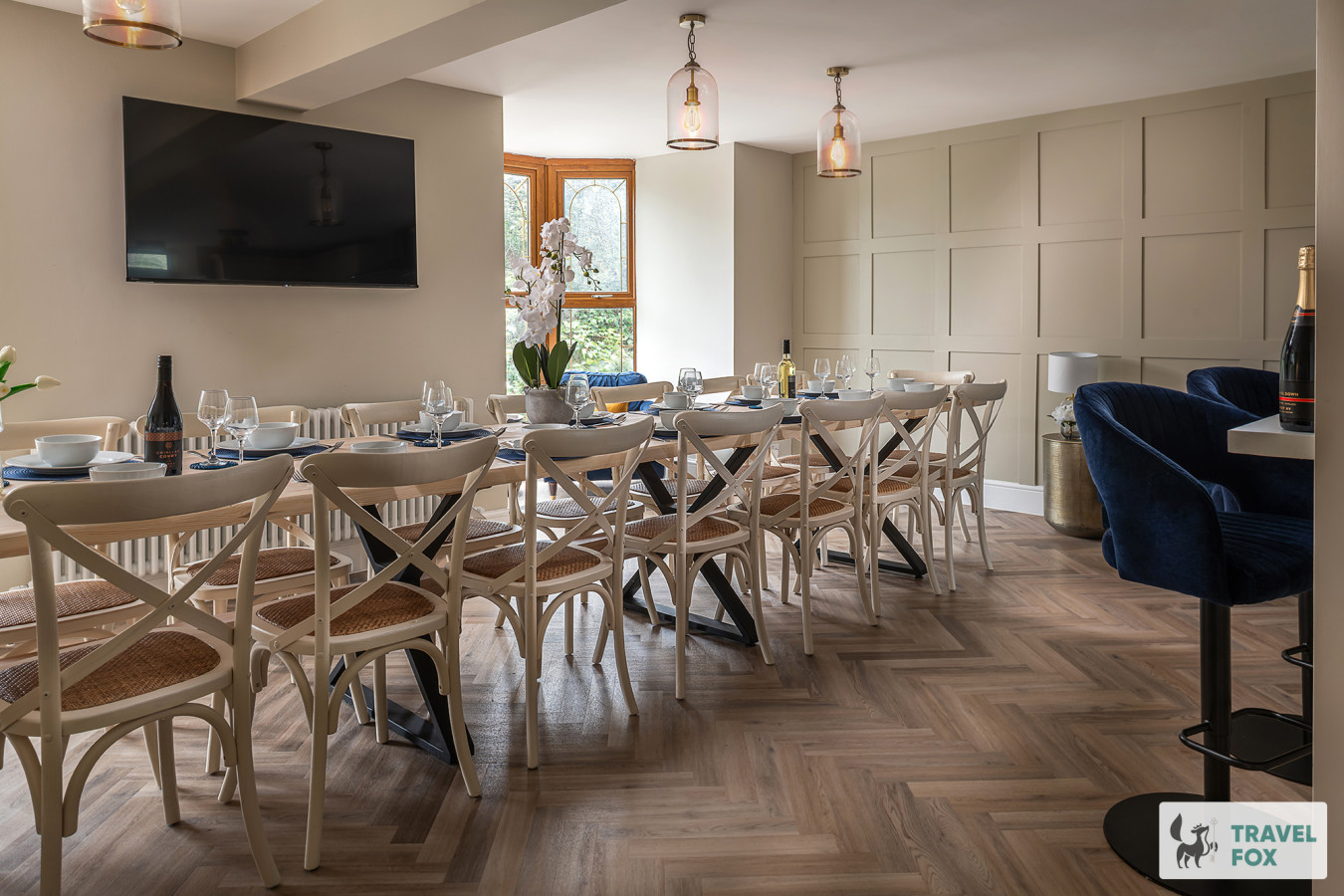
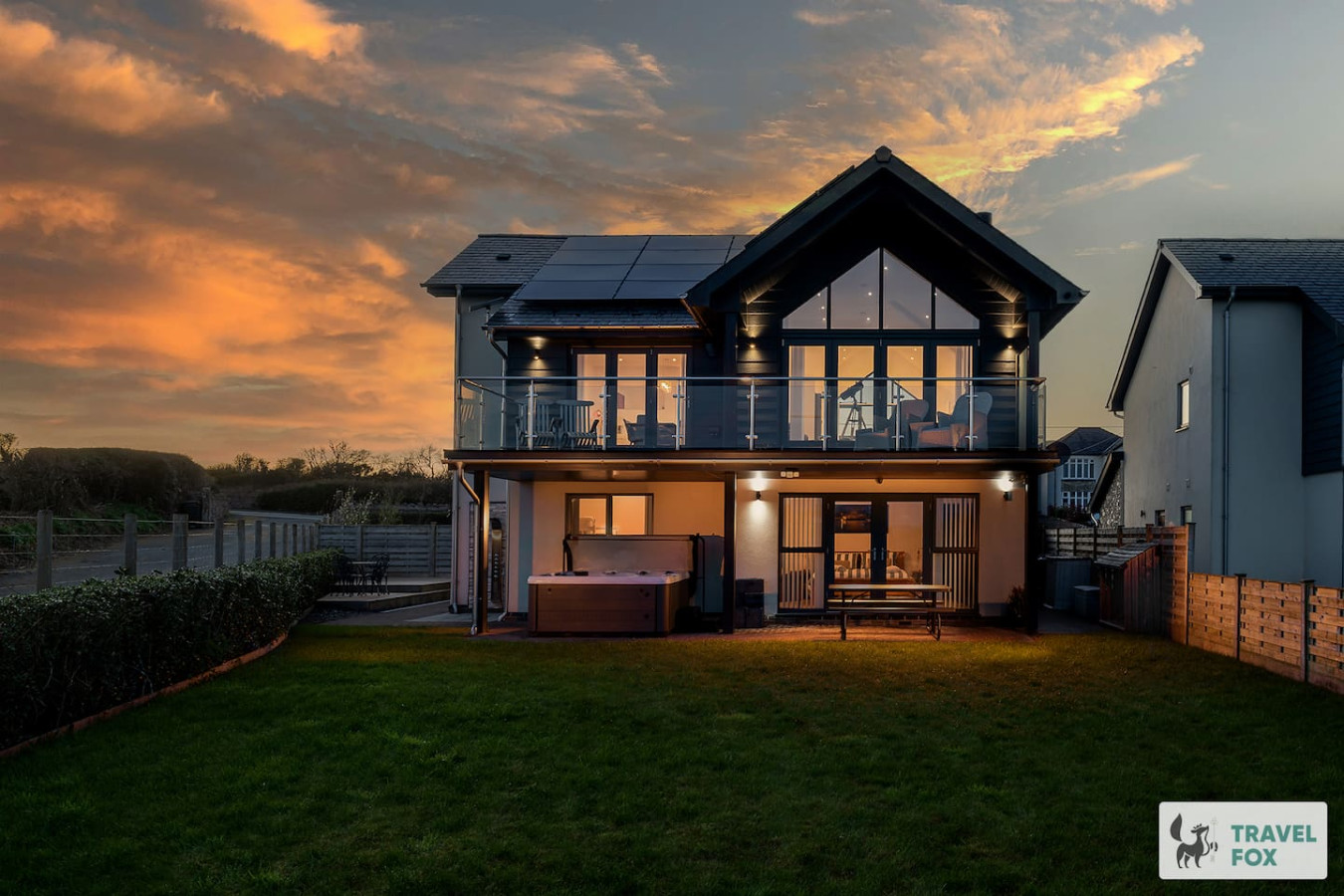
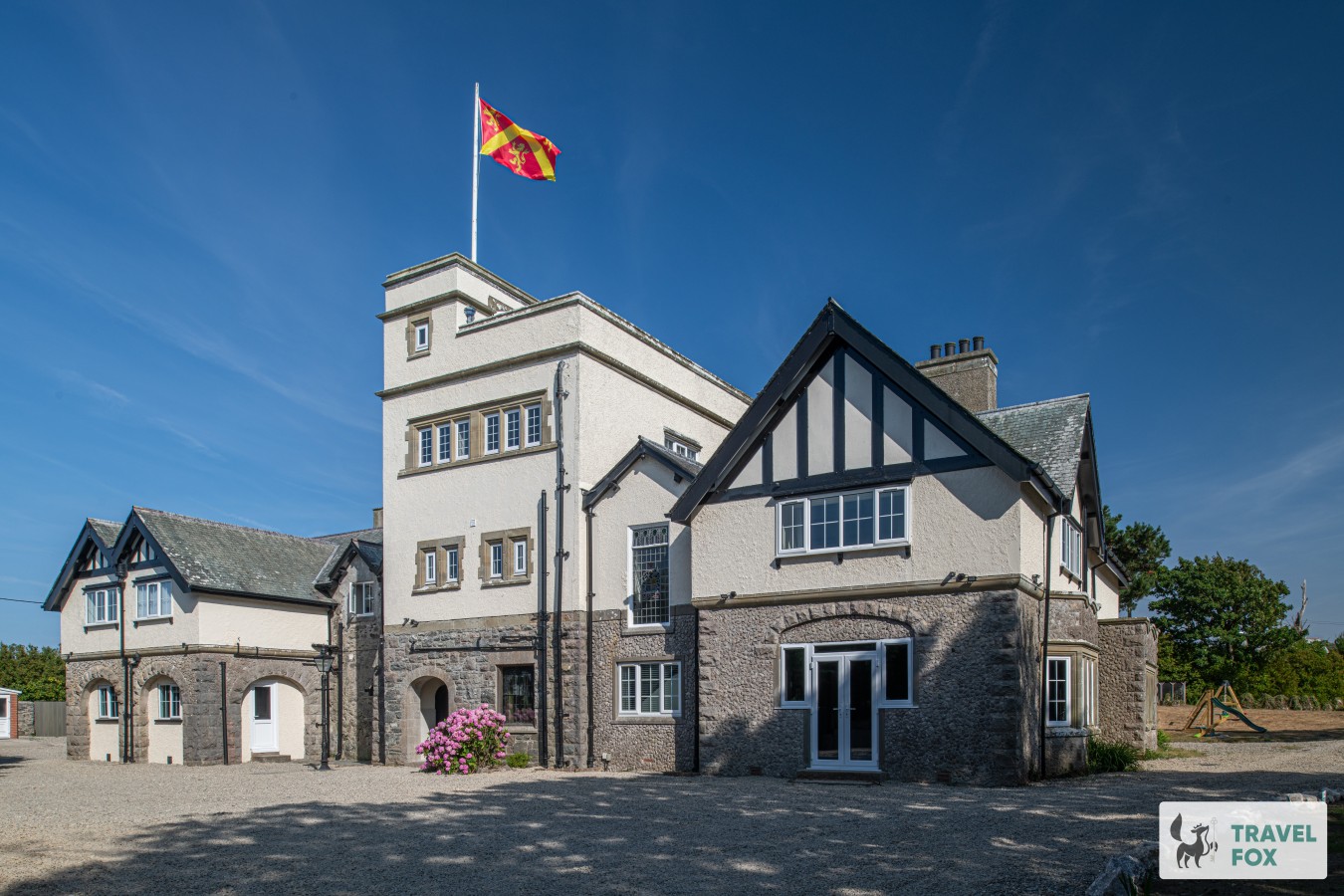
Travel Fox holiday homes around Anglesey, linked directly to their property pages.
For homeowners
Own a holiday home near Beaumaris?
We manage holiday lets across Anglesey from 12% commission, charged after cleaning costs, with no lock-in. A co-founder visits before you decide.
Holiday let management in Anglesey →
A guide with a point of view
Written from research. Edited for real journeys.
Use the Official site links for live practical details, then use this guide for context, ideas and room to explore.
Photography credits & licences
Third-party photographs are credited to their named creators and reused under the linked Creative Commons licence or public-domain dedication. Travel Fox stores an optimised local copy; the file-specific changes and any browser-applied display crop are disclosed below. Reused photographs link both to the Wikimedia Commons source record and to the declared source image; Travel Fox's own photographs carry no such record and are marked as ours. These image licences do not cover Travel Fox text, branding or page design.
- File:Eglwys y Santes Fair a Sant Nicolas, Biwmares - St Mary's and St Nicholas's Church, Beaumaris, Anglesey, Wales 16.png — photograph by Llywelyn2000; Own work. Source record on Wikimedia Commons. Declared source image. Licence: CC BY-SA 4.0. File changes: Downloaded from Wikimedia Commons, resized to a maximum 1920px edge and encoded as an optimised JPEG. Display changes: Displayed with responsive CSS cropping.
- File:Beaumaris Gaol - geograph.org.uk - 4683772.jpg — photograph by Jeff Buck; Beaumaris Gaol by Jeff Buck. Source record on Wikimedia Commons. Declared source image. Licence: CC BY-SA 2.0. File changes: Downloaded from Wikimedia Commons, resized to a maximum 1920px edge and encoded as an optimised JPEG. Display changes: Displayed with responsive CSS cropping.
Sources
Every place on this page is checked against a published source. Each entry links the record we used and names who publishes it.
- Beaumaris Castle — cadw.gov.wales statutory register or public authority
- St Mary's and St Nicholas's Church — churchinwales.org.uk other published source
- Beaumaris Gaol — visitanglesey.co.uk operator, sector body or destination organisation
- Beaumaris Courthouse — visitanglesey.co.uk operator, sector body or destination organisation
- Beaumaris to Penmon Point Walk — visitwales.com operator, sector body or destination organisation
- Starida Puffin Island Cruise — starida.co.uk operator, sector body or destination organisation
- Red Boat Gelato — visitwales.com operator, sector body or destination organisation
- Ye Olde Bull's Head Inn — inncollectiongroup.com other published source
- George & Dragon — robinsonsbrewery.com other published source