
Whiskey, craft and coast
Bushmills
A working riverside village shaped by whiskey, water-powered industry, Georgian rebuilding and a pioneering tramway legacy.
- Best for
- Whiskey history and village heritage
- Build around
- The courthouse, Main Street and the old tramway corridor
- Nearby landmark
- The Atlantic coast beyond the Bush valley
Photo: Dr Neil Clifton · CC BY-SA 2.0 · cropped
The Fox verdict
A working village behind a world-famous name
Bushmills combines a nationally important pub interior, a restored creative courthouse, grain-to-glass whiskey and a direct off-road link towards the Causeway.
The strongest visit joins the village to its industries: mills and salmon science on the River Bush, whiskey made on one site, the revived railway corridor and Main Street buildings created during the Macnaghten remaking. Independent food, craft and hospitality give those histories useful places to stop.
Where to go
Places in Bushmills
Every place below is checked against a published source, listed with what it is and how long to give it.
Local signatures
3 placesBush House
A traditional three-room town pub with a nationally recognised historic interior, including a terrazzo-floored front bar and Victorian mirrored whiskey bar-back; cask ale is not available.
- Visit length
- Editorial estimate: Allow around 1 hour
- Locality
- 72–74 Main Street
The Courthouse and The Designerie
A restored former Petty Sessions courthouse, reopened in 2024 as a shared creative hub containing The Designerie’s social-enterprise shop and workshops.
- Visit length
- Editorial estimate: Allow around 1 hour
- Locality
- 75 Main Street
Old Bushmills Distillery
A grain-to-glass whiskey site where malt distilling is followed by whiskey maturation, blending and bottling, all in Bushmills, with water drawn from Saint Columb’s Rill, a River Bush tributary.
- Visit length
- Editorial estimate: Allow around 1 hour 30 minutes
- Locality
- in Bushmills
Food & drink
2 placesThe Gas Bar at The Bushmills Inn
A gas-lit hotel pub with open and peat fires, secluded snugs, live music, patio and garden seating, plus a simpler bar menu.
- Visit length
- Editorial estimate: Allow around 1 hour 15 minutes
- Locality
- 9 Dunluce Road
Maegden Cheese & Supplies
An independent cheesemonger, deli and pantry shop that began as a food truck in 2017, with farmhouse cheeses, charcuterie and Irish-cheese hot sandwiches.
- Visit length
- Editorial estimate: Allow around 45 minutes
- Locality
- 119 Main Street
History & heritage
2 placesSt John the Baptist, Dunluce Parish
An 1821 church on an ecclesiastical site first recorded in 1262, with an eight-pointed St John’s cross in the fanlight.
- Visit length
- Editorial estimate: Allow around 30 minutes
- Locality
- the ancient ecclesiastical site of Portcamman
Dunluce Castle
A cliff-edge castle ruin begun by the MacQuillans around 1500 and seized by the MacDonnells in the 1550s, with archaeology from the abandoned 1608 town.
- Visit length
- Editorial estimate: Allow around 1 hour 15 minutes
- Locality
- west of Bushmills
Things to do
1 place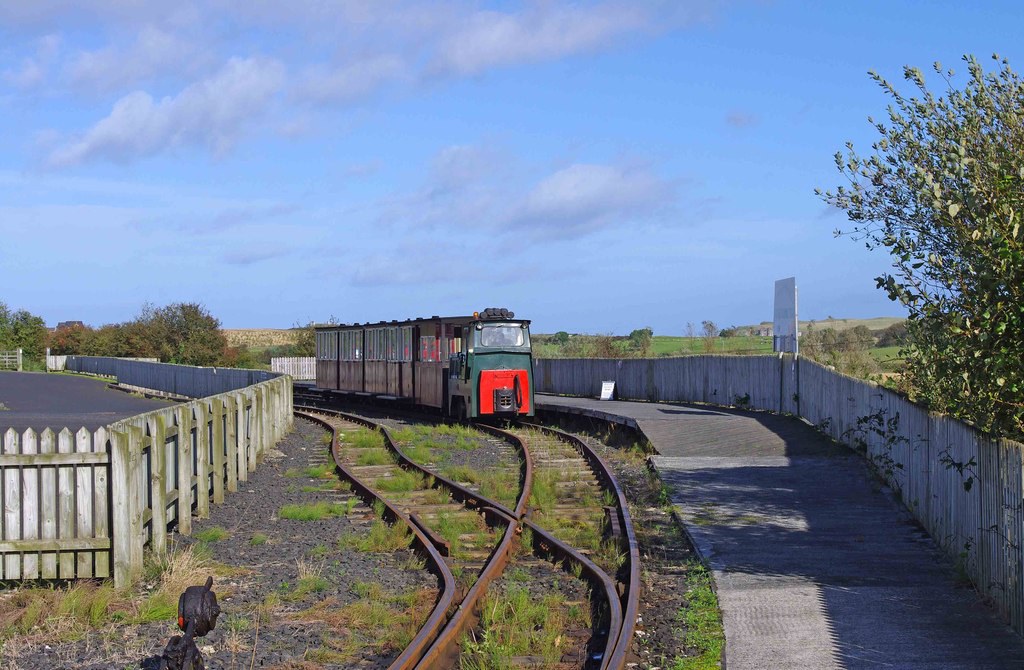
Giant’s Causeway and Bushmills Railway
A family-scale narrow-gauge heritage ride on the revived Bushmills–Causeway section of the former hydroelectric tramway corridor.
- Visit length
- Editorial estimate: Allow around 1 hour
- Locality
- on the old tramway corridor beyond Bushmills
- Access
- Operating days are seasonal.
No places match this filter. Choose All places to reset the list.
Three ways to explore Bushmills
Signature outings
A Grain-to-glass Whiskey Story
See how malt distilling, maturation, blending and bottling come together at Old Bushmills, whose water comes from Saint Columb’s Rill.
The Tramway Reborn
Take the family-scale heritage railway along the revived Bushmills–Causeway section, following the dunes and crossing the River Bush.
Dunluce Above the Sea
Explore the ruin begun by the MacQuillans around 1500 and taken by the MacDonnells in the 1550s, with traces of an abandoned 1608 town.
The village story
Bushmills: Whiskey, Craft and Coast
The original Travel Fox story moves from a remarkable pub interior through the rebuilt village, its tables and makers, whiskey and river industry, then out along old rails to the Atlantic coast.
Historic Interiors and the Macnaghten Village
The front bar of Bush House, at 72–74 Main Street, has a terrazzo floor, a Victorian mirrored whiskey bar-back and a mahogany fire surround that came out of the old Arcadia ballroom in Portrush. Most of the interior dates from just before the Second World War, or perhaps the 1950s, with some older fabric surviving. There is no cask ale, but it is a three-room town pub of a kind that has largely vanished, and it holds a place on the national inventory of historic pub interiors. The old kitchen keeps its white glazed brick and a cast-iron "Fairy Esse" cooker, and on the door of the ladies' lavatory a coin-operated lock stayed in use until the late 1990s. The bar is small, there is often music, and regulars have a habit of inviting strangers to sit down with them. Ask for Trudi or Kim.
That is a good deal of preserved detail for one room. It sits slightly inland on the River Bush, in the softer farmland behind the black basalt and white chalk of the Causeway Coast, two miles short of the Giant's Causeway. Main Street runs the length of the village and opens at Market Square, where a clock tower stands over a former market house. Both were built for the Macnaghten family, who owned the surrounding estate and rebuilt much of Bushmills in the 1820s, laying out the square, the courthouse and the old national school in a single stretch of improvement.
Start with the courthouse at 75 Main Street. Built by the MacNaghten family, it became the Petty Sessions court and closed in 1938, when it became a private residence. The last resident left in the 1960s. Later businesses included a bookshop, shoe shop and travelling dentist; the building has been vacant since 1972. After restoration, it reopened in 2024 as a creative shared space that includes The Designerie and The Bistro.
Restaurants, Bars and Café Counters
For dinner with more formality, there is the Bushmills Inn. Its restaurant carries an AA Rosette under executive chef Gordon McGladdery and head chef Alan Hope, and the menu is worth reading slowly: Guinness and onion soup with Bandon Vale cheese, whiskey-cured salmon niçoise, a breaded North Antrim fish cake, a lamb tasting plate of rump, shepherd's pie and lamb sausage, tandoori monkfish, and wood-fired steaks finished with a Bushmills whiskey black-pepper cream. The Inn's own bread arrives as a dulse and Irish-cheddar roll, stout wheaten and toasted soda farl. Attached to it is the Gas Bar, still lit by gas, with open and peat fires, a scatter of snug corners, live music and a patio and garden out the back. The simpler menu there runs to Guinness and oysters, chargrilled burgers, sandwiches and Irish tapas. The inn occupies the former Antrim Arms.
There is more eating than a village this size usually supports. Bushmills Townhouse, at 45 Main Street, is chef-patron Ian Orr's Italian-inspired restaurant built on seasonal regional ingredients. Tartine, at 140 Main Street, works Northern Irish seafood, beef, game and farm-shop produce in a building that once housed the distillery's owners and later became lodgings and a bar; ask for Cora if you want to know how the service earns its praise. Market Square, at number 62, occupies a former bank beside the clock tower and cooks with North Coast ingredients, local craft draught and Bushmills whiskey. Destination keeps things looser, a dog-friendly bar and kitchen doing tapas, craft beer and cocktails.
Lower down the register, and no less worth your time, are the cafés and the chip shops. Lorna's Kitchen does fresh scones and a proper fry. Mike's Coffee Shop has run daily specials as far off-piste as Thai fish cakes and chicken skewers. Bilberry Mill Café, in the Diamond, bakes its own breads and traybakes and has served eggs Benedict with smoked salmon during the village's Salmon and Whiskey Festival. The Hip Chip has been frying since 1992 and is the village's oldest chip shop; Flash in the Pan does the straightforward fish and chips; North Coast Pizza turns out Neapolitan-style bases, kebabs and loaded fries; Yi House, recognisable by its bright-red front, and China Garden cover the Chinese takeaways. Wolf it Down parks a converted bus and serves burgers, bangers and mash and oversized sausage rolls from it. For pudding there is Maud's, whose honeycomb ice cream goes by the name Poor Bear's Delight.
Shops, Whiskey and River Industry
The shopping is unusually good for the length of the street. Maegden began as a food truck in 2017 and now runs a proper cheesemonger and deli at 119 Main Street, selling small-batch farmhouse cheeses from across the British Isles alongside charcuterie, hampers, hot Irish-cheese sandwiches and, for the ambitious, celebration cheese towers; suppliers include Broughgammon Farm and Abernethy Butter. Kane Family Butchers sits at 66 Main Street, with a second butcher, Bushmills Meat Centre, also on the street. Gallery 1608 shows paintings, prints, sculpture, ceramics, glass and jewellery by Irish artists and keeps one of Northern Ireland's largest selections of Irish art books.
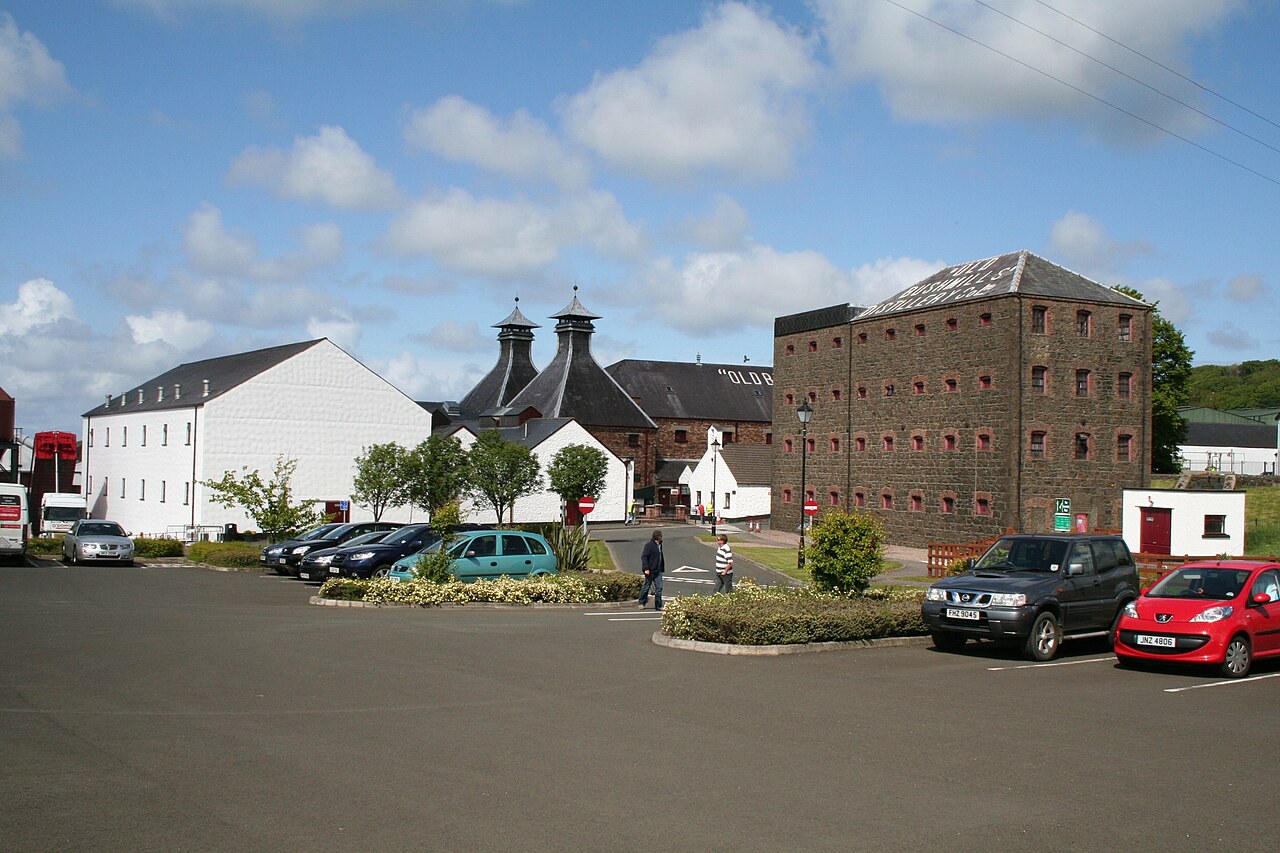
And then there is the distillery, which is the reason most people have heard the name at all. In 1608 James I granted Sir Thomas Phillipps a licence to distil spirits across the region, and the date has followed Bushmills whiskey ever since. The Old Bushmills Distillery is one of the few places in Ireland to malt, distil, mature, blend and bottle on a single site, drawing its water from Saint Columb's Rill, a tributary of the Bush. Fire destroyed nearly all of it in 1885 and it was rebuilt larger. The whiskey's identity is tied to the village: without the village there would be no whiskey.
The whiskey grew out of water and industry rather than tourism. Before it was Bushmills the settlement was Portcaman, a few dwellings by a shallow crossing of the Bush, and the seventeenth-century mills turned it into a centre for corn, flax, spades and spirits. Seven water-powered mills once worked the river; two, Palmer's and Currie's, survive in restored form. Samuel Lewis, counting the place in 1837, found 108 houses and 507 people, a Tuesday market in grain, linen yarn and pork, and a distillery already exporting around twelve thousand gallons a year. Sir F. W. Macnaghten established a weekly market in Bushmills in 1827; the River Bush Salmon Research Station was established in 1973, and its long-term monitoring contributes to international Atlantic salmon management. Through the middle of the village the river's Town Stretch holds the fast, deep Doctor's Pool and a noted salmon lie, where salmon and sea trout are returned to the water.
Old Rails, Atlantic Coast and Local Memory
Getting to the Causeway from here is best done on foot. A dedicated off-road path leaves the village along the corridor of the old tramway, the only walking route to the World Heritage Site that keeps you off the road, running beside the heritage railway and out across the dunes toward Runkerry. That tramway was a genuine curiosity: a hydroelectric line that opened between Portrush and Bushmills in 1883, reached the Causeway in 1887, and ran until cars and buses saw it off in 1949. A narrow-gauge heritage railway revived the Bushmills-to-Causeway leg in 2002 and still carries families along the same dunes and across the Bush on seasonal running days. The Causeway's own clifftop trails pick up at the far end: the Green Trail from the Causeway Hotel, where skylarks, stonechats and the occasional chough turn up and a clear day reaches to Islay, and the shorter Blue Trail down to the stones themselves.
The coast around gives you a full week if you want one. Dunluce Castle stands on its cliff-edge to the west, a ruin the MacQuillans began around 1500 and the MacDonnells took by force in the 1550s. Portballintrae sits where the Bush meets the sea. White Park Bay is a long white curve of sand backed by old dunes, with fossils in the rock, porpoises offshore and cows that wander down onto the beach as though they have every right to be there. Carrick-a-Rede swings its rope bridge nearly thirty metres above the water, first strung up by salmon fishermen more than two centuries ago; high winds can close the crossing. By car all of this hangs off the Causeway Coastal Route. By public transport the practical approach is rail to Coleraine, twelve kilometres away, and the bus in from there; the Belfast to Giant's Causeway service also stops at the war memorial in the middle of the village.
That war memorial is worth a pause. Robert Quigg was born near Bushmills in 1885 and worked on the Macnaghten estate before the war. On the first day of the Somme he went out into no man's land seven times looking for his officer, Lieutenant Harry Macnaghten, and each time brought back a wounded man instead. He was awarded the Victoria Cross, and his statue, unveiled in 2016, now stands on the street. A few doors along is a quieter piece of bronze, the Alphabet Angel that Ross Wilson made with local people in 2004 to mark the Ulster-Scots spoken here. The paving around it carries verse by the poet James Fenton, and it ends the way people here still say it: this is hame.
Stay around Causeway Coast
Make a longer stay of it
Travel Fox holiday homes around Causeway Coast, linked directly to their property pages.
For homeowners
Own a holiday home near Bushmills?
We manage holiday lets across the UK from 12% commission, charged after cleaning costs, with no lock-in. A co-founder visits before you decide.
How our holiday let management works →
A guide with a point of view
Written from research. Edited for real journeys.
Use the Official site links for live practical details, then use this guide for context, ideas and room to explore.
Photography credits & licences
Third-party photographs are credited to their named creators and reused under the linked Creative Commons licence or public-domain dedication. Travel Fox stores an optimised local copy; the file-specific changes and any browser-applied display crop are disclosed below. Reused photographs link both to the Wikimedia Commons source record and to the declared source image; Travel Fox's own photographs carry no such record and are marked as ours. These image licences do not cover Travel Fox text, branding or page design.
- File:Old Bushmills Distillery - geograph.org.uk - 1748888.jpg — photograph by Dr Neil Clifton; Dr Neil Clifton. Source record on Wikimedia Commons. Declared source image. Licence: CC BY-SA 2.0. File changes: Downloaded from Wikimedia Commons, resized to a maximum 1920px edge and encoded as an optimised JPEG. Display changes: Displayed with responsive CSS cropping.
- File:Giant's Causeway ^ Bushmills Railway - Bushmills Station - geograph.org.uk - 2630031.jpg — photograph by P L Chadwick; Giant's Causeway & Bushmills Railway - Bushmills Station by P L Chadwick. Source record on Wikimedia Commons. Declared source image. Licence: CC BY-SA 2.0. File changes: Downloaded from Wikimedia Commons, resized to a maximum 1920px edge and encoded as an optimised JPEG. Display changes: Displayed with responsive CSS cropping.
Sources
Every place on this page is checked against a published source. Each entry links the record we used and names who publishes it.
- Bush House — camra.org.uk operator, sector body or destination organisation
- The Gas Bar at The Bushmills Inn — visitcausewaycoastandglens.com operator, sector body or destination organisation
- The Courthouse and The Designerie — thecourthousebushmills.com operator, sector body or destination organisation
- Maegden Cheese & Supplies — cheesemaegden.com operator, sector body or destination organisation
- Old Bushmills Distillery — shop.bushmills.com operator, sector body or destination organisation
- Giant’s Causeway and Bushmills Railway — find-and-update.company-information.service.gov.uk statutory register or public authority
- St John the Baptist, Dunluce Parish — dunluceparish.org operator, sector body or destination organisation
- Dunluce Castle — communities-ni.gov.uk statutory register or public authority