
Tower, ale and reservoir paths
Alloa
A Forth-side town shaped by the Erskines, coal, brewing and wool, with a restored medieval tower and nearby waterside walking.
- Best for
- Tower history, local ale and reservoir walks
- Give it
- A day split between the town and Gartmorn Dam
- By train
- About seven minutes from Stirling
Photo: HARTLEPOOLMARINA2014 · CC BY-SA 3.0 · cropped
The Fox verdict
A small town with a substantial industrial and medieval story
Alloa pairs its restored tower house and brewing legacy with easy reservoir walking less than two miles away.
Alloa Tower is the surviving heart of the medieval town, while the Mansfield Arms keeps the Wee County's microbrewing story active on Alloa's edge. Gartmorn Dam adds a flat circuit through waterside paths and peaceful woodland.
Where to go
Places in Alloa
Every place below is checked against a published source, listed with what it is and how long to give it.
Local signatures
3 placesSt Mungo's Parish Church
A Category B-listed neo-perpendicular Gothic church designed by James Gillespie Graham, opened in 1819 on the site of an earlier medieval chapel.
- Visit length
- Editorial estimate: around 45 minutes
- Locality
- Alloa
The Speirs Centre
A community and leisure building in Alloa dating from 1895.
- Visit length
- Editorial estimate: around 45 minutes
- Locality
- in the town
Clackmannan Tower
A medieval tower in neighbouring Clackmannan, linked with Alloa's tower by a longer route through Gartmorn Dam Country Park.
- Visit length
- Editorial estimate: around 45 minutes
- Locality
- Clackmannan, a neighbouring village
Food & drink
1 placeMansfield Arms & Devon Ales Brewery
A traditional two-bar Scottish pub with an attached microbrewery, serving Devon Ales from changing hand pumps alongside its own craft beers and classic pub food.
- Visit length
- Editorial estimate: around 90 minutes
- Locality
- Sauchie, on Alloa's edge
Walks & outdoors
1 placeGartmorn Dam Country Park
A flat, easy reservoir circuit in a 370-acre country park of waterside path and peaceful woodland at the southern foot of the Ochil Hills.
- Visit length
- Editorial estimate: around 2 hours
- Locality
- less than 2 miles from Alloa
History & heritage
1 place
Alloa Tower
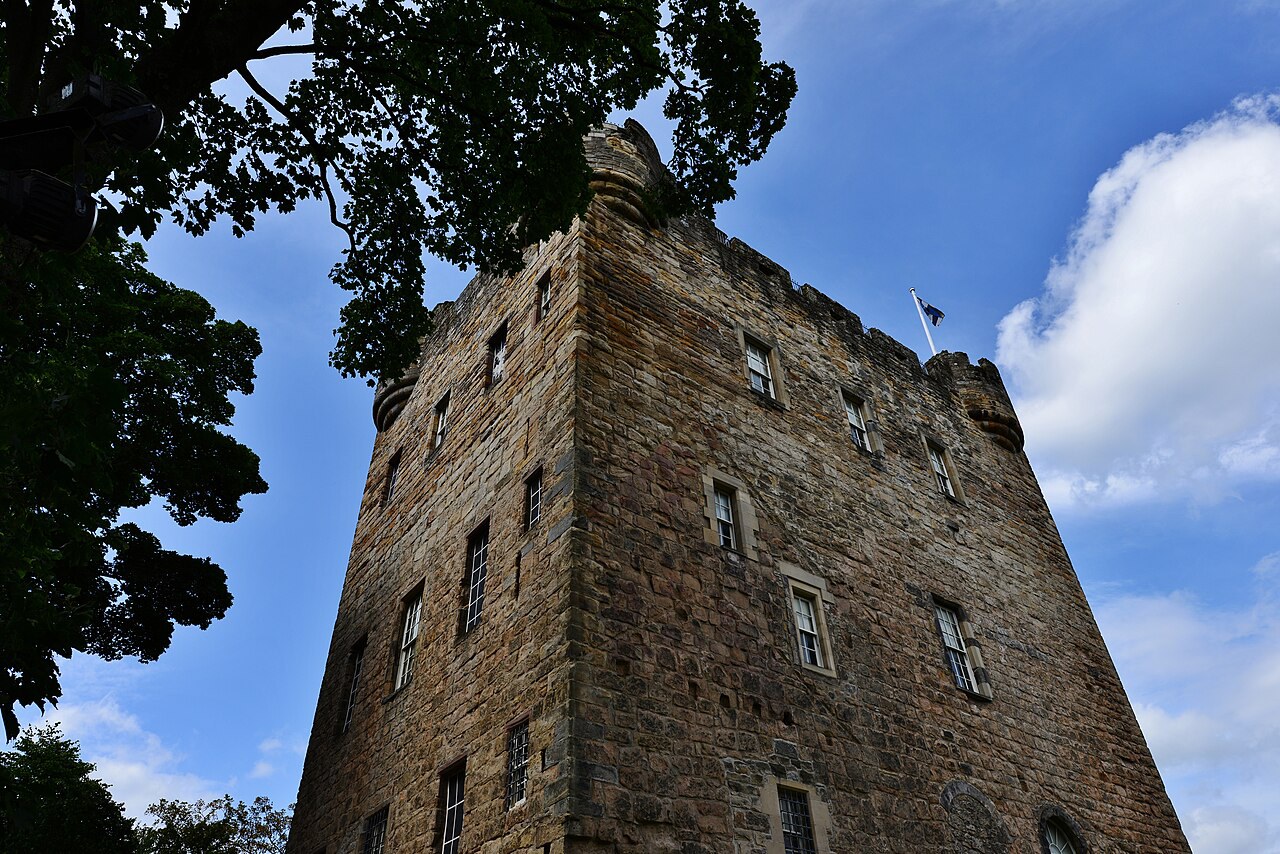
A restored four-storey 15th-century tower house with 11-foot-thick walls, open to visitors as the ancestral home of the Erskine Earls of Mar and Kellie.
- Visit length
- Editorial estimate: around 60 minutes
- Locality
- Alloa
No places match this filter. Choose All places to reset the list.
Three ways to explore Alloa
Signature outings
Enter Alloa's medieval heart
Visit the restored four-storey tower house that dominates the skyline and was the ancestral home of the Earls of Mar and Kellie.
Walk Gartmorn Dam
Follow the flat circuit through waterside path and peaceful woodland around Scotland's oldest artificial reservoir.
Try Alloa's living brewing story
Choose Devon Ales and classic pub food in the traditional two-bar Mansfield Arms, where the attached microbrewery has operated since 1992.
The town story
Alloa Town Guide
A town of local ale, medieval tower history and nearby waterside walking.
Ales and Alloa Tables
The Mansfield Arms sits in Sauchie on the edge of Alloa, and it brews its own beer out the back. Devon Ales has been running there since 1992, which makes it the oldest working microbrewery in the Wee County — the local name for Clackmannanshire, Scotland's smallest mainland council area. Four Devon Ales come off three changing hand pumps, alongside the brewery's own craft beers, in a traditional two-bar pub with a lounge and a function suite. The kitchen serves generous plates of classic pub food from noon until nine. One visitor called it a bar "soaked in atmosphere" where "both the patter and ale flow in ample supply." It has been in the Gibson family for four generations.
The rest of the town's drinking is close by. The Royal Oak Hotel, near the town centre and the railway station, does good-value food and runs a quiz on Sunday nights. Crams Bar holds about thirty people and is known for its drinks range and quick service. The Thistle Bar has karaoke on Saturdays. The Old Brewery is a newer arrival, tucked into a retail redevelopment with a mix of old and new fittings inside. For a sit-down meal, Peppés British Restaurant keeps a warm, cosy room.
Gartmorn Dam and the Tower Trail
The walk everyone points you towards is Gartmorn Dam, less than two miles out. The reservoir was built in 1713 to power the coal works and mills, which makes it Scotland's oldest artificial reservoir, and the country park around it now covers 370 acres of water, path and quiet woodland at the southern foot of the Ochil Hills. A flat circuit joins the Devon Way, which follows the line of a former railway. You may see woodpeckers, roe deer, hare, red squirrels and wildfowl. A longer route links the medieval towers — Alloa's own, Clackmannan Tower and Sauchie Tower — and passes the Mansfield Arms on the way.
The Erskines' Tower
Alloa Tower dominates the skyline: a large fifteenth-century tower house, four storeys tall with walls eleven feet thick, the surviving heart of the medieval town. It was the seat of the Erskine family, Earls of Mar, who were granted the lands here around 1360. The National Trust for Scotland has restored it and opens it to visitors.
Beer, Coal and Wool
The town made its money in beer, whisky and wool. Around 1900 some ten breweries were working here, and Alloa ale was shipped to London, the West Indies, Egypt and the Far East. John Paton founded a wool-spinning mill at Kilncraigs in 1814; it later merged into Patons & Baldwins, whose yarns and knitting patterns went everywhere. In 1772 the port exported almost a third of all Scotland's coal. Most of that is gone now — the port closed in 1970, the last big brewery came down for flats and shops — though the surviving Edwardian block at Kilncraigs still stands over the car parks.
Rail Return and a Local Olympian
Trains run hourly from the station, which reopened in 2008 after four decades shut; Stirling is about seven minutes away, with Glasgow and Edinburgh beyond. Duncan Scott, the Olympic swimmer, grew up in the town and learned to swim somewhere within it.
Stay around Clackmannanshire
Make a longer stay of it
Travel Fox holiday homes around Clackmannanshire, linked directly to their property pages.
For homeowners
Own a holiday home near Alloa?
We manage holiday lets across the UK from 12% commission, charged after cleaning costs, with no lock-in. A co-founder visits before you decide.
How our holiday let management works →
A guide with a point of view
Written from research. Edited for real journeys.
Use the Official site links for live practical details, then use this guide for context, ideas and room to explore.
Photography credits & licences
Third-party photographs are credited to their named creators and reused under the linked Creative Commons licence or public-domain dedication. Travel Fox stores an optimised local copy; the file-specific changes and any browser-applied display crop are disclosed below. Reused photographs link both to the Wikimedia Commons source record and to the declared source image; Travel Fox's own photographs carry no such record and are marked as ours. These image licences do not cover Travel Fox text, branding or page design.
- File:THE ALLOA TOWER.JPG — photograph by HARTLEPOOLMARINA2014; Own work. Source record on Wikimedia Commons. Declared source image. Licence: CC BY-SA 3.0. File changes: Downloaded from Wikimedia Commons, resized to a maximum 1920px edge and encoded as an optimised JPEG. Display changes: Displayed with responsive CSS cropping.
Sources
Every place on this page is checked against a published source. Each entry links the record we used and names who publishes it.
- Alloa Tower — nts.org.uk national body or asset manager
- St Mungo's Parish Church — portal.historicenvironment.scot statutory register or public authority
- The Speirs Centre — clacks.gov.uk statutory register or public authority
- Gartmorn Dam Country Park — clacks.gov.uk statutory register or public authority
- Mansfield Arms & Devon Ales Brewery — devonales.com operator, sector body or destination organisation
- Clackmannan Tower — historicenvironment.scot statutory register or public authority record not machine-readable; publisher restricts automated access