
Church, court and open country
Whittington
A small Cotswold settlement where medieval effigies, a Tudor and Jacobean manor and an ambitious field walk reward a carefully timed visit.
- Best for
- Medieval church detail and a long country walk
- Give it
- A morning for the circuit or a shorter history visit
- Don't miss
- The three life-size medieval stone effigies
Photo: Philip Halling · CC BY-SA 2.0 · cropped
The Fox verdict
A tiny settlement with an unusually deep record
Whittington brings a medieval church, a seasonally opened manor and a substantial landscape circuit together just off the A40.
Come for the de Croupes effigies and the layers of Whittington Court, or give most of a morning to the circuit through fields, woodland, Cleeve Hill slopes and Dowdeswell Reservoir. Food and exposed Roman remains require nearby stops rather than village facilities.
Where to go
Places in Whittington
Every place below is checked against a published source, listed with what it is and how long to give it.
Local signatures
3 places
Start here
Church of St Bartholomew
A Grade II* church with a 12th-century core, Norman arch, medieval font and three life-size stone effigies of two armoured de Croupes knights and a wimpled lady.
- Visit length
- Editorial estimate: allow around 30 minutes
- Locality
- Whittington
Whittington Court
A Grade I manor with a 16th-century main range, later east wing, early oak staircase and collections spanning books, textiles, minerals, fossils and Egyptian objects.
- Visit length
- Editorial estimate: allow around 90 minutes
- Locality
- Whittington, north of the A40
- Access
- Opens to individual visitors only during short advertised seasons; check dates before travelling.
The Royal Oak, Andoversford
A traditional country pub with real fires, a bar, restaurant room and large covered terrace; the changing food offer includes pub classics, pizzas and vegetarian choices.
- Visit length
- Editorial estimate: allow around 60 minutes
- Locality
- Neighbouring Andoversford, just off the A40
Walks & outdoors
1 placeAndoversford - Whittington - Dowdeswell - Andoversford
A moderate circuit crossing fields to the old medieval village earthworks, then passing through Whittington and woodland, climbing gently on the side of Cleeve Hill, briefly joining the Cotswold Way and descending to Dowdeswell Reservoir.
- Visit length
- Editorial estimate: Allow around 3 hours 30 minutes
- Locality
- Andoversford, Whittington and Dowdeswell
History & heritage
1 placeThe Wilson
The Wilson is a museum in Cheltenham.
- Visit length
- Editorial estimate: allow around 90 minutes
- Locality
- Cheltenham, about four miles west
No places match this filter. Choose All places to reset the list.
Three ways to explore Whittington
Signature outings
Explore the town through its museum
The Wilson adds a museum stop to a Cheltenham visit, alongside the town's Regency centre and parks.
Eat by the real fires
The Royal Oak pairs a traditional country-pub setting with a changing menu of pub classics, pizzas and vegetarian choices.
Follow the fields to Dowdeswell
This 8.1-mile circuit links Andoversford, Whittington and Dowdeswell, crossing pasture and woodland before reaching the lower slopes of Cleeve Hill and Dowdeswell Reservoir.
The village story
Whittington Village Guide
Medieval stonework, a storied manor and a long field circuit give this small settlement a reach far beyond its size.
The Church and the Village
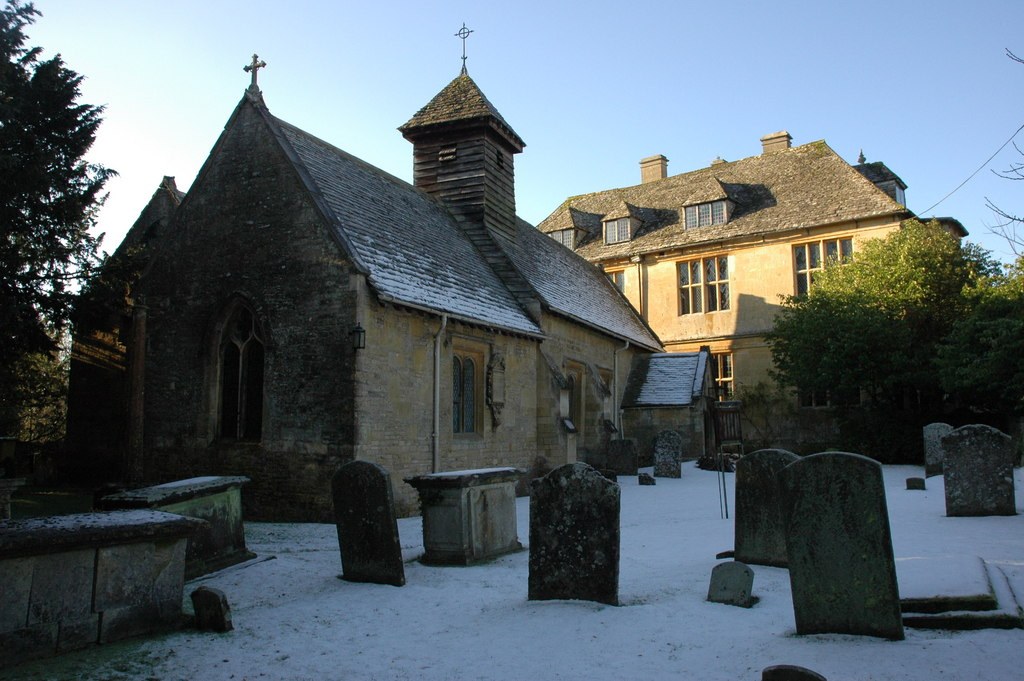
Inside the church of St Bartholomew, three medieval figures lie carved full-length in stone: two armoured knights and a woman in a wimple. The knights are of the de Croupes family, Sir Richard, who died in 1278, and his son, another Richard, who died in 1326. Around them are an octagonal font, a Norman arch, a fifteenth-century carving of a horned headdress, and the brass of Richard and Margaret Cotton. The building has a twelfth-century core, a weather-boarded bell turret and a stone-slated roof, and was restored around 1872 by Frederick S. Waller. For a long time the dedication was unsettled: the church was recorded as St Michael's in 1750 and had become St Bartholomew's by the 1920s.
Whittington is a small cluster of stone buildings four miles east of Cheltenham, set just off the north side of the A40. The approach leaves the trunk road quickly, and what remains is the church, the manor and a few lanes.
Beside the church stands Whittington Court, a Grade I manor probably begun by Richard Cotton, who died in 1556, with a sixteenth-century main range and a later east wing. Queen Elizabeth I dined here on 9 September 1592, during a progress through Gloucestershire. Inside are a four-centred-arch chimneypiece from around 1590, a Renaissance fireplace, and an oak staircase fitted with an early dog gate. The collections run to Regency bookcases, fossils, Egyptian objects and books from the Whittington Press, and the owner, Jenny Stringer, shows block-printed textiles and eighteenth-century dresses in her studio.
Whittington Court
The house opens to individual visitors only during short advertised seasons, when the garden, the 1614 tithe barn and the church are all included. The visits are self-guided. Check the dates before you travel.
The real reason to stay is the walking. A roughly eight-mile circuit links Andoversford, Whittington and Dowdeswell, crossing fields to the grassy humps of the medieval village that Whittington used to be, then climbing through woodland onto the lower slopes of Cleeve Hill. It joins the Cotswold Way briefly before dropping to Dowdeswell Reservoir, where there are wildfowl and, in spring, one of the area's larger gatherings of common toads. It is 250 metres of ascent and takes the better part of a morning. A 2019 note reports an obscured waymarker on the route; carry a current map.
Across Fields and Woodland
North of Dowdeswell, Arle Grove is an ancient woodland of yellow archangel, herb-Paris and bluebells, though it is presently closed for storm damage and ash dieback.
There is no pub in Whittington itself. The nearest is the Royal Oak in Andoversford, a country pub off the A40 that has been serving since 1628, with real fires, a large covered terrace and dogs allowed. The menu changes, but has run to crispy Cornish brie with cranberry sauce, pan-fried lamb's liver with smoked bacon and mash, battered fish with peas and tartare sauce, and treacle tart. There are pizzas and vegetarian dishes as well.
Food, Transport and the Old Record
Cheltenham Spa is about five miles away, and the X52 between Cheltenham and Oxford stops at Whittington Turn, a short walk from the Court. It is worth checking the current timetable rather than trusting a printed one. Directions work better by the house name than by the postcode alone.
The record here is old and unusually itemised. Domesday counted eleven households in 1086, six villagers, four smallholders and one rider, with a mill worth ten shillings. The manor was worth three pounds a year, down from five before the Conquest. In 1375 an inquiry was ordered after armed men came to Whittington and drove off three oxen and a cow, valued at four marks, belonging to tenants of John, King of Castile.
Roman Ground and Enduring Landmarks
Beneath the fields around the Court lies a Roman villa, scheduled along with the old village. For mosaics, hypocausts and a bath-house you go on to Chedworth, further into the hills, where the remains are uncovered and a museum sits beside them.
Arthur Mee described the church and the Court together as "the great house and God's house ... a grand old yew tree, and the Moat which protected them both." The yew and the earthworks of the moat still stand beside the church.
Stay around Cotswolds
Make a longer stay of it
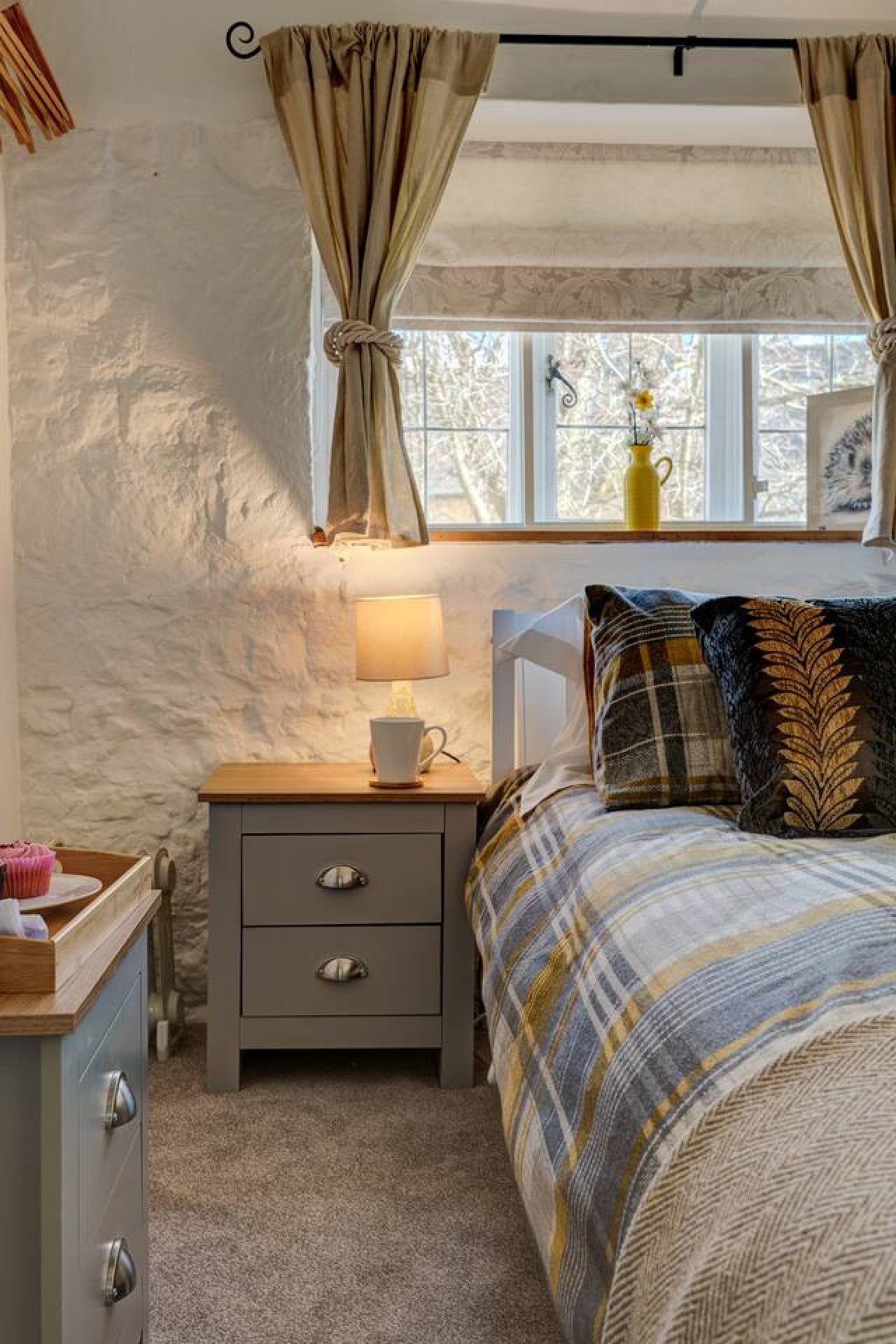
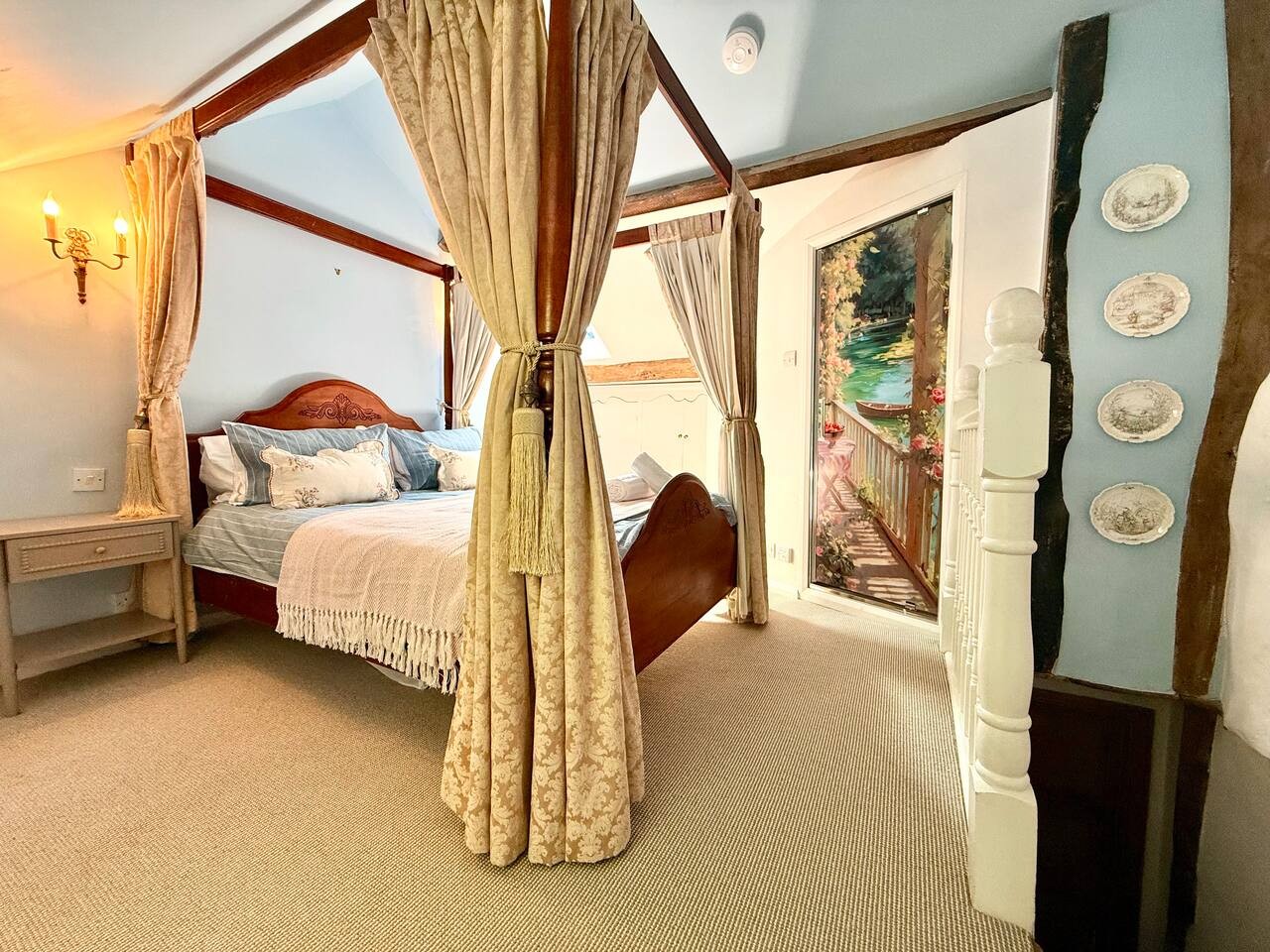
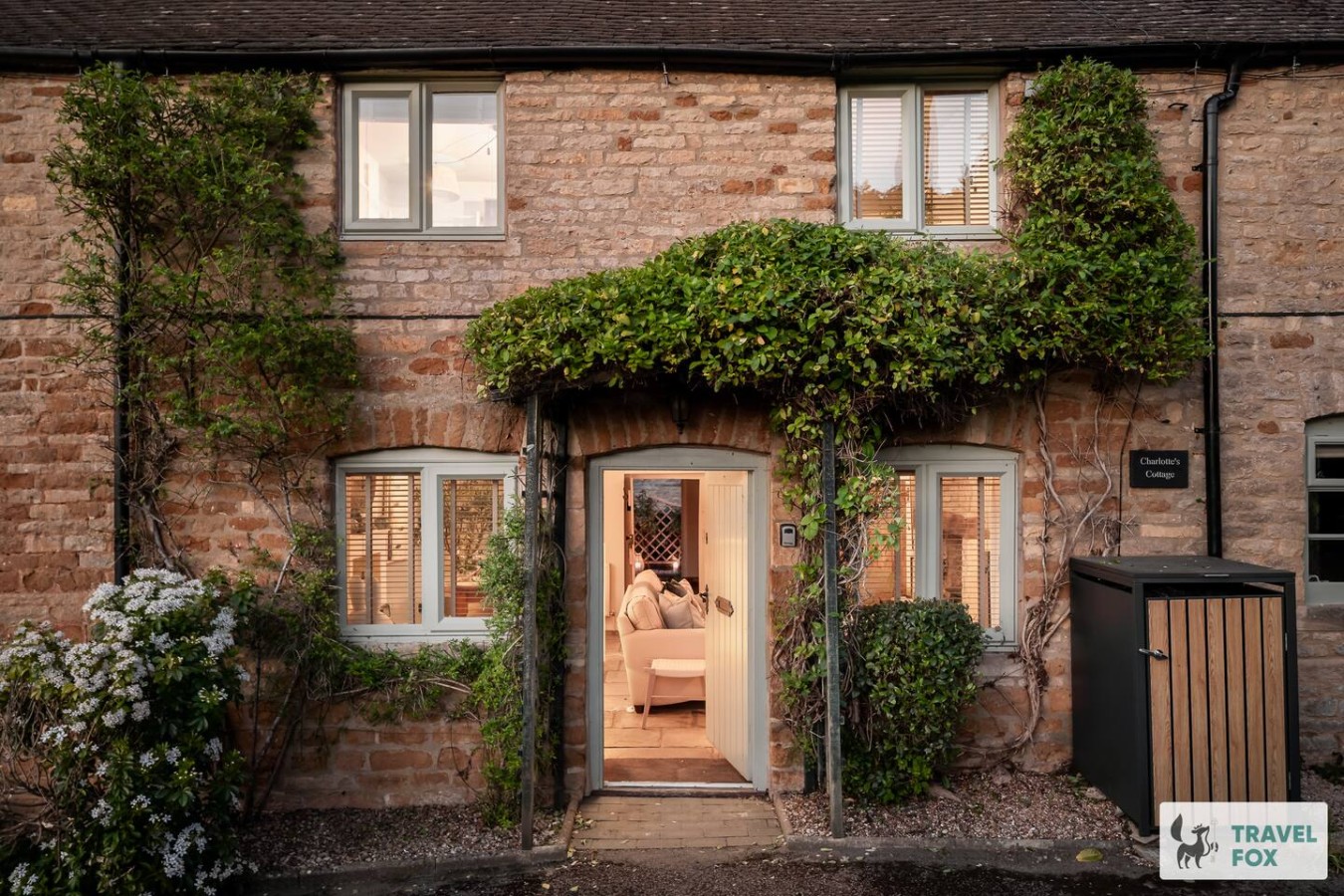
Travel Fox holiday homes around Cotswolds, linked directly to their property pages.
For homeowners
Own a holiday home near Whittington?
We manage holiday lets across the Cotswolds from 12% commission, charged after cleaning costs, with no lock-in. A co-founder visits before you decide.
Holiday let management in the Cotswolds →
A guide with a point of view
Written from research. Edited for real journeys.
Use the Official site links for live practical details, then use this guide for context, ideas and room to explore.
Photography credits & licences
Third-party photographs are credited to their named creators and reused under the linked Creative Commons licence or public-domain dedication. Travel Fox stores an optimised local copy; the file-specific changes and any browser-applied display crop are disclosed below. Reused photographs link both to the Wikimedia Commons source record and to the declared source image; Travel Fox's own photographs carry no such record and are marked as ours. These image licences do not cover Travel Fox text, branding or page design.
- File:St Bartholomew's church, Whittington, Gloucestershire-geograph.org.uk-2187731.jpg — photograph by Philip Halling; Philip Halling. Source record on Wikimedia Commons. Declared source image. Licence: CC BY-SA 2.0. File changes: Downloaded from Wikimedia Commons, resized to a maximum 1920px edge and encoded as an optimised JPEG. Display changes: Displayed with responsive CSS cropping.
Sources
Every place on this page is checked against a published source. Each entry links the record we used and names who publishes it.
- Church of St Bartholomew — historicengland.org.uk statutory register or public authority record not machine-readable; publisher restricts automated access
- Whittington Court — whittingtoncourt.co.uk operator, sector body or destination organisation
- Andoversford - Whittington - Dowdeswell - Andoversford — walks.walkingworld.com other published source
- The Royal Oak, Andoversford — royaloakcotswolds.co.uk operator, sector body or destination organisation
- The Wilson — cheltenhammuseum.org.uk other published source