
Clyde town, hill views
Greenock
Greenock is a Clyde town where aqueduct walks, Victorian civic stone and waterfront culture sit beside the story of ships, sugar and electronics.
- Best for
- Clyde views and industrial history
- Give it
- Half a day, longer with the Cut
- Don't miss
- Lyle Hill's Free French memorial
The Fox verdict
A Clyde town built by water and marked by what left
Come for the Greenock Cut and Firth views; stay for a waterfront story shaped by shipbuilding, sugar, steam and art.
Greenock rewards a visit that moves between the hills and the Clyde. The Cut explains how water powered the industries below, while the Watt Institution, Old West Kirk and Wyllieum give the town's engineering, art and civic history distinct places to land.
Where to go
Places in Greenock
Every place below is checked against a published source, listed with what it is and how long to give it.
Local signatures
3 placesLyle Hill
Craigs Top reaches 426 feet, with panoramic Firth of Clyde views on clear days and the Free French Naval Forces memorial on the hill.
- Visit length
- Editorial estimate: Allow around 45 minutes
- Locality
- Greenock's West End
Watt Institution / McLean Museum
The McLean Museum holds collections relating to Greenock-born James Watt, shipbuilding and Ancient Egypt.
- Visit length
- Editorial estimate: Allow around 90 minutes
- Locality
- Greenock
The Wyllieum
A museum for artist George Wyllie, opened in April 2024.
- Visit length
- Editorial estimate: Allow around one hour
- Locality
- Greenock
Walks & outdoors
1 placeThe Greenock Cut
A popular circular hill walk following a scheduled aqueduct engineered by Robert Thom and completed in 1827, with wide views over the Firth of Clyde.
- Visit length
- Editorial estimate: Allow around three hours
- Locality
- Cornalees area
History & heritage
2 placesOld West Kirk
Established in 1589 and moved to the Esplanade in 1926 for shipyard expansion, the kirk has stained glass associated with Dante Gabriel Rossetti and Edward Burne-Jones.
- Visit length
- Editorial estimate: Allow around 45 minutes
- Locality
- The Esplanade
Wemyss Bay railway station
A Category A listed station designed by James Miller in 1903, celebrated for its curved glass-and-steel canopy and its ferry connection to Rothesay.
- Visit length
- Editorial estimate: Allow around 45 minutes
- Locality
- Wemyss Bay
Things to do
2 placesBeacon Arts Centre
A 500-seat theatre on Greenock's waterfront, opened in 2013.
- Visit length
- Editorial estimate: Allow around two hours
- Locality
- Greenock waterfront
Gourock Outdoor Pool
A heated saltwater open-air pool, built in 1909 and reconstructed in 1969, and one of only three remaining public outdoor pools in Scotland.
- Visit length
- Editorial estimate: Allow around 90 minutes
- Locality
- Adjacent Gourock
No places match this filter. Choose All places to reset the list.
Three ways to explore Greenock
Signature outings
Walk the Cut
Trace Robert Thom's 1827 aqueduct on a circular hill walk with wide views over the Firth of Clyde.
Enter the moved kirk
See the Old West Kirk on the Esplanade, with stained glass associated with Rossetti and Burne-Jones.
Pause at Wemyss Bay
Take in James Miller's 1903 station and its celebrated curved glass-and-steel canopy.
The town story
Greenock, built around the Clyde
The unchanged Travel Fox article moves from a relocated kirk and water-powered industry to the town's museums, railways, football and Free French memorial.
A Kirk and a Town Facing the Clyde
On the Esplanade, facing the water, stands the Old West Kirk, its windows made by Dante Gabriel Rossetti and Edward Burne-Jones. The church dates from 1589, said to be the first built in Scotland after the Reformation, and it kept its original site until 1926, when the shipyards wanted the ground and the whole building was moved down to the waterfront to make room.
Greenock is a town of Victorian civic stone rising from the south bank of the Clyde, at the point called the Tail of the Bank where the river opens into the Firth. For three centuries almost everything here arranged itself around the water and what could be built, refined or shipped beside it.
From the Cut to the Waterfront
The walking starts above the town. The Greenock Cut is an aqueduct engineered by Robert Thom and finished in 1827, which once carried water down from Loch Thom to drive the mills, sugar refineries and shipyards below. It is now a scheduled monument and a circular hill walk in the Clyde Muirshiel park, with wide views over the Firth; you reach it from Cornalees. Higher still is Lyle Hill, 426 feet at Craigs Top, from where on a clear day you can see Gourock and Cowal, the Erskine Bridge, and Arran to the south-west.
Down at the front, the Beacon Arts Centre is a 500-seat theatre on the waterfront, and the McLean Museum holds the collections of James Watt, who was born here in 1736 and whose work on the steam engine came out of this town. Nearby, the Wyllieum, opened in 2024, is given over to the artist George Wyllie. The Ocean Terminal cruise berth, its new passenger building opened in 2023, brings more than a hundred ships a year to the same quays that once handled sugar.
From Tall Ships to Microchips
The history is one of firsts and losses together. The PS Comet began Europe's first commercial steamboat service from here in 1812. The world's first Burns Club was founded in Greenock in 1801 and held the first Burns Supper on 29 January 1802. Scotts built ships from 1711; sugar was refined from 1765 until Tate & Lyle closed in 1997; IBM came in 1951 and left in 2023. The population, 81,123 at its peak in 1921, is now roughly half that. A town that went from tall ships to microchips has watched both leave within living memory.
Rails and The Ton
By some measure this is Scotland's best-served town for railway stations, with eight or more of them and a tunnel running under Newton Street; trains run to Glasgow Central, and the coast line carries on to Gourock and Wemyss Bay. Football is Greenock Morton, "The Ton," playing at Cappielow since 1879 and still remembered for beating Rangers to win the Scottish Cup in 1922, a Jimmy Gourlay goal in the eleventh minute.
The Free French Lookout
On top of Lyle Hill there is a Cross of Lorraine set against an anchor, unveiled in 1946 for the Free French sailors lost in the war, among them the crews of the corvettes Alysse and Mimosa. It looks out over the water they sailed from.
Stay around Inverclyde
Make a longer stay of it
Travel Fox holiday homes around Inverclyde, linked directly to their property pages.
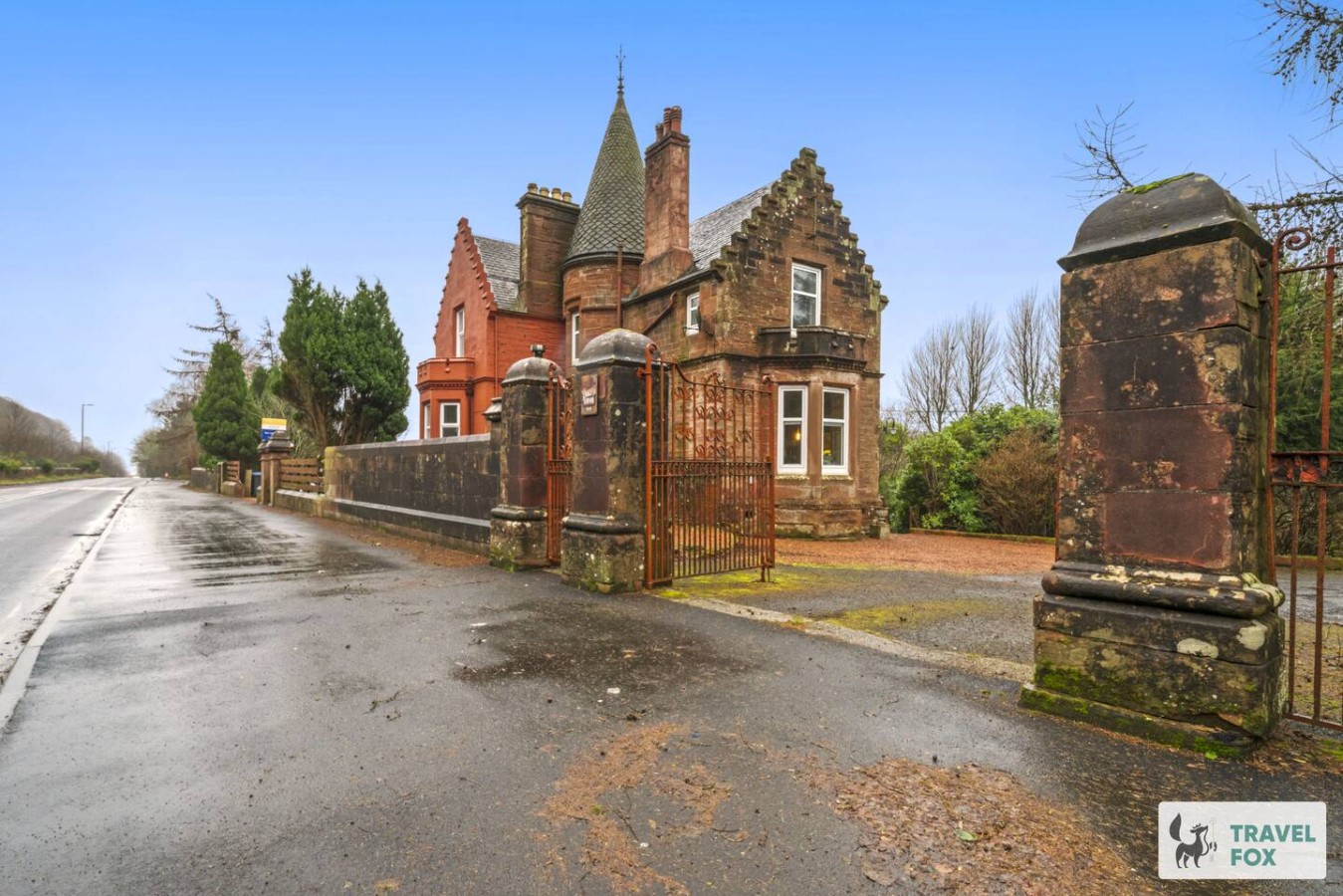
For homeowners
Own a holiday home near Greenock?
We manage holiday lets across the UK from 12% commission, charged after cleaning costs, with no lock-in. A co-founder visits before you decide.
How our holiday let management works →
A guide with a point of view
Written from research. Edited for real journeys.
Use the Official site links for live practical details, then use this guide for context, ideas and room to explore.
Sources
Every place on this page is checked against a published source. Each entry links the record we used and names who publishes it.
- Old West Kirk — portal.historicenvironment.scot statutory register or public authority
- The Greenock Cut — clydemuirshiel.co.uk other published source
- Lyle Hill — inverclyde.gov.uk statutory register or public authority
- Beacon Arts Centre — beaconartscentre.co.uk operator, sector body or destination organisation
- Watt Institution / McLean Museum — inverclyde.gov.uk statutory register or public authority
- The Wyllieum — wyllieum.com operator, sector body or destination organisation
- Gourock Outdoor Pool — inverclydeleisure.com other published source
- Wemyss Bay railway station — scotrail.co.uk other published source