
Clyde stronghold · Shipbuilding town
Dumbarton
Dumbarton gathers a volcanic fortress, shipbuilding heritage and riverside walks around the point where the River Leven joins the Clyde.
- Castle climb
- 627 steps
- Rock height
- 240 feet
- Glasgow by train
- About 25 minutes
Photo: Pradeep · CC BY-SA 4.0 · cropped
The Fox verdict
A compact meeting of fortress, river and shipyard history
Come for Scotland's longest-recorded stronghold history, then stay with the River Leven for the Denny Tank, Levengrove Park and the town's maritime story.
Dumbarton Rock carries the ancient capital of Strathclyde and a castle associated with William Wallace and Mary, Queen of Scots. Below it, the surviving Victorian ship-testing tank and the riverside landscape hold the clearest traces of the town that built ships.
Where to go
Places in Dumbarton
Every place below is checked against a published source, listed with what it is and how long to give it.
Local signatures
3 places
Start here
Dumbarton Castle
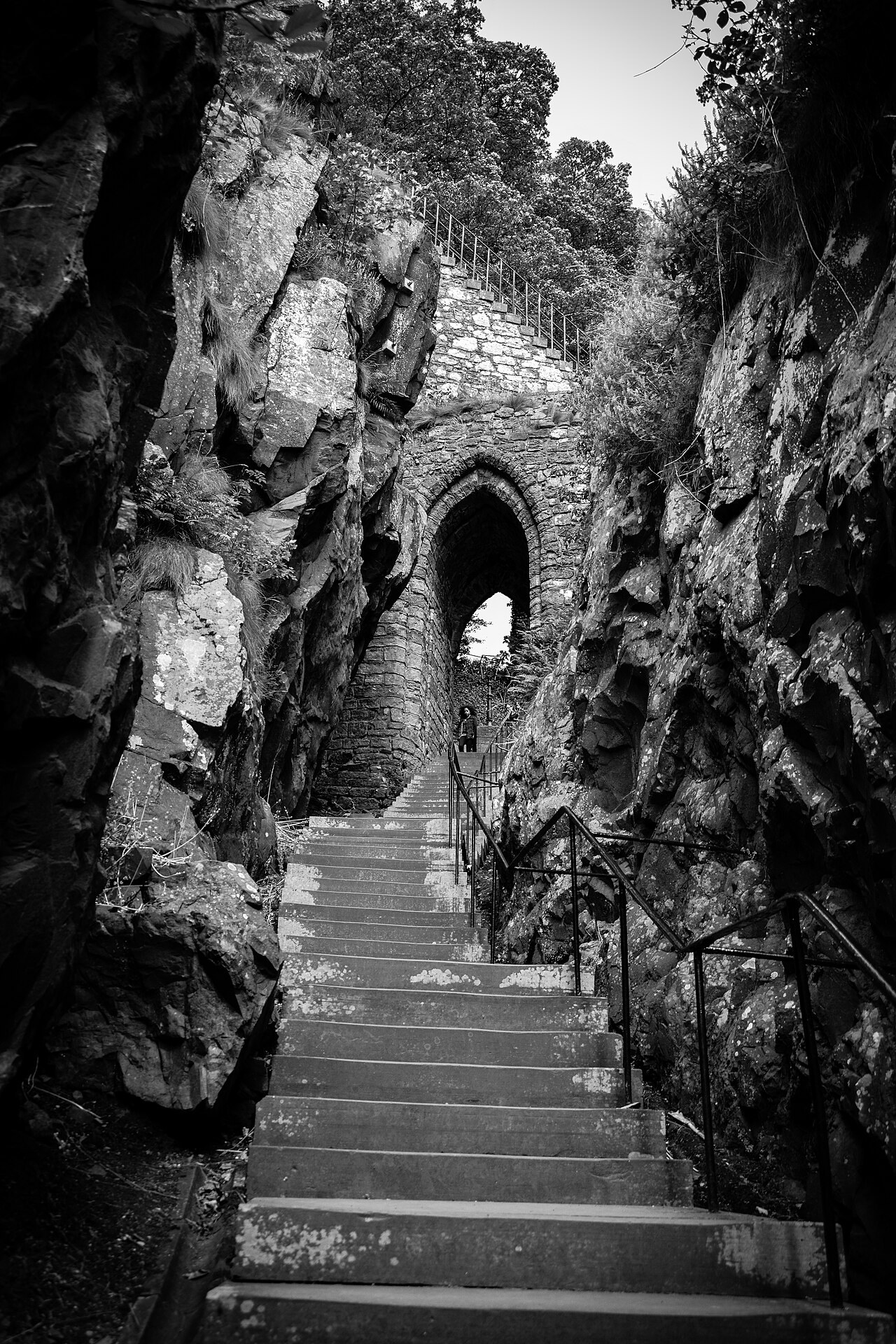
The castle has the longest recorded history of any stronghold in Scotland, with the Portcullis Arch, Wallace Tower foundations, guard house and Governor's House spread across the rock. Its 627-step climb ends at White Tower Crag with views over the Clyde, the Leven and the hills toward Loch Lomond.
- Visit length
- Editorial estimate: 120-minute itinerary allocation
- Locality
- Dumbarton Rock
Levengrove Park
This public park was laid out in 1885 and given to the town by local shipbuilding families. Its riverside lawns, Clyde views and ruins connected to St Serf's make it a place for an afternoon outdoors.
- Visit length
- Editorial estimate: 90-minute itinerary allocation
- Locality
- Dumbarton riverside
Denny Ship Model Experiment Tank
Part of the Scottish Maritime Museum, this surviving Victorian testing tank shows how model hulls were run down the water before full-size ships were laid down. The research identifies it as a family-friendly maritime heritage visit.
- Visit length
- Editorial estimate: 90-minute itinerary allocation
- Locality
- Along the River Leven
Walks & outdoors
1 placeRiver Leven towpath
The towpath follows the River Leven north from Dumbarton toward Balloch and the foot of Loch Lomond, extending the town's waterside setting into a longer riverside walk.
- Visit length
- Editorial estimate: 120-minute itinerary allocation
- Locality
- Dumbarton toward Balloch
History & heritage
1 placeRiverside Parish Church
Dumbarton's principal Church of Scotland parish church stands near the River Leven in the town centre. The research identifies it as a listed building while leaving the exact listing category unconfirmed.
- Visit length
- Editorial estimate: 30-minute itinerary allocation
- Locality
- Near the River Leven in Dumbarton town centre
Things to do
1 place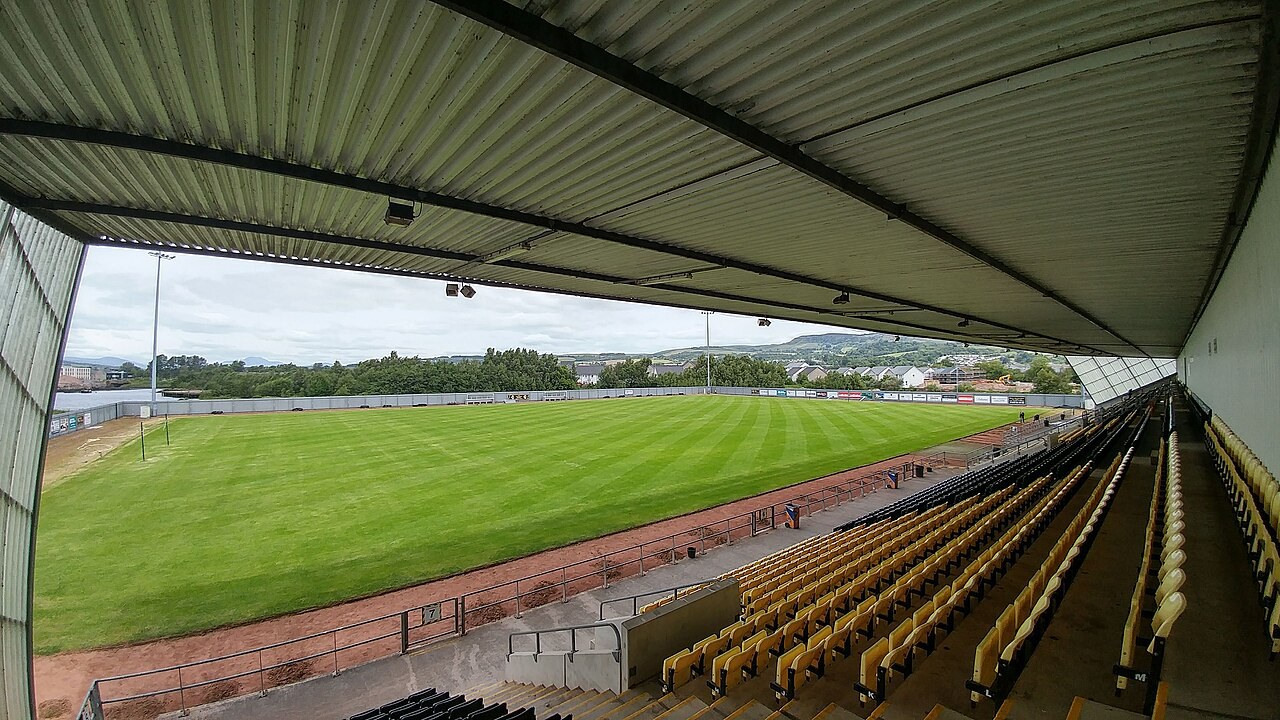
Dumbarton Football Stadium
Dumbarton F.C. play their home games at the stadium beneath Dumbarton Rock, pairing the town's football life with its dominant landscape feature.
- Visit length
- Editorial estimate: 60-minute itinerary allocation
- Locality
- Beneath Dumbarton Rock
No places match this filter. Choose All places to reset the list.
Three ways to explore Dumbarton
Signature outings
627 steps into fifteen centuries of stronghold history
The climb over Dumbarton Rock joins the castle's surviving arches and houses to the viewpoint on White Tower Crag.
A football ground under the volcanic landmark
Dumbarton F.C.'s home stadium sits beneath the rock that dominates the town's landscape.
A towpath pointing toward Loch Lomond
The River Leven towpath runs north from Dumbarton toward Balloch and the foot of the loch.
The town story
Dumbarton: rock, river and the ships that left
The locked article moves from the castle summit through the riverside town and its shipbuilding inheritance to the towpath and the unforgettable distillery geese.
The rock and its royal departures
Six hundred and twenty-seven steps take you from the waterside to the summit of Dumbarton Rock, a twin-peaked basalt plug that rises 240 feet straight out of the point where the River Leven joins the Clyde. It is around 334 million years old, the core of an extinct volcano. The castle spread across it holds the longest recorded history of any stronghold in Scotland: a 14th-century Portcullis Arch, the foundations of the Wallace Tower, a 16th-century guard house, an 18th-century Governor's House. William Wallace's sword was repaired here in 1505, and Mary, Queen of Scots was lodged on the rock as a child before sailing from it for France in 1548. The climb ends at the White Tower Crag, with views over the Clyde, the Leven and the hills toward Loch Lomond.
At the foot of the rock, Dumbarton F.C. play their home games. A short way west is Levengrove Park, laid out in 1885 and given to the town by local shipbuilding families — riverside lawns, ruins connected to St Serf's, and views across the Firth of Clyde. The park is traditionally linked to the burial of Robert the Bruce's remains.
Shipbuilding and the riverside parish church
The town built ships. Along the Leven, the Denny Ship Model Experiment Tank survives as part of the Scottish Maritime Museum — a Victorian testing tank where model hulls were run down the water before the full-size versions were laid down. William Denny and Brothers was the longest-lasting yard; it built Sunderland flying boats during the war and closed in 1963. In 1818 William Denny had built the Rob Roy, the first steam-powered ferry to cross the English Channel, and in 1869 Scott & Linton, with Denny finishing the work, built the Cutty Sark, one of the last and fastest of the tea clippers.
Riverside Parish Church, the town's principal Church of Scotland church, stands near the Leven in the centre.
Alt Clut, fortress of the Britons
Long before the castle, the rock was Alt Clut, "Clyde Rock", capital of the Kingdom of Strathclyde, and the name Dumbarton comes from Dun Breatainn, "fortress of the Britons". In 870 a Viking force under Ivar the Boneless and Olaf the White besieged it for fifteen weeks, destroyed it, and carried the survivors into slavery in Ireland. Nothing of that citadel is visible on the rock now.
Towpath to Balloch and rail connections
The River Leven towpath runs north toward Balloch and the foot of Loch Lomond. Balloch is five or six miles up the A813 — Loch Lomond Shores, an aquarium, a country park, and cruises from the pier out to Luss, with the paddle steamer Maid of the Loch moored under restoration. Beyond it is Loch Lomond and The Trossachs, Scotland's first national park. Dumbarton has three stations — Central, East and Dalreoch — on the North Clyde Line; frequent ScotRail trains reach Glasgow Queen Street in about 25 minutes, and the West Highland Line and the Caledonian Sleeper to London both pass through.
Vanished industries and the geese
Of all the industries that came and went here — the glassworks that made Dumbarton Scotland's largest glass producer by 1800, the shipyards, the Inverleven grain distillery once the largest in Europe — the geese are the detail that stays with you. From 1959 the distillery kept white Chinese geese as security guards. It was mothballed in 2002 and demolished in 2017.
Stay around West Dunbartonshire
Make a longer stay of it
Travel Fox holiday homes around West Dunbartonshire, linked directly to their property pages.
For homeowners
Own a holiday home near Dumbarton?
We manage holiday lets across the UK from 12% commission, charged after cleaning costs, with no lock-in. A co-founder visits before you decide.
How our holiday let management works →
A guide with a point of view
Written from research. Edited for real journeys.
Use the Official site links for live practical details, then use this guide for context, ideas and room to explore.
Photography credits & licences
Third-party photographs are credited to their named creators and reused under the linked Creative Commons licence or public-domain dedication. Travel Fox stores an optimised local copy; the file-specific changes and any browser-applied display crop are disclosed below. Reused photographs link both to the Wikimedia Commons source record and to the declared source image; Travel Fox's own photographs carry no such record and are marked as ours. These image licences do not cover Travel Fox text, branding or page design.
- File:Dumbarton Castle stairs.jpg — photograph by Pradeep; Own work. Source record on Wikimedia Commons. Declared source image. Licence: CC BY-SA 4.0. File changes: Downloaded from Wikimedia Commons, resized to a maximum 1920px edge and encoded as an optimised JPEG. Display changes: Displayed with responsive CSS cropping.
- File:View from the Stand at the Dumbarton Football Stadium.jpg — photograph by Fragglerock52; Own work. Source record on Wikimedia Commons. Declared source image. Licence: CC BY-SA 4.0. File changes: Downloaded from Wikimedia Commons, resized to a maximum 1920px edge and encoded as an optimised JPEG. Display changes: Displayed with responsive CSS cropping.
Sources
Every place on this page is checked against a published source. Each entry links the record we used and names who publishes it.
- Dumbarton Castle — historicenvironment.scot statutory register or public authority record not machine-readable; publisher restricts automated access
- Levengrove Park — west-dunbarton.gov.uk statutory register or public authority
- Denny Ship Model Experiment Tank — portal.historicenvironment.scot statutory register or public authority
- Riverside Parish Church — dumbartonriverside.org.uk operator, sector body or destination organisation
- Dumbarton Football Stadium — dumbartonfootballclub.com operator, sector body or destination organisation
- River Leven towpath — walkwheelcycletrust.org.uk other published source